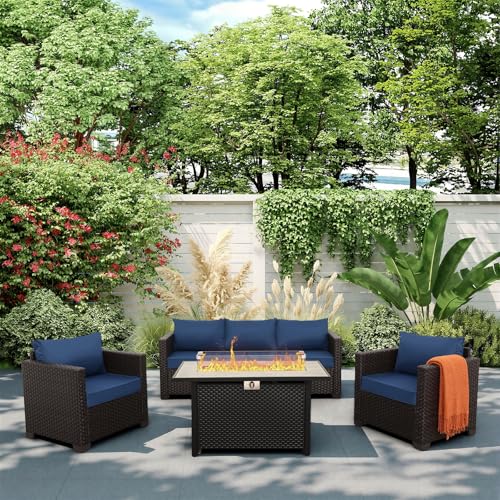
Semi Circle Patio Furniture with Fire Pit: The Complete Layout & Buying Guide
Turn an unused corner of your backyard into a warm, conversation-ready gathering zone. This guide explains how semi circle seating and a fire pit work together, what to measure before you buy, and which materials hold up season after season.
Explore Buying AdviceA semi circle patio furniture arrangement built around a fire pit is one of the most social layouts you can create outdoors. Instead of forcing guests to sit in a straight line or face a wall, curved seating draws everyone toward a shared center — the fire. The result is a space that feels intentional, warm, and naturally suited to evening conversations, cool-weather gatherings, and relaxed weekend afternoons.
This guide is written for homeowners who already know they want a curved seating setup with a fire feature but need clarity before committing. You will learn how to size the layout, choose between a semi circle outdoor couch with fire pit and individual chairs, compare materials by market tier, and avoid the most common placement mistakes. Every recommendation focuses on durability, comfort, and long-term usability rather than short-lived trends.
Why a Semi Circle Layout Works So Well Around a Fire Pit
Fire pits are inherently social features. They provide light, warmth, and a natural focal point. A semi circle arrangement leans into that psychology by orienting every seat toward the flames while still leaving one side open for entry, a walkway, or a view of the garden. Compared with a closed circular arrangement, the semi circle is easier to access, simpler to fit against a patio edge, and more forgiving in tighter spaces.
The curve also solves a common outdoor problem: the dead zone. Straight sofas facing a fire pit often leave awkward gaps at the corners, while a curved layout distributes seating evenly along the arc. Guests naturally angle toward each other, which makes conversation flow without anyone having to twist in their chair.
Layout and Spacing: How Much Room Do You Actually Need?
Before choosing furniture, measure your patio. A semi circle setup with a fire pit needs three distinct zones: the fire clearance zone, the seating depth, and the walkway behind the seats. Skipping any of these leads to cramped arrangements that look good in photos but feel uncomfortable in daily use.
The three-zone measurement method
- Fire clearance zone: Keep at least 30 inches between the fire pit rim and the front edge of the nearest seat. Increase this to 36–48 inches for larger fire bowls or windy locations.
- Seating depth: Standard patio chairs need about 26–30 inches of depth, while a curved sofa may require 32–36 inches. Measure from the front of the seat cushion to the back of the frame.
- Walkway: Leave 24–36 inches behind the seating so people can pass without stepping over legs or squeezing past the fire feature.
Add those three zones together and you get a practical minimum diameter. For a typical four-to-six seat semi circle, plan on a clear area of roughly 10 to 14 feet across. A smaller two-to-four seat arc can work in about 8 to 10 feet, but only if the chairs are compact and the fire pit is modest in size.
| Layout Size | Typical Seats | Minimum Clear Diameter | Best For |
|---|---|---|---|
| Compact arc | 2–4 | 8–10 ft | Balconies, small patios, side yards |
| Standard arc | 4–6 | 10–12 ft | Most suburban backyards |
| Generous arc | 6–8 | 12–14 ft | Large decks and entertainment patios |
| Grand arc | 8+ | 14 ft+ | Poolside lounges and expansive hardscapes |
If you are working with a compact footprint, consider a small outdoor patio set with fire pit that pairs a modest curved bench with a compact fire bowl. The same design logic applies — the curve still directs attention inward — but the overall footprint shrinks to fit tighter spaces.
Choosing Your Seating: Curved Sofa vs. Individual Chairs
There is no single correct answer here, but there is a correct answer for your space. The two main approaches — a curved sectional and a collection of individual chairs — offer different strengths. Many successful setups blend both.
Curved sofa or sectional
Creates a strong visual anchor, maximizes seat count along the arc, and delivers a cohesive look. Best for homeowners who want a permanent, design-forward arrangement.
Individual lounge chairs
Offers flexibility to rearrange, easier storage during off-season, and simpler replacement if one piece wears out. Ideal for renters and multi-use patios.
Hybrid arrangement
Pairs a curved sofa as the centerpiece with two accent chairs that close the arc. Balances visual weight with conversational flexibility.
Curved bench seating
Space-efficient and architectural. Works well against a low wall or planter edge, especially in smaller patios where depth is limited.
If you prefer a lounge-first setup, a small outdoor patio set can be positioned along the arc to create a relaxed, low-profile seating line. For a more structured look, individual patio chairs with cushions arranged in a gentle curve deliver flexibility without sacrificing comfort. Homeowners who want a deeper lounge feel often pair a curved couch with a matching set of outdoor chaise lounge chairs at the open ends of the arc.
Cushion quality matters more than most buyers expect. Look for solution-dyed fabrics, quick-dry foam, and zippered covers that can be removed for cleaning. A set of outdoor patio chair cushions in a neutral tone is a practical upgrade that extends the comfort and lifespan of entry-level and mid-range frames alike.
Materials and Tier Comparison
Semi circle patio furniture with a fire pit lives in a demanding environment. Heat exposure, UV light, rain, and temperature swings all push materials to their limits. Instead of guessing based on marketing language, use the tier framework below to understand where a given product sits in the market.
| Tier | Typical Materials | Durability Profile | Best For |
|---|---|---|---|
| Entry-level | Powder-coated steel, basic resin wicker, polyester cushions | Solid for sheltered patios; expect 3–5 seasons with covers | Renters, seasonal setups, first-time buyers |
| Mid-range | Aluminum frames, high-density resin wicker, solution-dyed cushions | Rust-resistant and fade-resistant; 6–10 seasons with care | Most family backyards and full-sun patios |
| Premium | Heavy-gauge aluminum, hand-woven wicker, high-grade olefin fabrics | Long-term investment; reinforced joints and refined finishes | Permanent installations and design-focused patios |
| Luxury | Marine-grade aluminum, teak accents, performance acrylic cushions | Flagship durability with the widest weather tolerance | Coastal homes, high-use entertaining spaces |
A few material rules of thumb help narrow the field quickly. Aluminum is lighter and rust-proof, making it the safest default for most homeowners. Steel is heavier and sturdy but demands a rust-proof finish to survive near a fire pit and in wet climates. Wicker and resin offer a softer, more traditional look but vary widely in weave density — tighter weaves generally last longer. Teak and other hardwoods age gracefully but require periodic sealing.
Fire Pit Considerations for a Semi Circle Setup
The fire feature shapes everything else in the layout. Before finalizing furniture, decide on the fire pit type, since each option affects clearance, seating height, and long-term maintenance.
Fire pit types at a glance
- Wood-burning: Authentic crackle and aroma; requires spark management, ash cleanup, and more generous clearance.
- Propane: Instant on/off, cleaner burn, and consistent heat; needs a tank or gas line nearby.
- Natural gas: Permanent and convenient; best planned during patio construction.
- Tabletop or portable: Ideal for renters and compact arcs; smaller heat radius but easier to relocate.
For tighter spaces, a smokeless tabletop fire pit can sit at the center of a small arc without overwhelming the seating. On larger patios, a full-size fire bowl becomes the visual anchor and justifies a wider arc of six to eight seats.
Height also matters. Coffee-height fire pits pair naturally with lounge seating, while dining-height tables work better with upright chairs. Mixing heights inside a single arc tends to break the visual flow, so choose one seating height and build the semi circle around it.
Small-Space Adaptations for Semi Circle Layouts
Not every patio can accommodate a full arc. The good news is that the semi circle concept scales down gracefully. A compact arc of two chairs and a tabletop fire pit can deliver the same social feeling in a fraction of the footprint.
Start by replacing deep lounge chairs with slimmer frames, and consider a curved bench that hugs the patio edge. A small patio table and chairs set placed along the arc can double as a dining and conversation zone. If your space is a balcony, a small balcony furniture set arranged in a gentle curve still captures the inward-facing dynamic that makes fire pit seating work.
Storage is another small-space concern. Keep cushions protected with a small deck box placed at the open end of the arc, where it doubles as a side surface. This keeps the seating area uncluttered and extends the life of the fabric.
Buying Checklist: What to Confirm Before You Commit
Use this checklist to evaluate any semi circle patio furniture set you are considering. It is organized around the factors that most often cause buyer regret: sizing, material compatibility, and long-term maintenance.
- Confirm the clear diameter. Measure your patio and compare it to the minimum dimensions in the layout table above. Do not rely on product photos.
- Check fire clearance. Verify that the front edge of every seat sits at least 30 inches from the fire pit rim.
- Match frame material to climate. Aluminum for wet or coastal areas, steel with a rust-proof finish for dry climates, hardwood for a classic look with maintenance.
- Review cushion specifications. Solution-dyed fabric and quick-dry foam are worth prioritizing in any tier.
- Plan the walkway. Leave 24–36 inches behind the seating for safe passage.
- Confirm assembly and delivery. Curved pieces are bulkier; check whether the set ships in modular sections.
- Review the warranty. Frame and fabric warranties vary widely within the same tier.
- Plan off-season storage. Covers and a storage box protect your investment during dormant months.
Homeowners who want a ready-made solution often start with a semi circle outdoor couch with fire pit bundle, which simplifies matching and sizing. Others prefer to build the arc piece by piece, adding a six seater dining set nearby for meals and reserving the curved zone purely for lounging. Both approaches work — the key is to plan the arc before buying the first piece.
Ready to Plan Your Semi Circle Fire Pit Patio?
Browse recommended products below, compare features by tier, and choose the setup that fits your space. Every recommendation is selected for durability, comfort, and long-term outdoor performance.
View Recommended ProductsFrequently Asked Questions
What size patio do I need for a semi circle furniture set with a fire pit?
A comfortable semi circle arrangement with a fire pit usually needs a clear area of roughly 10 to 14 feet across. Allow at least 24 to 36 inches of walkway behind the seating so guests can move safely around the circle without stepping over the fire feature.
Is a curved patio sofa better than individual chairs around a fire pit?
Curved sofas create a strong focal arc and make conversation feel intimate, while individual chairs offer flexibility for rearranging. Many homeowners combine both: a curved sectional as the anchor and two accent chairs to close the circle when entertaining larger groups.
How far should seating be from a fire pit?
Keep the front edge of seating at least 30 inches from the fire pit rim. For larger fire bowls and wind-prone areas, 36 to 48 inches is safer and more comfortable, especially when the fire feature is in regular use.
Which materials work best for semi circle patio furniture near a fire pit?
Powder-coated aluminum, high-grade steel, and weather-resistant wicker or resin are solid choices. Look for rust-proof finishes and solution-dyed cushion fabrics that resist fading, moisture, and heat exposure from the surrounding fire feature.