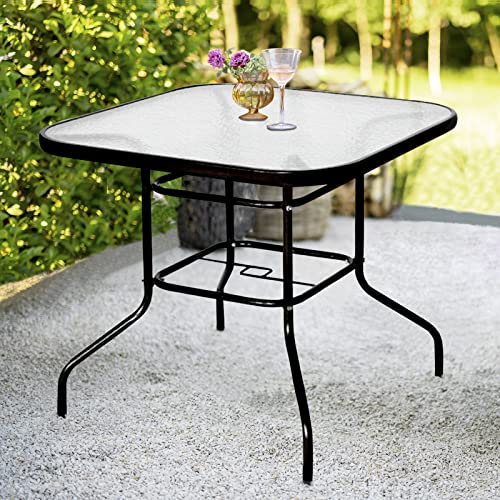
Square Outdoor Table: The Complete Buying & Design Guide
Everything you need to know before choosing a square patio table — sizing, materials, umbrella compatibility, placement, and long-term care for a table that fits your space and your lifestyle.
Start With the Key FactorsWhy a square outdoor table deserves serious consideration: The square footprint is one of the most space-efficient shapes in outdoor furniture. Unlike long rectangular tables that force awkward walkways, a square table concentrates seating around a central point — making conversation easier, shade more effective, and small patios feel intentional rather than cramped. This guide walks you through every decision point so you can buy with confidence.
Why Choose a Square Outdoor Table?
A square outdoor table solves a specific set of problems that rectangular and round tables handle less gracefully. Before you commit to a shape, it helps to understand exactly what the square form brings to an outdoor space.
- Conversation-friendly geometry. Everyone seated at a square table is roughly equidistant from the center, so no one feels relegated to the "end" of the table. This matters most for four-person gatherings where eye contact and shared platters drive the experience.
- Efficient use of corners. Patios, decks, and balconies often have unused corner zones. A square table slots naturally into those areas, whereas a long rectangle can leave dead space on either side.
- Centered umbrella shade. A single umbrella positioned through the center of a square table casts shade evenly across all four seats. Rectangular tables require either multiple umbrellas or accept uneven coverage.
- Symmetrical visual balance. Square tables photograph well and create a calm, ordered look on a patio. They pair naturally with four matching chairs and feel deliberate rather than improvised.
- Modular seating flexibility. You can seat four comfortably, squeeze in six with narrower chairs, or use two sides for dining and two for display or serving. The shape adapts to how you actually live outdoors.
If your priority is hosting large dinner parties with eight or more guests, a rectangular or oval table will usually serve you better. But for daily family meals, weekend brunches, and intimate entertaining, the square form is hard to beat. For a deeper look at how square tables compare to other configurations in tight layouts, see our guide on space-saving outdoor furniture.
Square Outdoor Table Sizing: Match the Table to Your Space and Guests
The most common buying mistake is choosing a table that seats the right number of people but crowds the surrounding walkway. Outdoor tables need breathing room — typically 36 inches of clearance on all sides for chairs to pull out and for people to walk behind seated guests.
Seating Capacity by Table Size
| Table Size (per side) | Comfortable Seating | Best For | Tier Consideration |
|---|---|---|---|
| 28–32 inches | 2–3 people | Balconies, bistro corners, coffee-style setups | Entry-level and mid-range options are plentiful here |
| 36–40 inches | 4 people | Standard family patio dining, small decks | The most common size across mid-range and premium tiers |
| 42–48 inches | 4 comfortably, 6 with slim chairs | Primary outdoor dining table for households of four | Premium and high-end tier tables dominate this range |
| 54–60 inches | 6–8 people | Large patios, entertaining-focused backyards | High-end and commercial-grade constructions |
A useful rule of thumb: allow about 24 inches of table edge per seated diner. That gives each person enough room for a plate, glass, and elbow space without crowding a neighbor. If you regularly host six at a square table, look at the 48-inch-and-up range and pair it with stackable outdoor dining chairs that tuck in tightly when not in use.
Measuring Your Patio Before You Buy
- Measure the available dining zone, not the entire patio. Subtract 36 inches from each dimension to account for chair pull-out and walkway clearance.
- Mark the table footprint on the ground with painter's tape. Walk around it. Sit at each side. This five-minute exercise prevents the most common return scenario.
- Check door swing and grill clearance. A square table in the path of a patio door becomes a daily irritation regardless of how well it looks.
- Factor in shade. If you plan to use an umbrella, confirm the table has a hole and that the umbrella base will sit clear of chair legs.
Umbrella Compatibility: The Detail Buyers Overlook
For most outdoor tables, the umbrella hole is not an optional nicety — it is the difference between a table you use in July and one you avoid. A center-mounted umbrella through a square table provides even shade across all four seats, which is precisely what a freestanding offset umbrella struggles to do in a tight patio layout.
When evaluating a square table with an umbrella hole, check three things:
- Hole diameter. Most umbrellas use a 1.5-inch or 2-inch pole. Confirm the table hole matches, or that the table includes an adapter ring.
- Base clearance. The umbrella base sits under the table, so the table's leg configuration must leave room for a weighted base. Four-leg tables with a wide apron can conflict with larger bases.
- Wind exposure. On an open deck, a center-mounted umbrella amplifies wind leverage on the table. A heavier table — steel, dense hardwood, or stone-topped — is the safer pairing. Our guide to square outdoor dining tables with umbrella holes covers specific configurations in more detail.
If your square table will live under a pergola or covered porch, the umbrella hole becomes less critical. But for open-sky patios, treat it as a baseline requirement. You can also explore square glass patio tables with umbrella holes if you want a lighter visual footprint, or square metal patio tables with umbrella holes for maximum durability.
Material Comparison: What Your Square Table Is Made Of
The material determines how the table ages, how much maintenance it demands, and how it feels under your hands. There is no universally best material — only the best material for your climate and your willingness to care for it.
Powder-Coated Aluminum
The workhorse of mid-range and premium outdoor tables. Light enough to move, rust-proof, and available in a wide range of finishes. Entry-level aluminum can feel thin; mid-tier and high-end aluminum uses thicker gauge and better coatings. Best for humid and coastal climates.
Stainless Steel
Heavy, stable, and extremely durable. Marine-grade stainless steel is the benchmark for coastal environments. Tables in this category sit in the premium to commercial-grade tier. Downsides: weight makes repositioning a two-person job, and the surface can get hot in direct sun.
Teak and Dense Hardwoods
Teak weathers to a silver-gray patina and resists rot naturally. It is a long-term investment that improves with age if you accept the natural finish, or stays honey-toned if you oil it annually. High-end tier teak tables can last decades. Pair with teak outdoor furniture for a cohesive look.
Glass Tops
Tempered glass over a metal or wood frame gives a light, open visual feel — ideal on small patios where a solid top would feel heavy. Glass is easy to wipe clean but shows water spots and requires careful handling. Often found in mid-range to premium tiers.
Resin and Plastic
The entry-level tier standard. Lightweight, weather-proof, and easy to clean. Modern resin tables are far more refined than older plastic designs, often mimicking wood grain or stone texture. Best for renters and seasonal setups where portability matters.
Stone and Concrete Composite
Top-tier visual weight and permanence. Stone-topped square tables anchor a patio and resist wind uplift, but they are essentially immovable and should be placed with intention. Ideal for dedicated dining zones where the table stays put year-round.
For a broader comparison of frame materials, our metal vs. aluminum furniture guide and wood furniture care guide go deeper. If sustainability influences your decision, the sustainable outdoor materials guide covers recycled and responsibly sourced options.
Key Buying Factors Beyond the Tabletop
The tabletop gets the attention, but the frame, legs, and assembly details determine whether you will still enjoy the table in five years.
Frame and Leg Construction
- Weld quality. On metal tables, inspect the joints where legs meet the apron. Clean, continuous welds signal durable construction; tack welds and visible gaps are a warning sign.
- Leg splay and bracing. Splayed legs improve stability but can reduce foot room. Cross-bracing adds rigidity on lighter tables. Sit at the table before buying if possible — foot clearance matters more than most buyers expect.
- Weight distribution. A heavy top on a light base wobbles. The best square tables balance mass between top and frame so the table feels planted without being immovable.
Finish and Weather Resistance
Look for powder-coated finishes on metal, UV-stabilized resin on plastic, and properly kiln-dried lumber on wood. Rust-proof finishes and weather-resistant coatings are worth prioritizing over cosmetic details — a beautiful table with a failing finish becomes a maintenance project. Our weatherproofing guide explains how to extend the life of any outdoor table.
Assembly and Delivery
Most square outdoor tables ship flat-packed. Check whether the listing notes the number of people required for assembly and whether tools are included. Heavy stone-topped tables typically ship with white-glove delivery — confirm this before ordering, because moving a 150-pound table up a flight of stairs is not a weekend DIY task. See our delivery and assembly guide for what to expect.
Storage and Seasonal Care
If you live in a climate with harsh winters, plan storage before you buy. A square table cover sized correctly prevents water pooling and freeze damage. Our square patio table cover guide covers fit and material choices, and the winter storage guide walks through end-of-season prep.
Placement and Design: Making the Square Table Work in Your Space
A square table changes the visual rhythm of a patio. Because it is symmetrical, the eye expects balance around it — matching chairs, a centered umbrella, and a defined ground plane. A few placement principles make the difference between "a table on a patio" and "a designed dining zone."
- Anchor the table with a rug. An outdoor rug defines the dining zone and visually separates it from lounge areas. A square table pairs naturally with a square or rectangular rug sized 24 inches larger than the table on each side. See our outdoor rug guide.
- Center the umbrella over the table, not the patio. Shade should follow the seating, not the architecture. If the table sits off-center on the patio, the umbrella should still center on the table.
- Leave the corners breathing. A square table placed tight into a corner loses one seating side. Pull it out at least 12 inches from walls or railings so all four sides remain usable.
- Pair with the right chairs. Four matching chairs reinforce the symmetry. If you want variety, use two armchairs and two armless chairs on opposite sides — the square form supports this kind of balanced asymmetry. Consider stackable outdoor dining chairs if storage space is tight.
- Layer lighting above. String lights or a pendant over the table center extend the usable hours dramatically. Our outdoor lighting guide covers options that do not require wiring.
Design Idea: The Four-Quadrant Patio
On a mid-sized patio, divide the space into four quadrants centered on a square table. One quadrant holds the grill or prep station, one holds a lounge chair or two, one holds planters, and the table anchors the center. The square form makes this zoning feel natural because the table reads as the hub rather than an obstacle. If you want to push the entertaining angle further, a square fire pit with a hidden propane tank can echo the table's geometry in an adjacent lounge zone.
Understanding Quality Tiers Without the Guesswork
Square outdoor tables span an enormous range of construction quality. Rather than trying to compare listings on specs alone, it helps to understand what each tier typically delivers. This is a relative positioning guide, not a shopping list.
| Tier | Typical Construction | Expected Service Life | Best For |
|---|---|---|---|
| Entry-level / Starter tier | Thin-gauge aluminum or resin, basic powder coating, simple folding or bolt-together frames | A few seasons with care | Renters, seasonal setups, first patios |
| Mid-range / Balanced tier | Thicker aluminum, better welds, UV-stabilized resin, mid-grade hardwood, glass tops on metal frames | Five to ten years | Primary family dining tables, covered patios |
| Premium / High-end tier | Marine-grade stainless steel, dense teak, stone composites, reinforced frames, refined finishes | Ten to twenty years | Dedicated outdoor dining rooms, coastal homes |
| Luxury / Commercial-grade | Architectural-grade materials, custom fabrication, oversized footprints, designer collaborations | Twenty years and beyond | Hospitality spaces, statement patios, long-term builds |
The jump from entry-level to mid-range usually delivers the biggest improvement in day-to-day experience — smoother edges, more stable frames, better finish durability. The jump from mid-range to premium buys longevity and refinement rather than a fundamentally different experience. For a fuller comparison of where to invest and where to hold back, our splurge vs. save outdoor guide is a useful companion.
Keeping Your Square Outdoor Table in Shape
Outdoor tables age well when they are maintained on a simple seasonal rhythm. The routine varies by material, but the principles are consistent.
- Weekly: Wipe the tabletop with a damp cloth and mild soap. Remove standing water after rain — especially on glass tops, where minerals leave spots.
- Monthly: Check fasteners and tighten any bolts that have worked loose. Inspect welds and joints for early signs of rust or separation.
- Seasonally: Deep-clean according to material. Aluminum benefits from a non-abrasive cleaner; teak can be scrubbed with a soft brush and reapplied with oil if you want to maintain color; resin tables tolerate a hose-down and mild detergent.
- Before winter: Cover or store the table. A correctly fitted cover prevents pooling and freeze damage. Our outdoor furniture cleaner guide and patio furniture cover guide cover the specifics.
If rust does appear on a metal table, address it early. Our rust removal guide explains how to treat surface rust before it spreads into the frame.
Frequently Asked Questions
What size square outdoor table seats four people comfortably?
A square table measuring around 36 to 42 inches per side comfortably seats four adults. This allows roughly 24 inches of dining width per person plus room for place settings and serving dishes.
Do square outdoor tables work well on small patios?
Yes. A square footprint is highly space-efficient because it uses corners that rectangular tables often waste. A compact square table is one of the smartest choices for balconies, courtyards, and compact decks.
Should I choose an umbrella hole in my square patio table?
An umbrella hole is strongly recommended if your table sits in direct sun. It lets you center shade directly over the dining area, which is far more effective than a freestanding offset umbrella in tight spaces.
Which material lasts longest for a square outdoor table?
Powder-coated aluminum and high-grade stainless steel offer the longest service life with minimal upkeep. Teak and other dense hardwoods also last for decades when given basic seasonal care.
Can I use a square outdoor table indoors?
Yes, many square outdoor tables work well in sunrooms and covered porches. Just confirm the finish is suitable for indoor use and that the table height matches your seating. Our sun room furniture guide covers hybrid indoor-outdoor setups.
Still deciding between shapes and materials? The outdoor buying guides hub collects the checklists and comparison frameworks that help you narrow down the right table for your space, and the measurement guide walks through the sizing math step by step.