Square Patio Table Cover with Umbrella Hole: The Complete Buying Guide
Protect your square outdoor table without removing the umbrella. This guide explains how umbrella-hole covers work, which materials hold up best, how to measure correctly, and what to check before you choose a cover for your patio setup.
Jump to Buying ChecklistWhy this guide matters: A square patio table is a significant part of your outdoor setup, and its cover is the first line of defense against rain, UV exposure, dirt, and seasonal debris. If you already own a square table with a central umbrella hole, a standard rectangular or round cover will not fit properly. This guide focuses specifically on square covers with an umbrella hole, so you can make a confident, well-informed decision.
What Is a Square Patio Table Cover with Umbrella Hole?
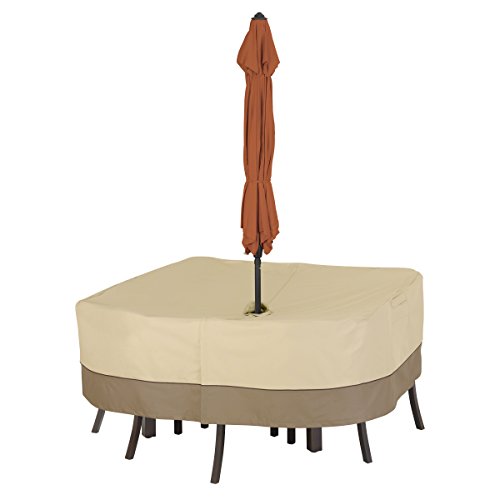
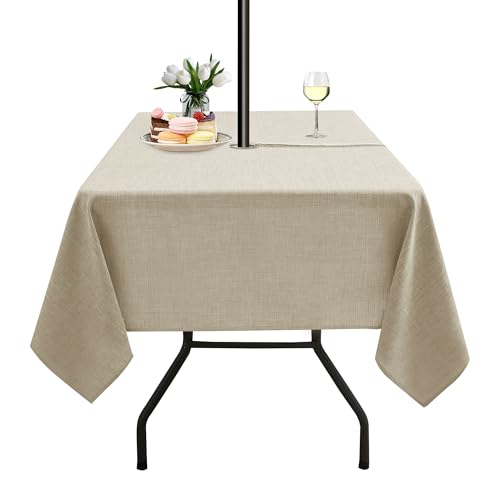
A square patio table cover with an umbrella hole is a fitted protective cover made for square outdoor tables that have a central opening for a patio umbrella pole. Unlike a standard cover, it includes a reinforced aperture—often with a collar, flap, or zippered slit—that wraps around the pole while the umbrella stays in place.
This design solves a practical problem: many homeowners prefer to leave their umbrella assembled during the season. Removing and reinstalling an umbrella every time the weather changes is inconvenient, especially for heavy or crank-lift models. An umbrella-hole cover lets you protect the tabletop and the pole opening at the same time.
These covers are typically used on square outdoor dining tables with umbrella holes, but they also fit many square glass patio tables and square metal patio tables. If your table is larger and seats eight, check whether a cover is sized for a square outdoor dining table for eight with umbrella hole.
Who Should Consider This Type of Cover
An umbrella-hole cover is a good fit for several common situations:
- Year-round umbrella users: You keep the umbrella mounted throughout the season and want the table protected without disassembly.
- Rainy or dusty climates: You need a quick way to shield the tabletop between uses.
- Glass-topped tables: Glass surfaces can collect water spots and debris; a fitted cover reduces cleaning frequency.
- Seasonal rentals or vacation homes: A cover protects the table during long absences without requiring the umbrella to be stored separately.
- Homes with limited storage: You do not want to store a detached umbrella and a separate pole cap.
If you remove your umbrella after each use, a standard square cover without an umbrella hole may be simpler. But if the umbrella stays mounted, an umbrella-hole cover is the more practical choice.
Key Features to Compare Before Buying
Material and Coating
Solution-dyed polyester, heavy-duty Oxford fabric, and vinyl-backed materials are common. Look for UV-resistant coatings and waterproof backing.
Umbrella Hole Design
Reinforced collars, zippered slits, and drawstring closures prevent water from seeping through the pole opening.
Fit and Dimensions
Square covers must match tabletop length, width, and drop height. A tailored fit reduces wind lift and water pooling.
Closure System
Elastic hems, buckles, and drawstrings keep the cover anchored during windy conditions.
Ventilation
Mesh vents or breathable panels reduce condensation and prevent mold buildup underneath the cover.
Seam Construction
Sealed or double-stitched seams improve water resistance and extend the cover's service life.
Material Guide: What Holds Up Best Outdoors
The material determines how well the cover resists rain, sun, and temperature swings. Here is how the main categories compare:
- Entry-level polyester: Lightweight and easy to handle. Suitable for short-term protection and mild climates, but may degrade faster under intense UV exposure.
- Mid-range solution-dyed polyester: Color is dyed into the fibers, which improves fade resistance. A solid choice for everyday seasonal use.
- Premium Oxford fabric with waterproof backing: Heavier hand-feel, better seam integrity, and stronger water resistance. Often includes reinforced umbrella collars.
- Top-tier heavy-duty covers: Feature high-grade coatings, sealed seams, breathable vent panels, and robust closure systems. Built for year-round exposure in demanding climates.
Across all tiers, prioritize UV resistance and seam quality. A cover with a strong fabric but weak seams will still let water through. If you store cushions nearby, pair the cover with a dedicated cushion storage solution so moisture does not migrate between items.
How to Measure Your Square Table for a Proper Fit
Accurate measurements are the difference between a cover that stays put and one that flaps or pools water. Follow these steps:
- Measure the tabletop: Record the length and width across the flat surface, edge to edge.
- Measure the height: Measure from the floor to the top edge of the table.
- Account for chairs: If you plan to cover the table with chairs tucked underneath, add a few inches to the drop height. If chairs remain outside, a shorter drop may be sufficient.
- Check the umbrella pole diameter: Confirm the pole size so the cover's collar or slit fits around it without excessive gaps.
- Compare with the cover's listed dimensions: Covers are usually sized by tabletop dimensions plus drop length. Choose the closest match rather than a significantly larger size.
Measurement Tip
When in doubt between two sizes, choose the one that matches your tabletop dimensions more closely. An oversized cover can collect water and catch wind, while an undersized cover will not fully protect the edges.
Umbrella Hole Designs: Collar, Slit, or Zip
The umbrella opening is the defining feature of this cover type, and the design affects convenience and weather protection:
- Reinforced collar: A raised ring around the pole opening. It reduces water ingress and stabilizes the cover around the pole. Common on mid-range and premium covers.
- Zippered slit: Allows the cover to be installed around an already-mounted pole without lifting the umbrella. Convenient but requires a flap or seal to maintain water resistance.
- Drawstring or hook-and-loop closure: Tightens the opening around the pole. Simple and effective when properly adjusted.
If your umbrella stays mounted all season, a zippered slit with a protective flap is the most convenient. If you prioritize weather protection, a reinforced collar with a drawstring is a strong choice.
Weather Protection: Water Resistance vs. Waterproof
These terms are often used interchangeably, but they are not the same:
- Water-resistant: Slows water absorption and sheds light rain. Suitable for covered patios and short exposure.
- Waterproof: Designed to prevent water penetration through the fabric, often with a coated backing and sealed seams. Better for open patios and persistent rain.
Even waterproof covers benefit from ventilation. Without breathable panels, condensation can form underneath, creating a damp environment that affects table finishes and promotes mildew. Look for covers that combine waterproof fabric with mesh vents or breathable side panels.
Comparison Table: Cover Tiers at a Glance
| Tier | Typical Materials | Umbrella Hole Design | Best For |
|---|---|---|---|
| Essential tier | Entry-level polyester, light coating | Simple slit or basic collar | Short-term protection, mild climates, covered patios |
| Balanced tier | Solution-dyed polyester, water-resistant backing | Reinforced collar with drawstring | Everyday seasonal use, mixed weather |
| High-end tier | Heavy-duty Oxford fabric, sealed seams | Zippered slit with protective flap | Open patios, windy locations, frequent rain |
| Top-tier / professional-grade | High-grade coated fabric, breathable vents, reinforced stress points | Engineered collar system with multiple closure points | Year-round exposure, demanding climates, long-term investment |
Closure Systems and Wind Resistance
A cover is only as good as its ability to stay in place. Wind lift is one of the most common reasons covers fail prematurely. Look for:
- Elastic hem: Provides a snug fit around the table's lower edge.
- Drawstring with cord lock: Allows tension adjustment for a secure fit.
- Buckle straps or click-close straps: Anchor the cover to table legs and prevent lifting.
- Weighted corners: Less common, but helpful in exposed areas.
If your patio is windy, prioritize covers with at least two closure points. A cover that flaps in the wind will wear at the seams and may eventually tear.
Maintenance and Storage Tips
Proper care extends the life of any cover:
- Clean with mild soap and water; avoid abrasive cleaners that strip protective coatings.
- Allow the cover to dry fully before folding and storing.
- Store in a dry, ventilated area during extended periods of non-use.
- Inspect seams and the umbrella collar periodically for wear.
- Remove standing water from the cover after heavy rain to prevent sagging and seam stress.
If your table sits under trees, brush off leaves and debris regularly. Debris traps moisture and can stain the fabric.
Complementary Accessories for Your Patio Setup
A table cover works best as part of a complete protection strategy. Consider these related items:
- Square patio table cover with umbrella hole — the core item discussed in this guide.
- Square outdoor table — confirm your table style and dimensions before ordering a cover.
- Square outdoor dining table with umbrella hole — ideal pairing for this cover type.
- Table umbrella — the umbrella that stays mounted under the cover.
- Standing umbrella base — stabilizes the umbrella during windy conditions.
- Storage bins for outdoor furniture cushions — keeps cushions dry alongside the covered table.
- Storage containers for patio furniture cushions — another option for cushion protection.
- Sofa replacement cushions for outdoor furniture — refresh seating while protecting the table.
- Spring decor — seasonal styling ideas for your refreshed patio.
Final Buying Checklist
Before you commit to a cover, run through this checklist:
- Confirm table shape and dimensions: Length, width, height, and umbrella pole diameter.
- Verify the umbrella hole design: Collar, slit, or zip—choose based on how often you remove the umbrella.
- Check the material tier: Match the cover's weather resistance to your climate and exposure.
- Look for sealed seams and ventilation: These details affect longevity and moisture control.
- Confirm closure points: At least one elastic hem or drawstring; two or more for windy patios.
- Read the care instructions: Ensure the cover is easy to clean and store.
- Compare against your table style: Glass, metal, and wood tables may benefit from different cover features.
With these factors in mind, you can choose a square patio table cover with umbrella hole that fits properly, protects your table, and lasts through the seasons.
Frequently Asked Questions
What is a square patio table cover with umbrella hole?
It is a fitted protective cover designed for square outdoor tables that have a central umbrella hole. The cover includes a reinforced opening so your umbrella pole can stay in place while the tabletop is protected from rain, dust, and sun damage.
Do I need to remove my umbrella before covering the table?
No. A cover with an umbrella hole is specifically made to accommodate the pole. You can keep the umbrella in place and simply slip the cover over the table and around the pole. Some covers also include a collar or flap that seals the opening.
Which material is best for a patio table cover?
Solution-dyed polyester and heavy-duty Oxford fabric with a waterproof backing are common choices. Premium and top-tier covers often use reinforced seams, UV-resistant coatings, and breathable vents to reduce condensation. The best material depends on your climate and how much sun exposure the table receives.
How do I measure for a square patio table cover?
Measure the tabletop length and width, then measure the height from the floor to the tabletop edge. Add a small allowance for chair backs if you plan to cover the table with chairs tucked underneath. Always check the cover's stated dimensions against your measurements.
Are covers with umbrella holes waterproof?
Many are water-resistant rather than fully waterproof. Look for covers described as waterproof with sealed seams and a fitted umbrella collar. Breathable vents help prevent moisture buildup underneath, which protects the table finish.