Wicker Table Buying Guide: Styles, Materials & Design Tips
From woven coffee tables to glass-topped side tables, discover how to choose a wicker table that balances durability, comfort, and timeless outdoor style.
START EXPLORINGWhy a wicker table? Wicker tables bring warmth and texture to outdoor spaces that solid materials simply cannot match. Whether you are furnishing a covered porch, a sunroom, or an open patio, the right wicker piece anchors your seating area while staying lightweight and easy to rearrange. This guide walks you through material choices, table types, and practical selection criteria so you can buy with confidence.
What Exactly Is a Wicker Table?
The term “wicker” refers to the weaving technique, not a single material. Artisans weave flexible strands over a rigid frame to create the characteristic textured surface. In outdoor furniture, that weave is usually applied to one of three material families: natural rattan and cane, synthetic resin (often called all-weather wicker), or paper-based composites. Each family behaves differently under sun, rain, and daily use, so understanding the distinction is the single most important step before you buy.
A wicker table typically consists of three components: the woven shell, the structural frame (aluminum, steel, or hardwood), and the tabletop (glass, wood, or a woven surface). The quality of all three determines how the piece performs over time. A beautiful weave over a flimsy frame will sag; a sturdy frame with a poorly finished weave will fray. Look for tight, uniform weaving with no loose ends, and confirm the frame material before making a decision. If you are building a coordinated outdoor room, pair your table with matching seating from our wicker patio furniture collection or explore the broader wicker patio set options for a cohesive look.
Wicker Materials Compared: Natural vs. Synthetic vs. Composite
The material you choose shapes everything: maintenance routine, weather tolerance, lifespan, and how the piece feels in your space. Here is how the three main families stack up.
Rattan, Cane & Willow
Genuine plant-based weave with unmatched organic character. Best suited to covered porches and sunrooms where rain and direct sun are limited. Requires periodic sealing and is sensitive to prolonged moisture. Ideal for anyone who values authentic texture and a natural aesthetic.
Synthetic Resin Wicker
High-density polyethylene strands woven over aluminum or steel frames. Resists UV fading, moisture, and temperature swings. The most common choice for exposed patios and poolside areas. Modern extrusion techniques produce convincing natural textures with far less upkeep.
Paper & Composite Weave
A middle ground that mimics natural rattan at a lighter weight. Often found in sunroom and indoor-outdoor pieces. Less weather-resistant than resin, so it performs best in sheltered spaces. A solid choice for seasonal rooms where portability matters.
| Material | Weather Tolerance | Maintenance Level | Best For |
|---|---|---|---|
| Natural rattan / cane | Low to moderate | Moderate to high | Covered porches, sunrooms, screened patios |
| Synthetic resin wicker | High | Low | Open patios, poolside, coastal decks |
| Paper / composite weave | Moderate | Low to moderate | Sunrooms, seasonal rooms, light-use areas |
For exposed outdoor settings, synthetic resin is the practical standout. It handles rain, UV exposure, and humidity without the seasonal care that natural rattan demands. That said, natural rattan remains the premium choice for protected spaces where its authentic grain and warmth justify the extra attention. If you are also shopping for companion seating, our guide to wicker porch chairs covers how to match weave and frame finishes across a set.
Types of Wicker Tables by Function and Shape
Wicker tables come in a range of footprints and configurations. Matching the table type to your seating layout prevents the two most common mistakes: a table that crowds the conversation area or one that is too small to be useful.
Coffee Tables
The centerpiece of a lounge arrangement. A wicker round coffee table softens a square seating footprint and improves flow around tight corners, while rectangular versions suit long sofas and sectionals. Look for a glass or solid top if you plan to set down drinks and trays daily. Glass tops are easiest to wipe clean and resist staining, but they show smudges; solid woven tops hide wear but can collect debris in the weave.
Side and End Tables
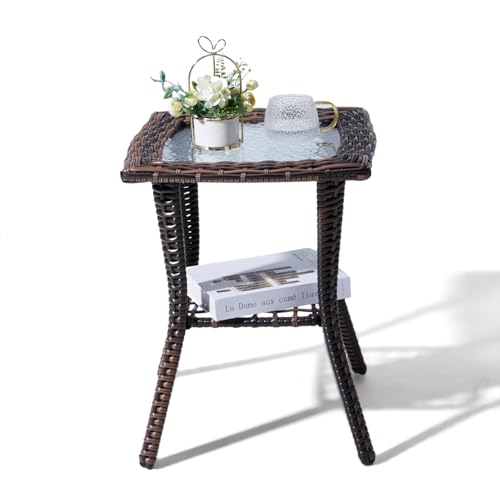
Side tables do the quiet work of holding a drink, a book, or a lantern within arm’s reach. A wicker side table in a compact footprint fits neatly between lounge chairs without blocking movement. Choose a height within a few inches of your chair armrest for comfortable reach. In tighter arrangements, consider a wicker storage bench that doubles as seating and concealed storage for cushions and throws.
Dining and Glass-Top Tables
For al fresco meals, a wicker dining table needs a rigid top and a reinforced frame. Glass-topped versions are popular because they are easy to clean and visually lighten the space. A wicker table with glass top and chairs delivers a complete dining solution, while a standalone glass-top dining table lets you pair the base with chairs of your choosing. Confirm that the glass is tempered and that the frame is rated for the table’s span—wide glass tops on soft frames can flex over time.
Sunroom and Indoor-Outdoor Tables
Wicker tables transition beautifully into enclosed spaces. A sunroom arrangement benefits from lighter composite or natural weaves that would struggle outdoors but shine in a climate-controlled room. Explore our wicker sunroom furniture guide if your table will live primarily indoors with occasional outdoor use.
What to Look For: A Practical Buying Checklist
Beyond aesthetics, these are the details that separate a table that lasts from one that disappoints within a season or two.
- Frame material and gauge: Aluminum resists rust and stays light; powder-coated steel is heavier and sturdier; hardwood frames suit traditional styles but need sealing. Thicker gauge and welded joints signal durable construction. Avoid frames that flex or creak when you press on a corner.
- Weave density and finish: Tight, uniform strands with no visible gaps or loose tails indicate careful manufacturing. Run your hand across the surface—it should feel smooth, with no sharp or fraying ends.
- Top material: Tempered glass for easy cleaning and a bright look; solid wood or resin for a warmer, lower-maintenance surface. Check that glass tops are secured with suction cups or clips.
- Weight and portability: Synthetic wicker on aluminum is the easiest to rearrange. Natural rattan on hardwood is heavier and best treated as a semi-permanent placement.
- Finish and colorfastness: For synthetic weaves, confirm UV stabilization to prevent fading. For natural weaves, check whether the piece is pre-sealed.
- Feet and floor protection: Rubber or plastic glides protect decking and tile. Replaceable feet extend the usable life of the table.
- Assembly and hardware: Stainless or coated hardware resists corrosion. Pre-assembled or tool-light designs reduce setup frustration.
A useful rule of thumb: entry-level wicker tables often use thinner frames and looser weaves, while mid-range models typically offer tighter weaving and better UV protection. Premium and luxury tiers add heavier frames, hand-finished weaves, and superior top materials. Within any tier, prioritize frame rigidity over decorative detail—it is the part you cannot upgrade later.
Sizing Your Wicker Table for the Space
Proportion matters more than any single dimension. Use these general guidelines to match table size to seating and room.
Coffee tables
Length should be roughly two-thirds the length of the sofa it serves. Keep 14–18 inches of clearance between the table edge and seating for comfortable legroom.
Side tables
Height within a few inches of the chair armrest. A top of 16–20 inches square fits a drink, a small tray, and a book without crowding.
Dining tables
Allow about 24 inches of table width per diner. For a four-person wicker dining set, a round table of roughly 42–48 inches diameter works well in compact spaces.
Balconies and tight patios
Choose round or oval shapes to preserve walkway space. A bistro-height wicker table pairs with two chairs and leaves room to move.
Caring for a Wicker Table
Maintenance needs depend on the material. Synthetic resin wicker generally needs only a rinse with mild soap and water, plus a soft brush to clear debris from the weave. Natural rattan benefits from periodic sealing and should be kept out of standing water; wipe spills promptly and store or cover the piece during off-season months. Glass tops should be cleaned with a non-abrasive cleaner to avoid scratching. For deeper protection advice across materials, see our wood furniture care guide if your table has a hardwood frame, and pair outdoor placements with quality covers during harsh weather.
Design Tips: Making a Wicker Table Work in Your Space
- Mix textures deliberately: Pair wicker with smooth metal or glass to keep the look balanced rather than heavy.
- Anchor with a rug: An outdoor rug defines the conversation zone and keeps wicker legs from sinking into gravel or grass.
- Coordinate weave tones: Honey and natural tones warm up cool-toned patios; grey and charcoal weaves suit modern, minimalist schemes.
- Layer lighting: A small lantern or a set of wind chimes nearby adds sensory interest without competing with the table itself.
- Keep scale in check: A wicker table should never block the primary walking path through your patio.
Frequently Asked Questions
Is wicker furniture suitable for outdoor use?
Synthetic resin wicker is designed for outdoor use and handles sun, rain, and humidity well. Natural rattan and cane are better suited to covered porches and sunrooms, where they are shielded from direct weather.
How can I tell high-quality wicker from lower-quality wicker?
Check the weave density, frame rigidity, and finish. Tight, uniform strands with no loose ends and a frame that does not flex under pressure are the strongest indicators. Stainless or coated hardware is another sign of careful construction.
Does a glass-top wicker table require special care?
Use a non-abrasive glass cleaner and avoid placing hot items directly on the surface. Confirm that the glass is tempered and secured with clips or suction cups to prevent shifting.
Can a wicker table be used indoors?
Yes. Wicker tables are popular in sunrooms, enclosed porches, and even living rooms. Indoor placements are less demanding on weather resistance, so natural and composite weaves become more viable choices.
What size wicker table should I choose for a small balcony?
Favor round or oval tables to preserve walking space. A compact side table or a bistro-height table with two chairs usually fits best and keeps the balcony feeling open.
Ready to complete the arrangement? Browse our full wicker patio furniture collection to coordinate seating, tables, and storage in a single weave family.