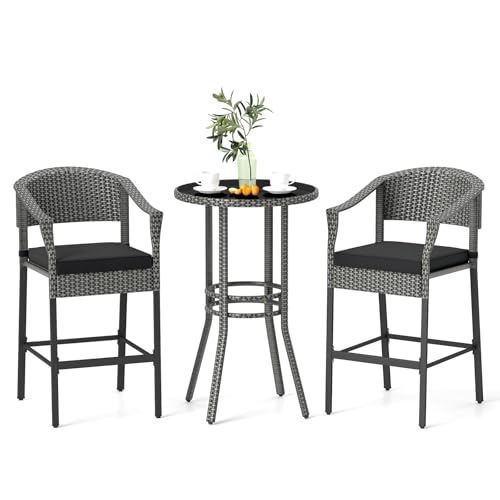
Wicker Table with Glass Top and Chairs: The Complete Buying Guide
Everything you need to choose a wicker dining set with a glass top — frame construction, weave types, glass safety, sizing, placement, and long-term care.
Why this guide matters: A wicker table with a glass top and chairs is one of the most practical outdoor dining choices you can make. The glass surface wipes clean after every meal, the woven base hides scuffs and weathering, and the chairs usually stack or nest for storage. But not all sets are built the same way. Below we break down exactly what separates a set that lasts a decade from one that loosens within a season — so you can evaluate any listing with confidence.
A wicker table with glass top and chairs combines two very different materials into one piece of furniture: a rigid glass panel for the eating surface and a woven shell wrapped around a structural frame. Each layer does a separate job, and each has its own failure points. Understanding those layers is the fastest way to judge a set you are considering.
Anatomy of a Wicker Glass-Top Dining Set
Before comparing models, it helps to know what you are actually looking at. Every outdoor wicker dining set is built in three layers, and the quality of each layer is independent of the others.
1. The structural frame
The frame is the skeleton underneath the weave, and it determines how stable the table and chairs feel after years of use. The most common options are:
- Powder-coated aluminum — the standard for mid-range and premium outdoor wicker. It resists rust, stays relatively light, and holds its shape. Powder coating adds a durable, chip-resistant finish.
- Steel — heavier and very strong, but it must have a rust-proof finish. A well-coated steel frame feels solid but adds noticeable weight to the set.
- Resin or plastic — found mainly in entry-level sets. Lighter and more flexible, but it can sag or loosen over time under constant outdoor exposure.
If you want a broader overview of how these frames are used across the category, our wicker patio furniture guide covers the material landscape in more detail.
2. The wicker weave
The visible weave is almost always a synthetic resin strand designed to imitate natural rattan. Quality varies in thickness, UV stabilization, and how tightly the strands are woven. Tight, uniform weaving resists sagging and hides the frame; loose weaving tends to stretch and trap debris. For a deeper comparison of woven constructions, see our notes on woven chairs and how weave density affects comfort.
3. The glass top
The glass panel is the working surface of the table, and it should always be tempered. Tempered glass is heat-treated so it resists impact far better than standard glass and, if it does break, fractures into small blunt pieces instead of sharp shards. Look for a panel that sits flush on rubber bumpers or suction pads, with a slight gap to allow airflow and drainage. A glass top that rests directly on the frame with no cushioning is more likely to chip or crack.
Quick check: On a good set, the glass should not rock when you press a corner, and you should be able to see or feel small rubber spacers underneath. If the glass moves or sits metal-on-glass, treat it as a warning sign.
Table Shapes, Sizes, and Seating Capacity
The shape of the glass top drives both the look of the set and how many people can sit comfortably. Use the guide below as a starting point, then measure your actual space before committing.
| Table Shape | Typical Seating | Best For | Planning Note |
|---|---|---|---|
| Round (48 in) | 4 chairs | Compact patios, balconies, conversation-friendly meals | No corners to navigate; easiest shape for tight spaces |
| Square (48 in) | 4 chairs | Symmetrical layouts, small decks | Fits neatly against railings and walls |
| Round (60 in) | 6 chairs | Family dining, covered porches | Allows generous place settings and a centerpiece |
| Rectangular (72 in) | 6–8 chairs | Long patios, entertaining, buffet-style serving | Best for linear spaces; check chair pull-out clearance |
| Oval | 6 chairs | Soft, traditional layouts | Rounder edges suit winding garden paths |
A practical rule is to allow roughly 24 inches of table edge per diner and at least 36 inches between the table edge and any wall or railing so chairs can slide out without scraping. If your space is tight, a round four-seat set usually works better than a rectangular one of the same capacity.
Chair Options That Pair Well with a Glass-Top Wicker Table
Most sets ship as a matched package, but if you are building your own combination, the chairs you choose will affect both comfort and storage.
- Armchairs with woven backs — the classic pairing. They look cohesive with the table and offer more support, but take up more room around the table.
- Armless side chairs — easier to tuck in and stack, which helps on smaller patios. Less supportive for long meals.
- Swivel or rocking chairs — comfortable but heavier and bulkier; better suited to a separate seating zone. If that appeals, look at dedicated wicker rocking chairs rather than forcing them around a dining table.
Cushions matter as much as the chair frame. Look for quick-dry foam and solution-dyed acrylic or polyester covers that resist fading and mildew. Removable, zippered covers make seasonal cleaning far easier.
Stacking and storage
If you plan to store the set for winter, check whether the chairs stack and whether the table has a folding or removable top. Stackable armless chairs are the most storage-friendly option; full armchairs usually do not stack well.
Materials and Durability: What to Evaluate Before You Buy
Because you cannot inspect a set in person when shopping online, use the specifications and descriptions as your checklist. These are the signals that separate tiers of quality.
Durability checklist
- Frame material is stated explicitly — "powder-coated aluminum" is a stronger signal than a vague "metal frame."
- Glass is described as tempered — not just "glass top."
- UV-stabilized resin weave — resists fading and brittleness in strong sun.
- Rust-proof or rust-resistant finish on any metal hardware, bolts, and feet.
- Rubber or plastic feet — protect both the frame and your patio surface, and reduce wobble.
- Weight and assembly notes — heavier sets tend to feel more solid; clear assembly instructions suggest better engineering.
- Warranty length — a longer structural warranty usually reflects confidence in the frame.
How the tiers differ
Outdoor wicker dining sets generally fall into three market positions, and the differences show up in the frame, weave density, and glass support:
- Entry-level tier — lighter resin frames, thinner weave, simpler glass support. Fine for covered porches and light use.
- Mid-range tier — powder-coated aluminum frames, tighter weave, tempered glass with proper bumpers. The most common choice for year-round patios.
- Premium / high-end tier — heavier frames, denser hand-finished weave, thicker tempered glass, and better cushions. Built for daily use and exposed locations.
Tip: A mid-range set with a genuinely powder-coated aluminum frame usually outperforms an entry-level set with a heavier-looking but poorly finished frame. Prioritize the frame and glass specification over decorative details.
Glass Top: Safety, Care, and Practical Considerations
Glass is the most misunderstood part of a wicker dining set. It is durable when specified correctly, but it has specific needs.
Safety
- Confirm the panel is tempered; this is the single most important glass specification.
- Check that the glass is supported around its full perimeter, not just at four points.
- Avoid placing hot cookware directly on the glass; use trivets even with tempered panels.
- Keep an eye on children and heavy objects near the table edge — impact at the rim is the most common cause of chips.
Cleaning and maintenance
- Wipe the glass with a non-abrasive cleaner and a soft microfiber cloth.
- Clean the weave with mild soapy water and a soft brush; rinse and dry thoroughly.
- Avoid pressure washers, harsh solvents, and abrasive pads on both glass and weave.
- Check and replace worn rubber bumpers under the glass periodically to prevent rattling.
Weather and storage
In mild climates the set can stay outside year-round, but in freezing or snowy regions it is safer to cover it with a breathable, fitted cover or move it indoors. Water pooling on the glass or trapped in the weave is the main enemy — it causes staining, mildew, and, in cold weather, freeze damage. If you want to keep the set outdoors, look for covers that allow airflow rather than fully sealed plastic.
Where a Wicker Glass-Top Set Works Best
The combination of a wipe-clean glass surface and a woven base suits several outdoor zones especially well:
- Covered patios and porches — the ideal setting; protection from direct rain extends the life of both the weave and the glass.
- Sunrooms and screened enclosures — the indoor-outdoor feel of wicker fits naturally here. See our wicker sunroom furniture ideas for layout inspiration.
- Deck dining areas — a rectangular glass-top table anchors a grilling and dining zone.
- Balconies and small patios — a 48-inch round set seats four without overwhelming the space.
If your space leans more toward lounging than dining, a separate seating arrangement with a wicker round coffee table or a wicker side table can complement the dining set without duplicating it.
Complementary Pieces and Coordinating Your Space
A dining set rarely stands alone. A few well-chosen additions make the space feel finished and improve day-to-day usability:
- Shade — a patio umbrella or a pergola keeps the glass from turning into a heat trap in direct summer sun.
- Storage — a wicker storage bench holds cushions and table linens and doubles as extra seating.
- Ambiance — string lights, a fire pit, or even a set of wind chimes extend the usable hours of the space.
- Matching seating — if you want a fuller arrangement, browse the wider wicker patio set options to keep materials and tones consistent.
For sets that lean toward a more traditional metal-and-glass aesthetic instead of wicker, our guides to wrought iron glass-top dining tables and chairs and wrought iron dining tables with glass tops cover a parallel category with different trade-offs in weight and style.
How to Evaluate a Set Before You Commit
When you are comparing listings, run through these questions in order. They are designed to surface the details that matter most:
- What is the frame material? Powder-coated aluminum is the safest all-round choice for outdoor use.
- Is the glass tempered? If the listing does not say, assume it may not be.
- How is the glass supported? Look for full-perimeter support and rubber bumpers.
- How dense is the weave? Tight, uniform weaving is more durable than loose or open patterns.
- What are the chair dimensions? Confirm the chairs fit your available pull-out clearance.
- What is the warranty? A longer structural warranty signals a more confident manufacturer.
- Does the set include cushions? If yes, check the fabric type and whether covers are removable.
If you are still narrowing down the broader category, our wicker table guide and the wicker porch chairs overview can help you compare table-only and chair-only options before committing to a full set.
Frequently Asked Questions
Is a glass top on a wicker table safe for outdoor use?
Yes, when the glass is tempered. Tempered glass is heat-treated to resist impact and breaks into small, blunt fragments rather than sharp shards. Most mid-range and premium outdoor wicker tables use tempered glass rated for outdoor exposure. Always confirm the glass is tempered and sits on a supported frame with rubber bumpers.
What frame material should I look for under the wicker weave?
Powder-coated aluminum is the most common and reliable frame for outdoor wicker because it resists rust and stays relatively light. Steel frames are heavier and strong but require a rust-proof finish. Resin or plastic frames appear mainly in entry-level sets and are lighter but less rigid over time.
How do I clean a wicker table with a glass top?
Wipe the glass with a non-abrasive cleaner and a soft cloth, and clean the wicker weave with mild soapy water and a soft brush, then rinse and dry thoroughly. Avoid pressure washing, harsh solvents, and abrasive pads, which can damage the weave and the glass edge.
Can a wicker table with glass top and chairs stay outside in winter?
It can stay outside in mild climates, but in freezing or snowy regions it is safer to move the set indoors or cover it with a breathable, fitted cover. Drainage matters: water pooling on the glass or trapped in the weave can cause staining, mildew, or freeze damage.
How many chairs fit around a wicker glass-top table?
A 48-inch round or square table comfortably seats four, a 60-inch round seats six, and a rectangular 72-inch table seats six to eight. Leave about 24 inches of table edge per person and at least 36 inches between the table edge and walls or railings for chair pull-out.
The bottom line: A wicker table with glass top and chairs is a strong, low-fuss choice for outdoor dining when the set is built on a powder-coated aluminum frame, uses a tight UV-stabilized weave, and pairs it with tempered glass that is properly cushioned and supported.
Focus your comparison on those three structural points rather than decorative details, confirm the seating capacity against your measured space, and plan for shade, storage, and seasonal protection. Do that, and the set will serve as the anchor of your patio for many seasons.