Cantilever Patio Umbrella with Lights and Base
Everything you need to know about choosing a lighted offset umbrella that gives you shade by day and ambiance by night — without a center pole in your way.
Jump to Buying GuideWhy a lighted cantilever umbrella deserves your attention: A cantilever patio umbrella with lights and base combines three features that transform how you use your outdoor space — a side-mounted offset design that frees up your seating area, integrated LED or solar lighting for evening enjoyment, and a base that anchors the whole assembly. For homeowners researching this category, the challenge is not finding options but understanding which combination of canopy size, lighting type, base design, and frame material fits a specific patio. This guide walks through each decision point so you can buy with confidence.
What Makes a Cantilever Umbrella with Lights and Base Different?
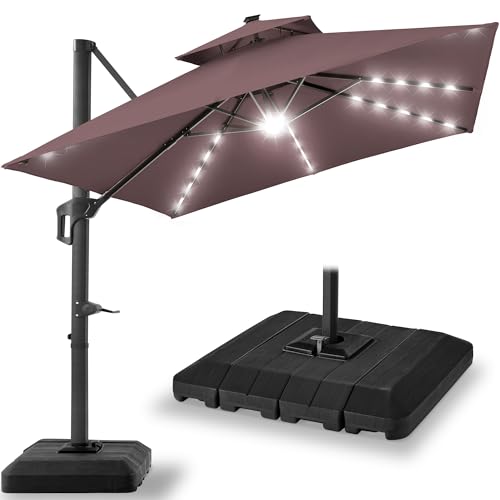
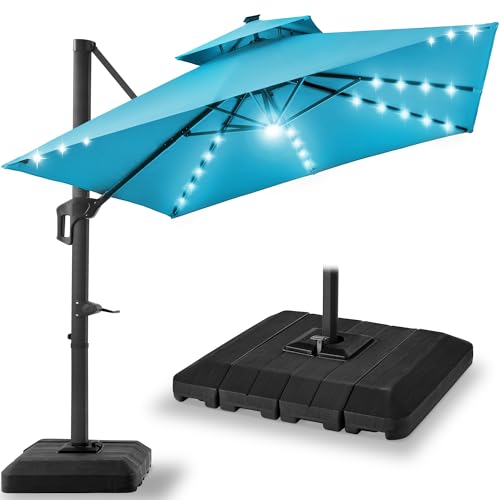
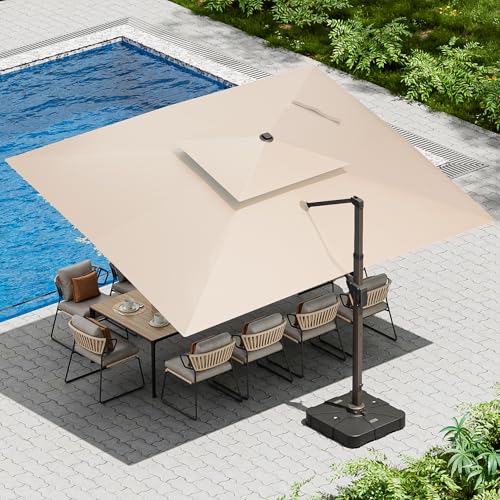
A cantilever patio umbrella with LED lights suspends its canopy from a curved or articulated side arm rather than a pole through the center of the table. The offset design means you can place the umbrella beside your seating group, rotate the canopy overhead, and keep the space beneath completely unobstructed. The integrated lighting — whether LED strips along the ribs or solar-powered panels — provides soft illumination after sunset. The base, meanwhile, is not an accessory but a structural requirement: it counterbalances the cantilevered arm and keeps the umbrella stable.
The combination of lights and base matters because these two features are often sold separately or bundled in ways that affect performance. A cantilever umbrella with solar lights and base is self-contained, while a cantilever patio umbrella with weighted base emphasizes stability for windy locations. Understanding which configuration suits your patio is the first step.
Advantages and Trade-Offs
What You Gain
- Unobstructed seating: No center pole means you can center a table or lounge group directly under the canopy.
- Evening usability: Integrated lights extend patio time well past sunset without additional lighting fixtures.
- Flexible positioning: Many models rotate 360 degrees and tilt, so you can track the sun or shade a specific area.
- All-in-one convenience: A cantilever patio umbrella with lights and base arrives as a complete system — no separate base shopping.
- Design versatility: Offset umbrellas pair well with dining sets, lounge chairs, and fire pit arrangements alike.
What to Consider
- Base footprint: Cantilever bases are larger and heavier than center-pole bases, so plan for the space beside your seating area.
- Wind sensitivity: A cantilevered canopy catches wind differently; closing the umbrella during gusts is essential.
- Assembly effort: Bases often require filling with sand or water, and the frame assembly is more involved than a standard umbrella.
- Lighting limitations: Integrated LEDs provide ambiance rather than task lighting; solar models depend on sun exposure to charge.
Key Features to Evaluate Before You Buy
The table below summarizes the decision points that matter most when comparing models. Use it as a checklist while you research specific products.
| Feature | What to Look For | Why It Matters |
|---|---|---|
| Canopy Size & Shape | Round, square, or rectangular canopies sized to your seating group | Ensures adequate shade coverage without overwhelming the patio |
| Frame Material | Powder-coated aluminum or high-grade steel | Corrosion resistance and long-term durability in outdoor conditions |
| Lighting Type | LED strips, solar panels, or USB-rechargeable lights | Determines brightness, charging requirements, and evening usability |
| Base Design | Weighted base, rolling base, or wheeled base included | Stability against wind and ease of repositioning |
| Rotation & Tilt | 360-degree rotation, crank tilt, or collar tilt | Flexibility to shade different areas throughout the day |
| Fabric Rating | Solution-dyed, UV-resistant, water-repellent canopy fabric | Color retention and resistance to fading and mildew |
| Ventilation | Single or double wind vent at the canopy top | Improves airflow and reduces wind lift |
Canopy Size, Shape, and Frame Construction
Canopy coverage is the first specification to match to your space. Round canopies suit conversation sets and bistro tables, while rectangular models pair naturally with dining tables and lounge arrangements. A canopy that is too large for the space can make a patio feel cramped and increase wind load; one that is too small leaves guests in the sun. Measure your seating area and consider how much shade you need at peak sun.
Frame construction determines how the umbrella handles years of exposure. Powder-coated aluminum is the most common choice for cantilever models because it is lighter than steel and resists rust. High-grade steel frames offer rigidity but require more careful maintenance if the coating chips. Look for reinforced joints at the cantilever arm — this is the highest-stress point on any offset umbrella. A cantilever patio umbrella with rolling base adds mobility, but the frame still needs to handle the torque of being moved.
Integrated Lighting: LED vs Solar
Lighting is where these umbrellas earn their evening appeal. There are two dominant approaches:
- LED strip lighting: Small LEDs embedded along the canopy ribs or the central hub, usually powered by a rechargeable battery or USB. These tend to provide consistent brightness and work regardless of daytime sun exposure. Many models include a dimmer or remote.
- Solar-powered lighting: A solar panel mounted on top of the canopy charges a battery during the day, powering LEDs at night. A cantilever patio umbrella with solar lights is convenient because there is no wiring, but performance depends on how much direct sun the panel receives.
For a deeper comparison of lighting approaches, see our guide to the cantilever patio umbrella with LED lights. If you want the broadest feature set, the cantilever patio umbrella with lights and base category typically bundles lighting with a matching base, which simplifies setup.
Understanding the Base: Weight, Wheels, and Stability
The base is the least glamorous part of the purchase and the most important for safety. A cantilever umbrella relies on counterweight to stay upright, and manufacturers specify a minimum base weight for each canopy size. Bases generally fall into three categories:
- Weighted base: A cantilever patio umbrella with weighted base uses a filled platform — often sand or water — to anchor the pole. These are stable but heavy to move once filled.
- Rolling base: A cantilever patio umbrella with rolling base adds casters so you can reposition the umbrella without lifting. The trade-off is that wheels can reduce ground contact and may need locking.
- Wheeled base: Similar to rolling bases, a cantilever patio umbrella with wheeled base emphasizes mobility, often with larger wheels for uneven surfaces.
If your patio is exposed to wind, prioritize base weight and consider a model where the base can be filled with sand rather than water for greater density. Always follow the manufacturer's guidance on filling and placement. For a focused look at anchoring options, read our cantilever umbrella base guide.
Popular Configurations and Who They Suit
Different configurations solve different problems. Here is how the main options compare:
- Lighted umbrella with rolling base: Best for patios where furniture layouts change seasonally or for hosting. The wheels make repositioning practical, and the lights extend evening use.
- Solar umbrella with included base: Best for sunny patios where running power is inconvenient. The self-contained design reduces clutter and setup complexity.
- Rectangular cantilever with base: A cantilever rectangular umbrella with base suits long dining tables and narrow patios where a round canopy would waste coverage.
- Umbrella with mosquito netting: A cantilever umbrella with mosquito netting adds pest protection for evening dining in humid climates.
- Tilt and rotation models: A cantilever umbrella with tilt and rotation offers the most control over shade direction throughout the day.
For a full comparison of base-included models, see our guide to the cantilever umbrella with weighted base included. If color coordination matters to your patio design, the cantilever patio umbrella black and white option pairs well with monochrome or modern schemes.
Market Positioning: Entry-Level to Luxury
Rather than focusing on figures, it helps to understand where models sit in the market. The tiers below describe relative positioning and typical feature sets:
- Entry-level: Smaller canopies, basic LED strips or no lighting, lighter frames, and simpler bases. Suitable for occasional use and sheltered patios.
- Mid-range: Larger canopies, integrated LED or solar lighting with dimming, powder-coated aluminum frames, and fillable bases. The most common choice for everyday residential use.
- Premium: Reinforced cantilever arms, higher-grade fabrics, smoother rotation mechanisms, and more sophisticated lighting controls. Built for frequent use and larger seating areas.
- Luxury: Commercial-grade frames, motorized rotation or tilt, premium canopy fabrics with extended UV resistance, and designer base finishes. Intended for high-end outdoor living spaces.
Mid-range models usually offer the smoothest balance of features and durability for a typical home patio, while premium and luxury tiers add refinement in mechanism quality and material longevity.
Setup, Placement, and Care
Proper placement maximizes both shade and stability. Position the base on a level, solid surface — a cantilever umbrella on soft ground or a slope is a tipping risk. Allow clearance for the arm to rotate without striking furniture or railings. If your patio is windy, orient the umbrella so the canopy's vent faces the prevailing wind and close it when gusts are forecast.
Care routines extend the life of the umbrella and its lighting:
- Fabric: Brush off debris, spot-clean with mild soap and water, and allow the canopy to dry fully before closing to prevent mildew.
- Frame: Wipe down the aluminum or steel frame periodically and touch up any coating chips to prevent corrosion.
- Lighting: For solar models, keep the panel clean for efficient charging; for battery-powered LEDs, recharge according to the manufacturer's instructions.
- Base: Check fill levels and locking mechanisms each season, and store the base in a sheltered spot during winter if possible.
- Winter: Close and cover the umbrella or store it indoors during off-season months to protect the frame, fabric, and lights.
Explore Related Umbrella Options
If you are still comparing configurations, these related guides can help narrow your choices:
Frequently Asked Questions
What is a cantilever patio umbrella with lights and base?
It is an offset shade structure that suspends its canopy from a side arm rather than a center pole. The integrated lighting provides evening ambiance, while the included base anchors the umbrella and, in many models, allows rotation and tilt. The combination is convenient because the lighting and anchoring components are designed to work together.
How much weight does a cantilever umbrella base need?
Most manufacturers specify a minimum base weight based on canopy size and wind exposure. A common practice is to choose a base that meets or exceeds the recommendation for your model and to fill it with sand or water where applicable. Always follow the manufacturer's guidance for your specific umbrella and local conditions, and consider a heavier fill for windy patios.
Are solar-powered cantilever umbrella lights bright enough for dining?
Solar LED strips integrated into the ribs typically provide soft ambient light suitable for dining and conversation rather than task lighting. If you need brighter illumination, look for models with higher-lumen LED arrays or supplement with dedicated outdoor lighting. Battery-powered LED models often provide more consistent brightness than solar models.
Can a cantilever umbrella be left outside in winter?
It is best to close the canopy, remove the base weight where possible, and store the umbrella in a dry, sheltered location during winter. Prolonged exposure to snow, ice, and high winds can damage the frame, fabric, and lighting components. If storage is not possible, use a fitted cover and secure the umbrella against wind.
How do I choose between a round and rectangular canopy?
Round canopies suit conversation sets and bistro tables, while rectangular models pair naturally with long dining tables and narrow patios. Measure your seating area and think about the shape of the shade you need at peak sun. The canopy should cover the seating group without extending so far that it becomes a wind hazard.
Do I need a separate base if the umbrella includes one?
No — a cantilever patio umbrella with lights and base is a complete system. However, check whether the included base requires filling with sand or water and whether it meets the minimum weight recommendation for your canopy size. Some models allow upgrading to a heavier base if your patio is exposed to wind.
Ready to Compare Lighted Cantilever Umbrellas?
Use the recommendations below to explore models that match your patio size, lighting preference, and base requirements. Each listing includes the features discussed in this guide.
View Recommended Models