Covered Chaise Lounge: The Complete Buyer's Guide
Everything you need to know about covered chaise lounges — from canopy designs and weather-resistant fabrics to frame construction and long-term care — so you can choose with confidence.
Why this guide matters: If you are researching covered chaise lounges, you already know you want a lounger that holds up to sun, rain, and daily use. This guide breaks down the two main meanings of "covered" — an integrated shade canopy versus a protective storage cover — and explains how each affects comfort, durability, and maintenance. Read it once and you will be ready to compare options on any retailer's page.
What Exactly Is a Covered Chaise Lounge?
The phrase "covered chaise lounge" gets used in two distinct ways, and knowing the difference saves you from buying the wrong product.
1. Loungers With an Integrated Canopy
These are chaise lounges built with a folding or retractable canopy attached to the backrest. The canopy shades your head and shoulders while you recline, which makes them a strong fit for poolside use and sunny decks. The canopy is usually a powder-coated aluminum frame with a solution-dyed fabric top. A good canopy pivots independently of the backrest so you can angle the shade without changing your recline position. If this is the style you want, start with our guide to a covered chaise lounge chair for a deeper look at canopy mechanisms.
2. Loungers Sold With a Protective Cover
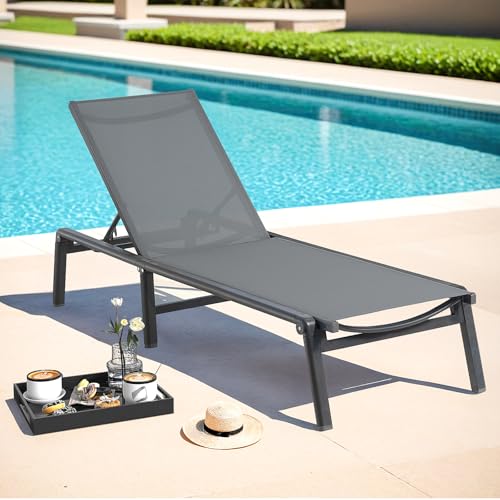
These are standard chaise lounges paired with a fitted, weather-resistant cover for storage. The lounger itself may be identical to an uncovered model, but the included cover protects the frame and cushions from UV fading, rain, pollen, and bird droppings when the lounger is not in use. This is the more common meaning when you see "covered" in a product listing. For a broader comparison of both approaches, see our overview of covered outdoor lounge chairs.
Some premium models combine both features: a canopy for in-use shade and a fitted cover for storage. Those are the most versatile option, but they are also the most complex to maintain because you have two fabric systems to inspect.
Key Features That Separate Good From Great
Once you know which type of covered lounger you want, the next step is evaluating construction. These are the features that matter most during long-term ownership.
Frame Material and Coating
Powder-coated aluminum is the standard for outdoor loungers because it resists rust and stays light enough to move. High-grade steel is heavier and more rigid, but it needs a rust-proof finish to survive wet climates. Resin and wicker frames offer a warmer look but tend to flex more under weight. Whatever the material, check that the joints are welded or reinforced rather than merely bolted — bolted joints loosen over time on a lounger that gets reclined daily.
Fabric and UV Resistance
For the canopy or the seat cushion, solution-dyed acrylic is the top-tier choice: the color is engineered into the fiber, so it resists fading far better than surface-dyed fabrics. High-grade polyester blends are a solid mid-range option. Look for a water-repellent finish and a tight weave. Avoid untreated cotton, which mildews quickly in humid conditions. Our cushion guide explains how to match fabric grade to your climate.
Recline Mechanism
A covered chaise lounge is reclined constantly, so the mechanism is a wear point. Entry-level models use a simple notched bar that locks into preset angles. Mid-range and premium models use a smoother ratchet or gas-assist system that adjusts more finely. Test the mechanism in person if you can; a stiff or wobbly recline is the most common early failure on lower-tier loungers.
Cover Quality
If your lounger comes with a storage cover, inspect the seams, the drawstring or strap system, and the ventilation. A cover that traps moisture can do more harm than no cover at all. Breathable, UV-stabilized fabric with reinforced seams is the minimum. For a deeper dive into cover materials, see our guide to custom canvas covers for outdoor furniture.
Covered Chaise Lounge Tiers Compared
To keep the comparison neutral, this table uses market-position descriptors rather than any numeric figures. Use it to match a lounger's build quality to your expected usage.
| Tier | Typical Construction | Best For |
|---|---|---|
| Entry-level | Lightweight aluminum or resin frame, surface-dyed polyester canopy, notched recline bar, basic fitted cover | Occasional use on a balcony or small patio; buyers who want a shade option without a long-term commitment |
| Mid-range | Powder-coated aluminum frame, solution-dyed acrylic canopy, ratchet recline, breathable UV-stabilized cover | Daily seasonal use on a family patio; the balanced choice for most homeowners |
| Premium | Reinforced aluminum or high-grade steel frame, premium acrylic fabric, gas-assist or multi-position recline, heavy-duty cover with ventilation panels | Frequent use in sunny or coastal climates; buyers who want a long-term investment |
| Luxury / commercial-grade | Welded commercial frame, flagship-tier fabric with extended UV warranty, precision recline hardware, custom-fit cover system | Poolside setups, rental properties, and anyone replacing a lounger every few seasons |
A mid-range covered lounger usually offers a noticeably smoother recline and better fabric longevity than an entry-level model. Moving from mid-range to premium mostly buys you heavier hardware and longer fabric life — worthwhile if the lounger stays outside year-round.
How to Choose the Right Covered Lounger for Your Space
Match the Cover Type to Your Climate
In a dry, sunny climate, an integrated canopy is the priority and a storage cover is a nice extra. In a wet or humid climate, the storage cover matters more because moisture is the main threat to cushions and frame joints. If your patio is exposed to wind-driven rain, a fitted cover with a secure strap system beats a loose one. Our guide to covering patio furniture for winter covers seasonal protection in detail.
Measure Before You Commit
A chaise lounge with a canopy is taller and longer than a flat lounger, and the canopy needs clearance to fold back. Measure the footprint of your patio, the height of any railing or pergola, and the swing path of the canopy before ordering. If space is tight, a cushioned outdoor chaise lounge without a canopy may fit better while still giving you a padded recline.
Think About Cushion Storage
Even a covered lounger benefits from a dedicated place to stash cushions during storms. A deck box or storage bench near the patio makes this painless. See our cushion storage guide for options that fit small spaces.
Plan for the Off-Season
If you live where temperatures drop below freezing, plan to move the frame indoors or into a shed for winter and store cushions separately. A cover alone is not enough in heavy snow. If your lounger is part of a larger seating arrangement, our covered outdoor furniture guide shows how to protect a full set efficiently.
Care and Maintenance for Covered Chaise Lounges
Covered loungers need less maintenance than uncovered ones, but they are not maintenance-free. A simple seasonal routine keeps the frame, canopy, and cover in good shape.
- Weekly during use: Brush off debris and check that the canopy attachment points are secure.
- Monthly: Rinse the frame with fresh water and mild soap; inspect the cover for fraying or trapped moisture.
- Before storing: Clean and fully dry the frame, remove cushions, and fold the canopy loosely rather than creasing it tightly.
- Annually: Check the recline mechanism for stiffness, and re-tension any straps on the cover.
If you notice rust at a joint or mildew on the canopy, address it early. Small repairs are far easier than replacing a fabric panel later. Our weatherproofing guide covers products and techniques for extending fabric life.
Frequently Asked Questions
What is a covered chaise lounge?
A covered chaise lounge is an outdoor lounger designed with either an integrated canopy, a protective fabric cover, or a full weather-resistant construction that shields the seat from sun, rain, and debris. The term can refer to a lounger with a built-in shade canopy or a lounger sold with a fitted protective cover for off-season storage.
What fabrics are best for a covered outdoor lounge chair?
Solution-dyed acrylic and high-grade polyester blends are the most common choices. They resist fading from UV exposure and resist moisture. Look for a tight weave and a water-repellent finish. Avoid untreated cotton, which absorbs water and mildews quickly.
Does a covered chaise lounge need additional maintenance?
Yes, but less than an uncovered lounger. Rinse the frame and fabric periodically, check the cover for wear, and store cushions indoors during extended wet seasons. An integrated canopy should be inspected for fraying at the seams and for a secure attachment point.
Can I leave a covered chaise lounge outside in winter?
A covered lounger can stay outside in mild climates if the frame is rust-resistant and the cover is rated for winter use. In freezing or heavy-snow regions, move the frame indoors or into a shed, and remove cushions. Even a weatherproof cover is not a substitute for proper winter storage.
Related Reading on PatioFocus
If you are building out a full lounging area, these guides pair naturally with a covered chaise lounge purchase:
- Covered outdoor chairs — for matching seating that protects against the elements.
- Covered patio chairs — compact options for smaller spaces.
- Cushioned patio chairs — how cushion construction affects comfort and lifespan.
- Covered patios — structural shade that reduces the need for individual canopies.
- Concrete outdoor coffee tables — a durable anchor piece for a lounging zone.