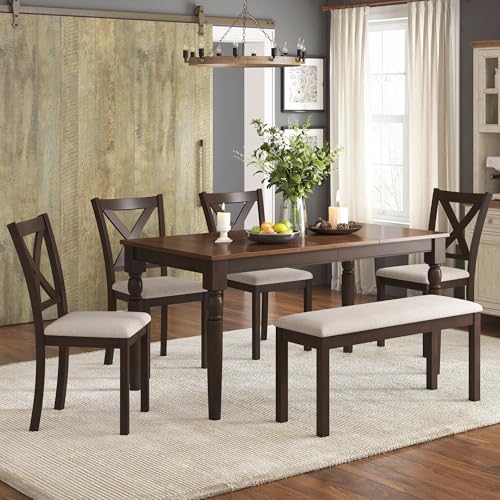
Dining Room Table with Bench and Chairs: Complete Buying Guide
Everything you need to know before choosing a bench-and-chair dining set — seating capacity, space planning, materials, and design so you can buy with confidence.
START EXPLORINGWhy a bench-and-chair dining set deserves your attention: Combining a bench on one side with chairs on the other is one of the most practical seating arrangements for modern homes. It maximizes seating along a wall or open side, keeps the table footprint efficient, and gives the room a warm, family-friendly character that a uniform chair arrangement often lacks. This guide walks you through the decisions that matter most before you commit.
The Practical Appeal of Bench and Chair Seating
A dining room table with bench and chairs solves a problem that pure chair sets often create: how to seat more people without crowding the room. The bench side typically runs parallel to a wall, a window, or an open edge, which means the chairs can be pulled out freely and the bench never blocks a walkway. For households that frequently host family dinners, that one-sided bench can be the difference between comfortable seating for six and a cramped seating for five.
Beyond logistics, a bench brings a distinct visual rhythm to the room. It lowers the profile on one side, letting light flow across the tabletop and making narrow dining rooms feel less boxed in. It also encourages a more relaxed, communal atmosphere — children and adults can slide in and out easily, and the bench surface doubles as a brief staging spot between courses.
If you are still weighing whether bench seating fits your routine, the broader category of outdoor and indoor benches shows how versatile a single bench can be across different rooms and settings.
Seating Capacity and Table Dimensions
Getting the numbers right is the single most important step before you buy. A bench and chair arrangement works best when the table length is matched to the bench length and the per-person seating allowance is respected. As a practical rule, plan about 24 inches of table edge for each diner, and add a few inches of clearance at each end so elbows and chair backs do not collide.
| Table Length | Bench Side | Chair Side | Best For |
|---|---|---|---|
| 60–66 inches | 2-seat bench | 2–3 chairs | Compact dining rooms and kitchens |
| 72 inches | 2–3 seat bench | 3 chairs | Mid-size family dining |
| 84 inches | 3-seat bench | 3–4 chairs | Larger families and regular hosting |
| 96 inches and above | 3–4 seat bench | 4 chairs | Formal dining rooms and entertaining |
When choosing a bench, remember that a backless bench tucks fully under the table and saves floor space, while a bench with a back provides support for longer meals but adds depth. Sets designed around this hybrid layout, such as a kitchen table with bench and chairs, usually pair a mid-length table with a two-seat bench and two chairs — an efficient format for everyday use.
Bench Styles and What Each One Does Best
Not all benches behave the same way at the dining table. The style you choose should follow from how often the space is used and whether comfort or compactness matters more.
Backless benches
Backless benches are the most space-efficient option. They slide completely under the table, which keeps the room looking open and makes floor cleaning simple. They are also the easiest bench type to move when you need extra floor space for a gathering. For small dining rooms, this is usually the best starting point.
Benches with a back
A bench with a back adds genuine support for longer meals and reads more like built-in seating. It works particularly well when the bench sits against a wall or in a corner, where the back can lean comfortably. A set that pairs this with matching chairs, like a dining table with a backed bench, gives a more anchored, furnished look than a backless arrangement.
Upholstered benches
Upholstered benches soften the look of a wooden dining set and make long dinners far more comfortable. They pair naturally with cushioned chairs and are a strong choice for formal dining rooms where the set is a visible centerpiece. If you already plan to add cushions, check the chair cushions options so the bench fabric and chair fabric belong to the same color family.
Storage benches
Storage benches hide linens, board games, or seasonal tableware inside the seat. In a small dining room, this effectively adds a built-in sideboard without taking extra floor space. The trade-off is a slightly heavier bench that is harder to reposition.
Table Shapes and Materials That Work With Benches
Rectangular tables are the natural partner for a bench because a bench runs in a straight line. Square tables can work with a short bench on one side, but round tables generally pair better with chairs on all sides — a bench on a curved edge leaves awkward gaps at the ends.
Material choice affects both the weight of the bench and how the set ages:
- Solid wood — the most traditional and repairable option. Oak, walnut, and rubberwood are common. Solid builds handle daily use well and can be refinished rather than replaced.
- MDF and veneer — stable and consistent, and often found at the entry-level to mid-range tier. Good for rooms with controlled humidity.
- Metal frames with wood or composite tops — reinforced steel legs and stretchers give a heavy-duty feel and suit industrial or minimalist interiors.
- Glass tops — visually light and easy to wipe clean, but they need a bench with a solid frame to keep the arrangement grounded.
Whatever material you pick, verify that the table and bench are designed for the same load path. A long backless bench should have a center leg or stretcher so it does not bow under the weight of two or three people. For sets intended to move between indoor and covered outdoor spaces, a large dining table with bench and chairs shows how the same layout scales up to bigger gatherings.
Matching the Bench and Chairs — Cohesive or Mixed
There is no rule that the bench and chairs must be identical, but there are design principles that keep a mixed set from looking accidental.
Keep the finish in one family
If the bench is warm oak, the chairs can be a slightly darker walnut or a painted version of the same tone. Pairing warm wood with cool chrome in the same set often reads as a mismatch. Sticking to one finish family makes even different silhouettes feel intentional.
Repeat a shape or a line
Look for a shared detail — a tapered leg, a horizontal stretcher, a softly rounded corner — and let that detail appear on both the bench and the chairs. Repetition is what makes a mixed arrangement feel designed rather than assembled.
Vary the visual weight deliberately
A slim backless bench next to substantial upholstered chairs creates a pleasant contrast. The reverse — a heavy storage bench next to delicate spindle chairs — can look top-heavy. If you want a clearly matched set, a coordinated dining table with chairs and bench removes the guesswork and guarantees the proportions were designed together.
Space Planning: Clearances That Keep the Room Comfortable
Measure the room before you measure the table. A bench set that technically fits but leaves no walking space will feel wrong every day. Use these clearances as planning targets:
- 24–30 inches of clear floor space beside the chair side so chairs can be pushed back and occupied comfortably.
- About 12 inches between the bench back and the wall it faces, or zero if the bench is designed to sit flush against the wall.
- 36 inches for the main walkway behind the chairs if it is a through-route to another room.
- At least 18 inches of table overhang on the bench side if you want knees to fit under without a stretcher in the way.
In a narrow dining room, placing the bench along the long wall is usually the best move: it removes the need to pull chairs back on that side and creates a clean circulation path on the chair side. A 3-piece arrangement such as a 3-piece bistro set follows the same principle at a much smaller scale and is useful as a reference point for how little footprint a bench-and-chairs layout can occupy.
Comfort and Long-Term Durability
A dining set is used daily in most homes, so the difference between a set that feels solid after five years and one that wobbles after one comes down to construction details rather than styling.
Check the joinery first. Mortise-and-tenon or doweled joints with corner blocks are a sign of solid build; stapled or glued-only joints on a bench seat will loosen under repeated weight. Look at the bench seat thickness — a seat board under about an inch thick will flex noticeably. On the table, a reinforced apron and a center support on longer spans prevent sagging.
For upholstered benches and cushioned chairs, the density of the foam matters more than the cover fabric. High-density foam keeps its shape through years of daily meals, while low-density foam compresses into a visible dip. Removable, washable covers are a worthwhile feature in households with children.
If the dining set sits near a window with strong sun exposure, a weather-resistant coating or a UV-stable finish on the wood will prevent the top from fading unevenly. The same care principles covered in the garden care guide apply to any wood surface that sees regular sunlight.
Final Buying Checklist
Before you order, run through these points so the set works in the room and in daily life:
- Measure the table length and confirm the bench length leaves at least 6 inches of clearance at each end.
- Confirm the bench height matches the table height — seat height should sit about 10–12 inches below the tabletop.
- Decide between backless, backed, upholstered, or storage bench based on how often the room is used.
- Verify the chair count on the open side gives each diner roughly 24 inches of table edge.
- Check the walkway clearance behind the chairs before committing to the table width.
- Confirm the finish family is consistent between bench and chairs, or that the contrast is deliberate.
- Review the return policy and assembly requirements — long tables and benches often ship in multiple boxes.
For a fully coordinated starting point, explore the range of large dining tables with bench and chairs and compare how different table lengths change the seating balance.
Frequently Asked Questions
What is the advantage of a dining room table with a bench and chairs?
A bench optimizes seating along one side, allowing you to seat more people in the same footprint. It also creates a relaxed, family-friendly look and can be tucked fully under the table when not in use, keeping the room visually open.
How much seating space does each person need?
Allow roughly 24 inches of table edge per person for comfortable dining. A standard bench accommodates two adults comfortably, while longer benches can seat three. Add a few inches of clearance at each end of the table.
Should the bench match the chairs in style?
Matching the bench and chairs creates a cohesive look, but mixing finishes and silhouettes is a popular design choice. Keep the wood tone or metal finish in the same family and repeat at least one shape detail to keep the arrangement balanced.
Can a bench be used with a round dining table?
A bench works better with rectangular and square tables because it runs in a straight line. On a round table, a bench leaves awkward gaps at the curved ends and is generally less comfortable than chairs on all sides.
What seat height should a dining bench have?
A standard dining bench seat should sit about 10–12 inches below the tabletop. For a table around 30 inches high, look for a bench seat height near 18 inches. Standard-height dining tables pair with standard-height benches.
Is a backless or backed bench better for everyday use?
A backless bench is more space-efficient and easier to move, making it ideal for compact rooms. A backed bench offers more support for long meals and suits a bench placed against a wall. Choose based on how long your typical dinners last and how much floor space you can spare.