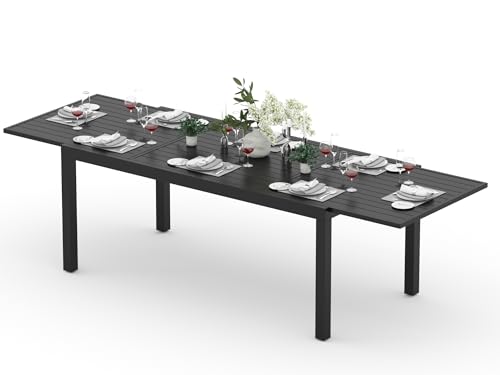
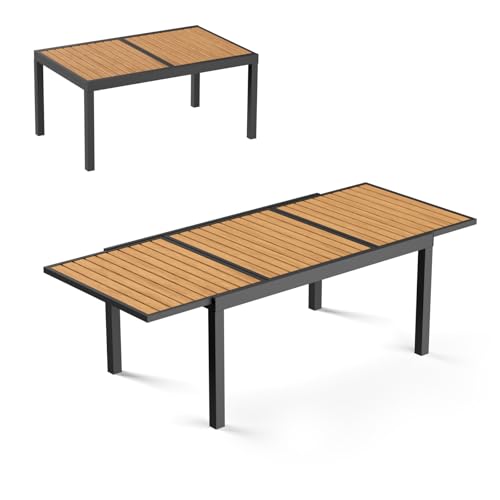
Expandable Patio Table: The Complete Buying Guide
Discover how an expandable patio table adapts to everyday meals and weekend gatherings. Learn about size options, materials, umbrella hole features, and care tips so you can choose the right table for your outdoor space.
Start ReadingWhy an expandable patio table makes sense: Outdoor dining needs change with the seasons and the guest list. A table that stays compact for weekday breakfasts yet extends for a family barbecue gives you flexibility without dedicating your entire patio to a permanent large table. This guide walks through the key decisions so you can buy with confidence.
What Is an Expandable Patio Table?
An expandable patio table is an outdoor dining table with a tabletop that extends to increase seating capacity. The extension mechanism typically falls into one of three styles: butterfly leaves that fold out from the center, drop leaves that hinge down at the ends, or telescoping sections that slide outward along a frame. Each style balances convenience, stability, and storage needs differently.
These tables are especially useful for homeowners who want a compact footprint day to day but need extra room when entertaining. If your outdoor space is tight, pairing an expandable table with a dining table with bench for small spaces can further reduce the footprint while keeping seating generous.
Who Should Consider an Expandable Patio Table?
This table style suits a wide range of households. Consider one if you recognize yourself in any of these scenarios:
- You host occasional gatherings but want a compact table for daily use.
- Your patio or deck has limited square footage and you need furniture that adapts.
- You want to seat four normally but stretch to six or eight when family visits.
- You prefer a single table that handles both casual meals and formal outdoor dining.
- You want an umbrella hole option that stays usable in both compact and extended configurations.
If you regularly host large groups and have the space, a fixed dining table with 10 seats may be simpler. But for most households, the flexibility of an expandable table is the more practical choice.
Key Features to Evaluate Before Buying
1. Extension Mechanism and Stability
The extension mechanism is the heart of an expandable table. Butterfly-leaf designs are common because they store the leaf inside the table when closed, which keeps the table compact. Drop-leaf tables hinge downward and can be placed against a wall when not extended. Telescoping tables slide outward on rails and often feel the most solid when fully extended.
Whichever style you choose, check for locking pins, reinforced hinges, and a sturdy apron under the tabletop. A table that wobbles when extended is a safety concern, especially with food and drinks on the surface.
2. Size and Seating Capacity
Measure your patio before shopping, then map out how much space you need around the table for chairs to pull out comfortably. A common approach is to allow at least 24 inches of clearance per seated guest along the table edge, plus walking space around the perimeter.
Think about both configurations: the compact size for everyday use and the extended size for entertaining. If you plan to seat six regularly but extend to eight occasionally, look for models that clearly state both seating capacities. For a closer look at how different table-and-bench configurations seat guests, see this guide to a dining table set for 6 with bench.
3. Materials and Weather Resistance
Outdoor tables face sun, rain, and temperature swings. The most common frame materials are powder-coated aluminum, high-grade steel, and solid wood such as teak or eucalyptus. Aluminum resists rust and stays relatively light, making it a strong choice for humid climates. Steel is heavier and very stable but needs a rust-proof finish. Wood offers a classic look and can be refinished over time.
Tabletop options include slatted wood, powder-coated metal, and high-density polyethylene (HDPE) or resin. Slatted tops drain water well and dry quickly. Solid surfaces are easier to wipe clean but can pool water if not slightly angled. Look for weather-resistant coatings and stainless steel hardware, especially on the extension mechanism.
4. Umbrella Hole and Shade Compatibility
Many expandable patio tables include a pre-drilled umbrella hole. This is a major convenience because it lets you add shade without a separate umbrella stand. However, the hole position matters: on some tables the hole sits in the center of the main tabletop, while on others it moves to the extension leaf when the table is fully open. Confirm that the hole aligns with your umbrella pole in both configurations.
If shade is a priority, consider a model designed specifically as an expandable patio table with umbrella hole, and pair it with an appropriate base for stability. A weighted base is essential, especially on windy days.
5. Assembly, Storage, and Portability
Most expandable patio tables arrive partially assembled. Check whether the extension mechanism requires tools or complex adjustments. If you plan to move the table for winter storage, note its weight and whether it has locking casters or foldable legs. Lighter aluminum frames are easier to relocate, while heavier steel or wood tables offer more stability but demand more effort to move.
Quality Tiers: How Expandable Patio Tables Compare
Expandable patio tables fall into a few broad quality tiers. Use this table to match your needs to the right tier, without relying on specific figures.
| Tier | Best For | Typical Characteristics |
|---|---|---|
| Entry-Level | Casual use, renters, seasonal setups | Lightweight aluminum or resin frames, simpler butterfly-leaf mechanisms, basic weather-resistant coatings. |
| Mid-Range | Everyday family dining with occasional entertaining | Powder-coated aluminum or steel frames, smoother telescoping or drop-leaf mechanisms, reinforced hardware, umbrella hole options. |
| Premium | Frequent hosting and long-term outdoor use | High-grade aluminum or solid wood, precision extension rails, stainless steel fasteners, refined finishes, and stronger warranties. |
| Luxury | Design-focused patios and commercial-grade expectations | Premium hardwoods or designer metal finishes, seamless extension designs, custom sizing, and top-tier craftsmanship. |
In general, mid-range models offer the smoothest balance of durability and mechanism quality for most homeowners. Entry-level tables are fine for light use, while premium and luxury tiers make sense when the table will be a permanent centerpiece and used often.
Pros and Cons of Expandable Patio Tables
Advantages
- Adapts to different guest counts without buying a second table.
- Saves space in compact patios when not extended.
- Umbrella hole models combine dining and shade in one footprint.
- One table handles casual meals and larger gatherings.
Considerations
- Extension mechanisms add moving parts that need maintenance.
- Some designs are less stable when fully extended if not well-built.
- Butterfly leaves can be awkward to lift alone on larger tables.
- Umbrella hole placement may not suit every umbrella setup.
Matching Your Table to Your Patio Layout
The best expandable table is one that fits your space in both configurations. Start by sketching your patio dimensions and marking doors, grill zones, and traffic paths. Then place the compact table footprint on the sketch and check that chairs can pull out without blocking walkways. Next, draw the extended footprint and confirm that guests can still move around comfortably.
If your layout includes a bench on one side, an extendable dining table with bench and chairs can be a smart pairing because the bench tucks neatly under the table when not in use. Similarly, a dining table with bench on one side keeps chair clutter down while preserving seating capacity.
For patios that need to switch between dining and lounge modes, consider how the table coordinates with your other furniture. A dining outdoor patio set that includes matching chairs can simplify the look and ensure proportional sizing.
Care and Maintenance Tips
Expandable tables last longer with a little routine attention. Follow these habits to keep the mechanism smooth and the surface looking its best:
- Wipe the tabletop after meals with mild soap and water; avoid abrasive cleaners on coated metal or wood finishes.
- Lubricate the extension rails or hinges at the start of each season with a silicone-based lubricant.
- Inspect locking pins and hinges periodically for wear, and tighten any loose hardware.
- Cover the table or store it during harsh weather, especially if the frame is steel or the top is wood.
- Check the umbrella hole and base for stability before use on windy days.
- When moving the table, lift rather than drag to protect the extension mechanism.
If you plan to add cushions or replacement parts later, browse relevant categories such as dining bench seat options to keep your seating coordinated.
Common Mistakes to Avoid
Buying an expandable patio table is straightforward once you know what to watch for. Avoid these common pitfalls:
- Ignoring the extended footprint: Measure the table at full extension, not just its compact size.
- Overlooking umbrella compatibility: Confirm the hole position and diameter match your umbrella pole.
- Skipping the stability check: Read reviews about wobble and test the locking mechanism if possible.
- Underestimating assembly: Some models require two people to assemble the extension rails safely.
- Choosing the wrong material for the climate: Humid coastal areas favor aluminum; dry sunny regions suit sealed wood.
Frequently Asked Questions
What is an expandable patio table?
An expandable patio table is an outdoor dining table with a mechanism that extends the tabletop to accommodate more guests. It typically uses butterfly leaves, drop leaves, or telescoping extensions that fold out from the center or ends of the table.
What size expandable patio table should I choose?
Choose based on your typical guest count and available space. A compact table that expands to seat six is ideal for everyday use with occasional entertaining. Larger versions that extend to seat eight or more suit frequent hosts with generous patio space.
Do expandable patio tables work with umbrella holes?
Yes, many expandable patio tables include a pre-drilled umbrella hole, often positioned in the center of the table or in the extended leaf section. Verify that the hole aligns with your umbrella pole when the table is fully extended.
How do I maintain an expandable patio table?
Clean the table surface regularly with mild soap and water, lubricate the expansion mechanism seasonally, and store or cover the table during harsh weather. Check the locking pins and hinges for wear to ensure the table remains stable when extended.
Is an expandable table stable when fully extended?
Stability depends on the build quality and mechanism design. Mid-range and premium tables with reinforced aprons and locking pins tend to feel solid when extended. Entry-level models may have more flex, so test or read reviews before choosing.
Ready to Choose Your Expandable Patio Table?
Use the tips in this guide to match size, material, and umbrella compatibility to your patio. When you are ready to compare options, explore the recommended products below to find a table that fits your outdoor lifestyle.
Explore Recommended Tables