Dining Table with Bench on One Side: The Complete Guide
A one-sided bench layout combines the sociable appeal of bench seating with the individual comfort of chairs. This guide explains how to choose, arrange, and care for a dining table with a bench on one side so you can make a confident, well-informed decision.
Why this layout works: Placing a bench on just one long side of the table keeps the opposite side open for chairs. This creates a natural division between relaxed lounge-style seating and conventional dining seats, improves traffic flow around the table, and makes better use of walls and tight corners. It is a practical, design-forward answer for households that want flexibility without sacrificing style.
What Is a Dining Table with a Bench on One Side?
A dining table with a bench on one side pairs a standard table with a long bench running along one edge and individual chairs along the opposite edge. The bench may be backless for a clean, minimalist look, or it may include a backrest for extra support. This mixed-seating arrangement differs from a fully bench-based setup, where benches replace chairs on both long sides, and from a standard chair-only configuration.
The concept belongs to the broader family of dining sets with bench seating. Within that category, the one-sided bench layout is one of the most versatile variants because it balances social seating with personal comfort. If you are exploring related configurations, you may also want to compare a dining table with a bench and chairs that places chairs on both ends, or a dining table and bench set designed for a more compact footprint.
Why Choose a Bench on One Side?
Space Efficiency
A bench tucks neatly under the table and occupies less depth than a row of chairs, which helps in tighter dining rooms and open-plan layouts.
Social Seating
Bench seating invites children, guests, and family members to sit closer together, encouraging conversation and shared meals.
Visual Balance
A bench on one side and chairs on the other creates a pleasing asymmetry that reads as intentional and design-forward.
Flexible Capacity
Benches often seat more people than the equivalent number of chairs, making this layout useful for growing households and occasional entertaining.
Beyond the practical benefits, the one-sided bench arrangement suits a wide range of interior styles. Farmhouse, rustic, modern, and coastal interiors all adapt well to a dining table with bench and chairs, and the bench itself can become a design focal point through material choice, upholstery, or a distinctive silhouette.
Seating Capacity and Table Sizing
Getting the proportions right is the most important step. A bench that is too short leaves gaps at the table ends, while an oversized bench crowds the room. Use the table below as a general planning reference for rectangular tables paired with a long bench on one side and chairs on the opposite side.
| Tier | Typical Table Length | Bench Seating | Chair Seating | Best For |
|---|---|---|---|---|
| Starter tier | Small rectangular table | 2 to 3 people | 2 chairs | Apartments, breakfast nooks, two-person households |
| Mid-tier | Standard rectangular table | 3 to 4 people | 3 chairs | Family kitchens, everyday dining, four-person households |
| High-end tier | Large rectangular table | 4 to 5 people | 4 chairs | Open dining rooms, larger families, frequent entertaining |
| Premium tier | Extra-long table | 5 to 6 people | 5 to 6 chairs | Formal dining rooms, holiday gatherings, commercial-grade use |
Always leave a comfortable gap between the bench and the table edge so guests can slide in easily. For a bench with a backrest, allow additional clearance behind the bench for leaning back. If your room is tight, a dining table with a bench for small spaces is a smarter starting point than forcing a large table into a compact footprint.
Bench Types and Materials
The bench you choose defines both the comfort and the visual character of the setup. Consider these common options:
- Backless wooden benches: The most common pairing for farmhouse and rustic tables. They are simple, durable, and easy to slide under the table. A dining bench seat in solid hardwood is a long-term investment that ages gracefully.
- Benches with a backrest: A dining table bench with a back offers more support for longer meals and works well for older guests or anyone who prefers upright seating.
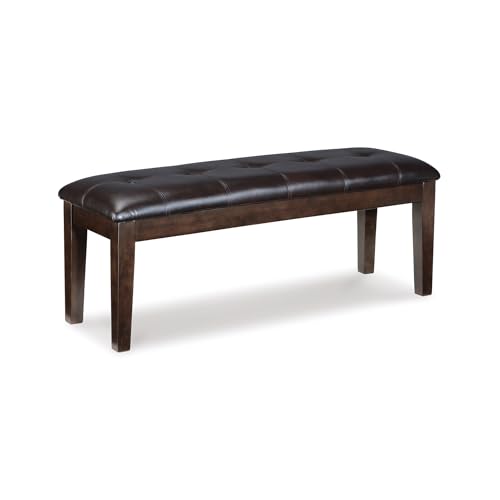
- Upholstered benches: Padded benches add softness and comfort. Pair an upholstered bench with upholstered chairs for a cohesive, comfortable dining zone.
- Storage benches: A bench with built-in storage keeps table linens, games, or serving pieces out of sight. A dining table with a storage bench and chairs is especially useful in smaller homes.
- Corner and L-shaped benches: These turn a plain dining area into a banquette-style nook. Explore dining table with corner bench and chairs layouts for a built-in look.
For outdoor patios, prioritize weather-resistant materials. High-grade hardwood, powder-coated aluminum, and dense resin all deliver durable construction that holds up to moisture and sun exposure. A dining outdoor patio set with a bench on one side can extend the same sociable layout to your backyard.
Chairs to Pair with a One-Sided Bench
The chairs opposite the bench should complement its height and style without matching it too literally. A few pairing strategies work consistently well:
- Matching material, different silhouette: A wood bench with wood chairs in a lighter or contrasting finish looks cohesive without feeling like a set.
- Upholstered chairs for contrast: Soft fabric chairs against a solid wood bench add warmth. See dining table with bench and upholstered chairs for styling ideas.
- Armchairs for a head-of-table feel: A dining table with 2 chairs and a bench configuration keeps the layout simple and visually calm.
- Full chair rows for larger tables: A dining table and 4 chairs and bench setup seats a crowd while retaining the one-sided bench design.
Layout and Placement Tips
Placement determines whether the bench feels like a clever design choice or an awkward compromise. Follow these guidelines:
- Put the bench against a wall or fixed feature. This anchors the seating and prevents the bench from being pushed backward during meals.
- Keep chairs on the open side. Chairs need pull-out space, so the side facing the room or walkway should have chairs rather than a bench.
- Mind the ends. If the table is long enough, place a chair at each end to maximize seating. A dining table with bench and two chairs is a common compact version of this layout.
- Leave walking clearance. Aim for enough space behind the chairs to push back and stand up without bumping into other furniture.
- Use a rug to define the zone. A rug under the table visually groups the bench, chairs, and table into a single dining area.
For rooms where the table sits near a corner, a dining table with corner bench and chairs can make better use of dead space than a standard rectangular bench.
Style Variations Worth Considering
The one-sided bench layout adapts to nearly every design language. A few popular variations include:
- Farmhouse: A farmhouse dining table with bench and chairs pairs a sturdy plank table with a simple wooden bench and spindle-back chairs.
- Extendable: An extendable dining table with bench and chairs lets you add length for holidays without changing the bench.
- Banquette-inspired: A dining room table with banquette seating uses a built-in or long bench to create a restaurant-style nook.
- Set-based: A complete dining table with bench and chairs set removes the guesswork of matching proportions.
If you are still deciding between a bench and a second row of chairs, compare a dining set with bench against a chair-only configuration to see which suits your household's habits better.
Care and Maintenance
A one-sided bench layout is easy to maintain when you match care routines to materials. Solid wood benches benefit from periodic sealing and should be wiped dry after spills. Upholstered benches need regular vacuuming and spot cleaning, especially in households with children or pets. Outdoor benches should be covered during harsh weather and inspected for loose hardware each season. Pairing your dining set with a properly sized rug and keeping the bench free of clutter will extend its useful life and keep the arrangement looking intentional.
Frequently Asked Questions
Is a dining table with a bench on one side good for small spaces?
Yes. A one-sided bench layout keeps chairs only on one long side, which reduces the footprint and makes traffic flow easier in compact dining areas. The bench can also slide under the table when not in use.
How many people can sit at a dining table with a bench on one side?
A typical mid-range rectangular table with one long bench and chairs on the opposite side seats four to six people comfortably. A premium larger table paired with a longer bench and matching chairs can accommodate six to eight diners.
Should the bench face a wall or a walkway?
Place the bench against the wall or a fixed structure so guests can slide in without obstructing circulation. Chairs on the open side allow easy access and keep the room feeling balanced.
What materials work best for an outdoor dining bench?
For patios and decks, look for weather-resistant hardwood, powder-coated aluminum, or high-grade resin. These materials resist moisture and UV exposure, making them a durable construction choice for long-term outdoor use.