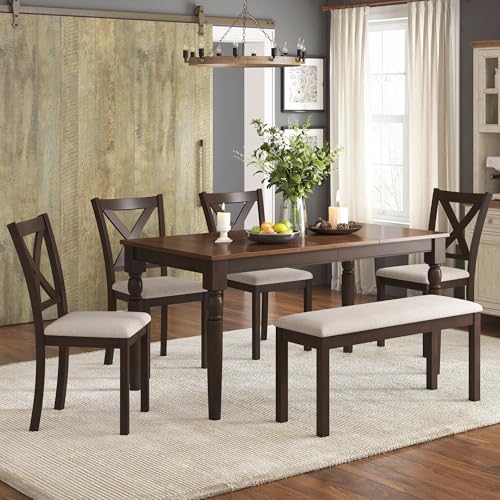
Dining Table with a Bench and Chairs: The Complete Buying Guide
Bench-and-chair dining sets blend comfort, capacity, and clever use of space. This guide breaks down seating layouts, table shapes, materials, and sizing so you can choose a set that fits your room and your household.
START WITH SEATING LAYOUTSWhy Choose a Dining Table with a Bench and Chairs?
A dining table with a bench and chairs is one of the most practical seating combinations available. The bench maximizes the number of people who can sit along one side while freeing up visual space, and the chairs on the opposite side provide individual back support for everyday meals. Together, they create a balanced arrangement that works equally well in a family kitchen, a formal dining room, and an outdoor patio.
The appeal goes beyond seating capacity. A bench tucks neatly under the table when not in use, which keeps walkways clear in smaller rooms. Benches also encourage a communal feel, making them a natural fit for casual gatherings, holiday dinners, and long weekend breakfasts. If you are still comparing configurations, our guide to a dining table set with bench and chairs explains how the two seating types complement each other.
Quick answer: A standard rectangular table paired with a bench on one long side and two chairs on the other seats four adults comfortably. Larger tables that pair a bench with four chairs seat six, and bench-and-six-chair layouts seat eight or more.
Seating Layouts: How Benches and Chairs Work Together
The way you distribute a bench and chairs around the table determines both comfort and how many people the set accommodates. Four layouts cover the vast majority of homes.
Bench on One Side, Chairs on the Other
This is the most common and versatile configuration. The bench sits along one long side of a rectangular table, and chairs face it from the opposite side. It works for four-seat tables, six-seat tables, and larger. If you want to see variations of this arrangement, explore a dining table with a bench on one side.
Two Chairs with a Bench
A compact option for two to four diners: two chairs occupy one side, and a shorter bench runs along the other. This layout suits breakfast nooks and apartments. See a dining table with two chairs and a bench for practical examples.
Corner Bench Configurations
An L-shaped corner bench wraps around two sides of the table, leaving room for chairs on the remaining edges. Corner benches are excellent for maximizing seating in a tight corner of a dining room or kitchen. Our page on a dining table with a corner bench and chairs covers the layout in detail.
Bench Plus Four or Six Chairs
For larger households, a long bench on one side with four chairs opposite and chairs at the ends seats six to eight people. This works well for farmhouse-style tables and extendable designs. If you need a bigger footprint, look at a dining table set for six with a bench or a dining table set for eight with a bench.
| Layout | Typical Seating | Best For |
|---|---|---|
| Bench on one side + 2 chairs | 4 diners | Small kitchens and dining rooms |
| Bench + 4 chairs | 6 diners | Family homes and everyday meals |
| Bench + 6 chairs | 8 diners | Entertaining and large households |
| Corner bench + chairs | 4–6 diners | Compact corners and nooks |
Table Shapes and Sizes That Pair Well with Benches
Bench seating is most natural on rectangular tables, but oval and round tables can also work with curved benches. Below are the shapes worth considering and the sizing rules that keep a bench-and-chair set comfortable.
Rectangular Tables
The safest choice. A bench along a straight edge is straightforward to place, and the table's length gives the bench enough room for two or three adults. Rectangular tables are also easier to extend, which matters if you plan to add a leaf for holidays.
Oval Tables
Oval tables soften the room's lines and reduce sharp corners in high-traffic areas. Curved benches exist for oval designs, though they are less common than straight benches. If you like the oval look, prioritize a set that includes a matching curved bench.
Round Tables
Round tables work best with chairs all around rather than a single bench, unless you use a curved bench that follows the table's edge. Round tables suit small dining areas and encourage conversation, but they offer less bench-friendly geometry than rectangular designs.
Sizing rule of thumb: Allow 24 inches of table width per person seated along a side, and 36 inches of clearance around the table so bench users can slide in and out. A bench pressed against a wall needs no rear clearance, which makes it a strong option for tight spaces.
For rooms where every inch counts, a dining table with a bench for small spaces is a smarter fit than a conventional four-chair set, because the bench slides fully under the table when the meal is over.
Material Guide: What to Look For in a Bench-and-Chairs Set
The material of the table, bench, and chairs determines durability, maintenance needs, and how the set ages. Match the material to whether the set will live indoors, on a covered porch, or fully outdoors.
Engineered Wood and MDF
Common in indoor dining sets, these materials offer a smooth painted finish and consistent shape. They are best kept in dry, climate-controlled rooms and wiped clean with a damp cloth.
Rubberwood and Acacia
Solid hardwood frames deliver a heavier, sturdier feel than engineered wood. Acacia is a popular choice for indoor-outdoor sets thanks to its natural grain and resistance to moisture.
Teak and Eucalyptus
Naturally weather-resistant hardwoods that hold up well on covered patios. Teak in particular develops a silver-gray patina over time and requires only occasional cleaning and oiling.
Powder-Coated Aluminum
Lightweight, rust-resistant, and low-maintenance. Powder-coated aluminum frames are the go-to choice for outdoor dining sets that stay outside year-round in mild climates.
Bench Construction Details That Matter
- Seat thickness: A bench top at least 1.5 inches thick resists flexing under adult weight and feels more substantial.
- Slatted vs. solid seats: Slatted tops shed rainwater and dry quickly, which makes them the better pick for outdoor benches.
- Leg bracing: Look for cross-bracing or an apron under the seat to prevent wobble over time.
- Back support: A backless bench saves space, while a bench with a back offers more comfort for long meals. See a dining table bench with a back for options.
- Storage: Some benches include a lift-up seat with storage inside—handy for table linens and board games. Browse a dining table with a storage bench and chairs.
Comfort, Style, and Household Fit
Comfort Considerations
Benches without back support are fine for short meals but can become tiring during long dinners. If your household lingers at the table, consider a bench with a low backrest or add a bench cushion for extra padding. Chairs should have a seat height that matches the table apron—typically 17 to 19 inches from floor to seat for a standard 30-inch table.
For households with young children, benches are easier to climb onto than chairs and can be safer in a dining nook. For older family members, chairs with arms provide more support getting in and out. Many families end up with a hybrid layout for exactly this reason.
Style Directions
Bench-and-chair sets appear in every major design style. Farmhouse tables with turned legs and a matching bench are a classic combination; see a farmhouse dining table with bench and chairs. Modern sets favor clean lines, slim legs, and a mix of bench and upholstered chairs. For a warmer, more traditional look, explore a dining table with bench and upholstered chairs.
Indoor vs. Outdoor Use
Indoor sets prioritize finish and upholstery, while outdoor sets need UV-resistant finishes, rust-proof hardware, and quick-drying materials. If your dining area is a covered patio, choose a set rated for outdoor use even if it rarely sees direct rain. Our broader dining outdoor patio set guide covers weather-ready options in more detail.
Buying Checklist Before You Commit
- Measure the room, not just the table. Mark the table footprint on the floor with painter's tape and confirm you have 36 inches of clearance on all open sides.
- Decide how many seats you need day to day and how many you need on holidays. An extendable table covers both.
- Choose bench placement. A wall-side bench saves the most space; a freestanding bench gives access from both sides.
- Confirm the bench height matches the table. The bench seat should sit about 10 to 12 inches below the tabletop for comfortable legroom.
- Check delivery and assembly requirements. Large tables and benches often ship in multiple boxes; see our delivery and assembly notes before ordering.
- Plan for care. Wood needs periodic sealing, metal needs occasional cleaning, and outdoor sets benefit from covers during the off-season.
Sets come in many configurations, from a three-piece bistro-style arrangement to a full eight-seat layout. If you are comparing options, our overview of a dining set with bench shows how the pieces are typically bundled.
Ready to Compare Bench-and-Chair Dining Sets?
Browse curated options below and check availability for the layout, size, and material that fits your space.
VIEW RECOMMENDED SETSFrequently Asked Questions
Is a bench or chairs better for a dining table?
Both have strengths. Chairs offer back support and individual comfort, while a bench maximizes seating capacity and creates a communal, space-saving layout. Many households combine a bench on one side with chairs on the other for the best of both worlds.
How many people can sit at a dining table with a bench and chairs?
A typical rectangular table with a bench on one long side and two chairs on the opposite side seats four adults comfortably. Larger tables that pair a bench with four chairs can seat six, and bench-and-six-chair configurations can seat eight or more.
Can a dining table with a bench be used outdoors?
Yes, provided the set is built with weather-resistant materials such as powder-coated aluminum, teak, or treated acacia. Outdoor dining benches with slatted tops shed rainwater and dry quickly, making them well suited to patios and decks.
How much clearance do I need around a dining table with a bench?
Allow at least 36 inches of clearance on all sides so bench users can slide in and out and chairs can be pushed back without hitting walls. A bench that sits flush against a wall needs no rear clearance, which is a key advantage in compact rooms.
Should the bench go against a wall or in the open?
Against a wall is the most space-efficient option and suits small rooms. A freestanding bench allows seating from both sides and makes it easier for guests to reach the table, which is preferable in larger dining rooms.