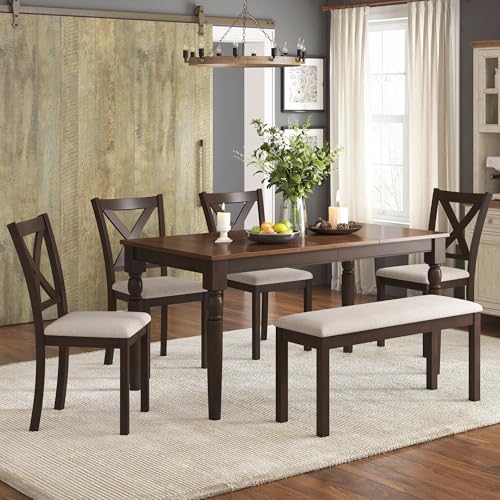
Dining Table Set for 6 with Bench: The Complete Guide
Everything you need to know about choosing a six-person dining table with bench seating, from layout and bench styles to materials, comfort, and long-term durability.
Start the GuideWhy this guide matters: A six-person dining set with a bench is one of the most practical and welcoming furniture investments you can make. It seats a family comfortably, handles guests gracefully, and brings a relaxed, communal feel to the dining room or open-plan kitchen. This guide walks you through every decision so you can choose with confidence.
What Is a Dining Table Set for 6 with Bench?
A dining table set for 6 with bench is a coordinated dining group designed to seat six people using a mix of seating types. Instead of six identical chairs, these sets pair a long table with a bench on one side, chairs on the opposite side, and often chairs or additional seating at the ends. The result is a dining arrangement that feels relaxed, family-friendly, and visually balanced.
This configuration has become a favorite in modern homes because it solves several problems at once. Benches let you tuck seating neatly under the table, which keeps sightlines open in smaller rooms. They also make it easy to seat children, teenagers, and visiting guests side by side. For households that host frequently, the combination of a bench and chairs gives everyone a comfortable place without crowding the floor plan.
If you are still exploring broader dining room configurations, the guide to dining room sets with a bench seat explains how bench seating fits into formal and casual dining spaces. For a more specific arrangement that mixes bench and chair counts, see dining room table set with bench and chairs.
Seating Layouts for Six People
The way a six-person set distributes seating has a major impact on comfort and traffic flow. Most sets follow one of three patterns, and each suits a different room and lifestyle.
Bench on One Side, Chairs Opposite
This is the classic arrangement. A long bench runs along one side of the table, while three chairs sit on the opposite side. It works beautifully against a wall or in the middle of a room. Benches are ideal for children and casual meals, while the chairs give adults back support for longer dinners. Explore the dedicated dining table with bench on one side layout for a deeper look at this configuration.
Bench on One Side, Chairs on the Other and at the Ends
Here the bench seats two or three people along one edge, chairs fill the opposite edge, and single chairs cap each end. This arrangement is especially efficient in rectangular rooms because it uses the table's full perimeter. The dining table with bench and chairs guide covers end-chair placement, elbow room, and serving access in detail.
Corner Bench or L-Shaped Banquette
Corner bench sets wrap seating around two sides of the table, often tucked into a nook or against two walls. They seat six comfortably while freeing up floor space, making them a strong choice for kitchens and compact dining areas. If this appeals to you, see dining set with corner bench and chairs and dining room table with banquette seating for design ideas and practical planning advice.
Quick rule of thumb: A bench with a backrest works best on the side where people sit longest. Backless benches are ideal for the side facing away from the room or where the table meets a wall.
Space and Room Planning
Before choosing a specific set, measure your room and map out clearances. A six-person table typically measures between 60 and 72 inches long, with depth ranging from 36 to 40 inches. Bench seating adds a few inches of clearance compared with chairs because the bench slides straight in and out rather than pulling back diagonally.
Plan for roughly 36 inches of clearance on all sides of the table so people can push back, walk behind seated guests, and serve food comfortably. In tight rooms, benches can reduce the clearance needed on one side, which is one reason they are so popular in apartments and open-plan kitchens.
| Element | Typical Range | Planning Note |
|---|---|---|
| Table length | 60–72 inches | Longer tables seat six more generously and allow serving platters to spread out. |
| Table depth | 36–40 inches | Deeper tables improve elbow room when benches and chairs face each other. |
| Bench length | 48–60 inches | Aim for at least 24 inches of seat width per person for comfortable seating. |
| Clearance around table | About 36 inches | Benches can reduce clearance on the wall side if the bench is fixed or backless. |
| Minimum room size | About 10 × 12 feet | Smaller rooms can work with corner benches or extendable tables. |
If your space is on the tighter side, an extendable option can give you six-person seating without committing to a long table every day. The extendable dining table with bench and chairs guide explores leaf mechanisms, storage, and daily-use trade-offs. For genuinely compact rooms, the dining table with bench for small spaces article offers layout strategies that keep movement comfortable.
Table Shapes and Sizes That Work with Benches
Not every table shape pairs naturally with bench seating. Rectangular tables are the most common companion to benches because their straight edges allow a bench to sit flush against the table. Oval and round tables can also work, but benches must match the curve or the seating area becomes awkward.
Rectangular Tables
Rectangular tables are the most versatile choice for a six-person set with bench. A 60-inch table seats two to three per long side with end chairs, while a 72-inch table gives each diner more elbow room and serving space. The dining table and bench set guide explains how to match bench length to table length without overhang issues.
Round and Oval Tables
Round tables create a convivial atmosphere and work well in square rooms, but a straight bench against a curved edge leaves gaps. Oval tables split the difference, offering a softer visual line while still providing a relatively straight seating edge. If a round table appeals to you, look for sets that pair the table with curved or segmented benches rather than a single straight bench.
Tables with End Chairs
Adding chairs at the ends increases capacity and comfort. A bench seating two on one side, two chairs opposite, and one chair at each end is a balanced six-person layout. The dining table set with bench and chairs article compares end-chair sets with bench-only arrangements.
Extendable Tables
If your household size fluctuates, an extendable table lets you keep a compact footprint day to day and open up to full six-person capacity when guests arrive. Bench seating pairs especially well with extendable tables because the bench remains in place while the table grows. See extendable patio table options for outdoor versions of this concept.
Bench Styles and Comfort
The bench is the defining feature of this dining setup, so it deserves careful attention. Benches range from simple backless wooden slabs to upholstered benches with supportive backrests. The right choice depends on how long people typically sit, who uses the table most, and how much visual weight you want the set to carry.
Backless Benches
Backless benches are the most space-efficient option. They slide fully under the table, keep sightlines open, and suit casual meals and children. The trade-off is reduced back support for extended dinners. They work well on the wall side of a table or in kitchens where the bench doubles as extra seating.
Benches with Backrests
A bench with a back offers chair-like support along the full seating length. These benches are heavier and take up more visual space, but they are far more comfortable for long meals and for older guests. The dining bench seat guide compares backrest heights, angles, and frame construction.
Upholstered Benches
Upholstered bench tops add cushioning and a softer look, making them a strong fit for formal dining rooms and open-plan living areas. Look for removable or wipeable covers if the bench will be used by children. Pair upholstered benches with dining table with bench and upholstered chairs for a coordinated, polished result.
Storage Benches
Storage benches hide linens, board games, or seasonal tableware inside the seat. They add practical value in smaller homes where every square foot counts. The dining table with storage bench and chairs article covers hinge types, load limits, and access considerations.
Seat height alignment
Bench seat height should leave about 10–12 inches between the seat and the tabletop for comfortable legroom and arm position.
Seat depth
Aim for 15–18 inches of seat depth. Deeper benches feel loungier but can push shorter diners away from the table.
Edge comfort
Rounded or cushioned front edges reduce pressure on the backs of the legs during long meals.
Footrest support
A stretcher or footrail helps shorter diners sit comfortably and keeps posture relaxed.
Materials and Finishes
The material of your dining set affects durability, maintenance, and the overall style of the room. Most six-person sets with benches fall into four broad material families, and each has distinct strengths.
Solid Wood
Solid wood remains the most popular choice for dining tables and benches. It offers warmth, repairability, and a timeless look that suits farmhouse, traditional, and modern interiors alike. Hardwoods such as oak, acacia, and rubberwood perform well under daily use. Wood does require occasional care, but scratches and dents can usually be sanded and refinished. Farmhouse-style sets are especially well served by wood, as shown in the farmhouse dining table with bench and chairs guide.
Engineered Wood and Veneer
Engineered wood with a veneer finish offers a stable, uniform surface at a lower weight than solid wood. It resists warping in fluctuating humidity, which makes it a practical choice for apartments and climate-controlled homes. Look for sealed edges and quality veneer bonding to ensure longevity.
Metal Frames and Metal-Backed Benches
Steel and aluminum frames deliver heavy-duty support and a clean, modern silhouette. Metal benches are often paired with wood or upholstered tops to balance durability with comfort. Powder-coated finishes resist rust and scratches, making metal a strong option for high-traffic dining areas. The dining table with bench and chairs set guide includes metal-frame options worth considering.
Upholstered and Mixed-Material Sets
Upholstered benches and chairs introduce fabric texture and comfort, while mixed-material sets combine wood, metal, and fabric for visual interest. Performance fabrics resist stains and fading, which matters in households with children or pets.
Durability tip: Whichever material you choose, check the joinery. Mortise-and-tenon joints, reinforced corner blocks, and metal-to-metal fasteners are signs of durable construction that will hold up through years of daily use.
Key Buying Factors to Evaluate
When comparing six-person dining sets with benches, focus on the factors that affect daily comfort and long-term satisfaction rather than surface-level styling. The checklist below covers the most important considerations.
1. Seating Capacity and Flexibility
Confirm that the set genuinely seats six with comfortable elbow room. A bench that is advertised for three should measure at least 72 inches long to seat three adults comfortably. If you regularly host larger groups, consider an extendable table or a set that includes end chairs.
2. Table and Bench Height Match
Standard dining tables are 28–30 inches high, and standard benches are 17–19 inches high at the seat. Counter-height sets run taller, around 34–36 inches at the table and 24 inches at the seat. Mixing heights between table and bench is the most common setup error, so verify measurements before buying.
3. Frame Construction and Stability
Solid joinery and a stable base matter more than decorative details. Check whether the table has a sturdy apron, whether the bench has a center support for longer spans, and whether the legs have adjustable glides to handle uneven floors.
4. Comfort Features
If the set will be used for long meals, prioritize benches with backrests or upholstered tops, and chairs with contoured seats. Backless benches are fine for casual or short meals but less comfortable over an extended dinner.
5. Finish and Maintenance
Look for sealed, water-resistant finishes on wood, powder-coated metal, and performance fabrics on upholstered pieces. These surfaces are easier to wipe clean and hold up better in busy households.
6. Assembly and Delivery
Many dining sets ship flat-packed and require assembly. Check the number of components, whether tools are included, and whether the brand offers delivery and setup. The delivery and assembly guide explains what to expect and how to prepare your room before the set arrives.
| Tier | Typical Construction | Best For | Notes |
|---|---|---|---|
| Essential tier | Engineered wood, simple joinery, backless bench | First apartments, casual kitchens, short-term use | Good value for its class; best for light daily use and shorter meals. |
| Mid-tier | Solid wood or metal frame, reinforced joinery, bench with optional back | Family dining rooms, daily use, regular hosting | Balanced tier with durable construction and comfortable seating for most households. |
| High-end tier | Hardwood or heavy-duty metal, mortise-and-tenon joinery, upholstered bench | Formal dining rooms, long meals, design-focused homes | Well-specified for the category, with premium materials and refined finishes. |
| Luxury tier | Hardwood solids, custom upholstery, artisan joinery, commercial-grade stability | Statement dining rooms, frequent entertaining, long-term ownership | A long-term investment with flagship-level materials and construction. |
Bench vs Chairs: What to Choose for Six People
Benches and chairs each bring distinct advantages to a six-person dining set. The best choice depends on how you use the room, who sits at the table, and how much flexibility you need.
| Factor | Bench Seating | Chair Seating |
|---|---|---|
| Space efficiency | High — slides fully under the table | Moderate — needs pull-back clearance |
| Back support | Only with backrest models | Standard on most chairs |
| Child-friendly | Very — children can climb on and off easily | Good, but smaller children may need boosters |
| Seating flexibility | Seats two or three side by side | Individual seating adjusts to guests |
| Visual weight | Light, open look | More visual mass and formality |
| Best for | Casual meals, families, compact rooms | Formal dining, long meals, older guests |
Many households land on a hybrid: a bench on one long side, chairs on the opposite side, and chairs at the ends. This captures the space savings and casual feel of a bench while preserving back support where it matters most. For a closer look at hybrid layouts, see dining table with bench and two chairs and dining table with chairs and bench set.
If your dining room also serves as a workspace or homework station, individual chairs may be more practical on the side used most often, while the bench handles overflow seating and children. The dining room table with bench and 2 chairs guide walks through this balanced approach.
Care and Longevity
A well-built dining set can last for decades with basic care. Wood surfaces benefit from regular dusting and occasional conditioning, and spills should be wiped promptly to prevent moisture damage. Metal frames should be checked periodically for loose fasteners, and powder-coated surfaces can be cleaned with a damp cloth and mild soap.
Upholstered benches should be vacuumed regularly and spot-cleaned according to the fabric manufacturer's instructions. Rotate cushions if possible so they wear evenly. For wood tables, use coasters and placemats under hot dishes, and avoid leaving standing water on the surface.
Check the set's hardware once or twice a year and tighten any loose bolts. If the table or bench wobbles, adjust the leg glides or add felt pads to protect flooring and stabilize the frame. With these simple habits, a quality six-person dining set with bench will remain comfortable and stable through years of family meals and gatherings.
Ready to Find Your Six-Person Dining Set?
Browse our recommended dining table sets for six with bench and compare real options that match your room, seating needs, and style. Every set below is selected for comfort, construction quality, and long-term value.
View Recommended SetsFrequently Asked Questions
What is a dining table set for 6 with bench?
A dining table set for 6 with bench is a complete dining group that seats six people using a combination of a table, a long bench, and chairs. The bench usually sits on one side while chairs fill the opposite side and ends, creating flexible seating for families and guests.
How much space does a 6 seater dining set with bench need?
Most six-person dining tables measure around 60 to 72 inches long. Allow roughly 36 inches of clearance around the table so benches and chairs can slide out comfortably. A room that is at least 10 by 12 feet usually accommodates a six-person set with bench.
Is a bench comfortable for long dinners?
A bench can be comfortable for long dinners when it has a contoured seat, a supportive backrest, or an upholstered cushion. Backless benches suit casual meals and quick seating, while bench models with a back are better for extended gatherings.
What materials work best for a dining table with bench?
Solid wood, engineered wood with veneer, metal, and upholstered bench tops are common choices. Wood offers warmth and repairability, metal delivers durability and a modern look, and upholstered benches add comfort for dining rooms and family kitchens.
How do I choose between a bench and chairs for a six-person table?
Choose a bench when you want to seat children or guests in a row, save floor space, or create a casual look. Keep chairs on the opposite side and at the table ends for back support and easy access. Many sets combine both for the best balance of comfort and flexibility.
Explore related guides: For smaller households, see dining table set for 4 with bench. For larger gatherings, compare dining table set for 8 with bench. If you prefer a farmhouse look, the farmhouse dining table set for 6 with bench guide is a natural next read.