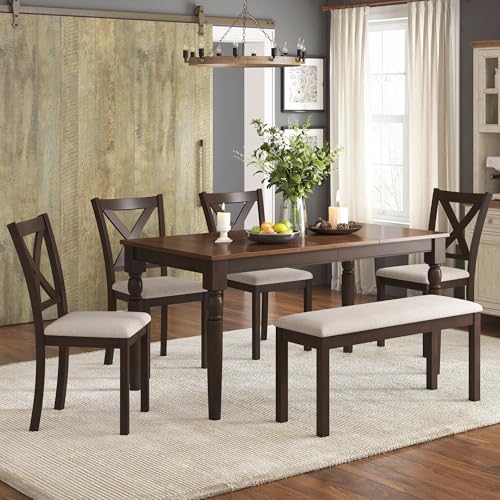
Dining Table with Chairs and Bench Set: The Complete Buying Guide
Everything you need to know about choosing a dining table with chairs and bench set — seating layouts, material comparisons, comfort factors, and styling advice for a dining space that works for everyday meals and special gatherings.
START COMPARINGWhy Choose a Dining Table with Chairs and Bench Set
A dining table with chairs and bench set has become one of the most practical and design-forward choices for modern homes. The combination of individual chairs and a shared bench offers a balance that straight chair-only sets rarely achieve: defined personal seating on one side and flexible, communal seating on the other.
The bench side is especially useful for families with children, since it eliminates the temptation to tip back on rear legs and keeps younger diners closely grouped. For adults, a bench encourages a more relaxed, social dining posture and allows the table to be pushed closer to a wall or window when not in use.
From a design standpoint, the mix of silhouettes — upright chairs paired with a long horizontal bench — creates visual rhythm. It breaks the repetition of identical chairs and gives the eye a natural resting point. Many interior stylists use this asymmetry deliberately to make a dining room feel curated rather than showroom-matched.
Another advantage is versatility. A bench can slide fully beneath the table, opening floor space in compact dining rooms. It can also double as extra seating elsewhere in the home when you host larger gatherings. For households that entertain often, this flexibility is a meaningful daily benefit.
If you are still deciding between chair-only and bench-inclusive configurations, our guide to dining table with bench and chairs explores the trade-offs in more depth. For larger households, a dining table set with chairs and bench layout often provides the best balance of capacity and comfort.
Seating Layouts Explained
The term "dining table with chairs and bench set" covers several distinct configurations. Understanding each layout helps you match the set to your room shape, household size, and entertaining habits.
Two Chairs and One Bench
This is the classic configuration and the most common entry point into bench dining. The bench typically runs along one long side of a rectangular table, with two chairs facing it. This layout seats four to five people comfortably and works well in both square and rectangular dining rooms. It is also the most space-efficient option for smaller homes.
For a closer look at this arrangement, see our guide to a dining table with 2 chairs and a bench.
Four Chairs and One Bench
Adding two more chairs — usually one at each end — increases capacity to six. This layout suits families of five or six and works best with longer rectangular tables. The end chairs often have arms or a slightly different profile, which adds visual interest while keeping the bench as the focal point. Our dining table with bench and 4 chairs guide covers sizing and proportion considerations.
Two Benches and Chairs
For a more communal, picnic-style feel, some sets pair two benches with a pair of chairs placed at the ends. This layout is popular in farmhouse and rustic interiors, and it maximizes seating along both long sides. It requires a wider table and more generous clearance on each side. See our dining set with bench overview for related configurations.
Corner Bench Layouts
Corner or L-shaped bench configurations turn a dining table into a built-in banquette-style arrangement. These are especially effective in alcoves, bay windows, and open-plan kitchens where a freestanding set would feel awkward. A dining table with corner bench and chairs can dramatically improve flow in tricky floor plans.
Quick tip: If your dining room is narrow, place the bench against the wall and the chairs on the open side. This keeps traffic paths clear and makes the bench feel intentional rather than squeezed.
Table and Bench Materials
The material of both the table and the bench determines durability, maintenance needs, and the overall character of the set. Most dining table with chairs and bench sets fall into one of four material families.
Solid Wood
Solid wood remains the benchmark for warmth and longevity. Hardwoods such as oak, walnut, and acacia resist daily wear and can be refinished if the surface dulls. Wood benches pair naturally with wood tables, though mixing species — a lighter oak table with a darker walnut bench — creates a more layered look. Wood requires periodic oiling or sealing, especially in humid climates.
Metal Frames
Steel and aluminum frames bring an industrial or modern edge. They are highly durable, resistant to warping, and easy to wipe clean. Metal benches often feature slatted or perforated seats that suit contemporary and minimalist interiors. Powder-coated finishes resist rust, making metal a solid choice for covered patios and sunrooms as well. Our overview of metal vs aluminum furniture explains the differences in weight and finish quality.
Composite and Resin
Engineered composites mimic the look of wood or stone while resisting moisture and temperature swings. They are a practical choice for dining areas near kitchens or covered outdoor rooms. Composite benches are heavier than wood but require almost no maintenance beyond routine cleaning.
Upholstered and Cushioned Elements
Chairs and benches often include upholstered seats or backs. Performance fabrics resist stains and fading, while removable covers simplify cleaning. A cushioned bench transforms a hard wooden seat into a comfortable spot for long dinners. If you are pairing a bench with existing chairs, our guide to dining bench seat options covers cushion thickness and fabric choices.
| Material | Best For | Maintenance | Durability |
|---|---|---|---|
| Solid Wood | Warm, traditional, and farmhouse interiors | Periodic oiling or sealing | High — refinishable |
| Metal | Industrial, modern, and minimalist spaces | Wipe clean; check powder coating | High — resists warping |
| Composite / Resin | Humid climates and covered outdoor rooms | Minimal — soap and water | Moderate to high |
| Upholstered | Comfort-focused dining and formal rooms | Vacuum and spot clean | Depends on fabric grade |
Comfort and Back Support
A bench is only as good as its comfort over the course of a long meal. The most common complaint about bench seating is the lack of back support, but this varies significantly by design.
Backless Benches
Backless benches are the most space-efficient and the easiest to tuck under the table. They suit casual meals, breakfast nooks, and kitchens where the dining set doubles as a workspace. For long dinners, pair a backless bench with a seat cushion and position it so diners can lean slightly against the table edge if needed.
Benches with Backs
A bench with a back offers proper lumbar support and feels closer to a sofa seat. These benches take up slightly more depth, so measure clearance carefully. They are the better choice for households that host lingering dinners or use the dining table as a primary gathering spot. Our guide to a dining table bench with back explains frame angles and upholstery options.
Cushioning and Seat Depth
A seat depth of around 17 to 19 inches suits most adults. Benches that are too deep force shorter diners to perch forward; benches that are too shallow feel unstable. Removable cushions are practical because they can be replaced or re-covered as tastes change. Our dining bench seat guide covers cushion densities and tie-down options.
Matching Chair Comfort
The chairs in the set should feel balanced with the bench. If the bench is upholstered and plush, plain wooden chairs can feel mismatched. Conversely, a simple wooden bench pairs well with chairs that have lightly padded seats. Aim for a consistent seat height across both — typically 18 to 19 inches from floor to seat — so everyone dines at the same level.
Space Planning and Sizing
Bench seating changes how much floor space a dining set actually requires. Because the bench slides under the table, a set that looks compact when stored can seat more people than a chair-only set of the same footprint.
Clearance Around the Table
Allow at least 36 inches of clearance between the table edge and any wall or furniture behind the chairs. On the bench side, you can reduce this to around 24 inches if the bench is backless and tucks under the table, but 30 inches is more comfortable for daily use. End chairs need the full 36 inches to pull out comfortably.
Table Length and Seating Capacity
As a general rule, allow 24 inches of table width per person seated along a side. A 60-inch rectangular table seats two to three people per long side, which fits a two-chair-plus-bench layout comfortably. A 72-inch table supports four chairs and one bench, or two chairs and two benches. For larger households, a dining table set for 8 with bench typically pairs an 84-inch or longer table with two benches.
Small-Space Solutions
In compact dining rooms, a bench against the wall frees up a full walking path. Round tables with a curved bench are another option, though curved benches are less common and often custom. Our guide to a dining table with bench for small spaces covers drop-leaf tables, wall-mounted benches, and nesting configurations.
Measure twice: Before ordering, tape the table and bench footprint onto your floor. Walk around the taped outline as if the set were already there. This simple step catches most sizing mistakes before delivery.
Matching Your Interior Style
The visual character of a dining table with chairs and bench set should echo the surrounding room, but it can also serve as a deliberate contrast point. Here is how the most common styles translate into bench-and-chair configurations.
Farmhouse and Rustic
Farmhouse dining sets typically pair a thick-plank wood table with a matching wooden bench and spindle-back or cross-back chairs. Distressed finishes, turned legs, and warm stains reinforce the look. A farmhouse dining table with bench and chairs is the archetypal version of this style and works equally well in a dedicated dining room or an open kitchen.
Modern and Minimalist
Clean lines, slim profiles, and restrained materials define modern sets. A metal-frame table with a slatted bench and molded chairs keeps the look light. Avoid heavy ornamentation; the bench should read as a single clean horizontal line beneath the tabletop.
Transitional
Transitional sets blend traditional warmth with contemporary simplicity. An upholstered bench paired with slat-back chairs and a gently tapered table leg is a classic transitional combination. Neutral fabrics and mid-tone woods keep the set versatile across changing decor.
Industrial
Exposed metal, reclaimed wood, and rivet details define industrial dining sets. A bench with a metal frame and a wood seat pairs naturally with factory-style chairs. Industrial sets suit lofts, converted spaces, and open-plan homes with exposed brick or concrete.
If you are building a cohesive dining room, our guide to dining table set with chairs and bench options highlights sets that balance style and function across these aesthetics.
Tier Comparison: What to Expect at Each Level
Dining table with chairs and bench sets vary widely in construction quality and finish detail. The table below organizes typical characteristics by market tier so you can align expectations with your priorities. No numeric figures are used — tiers are relative to one another within the category.
| Tier | Typical Construction | Best For | Longevity Outlook |
|---|---|---|---|
| Entry-Level | Engineered wood or thin veneer tops, basic metal or softwood frames, simple joinery | First apartments, casual breakfast nooks, temporary setups | Moderate — expect visible wear within a few years of heavy use |
| Mid-Range | Solid wood or thicker veneers, reinforced joinery, powder-coated metal, basic upholstery | Family dining rooms, everyday use, mixed households | Good — solid choice for the tier with routine care |
| Premium | Hardwood construction, mortise-and-tenon joinery, high-grade upholstery, durable finishes | Formal dining rooms, frequent entertaining, long-term homes | High — refinishable and repairable over time |
| Luxury | Premium hardwoods, custom upholstery, hand-finished details, commercial-grade hardware | Design-led interiors, heirloom-quality expectations, large dining rooms | Very high — a long-term investment piece |
As a rule, mid-range sets offer the broadest balance of durability and design flexibility. Entry-level sets are well-suited to spaces where the dining set is not the focal point, while premium and luxury sets reward households that plan to keep the same set for many years. For a deeper look at related configurations, our dining table with bench and chairs set guide covers layout-specific tier considerations.
Shopping Checklist
Before finalizing a dining table with chairs and bench set, run through the following checklist. It catches the most common sources of post-purchase frustration.
- Measure your room and doorway. Confirm the assembled set will fit through your entryway and into the intended space with clearance on all sides.
- Confirm seating capacity. Count the number of regular diners in your household, then add one or two seats for guests. A dining table with chairs and bench layout typically seats four to six.
- Decide on back support. Choose a backless bench for flexibility and compact storage, or a bench with a back for long, comfortable meals.
- Check seat heights. Chair and bench seats should sit within an inch of each other for a level dining plane.
- Review material care requirements. Wood needs periodic sealing; metal needs occasional inspection; upholstery needs spot cleaning. Match the care routine to your household's tolerance for maintenance.
- Plan for delivery and assembly. Large tables and benches often ship in multiple boxes. Our guide to delivery and assembly explains what to expect and how to prepare.
- Consider future flexibility. If you may move or reconfigure the room, a bench that doubles as extra seating elsewhere adds long-term usefulness.
Frequently Asked Questions
Ready to Find Your Ideal Dining Set?
Explore our curated selection of dining tables with chairs and bench sets. Compare features, seating layouts, and material options to find the configuration that fits your home.
EXPLORE OPTIONS