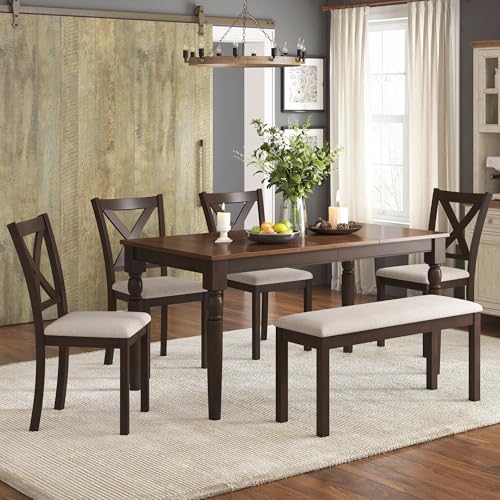
Dining Table with Bench and Chairs Set: The Complete Buying Guide
Everything you need to know before choosing a hybrid dining set that pairs a table with bench seating and chairs — seating layouts, materials, comfort factors, and space planning for indoor and outdoor use.
Explore Seating Layouts1. What Is a Dining Table with Bench and Chairs Set?
A dining table with bench and chairs set is a coordinated furniture grouping that combines a central dining table with bench seating along at least one side and individual chairs for the remaining seats. This hybrid arrangement sits between a fully benched picnic-style set and a conventional all-chair dining set.
The defining characteristic is the bench. Rather than four, six, or eight separate chairs around the table, one or two benches handle the long sides, while chairs occupy the ends or the remaining side. The result is a casual, communal feel that works equally well in a farmhouse dining room and on a covered patio.
These sets come in several recognizable forms: a dining table with bench and 2 chairs for compact households, a dining table with bench and 4 chairs for standard family dining, and larger configurations such as a dining table set for 8 with bench for entertaining. Corner configurations are also available, including a dining table with corner bench and chairs, which tucks seating into an L-shaped footprint.
What separates a well-chosen set from a mismatched assembly is proportion. Bench length, seat height, table apron clearance, and chair back height all need to work together. A bench that is too tall will not slide under the table; a bench that is too short leaves end chairs floating in space. The sections that follow explain how to evaluate each of these variables.
2. Why Choose Bench and Chair Seating?
Bench seating is not simply a stylistic choice. It changes how a table functions, how many people it accommodates, and how the surrounding room or patio is used.
Seating density
A bench places people shoulder to shoulder with no armrests between them. That typically fits one additional person per bench side compared with individual chairs of the same span. A 72-inch bench can comfortably seat three adults, where the same length would hold two chairs with comfortable spacing.
Flexibility for different gatherings
Children and teenagers tend to gravitate toward benches, while older guests often prefer chairs with backs and arms. A set that mixes both lets you assign seating to suit the group. For everyday family meals, the bench side becomes the default; for formal occasions, the chairs take the ends and the bench seats the younger guests.
Visual openness
Backless benches keep sightlines low, which makes a dining area feel less crowded. In a small dining room or an open-plan patio, this matters. The trade-off is back support, which is why many buyers choose a dining table bench with back — a bench with a backrest that preserves the bench format while adding support.
Storage and access
Benches can slide fully under the table, freeing floor space when the set is not in use. Some models include lift-up seats with internal storage, a feature worth considering in smaller homes. If storage is a priority, review a dining table with storage bench and chairs before deciding.
3. Seating Layouts and Capacity
The single most important decision is how many people you need to seat and on which sides. The table below summarizes common configurations, their typical capacity, and the situations each suits best.
| Configuration | Typical Seating | Best For | Notes |
|---|---|---|---|
| 3-piece set: table, 1 bench, 2 chairs | 4 people | Small dining rooms, breakfast nooks, balconies | Bench on one long side, one chair per end |
| 4-piece set: table, 1 bench, 4 chairs | 6 people | Family dining, mid-size patios | Bench on one side, two chairs per end or on the opposite side |
| Table with bench and 2 chairs | 4 people | Couples who entertain occasionally | Compact footprint; see dining table with 2 chairs and a bench |
| Table with bench and 4 chairs | 6 people | Households of four to six | Chairs can be split two per end for symmetry |
| Table with two benches and 2 end chairs | 8 people | Large families, frequent entertaining | Requires a longer table, typically 84 inches or more |
| Corner bench with chairs | 5 to 7 people | Kitchen corners, bay windows, L-shaped patios | See dining set with corner bench and chairs |
Capacity figures assume average adult shoulder width and a table at least 36 inches wide. Narrower tables reduce usable seating because place settings crowd the center. Always confirm the manufacturer's stated capacity and, if possible, measure an existing table against the proposed footprint.
One-sided versus two-sided benches
A dining table with bench on one side is the most common hybrid layout. The bench typically sits against a wall or railing, with chairs on the opposite side and ends. This arrangement is efficient in narrow rooms because the bench side needs less pull-out clearance.
A two-sided bench layout is more communal and works well on a patio where the table is freestanding. The trade-off is that everyone on both benches must shift for anyone to exit. For outdoor use, two benches also simplify storage, since benches stack or nest more readily than chairs.
Extendable and expandable options
If your household size fluctuates, consider an extendable dining table with bench and chairs. Leaf extensions add seating without changing the base footprint. Pair an extendable table with a bench long enough to span the extended length, or plan to add a second bench when the leaf is in use.
4. Bench Types and Configurations
Bench design affects comfort, access, and how the set integrates with the room. The main variants are described below.
Backless benches
The classic picnic-style bench. Backless benches slide completely under the table, take up minimal visual space, and encourage a casual atmosphere. They offer no back support, so they suit shorter meals and younger diners. Cushions with ties can soften the seat, and a bench pad with a non-slip backing prevents sliding.
Benches with backrests
A dining table with bench with back and chairs adds support for longer meals. Backed benches resemble a sofa without arms and are especially comfortable for older guests. Check that the back height clears the table apron and that the bench still slides under the table when needed. Many backed benches are too tall to tuck fully under, so measure the clearance between the table apron and the floor.
Upholstered benches
For indoor dining rooms, a dining table with bench and upholstered chairs combines a cushioned bench with fabric-covered chairs for a cohesive, formal look. Upholstery should be treated for stain resistance if the set is used daily. Removable, washable covers are a practical choice in households with children.
Corner and L-shaped benches
Corner benches maximize seating in tight corners and create a built-in banquette effect. A dining table with corner bench and chairs or a dining room table with banquette seating is an efficient solution for breakfast nooks and small kitchens. Corner benches are less flexible than freestanding benches, since they are fixed to a corner, but they free up floor space in the center of the room.
Bench height and table clearance
Standard dining tables are 28 to 30 inches high. A bench seat should be 17 to 19 inches from the floor, leaving roughly 10 to 12 inches of clearance between the seat and the table apron. Benches designed for counter-height tables are taller and should not be mixed with standard-height tables. If you already own a table, measure the apron height before buying a bench separately.
5. Table and Bench Materials
Material choice determines durability, maintenance, and whether the set can live outdoors. The table below compares the most common options using tier descriptors rather than figures.
| Material | Market Tier | Durability | Maintenance | Best For |
|---|---|---|---|---|
| Solid teak | Premium to luxury | Excellent; naturally weather-resistant | Occasional oiling; develops silver patina | Outdoor patios, long-term investment |
| Eucalyptus | Mid-range to premium | Very good; dense hardwood | Annual sealing recommended | Outdoor and indoor farmhouse styles |
| Powder-coated aluminum | Mid-range | Excellent rust resistance; lightweight | Wipe clean; check coating for chips | Modern outdoor sets, balcony dining |
| HDPE (high-density polyethylene) | Essential to mid-range | Excellent weather resistance; colorfast | Soap and water; no sealing | Coastal and rainy climates |
| Acacia | Entry-level to mid-range | Good; harder than pine but softer than teak | Seal annually for outdoor use | Indoor dining, covered patios |
| MDF with veneer | Entry-level | Moderate; susceptible to moisture | Keep dry; avoid outdoor exposure | Indoor dining rooms only |
| Recycled plastic composite | Mid-range | Very good; low maintenance | Wipe clean | Family patios, high-use outdoor areas |
For a set that will remain outdoors year-round, prioritize powder-coated aluminum, teak, HDPE, or recycled composite. Acacia and eucalyptus are solid choices for covered patios and indoor dining rooms, provided they are sealed. Avoid veneered MDF and untreated steel outdoors; both degrade quickly with moisture exposure.
Hardware matters as much as the frame. Stainless steel or galvanized bolts resist corrosion; standard zinc-plated hardware will rust at the joints within a season or two. Check whether the manufacturer specifies outdoor-rated hardware, and inspect joints when the set arrives.
6. Comfort and Ergonomics
A dining set is used for hours at a time, so comfort should not be an afterthought. The bench is usually the weak point, and it is worth evaluating carefully.
Seat depth and contour
Bench seat depth of 15 to 17 inches suits most adults. Deeper benches encourage slouching; shallower benches leave the thighs unsupported. Contoured seats with a slight dip distribute weight better than flat planks. If the bench is flat, a fitted cushion of 1.5 to 2 inches thickness improves comfort without raising the seat too high.
Back support
Backless benches are acceptable for meals under 45 minutes. For longer gatherings, a backrest makes a noticeable difference. When comparing a backed bench with a backless one, sit on both for several minutes and check that the backrest angle matches your natural posture.
Chair pairing
Chairs should have a seat height matching the bench so that everyone at the table sits at the same level. Mixing a 17-inch bench with 19-inch chairs creates a visible mismatch and uneven arm positions. If you are buying components separately, measure seat heights before committing.
Cushions and fabric
Outdoor cushions should use solution-dyed acrylic or olefin fabric with quick-dry foam. Indoor cushions can use higher-density foam and a wider range of fabrics, but should have removable covers in households with children. Tie-on cushions stay in place on a bench better than loose pads.
7. Space Planning and Clearance
Bench seating changes the clearance requirements compared with all-chair dining. Chairs need room to pull out straight back; bench users slide in from the side and need lateral clearance instead.
Clearance rules of thumb
- Chair sides: 36 inches from the table edge to a wall or adjacent furniture.
- Bench sides: 30 inches minimum, with the bench able to pull out at least 12 inches for access.
- Between table and bench seat: 10 to 12 inches of vertical clearance for legroom.
- End chairs: 24 inches between the table end and any wall, plus pull-out space.
For a typical 36-by-72-inch table with one bench and four chairs, plan a footprint of roughly 10 by 12 feet to allow comfortable circulation. In a tighter space, a dining table with bench for small spaces can reduce the footprint by placing the bench against a wall and using chairs only on the open sides.
Room shape and traffic flow
Rectangular rooms suit rectangular tables with benches along the long axis. Square rooms can accommodate a square table with benches on two opposite sides. In open-plan layouts, orient the bench away from the main walking path so that guests are not constantly asked to shift.
Measuring before you buy
Measure the room, then tape the proposed table and bench footprint on the floor. Walk around the tape outline to confirm circulation. Account for door swings, cabinet doors, and any nearby furniture that needs to open. A set that fits the room but blocks a doorway will quickly become frustrating.
8. Outdoor and Patio Considerations
Many buyers search for this configuration for outdoor use. A patio dining set with bench and chairs introduces a few additional requirements beyond indoor sets.
Weather resistance
Frames should be powder-coated aluminum, teak, eucalyptus, HDPE, or composite. Avoid untreated steel and softwoods. Check that the finish is described as rust-proof or weather-resistant, and confirm that the hardware is stainless or galvanized. For coastal areas, salt spray accelerates corrosion; HDPE and anodized aluminum perform best.
Surface and stability
Patio surfaces are rarely perfectly level. Benches with adjustable feet or leveling glides stay stable on uneven pavers and decking. A bench that rocks on a patio slab is uncomfortable and can damage the frame over time. Consider the surface material as well: metal legs on stone can scratch, so look for protective caps.
Sun and shade
If the set will sit in direct sun, choose fade-resistant fabrics and finishes. Umbrella holes are useful for shade; check whether the table includes an umbrella hole and whether a compatible base is available. An extendable outdoor dining table with umbrella hole combines flexibility with shade provision.
Storage and seasonal care
Outdoor sets benefit from covers during off-season months. A fitted cover protects the table and bench from leaves, pollen, and standing water. Store cushions indoors when not in use. For year-round exposure, HDPE and aluminum require the least maintenance; wood requires annual sealing and occasional sanding.
Wind and weight
Lightweight aluminum benches can shift in strong wind. If the patio is exposed, choose a heavier frame or add weighted feet. Conversely, heavy teak benches are stable but difficult to move for cleaning. Balance stability against portability based on how often the set will be rearranged.
9. Delivery, Assembly, and Care
Dining sets with benches are bulky, and delivery logistics deserve attention before purchase. Many retailers offer curbside delivery by default; in-home delivery and assembly may be an add-on. Confirm what is included, especially for upstairs rooms or gated patios.
Assembly expectations
Most sets require partial assembly: attaching legs to the table, assembling the bench, and attaching chair backs. Flat-pack sets typically include the necessary tools, but a cordless drill and a rubber mallet speed up the process. Allow 60 to 120 minutes for a full set. Check that all hardware is accounted for before starting, and keep the instructions for future disassembly.
Inspection on arrival
Inspect the tabletop for scratches, the bench for wobble, and the chairs for loose joints. Report damage before assembly, since some retailers require the set to be in original packaging for returns. Test the bench by sitting on each end and in the middle; a stable bench should not flex noticeably.
Routine care
- Wood: Wipe spills promptly, reseal annually for outdoor use, and sand minor scratches with fine grit.
- Metal: Wipe with mild soap and water; touch up chips in powder coating to prevent corrosion.
- HDPE and composite: Clean with soap and water; avoid abrasive pads that dull the surface.
- Cushions: Brush off debris, spot clean with mild detergent, and air-dry fully before storing.
For a more detailed walkthrough of assembly and delivery expectations, see the delivery and assembly guide.
10. Buying Checklist
Use this checklist to evaluate any dining table with bench and chairs set before committing.
- Seating count: Confirm the set seats the number of people you regularly host, with room for one or two extra on occasion.
- Layout: Decide between one-sided bench, two-sided bench, or corner bench based on your room shape and traffic flow.
- Bench type: Choose backless for compactness, backed for comfort, or upholstered for a formal indoor look.
- Material: Match the material to indoor or outdoor use, and confirm hardware is corrosion-resistant for patios.
- Dimensions: Tape the footprint on the floor and verify clearance on all sides, including bench pull-out space.
- Seat height match: Ensure bench and chair seat heights are consistent so all diners sit at the same level.
- Comfort: Test the bench edge, back support, and knee clearance, or read owner reviews for long-term comfort feedback.
- Assembly and delivery: Confirm what assembly is required and whether in-home delivery is available.
- Care requirements: Factor in sealing, covering, and cushion storage into your routine.
- Warranty: Check frame and finish warranties; longer coverage typically signals a higher-tier build.
For related configurations, compare the dining table with a bench and chairs and the dining table and bench set options to see which seating mix best fits your household.
Frequently Asked Questions
What is a dining table with bench and chairs set?
It is a coordinated dining set that pairs a central table with bench seating on at least one side and individual chairs for the remaining seats. The hybrid layout seats more people than an all-chair set of the same footprint and creates a casual, communal atmosphere.
How many people can a dining table with bench and chairs set seat?
Capacity depends on table length. A 3-piece set with one bench and two chairs typically seats four. A 4-piece set with one bench and four chairs seats six. Longer tables with two benches and two end chairs can seat eight or more. Always verify the manufacturer's stated capacity.
Is bench seating comfortable for long dinners?
Yes, when the bench has a contoured seat, adequate depth, and a backrest. Backless benches suit shorter meals; backed benches are better for extended gatherings. Adding a fitted cushion improves comfort without raising the seat too high.
Can a dining table with bench and chairs set be used outdoors?
Yes, if the materials are weather-resistant. Look for powder-coated aluminum, teak, eucalyptus, HDPE, or composite frames with stainless or galvanized hardware. Outdoor cushions should use solution-dyed acrylic fabric and quick-dry foam.
How much clearance is needed around a dining table with a bench?
Allow 36 inches on chair sides and at least 30 inches on bench sides, with room for the bench to pull out about 12 inches. For a typical 36-by-72-inch table, plan a footprint of roughly 10 by 12 feet.
Do benches need to be the same length as the table?
Not necessarily. A bench 6 to 12 inches shorter than the table looks intentional and leaves room for end chairs. A bench equal to or longer than the table can block end seating and appears crowded. Match bench length to the seating span you intend to use.
Final Thoughts
A dining table with bench and chairs set is a practical choice for households that want flexible seating without sacrificing style. The bench side seats more people per foot, keeps sightlines open, and encourages a relaxed gathering atmosphere, while the chairs provide back support and easy access for guests who need it. The key is proportion: bench height relative to the table apron, bench length relative to the table, and clearance around the set for comfortable access.
Before buying, confirm your seating count, measure the footprint, and match the material to the environment. For outdoor sets, prioritize rust-resistant frames and fade-resistant fabrics. For indoor sets, focus on comfort, upholstery durability, and how the bench integrates with the room's traffic flow. With those factors settled, the set you choose will earn daily use rather than gather dust.