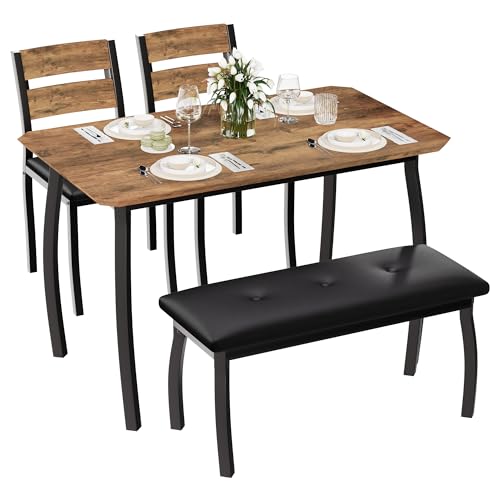
Dining Table with Bench and 2 Chairs: The Complete Buyer's Guide
Thinking about a dining table with a bench on one side and two chairs on the other? This guide walks you through layout planning, seating ergonomics, material choices, and the design details that make this configuration one of the smartest picks for compact and modern dining rooms.
Why this setup works: A dining table with a bench and two chairs balances individual seating with shared seating. The bench tucks neatly under the table to free up floor space, while the two chairs give guests comfortable, supportive spots on the opposite side. It is a layout that suits two to four people without making a room feel crowded.
What Exactly Is a Dining Table with Bench and 2 Chairs?
This configuration pairs a rectangular or square dining table with a long bench on one side and two individual chairs on the opposite side. It is often sold as a three-piece dining set and is commonly referred to as a 3-piece dining set. The format is popular because it offers a different seating rhythm on each side of the table: the bench encourages a relaxed, communal feel, while the chairs provide back support for diners who prefer a conventional seat.
If you are comparing similar formats, the dining table with bench and two chairs variant is essentially the same layout and worth reviewing alongside this guide. The key difference between the two is usually wording rather than structure, though specific product families may vary in table shape, bench length, and chair style.
Best For Small Spaces
The bench slides fully under the table when not in use, which reduces visual clutter and frees walking space. This makes the layout a strong fit for apartments, breakfast nooks, and open-plan kitchens. If floor space is your main constraint, the dining table with bench for small spaces approach is especially relevant.
Best For Casual Family Meals
Benches invite side-by-side seating, which works well for families with children and for casual shared meals. The two chairs on the opposite side give adults or guests a more structured seat. This mix of seating styles is why the format remains a steady favorite in mid-range and premium dining collections.
How the Bench and Chairs Work Together
Understanding the seating geometry helps you choose the right size for your room. A bench on one side typically seats two to three people, while the two chairs seat one person each. That gives the set an effective capacity of four to five diners, depending on bench length.
- Bench length matters: A bench that matches the table length looks intentional and balanced. A bench slightly shorter than the table keeps the silhouette clean but may limit seating to two adults comfortably.
- Chair depth matters: Chairs with deep seats need more pull-out clearance. If your dining zone is tight, choose chairs with a shallow profile or a sled base that slides easily.
- Bench backrests: A backless bench is easiest to tuck away, while a dining table with bench with back and chairs offers more comfort for longer meals.
Practical tip: Before ordering, measure the distance from the table edge to the nearest wall. Leave at least 30 inches on the chair side for pull-out comfort, and around 24 inches on the bench side if the bench is backless. If the bench has a backrest, treat it like a chair and plan for the full 30 inches.
Popular Styles and Design Directions
The visual identity of your dining set depends mostly on the table shape, the bench profile, and the chair style. Here are the most common directions buyers consider.
| Style | Typical Features | Best For | Market Tier |
|---|---|---|---|
| Farmhouse | Solid wood table, turned legs, distressed finish, backless or low-back bench | Warm, rustic dining rooms and open kitchens | Mid-range to premium |
| Modern Minimalist | Clean lines, square or rectangular table, slim bench, upholstered chairs | Contemporary apartments and small dining zones | Mid-tier to high-end tier |
| Industrial | Metal frame, wood top, exposed hardware, bench with metal legs | Lofts, urban interiors, mixed-material spaces | Essential tier to mid-range |
| Transitional | Softened lines, cushioned bench, slat-back chairs, neutral finishes | Family homes and flexible dining rooms | Mid-range |
| Scandinavian | Light wood, tapered legs, simple bench, fabric or woven chairs | Bright, airy rooms and compact layouts | Mid-tier |
If your room leans toward a farmhouse look, the farmhouse dining table with bench and chairs style is a natural starting point. For a more contemporary approach, review the dining table with bench and chairs collection to compare silhouettes.
Materials: What to Look For
Material choice affects durability, maintenance, and the long-term feel of the set. The table and bench should be evaluated together because they bear the most weight and movement.
Solid Wood
Solid wood tables and benches offer durable construction and can be refinished over time. Hardwoods such as oak, acacia, and rubberwood are common in mid-range and premium sets. A sealed finish helps resist everyday spills and wear.
Engineered Wood with Veneer
Engineered wood keeps the set lighter and more stable in humid rooms. Look for well-sealed edges and a reinforced frame; these details separate well-specified engineered pieces from entry-level builds.
Metal Frames
High-grade steel and powder-coated aluminum give the bench and chair frames a solid build. A rust-proof finish is essential if the set sits near a window with condensation or in a covered patio area.
Upholstered Seats
Upholstered chairs and cushioned benches add comfort but need care. Choose performance fabrics with tight weaves for easier cleaning, and check that cushion covers are removable if you expect heavy daily use.
Durability check: Look for corner blocks, stretchers, and reinforced joints on the bench. A bench takes repeated side-loading when people sit down at an angle, so a well-braced frame matters more on the bench than on the chairs.
Comfort and Ergonomics
Comfort is where budget-friendly sets often differ from mid-range and top-tier designs. The main variables are seat height, bench depth, back support, and cushioning.
- Seat height consistency: Chairs and bench should place diners at roughly the same eye level. A bench that sits too low makes the table feel unbalanced and can cause shoulder strain.
- Bench depth: Around 14 to 16 inches is comfortable for most adults. Deeper benches feel more like a sofa seat and may push diners too far from the table.
- Back support: Backless benches are fine for short meals but tiring for long dinners. If you host often, consider a dining table bench with back to add support without giving up the bench look.
- Cushioning: A thin cushion takes the hardness out of a wooden bench without making it hard to slide under the table.
Space Planning and Room Layout
The bench-and-two-chairs layout is flexible, but it still needs a clear plan. Use the following checks before committing to a set.
| Room Consideration | What to Check | Recommended Approach |
|---|---|---|
| Wall placement | Distance from table edge to wall | Bench against a wall saves depth; chairs need pull-out room |
| Traffic paths | Main walkway through the room | Keep at least 36 inches of clear walking width |
| Window or door access | Swing space for doors and windows | Do not block access with the bench end |
| Lighting | Pendant or ceiling light position | Center the table under the fixture for balance |
For layouts where the bench sits against a wall or window, the dining table with bench on one side layout is the most practical pattern. If you are planning a corner arrangement instead, review the dining table with corner bench and chairs option for a different footprint.
Bench and Two Chairs vs. Other Seating Configurations
It helps to see how this layout compares with alternatives before you settle on a direction.
| Configuration | Seating Capacity | Space Efficiency | Best For |
|---|---|---|---|
| Table with bench and 2 chairs | 4 to 5 people | High — bench tucks away | Compact dining rooms, families |
| Table with 4 chairs | 4 people | Moderate — needs pull-out space on both sides | Formal dining rooms |
| Table with bench and 4 chairs | 6 people | Moderate | Larger families and hosting |
| Corner bench set | 4 to 6 people | High in corners | Kitchen nooks and bay windows |
If your household regularly hosts more than four diners, the dining table with bench and 4 chairs format may suit you better. For a straightforward two-to-four-person setup, the dining table with bench and chairs set range is the most direct comparison point.
Buying Checklist: What to Verify Before You Order
- Table dimensions: Confirm length, width, and height. A common height is around 30 inches, but slight variations affect chair and bench fit.
- Bench weight capacity: Check the stated load rating, especially if multiple adults will sit on one bench.
- Chair seat height: Match chair seat height to table height to avoid knee clearance problems.
- Assembly requirements: Review how many parts ship separately and whether basic tools are needed. Delivery and setup details are covered in the delivery and assembly guide.
- Finish and care: Confirm the finish type and recommended cleaning method. Sealed wood and powder-coated metal are the easiest to maintain.
- Stability features: Look for anti-slip feet on the bench and floor protectors on the chairs to prevent scratching.
Ready to Compare Options?
Browse recommended dining table sets with bench and chairs below, then check availability and features for each option.
View Recommended SetsFrequently Asked Questions
What is a dining table with bench and 2 chairs best suited for?
It works best as a compact dining solution for two to four people. The bench seats multiple people on one side while the two chairs provide individual seating on the opposite side, making it ideal for small dining rooms, breakfast nooks, and open-plan apartments.
How much space does a dining table with bench and 2 chairs require?
A typical set measures around 43 to 55 inches in table length. Leave at least 24 to 30 inches of clearance around the table for chair pull-out and bench access, so plan for roughly 8 by 8 feet of floor area in a dining zone.
Is a bench comfortable for long dinners?
A bench with a contoured seat and backrest supports comfortable seating for extended meals. Upholstered or cushioned bench seats are best for long dinners, while simple backless benches suit casual, quick meals better.
Which materials are most durable for a dining bench set?
Solid wood frames, high-grade steel, and powder-coated aluminum offer the most durable construction. For outdoor or covered patio use, choose weather-resistant coating and rust-proof finishes.
Can a bench be used with any dining table?
Not always. The bench should sit at a comfortable height relative to the tabletop and fit within the table length for a balanced look. Check table height, apron depth, and leg placement before pairing a bench with an existing table.