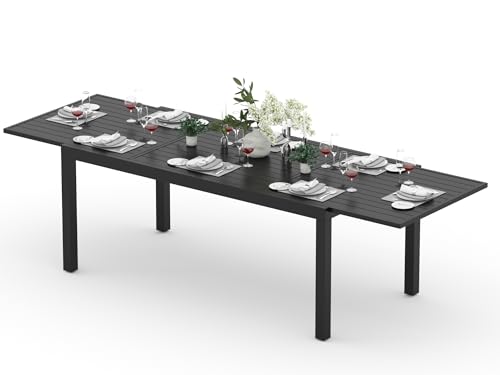
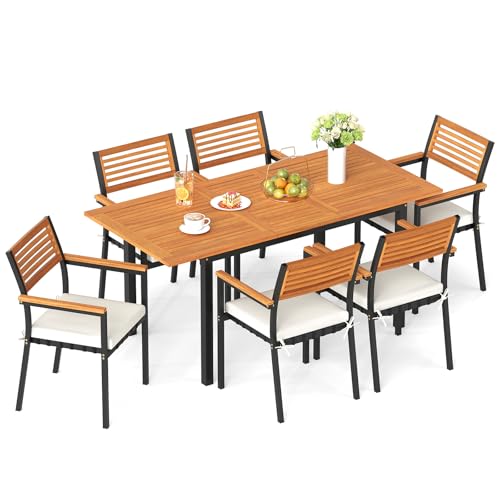
Expandable Patio Table With Umbrella Hole
Your complete buying guide to flexible outdoor dining tables that grow with your guest list and keep shade centered over the table.
Explore The GuideWhy this guide matters: An expandable patio table with an umbrella hole solves two common outdoor problems at once — limited seating on ordinary days and too much sun during meals. This guide explains how the mechanism works, which materials and tiers suit different situations, and what to check before you decide.
What Is an Expandable Patio Table With Umbrella Hole?
An expandable patio table with umbrella hole is an outdoor dining table designed with two functions built into one piece of furniture. First, the tabletop can extend — usually through one or two removable leaves, a butterfly-leaf mechanism, or sliding panels — to increase seating capacity when friends and family arrive. Second, a central opening in the tabletop accepts a patio umbrella pole, so shade stays positioned over the dining area rather than off to the side.
This combination is especially useful for households that host occasionally. For everyday use, the table stays compact and keeps a small patio or deck uncluttered. Before a gathering, the extension panels are added, and the umbrella remains centered because the hole is aligned with the table's midpoint. Compared with a fixed-size dining outdoor patio set, an expandable model delivers more flexibility without requiring a second table.
If you are still exploring the broader category, the general guide on expandable patio tables covers non-umbrella variants and mechanism basics. This page goes deeper into the umbrella-hole configuration, which has its own considerations for stability, shade coverage, and table geometry.
How Expandable Tables Work: Mechanisms Explained
Extension mechanisms vary considerably, and the quality of the mechanism is one of the clearest differentiators between product tiers. Understanding the three common designs will help you match the table to your habits.
1. Drop-Leaf Tables
A drop-leaf table has hinged panels on one or both ends that fold down vertically when not needed. Folding the leaves up creates additional seating space. These models are usually the simplest in construction and suit small balconies or breakfast nooks. The trade-off is that the hinge hardware sees repeated movement, so reinforced hinges matter on models that will be opened and closed frequently.
2. Butterfly-Leaf Tables
The butterfly-leaf design stores the extension panel beneath the main tabletop. The table separates in the middle, the leaf folds out, and the two halves slide back together around it. This system feels more like a single continuous surface when open and is common in mid-range and premium outdoor dining tables. The umbrella hole typically sits in the fixed center section or in a stabilizing bar, which keeps the umbrella centered even with the leaf inserted.
3. Sliding Panel or Extension-Leaf Tables
Some designs use one or two separate leaves that slide into channels or rest on a central support beam. These tend to offer the largest extension range, and high-end tier models often combine them with an aluminum or stainless steel rail system for smoother operation. On these tables, confirm that the umbrella hole remains centered after extension — on some designs the hole moves or is only usable in the compact position.
If seating is your primary concern rather than table length, related configurations such as a dining table with bench and chairs may suit a fixed layout better. But for mixed indoor-outdoor versatility, the expandable format is hard to beat.
Why the Umbrella Hole Matters More Than You Think
An umbrella hole is not just a convenience feature. It changes how shade behaves over a dining area and affects the umbrella you need to pair with the table.
Centered Shade
A through-table umbrella sits at the geometric center of the dining surface. Because the pole rises through the middle, the canopy spreads shade evenly across all seats. Freestanding and cantilever umbrellas, by contrast, place the canopy off-center, which can leave some seats in direct sun while casting a large shadow across walking paths.
Better Use of Space
Through-table umbrellas eliminate the need for a bulky weighted base in the middle of your patio. The table itself anchors the umbrella, and a smaller base beneath the table handles stability. On compact decks, this frees up meaningful floor space.
Umbrella Compatibility
Most umbrella holes accommodate standard pole diameters, but confirm the hole size and the recommended umbrella canopy width before pairing products. A canopy that is too large for the table can overhang onto walkways or tip in gusty conditions. If you want to review shades that pair well with expandable designs, the collection of expandable outdoor table with umbrella hole options shows how different table lengths are matched to umbrella sizes.
Product Tiers: What Changes as You Move Up
To make comparison easier without relying on prices, this guide uses a single classification system throughout: entry-level, mid-range, premium, and luxury. Each tier reflects relative market position and construction quality, not any specific figure.
| Tier | Typical Construction | Mechanism Feel | Best For |
|---|---|---|---|
| Entry-level | Powder-coated steel or basic aluminum; resin or composite top | Basic drop-leaf hinges; functional but less refined | Occasional use, balconies, starter outdoor spaces |
| Mid-range | Rust-resistant aluminum; teak or eucalyptus; HDPE options | Butterfly leaf with smoother glide; reinforced hardware | Regular family dining with occasional guests |
| Premium | Thick-gauge aluminum or solid teak; stainless fasteners | Precision extension rails; tight tolerances; minimal wobble | Frequent entertaining, windy or coastal locations |
| Luxury | Marine-grade aluminum, premium hardwood, designer finishes | Flagship mechanism with effortless operation | High-use patios where the table is a focal point |
In practical terms, mid-range models usually offer the most balanced combination of durability and mechanism quality for typical households. Entry-level designs are solid choices for seasonal or light use, while premium and luxury tiers justify themselves when the table is used daily or exposed to harsher weather.
Materials and Weather Resistance
Material choice drives longevity as much as tier. Aluminum is light enough to move and resists rust, making it a common choice across all tiers. Powder-coated steel is heavy-duty but demands attention to scratches where moisture can intrude. Teak and eucalyptus are premium hardwoods with natural weather resistance but benefit from periodic sealing. HDPE and resin are popular for low-maintenance, entry-level to mid-range pieces because they tolerate sun and rain without much care.
Whichever material you choose, inspect the umbrella hole's rim. A reinforced or grommet-lined hole resists wear from the pole and helps keep the opening watertight. On wood tables, the hole should be sealed to prevent moisture from entering the end grain.
Sizing and Space Planning
An expandable table's footprint changes when extended, so plan for both states. Measure the compact length and the fully extended length, then add at least 30 inches of clearance on each side for chairs and walking space.
- Compact state: often seats four; best for small patios and everyday meals.
- One leaf inserted: typically seats six.
- Fully extended: can seat eight or more, depending on table geometry and leaf count.
Also consider the umbrella's canopy diameter relative to the table's extended length. A canopy that covers the compact table may feel undersized once leaves are added. Many buyers pair a longer table with a larger canopy and verify that the umbrella pole remains centered through the extension.
For spaces where a fixed footprint works better, a dining table set for 6 with bench may be the more efficient layout. And if you plan to add matching seating later, review dining set with bench configurations to coordinate styles.
Pre-Purchase Checklist
- Measure both compact and extended lengths, plus chair clearance.
- Confirm the umbrella hole diameter matches your pole.
- Check that the hole stays centered after extension.
- Verify the table's recommended umbrella canopy size.
- Look for reinforced hinge or rail hardware if you will extend often.
- Check whether a stabilizer base is included or sold separately.
- Review weather-resistance ratings for your climate.
Setup, Assembly, and Care
Most expandable tables ship partially assembled, with legs and hardware to attach. Assembly is usually manageable for one or two people, but a larger table benefits from a second set of hands during alignment. When setting up, tighten all hardware evenly and test the extension mechanism before adding the umbrella. If the table arrives with protective packaging, keep the hardware bag labeled — replacement bolts are easier to source when you know the size.
For guidance on putting larger outdoor furniture together and managing delivery, see the delivery and assembly overview.
Routine care extends the life of both the table and the umbrella hole. Wipe spills promptly, rinse the tabletop after pollen season, and lubricate metal extension rails sparingly with a silicone-based product. During winter or long periods of disuse, cover the table and remove the umbrella. Wood tables should be treated according to the manufacturer's schedule, while aluminum and resin need only occasional cleaning with mild soap.
Matching the Table to Your Outdoor Space
Expandable tables fit a wide range of settings, but the best choice depends on how you use the space. For balconies and small patios, a drop-leaf or compact butterfly-leaf model in the entry-level or mid-range tier keeps the footprint manageable. For families who host regularly, a mid-range or premium butterfly-leaf table with a reinforced center hole offers the smoothest experience. For coastal or windy locations, prioritize heavier frames and stainless hardware, and consider a premium tier with tighter mechanism tolerances.
If your dining area is part of a larger layout, coordinate the table with your seating plan. Guides on dining table with bench and chairs set arrangements can help you think through traffic flow around an extended table. And if you are considering a round format instead, the eucalyptus 43-inch round folding deck table shows how folding mechanisms work in a different geometry.
Frequently Asked Questions
What is an expandable patio table with umbrella hole?
It is an outdoor dining table that lengthens through extension leaves or folding panels and includes a central opening for a patio umbrella pole. This lets you seat more guests when needed while keeping shade centered over the table.
How much extra seating can an expandable patio table provide?
Most designs add two to four seats when fully extended. A compact four-seat table often grows to seat six or eight, depending on the number of leaves and the table's base design.
Is an umbrella hole necessary on an expandable table?
It is highly practical if you dine outdoors in sunny weather. A through-table umbrella keeps shade centered even after extension, and it avoids the floor space required by a freestanding base.
What materials are best for an expandable patio table?
Aluminum, powder-coated steel, teak, eucalyptus, and HDPE are all suitable. Aluminum and resin are lightweight and weather-resistant; solid wood offers a premium feel but needs seasonal care. Higher tiers typically use stainless steel hardware for smoother extension.
Can I leave an expandable patio table outside all year?
Many modern tables tolerate year-round exposure, but cover the table and remove the umbrella during harsh weather. Wood tables should be treated and covered or stored in winter; aluminum and resin models need only basic care.
Final Considerations Before You Choose
An expandable patio table with umbrella hole is a long-term investment in outdoor flexibility. Focus on three priorities: a mechanism that operates smoothly and holds alignment, a material that suits your climate, and an umbrella hole that remains centered when the table is extended. Tier descriptors — entry-level, mid-range, premium, and luxury — are a reliable way to compare relative construction quality without anchoring your decision to any specific figure.
Once those three priorities are settled, the rest is styling and seating coordination. For further reading on complementary configurations, the dining table with bench and chairs guide and the expandable outdoor dining table overview offer additional context on how extension tables fit into complete outdoor dining setups.