Extra Large Patio Umbrella With Base: The Complete Buying Guide
Shade a full dining table, a lounge zone, or an entire deck with confidence. Learn how canopy size, frame construction, base type, and tilt systems work together before you choose your extra large patio umbrella with base.
Explore Recommended ModelsWhy this guide matters: An extra large patio umbrella is one of the few outdoor purchases where getting the base and canopy pairing right determines whether the shade stays put on a breezy afternoon. This guide walks you through every decision point so you can buy once and enjoy your patio for years.
What Counts as an Extra Large Patio Umbrella?
An extra large patio umbrella typically refers to a canopy with a diameter of 10 feet or more. The most common configurations in this category are 10-foot, 11-foot, and 12 to 13-foot round canopies, along with large square and rectangular models designed to cover rectangular dining tables. At this size, a single umbrella can shade a six- to eight-seat dining set, a deep seating arrangement, or a generous lounge area.
Because the canopy surface area grows quickly with diameter, wind load becomes the dominant engineering challenge. That is why extra large umbrellas place so much emphasis on frame rigidity, hub design, rib count, and — most importantly — the base. A canopy this size cannot rely on a lightweight stand; it needs a base engineered for the specific canopy diameter and pole configuration.
Center-Pole vs. Cantilever Extra Large Umbrellas
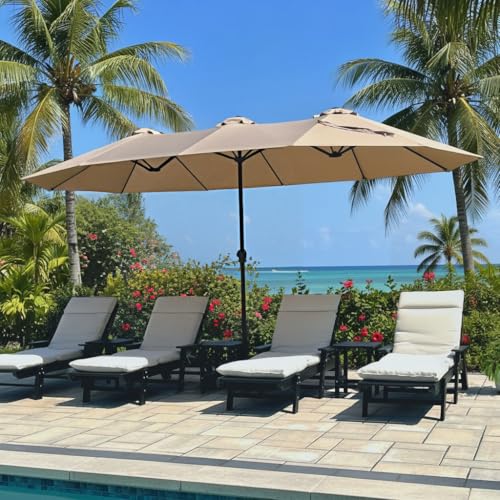
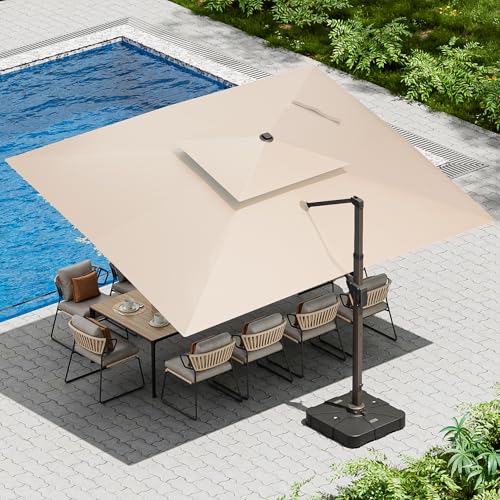
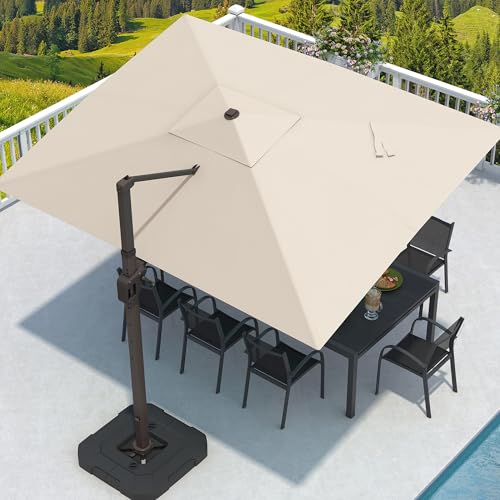
Center-pole (market) umbrellas place the pole through the middle of the canopy and usually through a hole in the table. They are structurally simple, easy to operate, and well suited to traditional dining setups. Cantilever (offset) umbrellas move the pole to the side, freeing the space beneath the canopy and allowing the shade to be rotated or shifted over loungers. For a large lounge zone with no table, a cantilever model is often the more practical choice, while a center-pole design remains the sturdiest option for a classic dining table.
If you are still planning the dining side of your patio, our guide to a dining outdoor patio set pairs well with this article, as does our overview of an expandable patio table with umbrella hole.
Choosing the Right Canopy Size and Shape
Canopy size should be driven by the area you actually need to shade, not by the largest model available. A canopy that is too large for its base and location becomes a wind sail, while an undersized canopy leaves guests squinting at the edges.
| Canopy Size | Best For | Shade Coverage Notes | Base Priority |
|---|---|---|---|
| 10 ft round | Six-seat dining tables, compact lounge zones | Solid coverage for a standard round or oval table | Mid-tier weighted base |
| 11 ft round | Six- to eight-seat dining sets, medium decks | Adds meaningful edge shade for larger tables | High-end tier base |
| 12–13 ft round | Eight-seat dining, wide lounge areas | Maximum shade, highest wind exposure | Top-tier or commercial-grade base |
| 10x13 ft rectangular | Long rectangular tables, patio sofas | Even shade along a long axis | High-end tier cantilever base |
Shape matters as much as size. Round canopies are the most wind-efficient and work well with round and oval tables. Square canopies maximize shade per foot of diameter and suit square tables. Rectangular canopies are ideal over long dining tables and sofa groupings. If your seating is still being decided, the guide on deep seating and deep sofa sets can help you size the umbrella to the furniture footprint.
Frame Materials: What Holds Up Over Time
The frame is the skeleton of your umbrella, and at extra large canopy sizes it carries significant stress. The most common frame materials are aluminum, steel, and wood. Aluminum is the standard for large and cantilever umbrellas because it resists rust and keeps weight manageable. Steel is heavier and very rigid but requires a rust-proof finish to survive seasons outdoors. Wood offers a classic look but needs regular sealing and is rarely used for the largest cantilever models.
Look for reinforced hubs, eight or more ribs for large canopies, and a powder-coated finish on metal parts. Ribs made from fiberglass or reinforced aluminum flex under gusts instead of snapping. A double-vent canopy lets wind pass through rather than lifting the umbrella, which is a meaningful safety feature on 11-foot and larger models.
Cranks, Tilt Mechanisms, and Rotation
A crank lift is essential on an extra large umbrella — hand-push mechanisms are impractical at this scale. Tilt functions (push-button, collar-tilt, or crank-tilt) let you angle the canopy as the sun moves. Cantilever models often add 360-degree rotation, which is genuinely useful when you want to shift shade from the dining table to the lounge chairs in the afternoon. Prioritize smooth, metal-geared mechanisms; plastic gears are the first component to fail on large canopies.
The Base: The Most Important Part of an Extra Large Umbrella
An extra large canopy demands a base that matches its wind load. Manufacturers typically specify a minimum base weight for each canopy size, and ignoring that guidance is the leading cause of tipped umbrellas. There are four broad base categories:
- Plate bases — flat steel or granite plates that sit under the pole. Simple and stable, but require a large footprint and heavy lifting.
- Water-fillable bases — plastic or resin bases filled with water or sand. Convenient to move when empty, but need to be fully filled to reach their rated weight.
- Cross bases with pavers — cross-shaped frames that accept weighted pavers. Common on cantilever umbrellas and easy to adjust.
- In-ground or weighted cantilever bases — large steel frames with bolt-on weighted plates, used for the biggest offset models.
For cantilever umbrellas, the base is even more critical because the canopy extends away from the pole, creating leverage. A cantilever base must be wider and heavier than a center-pole base for the same canopy size. If your umbrella sits on a deck, consider a deck-mount plate; on a patio, a freestanding weighted base is usually the better option.
Umbrella Tiers: Entry-Level, Mid-Range, and Premium
Rather than comparing arbitrary figures, it helps to think about extra large umbrellas in three quality tiers. Each tier reflects construction, mechanism quality, and expected lifespan.
Essential Tier
Solid choice for seasonal shade over a dining table in sheltered locations.
- Aluminum frame with fewer ribs
- Basic crank lift
- Single-vent or unvented canopy
- Best with a dedicated weighted plate base
Balanced Tier
Well-specified for the category, with smoother mechanisms and better fabric.
- Reinforced aluminum frame, eight ribs
- Crank lift with collar tilt
- Double-vent canopy, solution-dyed fabric
- Pairs well with a heavy plate or water-fill base
Top-Tier
Long-term investment for exposed patios and large cantilever setups.
- Heavy-duty frame with fiberglass ribs
- Metal-geared crank and rotation
- High-grade canopy fabric with strong UV resistance
- Engineered base system matched to canopy size
A mid-range model usually offers smoother tilt and rotation than an entry-level unit, while top-tier models are built for year-round exposure and commercial-grade use. If your patio is windy or your umbrella will stay open for long stretches, the higher tiers are the more efficient choice in the long run.
Canopy Fabric and Weather Resistance
Fabric quality determines color retention, water shedding, and how long the canopy looks presentable. Solution-dyed fabrics hold color through UV exposure far better than surface-dyed options. Look for canopies with reinforced stress points at the rib pockets, a double-stitched hem, and a vent system that reduces heat buildup under the canopy. For a coastal or breezy site, a vented canopy is not optional — it is a safety feature.
When the umbrella is not in use, a fitted cover protects the canopy from pollen, bird droppings, and UV degradation. Pair your umbrella purchase with our guide to extra large waterproof garden furniture covers to keep the whole seating area protected.
Setup, Assembly, and Seasonal Care
Extra large umbrellas arrive in substantial packaging, and cantilever models in particular require careful assembly of the base and arm. If you are not comfortable with tools, plan for professional setup; our delivery and assembly guide explains what to expect from furniture delivery services and how to prepare your patio beforehand.
Seasonal care is straightforward: close and cover the umbrella during storms, clean the canopy with mild soap and water, lubricate the crank and tilt mechanisms once a year, and inspect the base bolts for tightness at the start of each season. If your umbrella shares space with outdoor seating, our guides on extra large outdoor rocking chair cushions and durable outdoor furniture will help you keep the entire area in good condition.
A Practical Buying Checklist
Before you commit to an extra large patio umbrella with base, run through these questions:
- Canopy size: Does the diameter cover your table and seating with a small margin?
- Pole type: Center-pole or cantilever, and does it suit your furniture layout?
- Frame: Aluminum with at least eight ribs, powder-coated, with metal-geared mechanisms?
- Ventilation: Does the canopy have a vent or double vent to reduce wind uplift?
- Base: Is the base rated for the canopy size, and does it suit your surface — deck, patio, or grass?
- Operation: Crank lift, tilt, and rotation all smooth and within reach?
- Fabric: Solution-dyed, UV-resistant, with reinforced stress points?
- Storage: Do you have a cover and a plan for windy or winter months?
If you are furnishing the rest of the space, related reading includes double chaise lounges, ergonomic lounge chairs, and expandable outdoor dining tables with umbrella holes.
Frequently Asked Questions
What size counts as an extra large patio umbrella?
Extra large patio umbrellas typically feature canopies of 10 feet or more in diameter. Models from 11 to 13 feet offer the widest shade coverage for large dining tables and lounge areas, while rectangular canopies of 10x13 feet suit long tables and sofa groupings.
Do I need a heavy base for an extra large patio umbrella?
Yes. Larger canopies catch more wind, so a heavier and wider base is essential. Manufacturers specify a minimum base weight for each canopy size, and cantilever models often require weighted plates or water-fillable bases to stay stable.
Is a cantilever umbrella better than a center-pole umbrella?
Cantilever umbrellas keep the pole out of the table area and allow flexible positioning over loungers or dining sets. Center-pole umbrellas are simpler and sturdier for traditional dining tables with an umbrella hole. The right choice depends on your furniture layout and how often you need to move the shade.
How do I keep an extra large umbrella stable in wind?
Choose a model with a reinforced frame, use the manufacturer-recommended base weight, close the canopy during strong gusts, and choose a wind vent or double-vent canopy to reduce uplift. Inspect base bolts and pivot points at the start of each season.
Can an extra large umbrella be used over lounge furniture instead of a table?
Yes. Cantilever and offset umbrellas are particularly well suited to lounge areas because the pole sits to the side. A large round canopy can shade a sofa and two chairs, and rotation lets you follow the sun through the afternoon.
Ready to Compare Extra Large Patio Umbrellas With Base?
Browse curated models with detailed feature comparisons, canopy sizes, and base options — all selected to match the guidance in this guide.
View Recommended Products