Fire Pit with Adirondack Chairs: Complete Buying & Design Guide
Pair the classic comfort of Adirondack seating with the warmth of a backyard fire feature. This guide covers layouts, materials, safety, and buying decisions so you can build a gathering spot that lasts for seasons.
Explore Recommended OptionsWhy Pair Adirondack Chairs with a Fire Pit
Adirondack chairs are built for lingering. Their deep seat, sloped back, and wide armrests encourage relaxed conversation, which makes them a natural companion for a fire feature. A fire pit gives the seating arrangement a focal point after sunset, extending the usable hours of a patio or backyard well into the evening.
This combination works across a wide range of spaces. On a compact patio, a single fire pit table with two chairs creates an intimate corner. On a larger lawn, a traditional fire pit ringed by four to six chairs becomes a social anchor. The key is matching the pit size, chair footprint, and clearance to the space you actually have.
Unlike fixed built-in benches, Adirondack chairs are movable. That flexibility lets you reconfigure the circle for gatherings, shift chairs out of the wind, or store them during harsh weather. For homeowners researching before buying, that adaptability is often the deciding factor between a permanent seating wall and freestanding chairs.
Fire Pit Types That Suit Adirondack Seating
Not every fire feature pairs equally well with Adirondack chairs. Seat height, armrest clearance, and the direction of heat all influence comfort. The three categories below cover most residential setups.
Traditional Wood-Burning Fire Pits
These are the classic bowl or ring designs, often in steel or cast iron. They deliver strong radiant heat and a crackling ambiance. Because flames are open, chairs should sit slightly farther back. A backyard fire pit of this type benefits from a gravel or stone safety zone beneath and around it. Adirondack chairs with wide armrests give users a comfortable place to rest a drink while staying clear of the rim.
Propane and Gas Fire Pits
Gas units light instantly and produce no ash, which makes them easier to live with on a patio or deck. Many models are designed as tables, so the fire is inset and the surrounding surface can hold drinks and small plates. If you want a built-in look, a fire pit table with built-in propane tank keeps the fuel source hidden. For a more flexible arrangement, a fire pit seating layout around a freestanding gas bowl works just as well with Adirondack chairs.
Fire Pit Tables and Chat Sets
Fire pit tables raise the flame to a comfortable height and often include a lid or cover that converts the unit into a standard table when not in use. A fire pit chat set with swivel chairs is one route, but many homeowners prefer to pair a rectangular or round table with separate Adirondack chairs for a more relaxed, less matched look. The rectangular fire pit table format suits narrow patios where a circular arrangement would crowd the walkway.
| Fire Feature Type | Best For | Adirondack Pairing Notes |
|---|---|---|
| Wood-burning bowl or ring | Rustic yards, larger lawns, ambiance-focused gatherings | Increase clearance; use a spark screen; avoid cushions near the rim |
| Propane/gas fire pit | Patios, decks, low-smoke environments | Instant control; easy to arrange chairs close for conversation |
| Fire pit table | Multi-use spaces, entertaining, small patios | Flat surface supports drinks; chairs can tuck closer |
Adirondack Chair Materials Compared
Material choice affects comfort, maintenance, and how well the chair tolerates heat and embers. The comparison below uses tier descriptors rather than figures so the guidance stays useful over time.
Wood (Cedar, Teak, Fir)
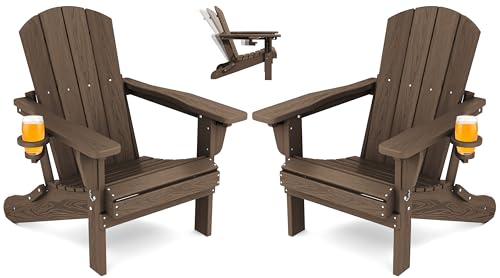
Wood Adirondack chairs offer a traditional look and a warm, natural finish. Cedar and teak are naturally weather-resistant; fir is a more common entry-level option. Wood can develop scorch marks if placed too close to open flames, and it requires periodic sealing. For a fire pit setting, a folding Adirondack chair in wood is convenient because it can be moved or stored easily.
Poly Lumber (HDPE)
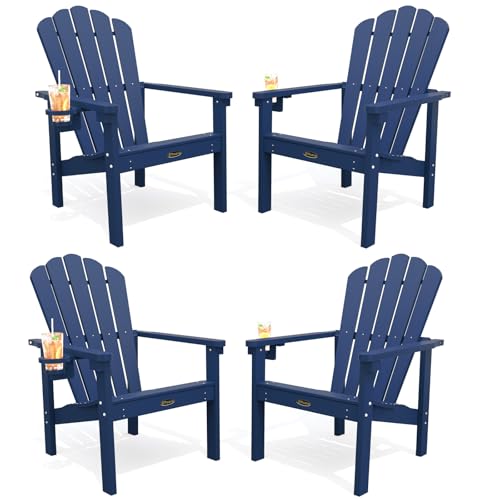
High-density polyethylene is a mid-range to premium choice that resists moisture, insects, and fading. It does not splinter and holds color well. Poly chairs are heavier than wood, which is an advantage around a fire pit because they are less likely to shift in wind. A folding Adirondack chair with cup holder in poly is a practical pick for entertaining.
Aluminum
Aluminum chairs are lightweight and rust-resistant, making them a strong fit for coastal or humid climates. They are typically mid-tier to high-end tier depending on frame thickness and finish. Because metal conducts heat, the seat and armrests should be checked before use near an active fire. Aluminum pairs well with a fire pit bench or mixed seating arrangement where portability matters.
Resin and Recycled Plastic
Entry-level resin chairs are widely available and easy to clean. They are lighter and may not tolerate prolonged radiant heat as well as poly lumber. For occasional use around a gas fire pit, they are a reasonable starter tier option. If the fire feature is wood-burning and used frequently, stepping up to poly or aluminum is generally a wiser long-term investment.
| Material | Tier | Best For | Heat & Weather Notes |
|---|---|---|---|
| Cedar / Teak | Premium to luxury | Traditional look, natural finish | Needs sealing; keep clear of open flame |
| Poly lumber (HDPE) | Mid-range to premium | Low-maintenance patios, windy sites | Fade-resistant; heavier and stable |
| Aluminum | Mid-tier to high-end tier | Coastal, humid, portable setups | Rust-resistant; check surface heat |
| Resin / recycled plastic | Entry-level | Occasional use, starter setups | Lightweight; moderate heat tolerance |
Layout and Spacing Guide
A comfortable fire pit circle depends on three measurements: the pit diameter, the clearance from pit edge to chair front, and the chair footprint. The guidance below applies to most residential Adirondack chairs.
Clearance From the Fire
Keep at least 3 feet (about 1 meter) between the edge of an open fire pit and the front of each chair. For wood-burning pits or windy sites, increase that to 4 feet. Gas fire pit tables can often sit slightly closer because the flame is contained and lower.
Chair Spacing
Leave roughly 18 to 24 inches between chair armrests so people can enter and exit without squeezing. Adirondack chairs are wider than dining chairs, so a four-chair circle typically needs a diameter of 10 to 12 feet to feel relaxed rather than packed.
Arrangement Options
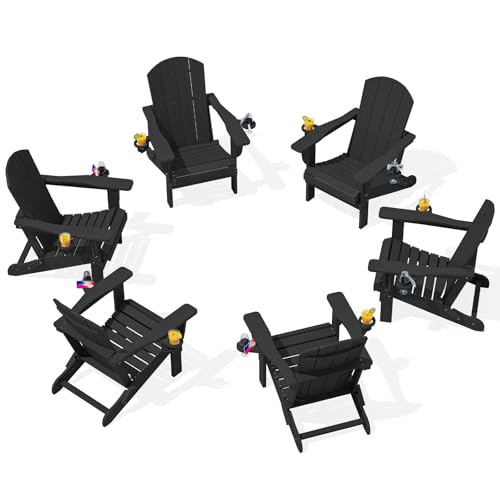
- Full circle: Four to six chairs evenly spaced. Best for open lawns and larger patios.
- Semicircle: Chairs wrap around one side with a walkway gap on the other. Works well against a wall or fence.
- Paired seating: Two chairs flanking a small fire pit coffee table. Ideal for balconies and compact decks.
- Mixed seating: Combine Adirondacks with a fire pit bench or a five-piece patio set with fire pit for larger groups.
Safety and Placement Essentials
Fire features demand respect. The following practices apply to both wood and gas units and should be reviewed before the first burn of the season.
- Surface clearance: Place fire pits on non-combustible surfaces such as stone, gravel, or concrete. Keep them away from low-hanging branches, wooden fences, and dry vegetation.
- Wind direction: Arrange chairs so guests are not sitting directly in smoke. If the wind shifts, rotate the seating rather than the pit.
- Cushions and throws: Remove or secure loose fabrics when a fire is active. Choose flame-resistant cushions where possible.
- Spark screens: Use a spark screen on wood-burning pits, especially near Adirondack chairs with wide armrests that sit close to the rim.
- Extinguishing: Keep a bucket of water, sand, or a fire extinguisher within reach. Never leave a fire unattended.
- Local rules: Check municipal or HOA regulations on open burning, setback distances, and burn bans before installing a pit.
For more detailed construction and placement guidance, see the fire pit build guide. If you are planning a permanent structure, a fire table backyard layout may offer a more controlled footprint on smaller lots.
Buying Checklist
Use this checklist to narrow options before you shop. It focuses on fit, function, and durability rather than figures.
- Measure the space: Confirm the available diameter or rectangle and leave a walkway at least 3 feet wide.
- Choose the fuel type: Wood for ambiance and radiant heat; propane or gas for control and low maintenance.
- Select the chair material tier: Entry-level resin for occasional use; mid-range poly or aluminum for regular use; premium wood or poly for a long-term investment.
- Check chair dimensions: Adirondack seats vary in width and depth. Confirm that the model you choose fits the circle without crowding.
- Plan for storage: Folding models simplify seasonal storage. A folding Adirondack chair with pull-out ottoman adds lounge flexibility.
- Review warranties: Frame and finish warranties vary by manufacturer. Compare coverage for the tier you are considering.
- Confirm accessories: Cup holders, side tables, and covers are useful additions. A fire pit table with a lid extends usability during daylight hours.
If you are still comparing seating formats, the fire pit with seating overview covers built-in benches, chat sets, and freestanding chair arrangements side by side.
Care and Seasonal Maintenance
Regular care keeps the pairing looking sharp and extends the life of both the fire feature and the chairs.
Fire Pit Care
- Empty ash from wood-burning pits after the unit has fully cooled. Use a metal container for disposal.
- Inspect gas lines and connections at the start of each season. Check for leaks and clear burner ports of debris.
- Cover the pit when not in use to prevent water accumulation and rust.
Adirondack Chair Care
- Wash poly and aluminum chairs with mild soap and water. Avoid abrasive pads that dull the finish.
- Reapply sealant to wood chairs annually, or as recommended by the manufacturer.
- Store or cover chairs during off-season months to reduce UV exposure and moisture damage.
- Inspect hardware and tighten fasteners before each season of use.
For broader guidance, see the furniture cleaner overview and the weatherproofing recommendations in the outdoor care section.
Frequently Asked Questions
How far should Adirondack chairs be placed from a fire pit?
A common safety guideline is to keep seating at least 3 feet (about 1 meter) away from the edge of an open fire pit. For larger fire pits or windy conditions, increase that distance. The goal is to allow comfortable legroom while keeping fabric, cushions, and clothing clear of embers and radiant heat.
Which Adirondack chair material works best around a fire pit?
Wood, high-grade poly lumber, and aluminum are the most common choices. Poly lumber and aluminum are weather-resistant and tolerate heat and sparks better than resin plastic in many cases. Untreated wood can develop scorch marks, so a heat-resistant finish or careful placement helps. Cushions should be flame-resistant or removed when a fire is burning.
What is the ideal layout for a fire pit with Adirondack chairs?
A circular or semicircular arrangement is the most natural. Place four to six chairs in a ring facing the fire pit, leaving a walkway gap on the entry side. Keep a 3-foot clearance from the pit edge to the front of each chair, and avoid crowding. A diameter of 10 to 12 feet is a practical guide for a four-chair circle.
Do I need a fire pit table or a traditional fire pit?
A traditional fire pit creates a central focal point with open flames and is best for wood or propane. A fire pit table combines the warmth with a flat surface for drinks and small plates. Choose a traditional pit for ambiance and a table style if you want serving space and a more built-in look.
Final Thoughts
A fire pit with Adirondack chairs is one of the most reliable ways to make an outdoor space feel finished. The combination is comfortable, adaptable, and easy to maintain when the right materials and spacing are chosen. Start with a measured layout, choose a fuel type that matches your routine, and select chairs at a material tier that reflects how often the space will be used.
When you are ready to compare specific products, the recommended options below are organized around this exact pairing. Use the checklist in this guide to evaluate each one against your space.
View Recommended Options