
Front Porch Rocking Chairs: The Complete Buyer's & Styling Guide
Everything you need to choose, place, and care for front porch rocking chairs — from frame materials and sizing to comfort features and long-term durability.
Why this guide matters: A front porch rocking chair is more than furniture — it is an invitation to slow down. But the wrong pick can wobble, crack, or feel uncomfortable within a season. This guide walks you through every decision so you can buy with confidence and enjoy your porch for years.
Why Front Porch Rocking Chairs Are Worth the Investment
Front porch rocking chairs carry a timeless appeal that few other outdoor pieces match. They signal hospitality, encourage conversation, and turn a plain entryway into a destination. Beyond the aesthetic, a well-chosen rocker offers practical benefits:
- Comfort that lasts: The gentle rocking motion eases tension and encourages longer sits — perfect for morning coffee or evening unwinding.
- Visual curb appeal: A matched pair of rockers instantly frames a front door and makes the porch feel intentional.
- Versatile placement: Rockers work on covered porches, open decks, and even sunrooms. If your space is tighter, consider a front porch chair as a compact alternative.
- Long-term durability: Quality rockers are built to handle sun, rain, and temperature swings with minimal fuss.
Whether you are furnishing a new home or refreshing an existing setup, the decision starts with understanding how you plan to use the space. If you are building out the whole area, our front porch furniture overview can help you plan seating, tables, and accents together.
Choosing the Right Frame Material
The frame material is the single biggest factor in how a rocking chair looks, feels, and holds up over time. Here is how the main options compare:
Wood (Teak, Cedar, Acacia)
Warm, classic, and endlessly repairable. Teak and cedar resist moisture naturally; acacia offers a solid build at a mid-range position. Expect periodic oiling or sealing to keep the finish rich.
Aluminum & Steel
Lightweight aluminum resists rust and is easy to move. Powder-coated steel delivers a heavier, anchored feel. Both suit modern and coastal porches and need only occasional wiping.
Resin & HDPE
Engineered lumber and high-density resin shrug off rain, sun, and insects. They are the most forgiving option for exposed porches and typically arrive in a range of colors and textures.
Wicker & Rattan
Natural rattan offers a woven, cottage feel but needs shelter. All-weather wicker over an aluminum frame gives you the same look with far better resilience outdoors.
If your porch is fully covered, wood and natural rattan are viable. If it takes direct rain and sun, lean toward aluminum, resin, or all-weather wicker. Our wood furniture care guide covers sealing schedules in detail, while the metal vs aluminum breakdown helps you weigh frame strength against portability.
Comfort Features That Actually Matter
A rocking chair can look perfect and still feel wrong after twenty minutes. Prioritize these details during your research:
- Seat depth and height: A seat depth of roughly 18–22 inches suits most adults; shorter sitters should favor shallower seats so their feet reach the floor comfortably.
- Armrest height: Arms should let your shoulders relax without hunching. Wide, flat arms double as a spot for a mug or book.
- Runner geometry: Longer, gently curved runners produce a smoother motion. Shorter runners feel more controlled but rock with less glide.
- Cushion support: Look for high-density foam with removable, washable covers. Ties or grip dots prevent sliding.
- Weight capacity and build: Check the stated capacity and look for reinforced joints at the runner-to-leg connection — the highest-stress point on any rocker.
For a paired setup with a small side surface, a front porch rocking chair set with table streamlines the layout. If you prefer to buy two matching seats, a set of two rocking chairs is the simplest path to a balanced look.
Sizing and Placement: Getting the Layout Right
Rocking chairs need clearance front and back to move freely. As a rule of thumb, allow at least 18 inches behind the chair for the back swing and 24–30 inches in front for legroom and safe entry. Between two chairs, leave 12–18 inches so arms do not collide.
On a narrow porch, angle chairs slightly toward each other rather than placing them flat against the wall — this creates a conversation zone and reduces the footprint. On deep porches, pull chairs away from the house wall to avoid bumping siding or railings.
Mark the chair footprint on your porch with painter's tape, then sit inside the tape outline to test sightlines and clearance. This five-minute step prevents the most common return reason for rocking chairs.
Material Comparison at a Glance
| Material | Best For | Maintenance Level | Tier Position |
|---|---|---|---|
| Teak / Cedar | Covered porches, classic styling | Moderate — oil annually | Premium to luxury tier |
| Acacia Wood | Balanced look and resilience | Moderate — seal yearly | Mid-range |
| Powder-Coated Aluminum | Coastal and humid climates | Low — wipe occasionally | Entry-level to mid-range |
| Powder-Coated Steel | Heavy, anchored feel | Low — inspect for chips | Mid-range to premium |
| HDPE / Resin | Fully exposed porches | Very low — soap and water | Mid-range |
| All-Weather Wicker | Cottage and coastal looks | Low — rinse and dry | Mid-tier to high-end tier |
Styling Your Front Porch Rocking Chairs
Once the chairs are chosen, a few deliberate touches pull the porch together:
- Anchor with a rug: An outdoor rug defines the seating zone and hides worn boards. See our outdoor rugs guide for weather-ready options.
- Add a side surface: A small table between chairs holds drinks and a lantern. A front porch bench can supplement seating without crowding the rockers.
- Layer lighting: String lights or a porch lantern extend usable hours. Our outdoor lighting overview covers warm, low-glare choices.
- Introduce greenery: A pair of outdoor planters flanking the door balances the seating arrangement.
- Seasonal accents: A doormat and a wreath refresh the entry without replacing furniture. Browse porch decor ideas for rotating touches.
If your porch doubles as an evening gathering spot, a front porch swing can coexist with rockers on longer porches — just keep swing clearance separate from rocker zones.
Care and Longevity: Keeping Rockers Solid
Rocking chairs endure more mechanical stress than stationary seating because the runners flex with every motion. A simple routine keeps them stable:
- Inspect joints seasonally: Tighten bolts at the runner connections and check for hairline cracks in wood.
- Clean by material: Mild soap and water for metal and resin; a wood-safe cleaner for timber frames. Our furniture cleaner guide details safe products.
- Protect finishes: Reapply sealant or oil on wood before winter. Touch up powder-coat chips promptly to prevent corrosion.
- Store cushions: Bring cushions indoors during off-season or heavy rain. A cushion storage solution keeps them dry and shape-retaining.
- Cover when idle: A breathable cover protects exposed porches during storms. See our patio furniture covers guide for fit tips.
For deeper seasonal prep, our weatherproofing guide and winter storage guide walk through end-of-season steps.
Understanding Quality Tiers
Rocking chairs fall into recognizable tiers based on construction and materials. Using tiers instead of numeric figures keeps the comparison useful over time:
- Entry-level: Lightweight frames, basic joinery, and simpler cushions. Suitable for occasional use and sheltered porches.
- Mid-range: Solid wood or reinforced metal frames, better foam, and smoother runner geometry. The sweet spot for daily use.
- Premium: Dense hardwoods or heavy-gauge metal, precision joinery, and replaceable cushions. Built for years of daily rocking.
- Luxury: Crafted frames, hand-finished details, and premium upholstery. A long-term investment for a statement porch.
Mid-range models typically offer noticeably smoother rocking and better joint durability than entry-level options, while premium tiers add refinements in finish and repairability rather than dramatic functional leaps. For a full outdoor plan, pair your tier choice with our outdoor planning guide to allocate across seating, shade, and lighting.
Frequently Asked Questions
How much clearance do front porch rocking chairs need?
Plan for at least 18 inches behind the chair for the rocking arc and 24–30 inches in front for legroom and safe entry. Between two chairs, leave 12–18 inches so armrests do not collide.
Are wood or metal rocking chairs better for an uncovered porch?
For fully exposed porches, powder-coated aluminum, HDPE resin, or all-weather wicker hold up best with minimal care. Wood can work but requires regular sealing and should be teak, cedar, or another rot-resistant species.
Can rocking chairs be left outside in winter?
Metal and resin chairs generally can, though cushions should be stored indoors. Wood chairs benefit from a cover or indoor storage to prevent moisture cycling and finish cracking. See our winter storage guide for step-by-step prep.
How do I stop a rocking chair from sliding on a porch?
Use rubber or felt pads under the runners, or place the chair on an outdoor rug with a non-slip backing. Avoid placing rockers directly on smooth composite decking without grip protection.
What seat height suits shorter or taller users?
Shorter sitters should look for seat heights around 16–17 inches so feet rest flat; taller users generally prefer 17–19 inches. Always test the runner length too — longer runners feel more fluid for taller users.
Should I buy a matched pair or mix styles?
A matched pair creates a formal, symmetrical look ideal for traditional porches. Mixing a rocking chair with a front porch chair or bench suits relaxed, eclectic layouts and can fit tighter spaces better.
Recommended Front Porch Rocking Chairs
⚠️ AFFILIATE DISCLOSURE: This website contains affiliate links. As an Amazon Associate, we earn from qualifying purchases. If you make a purchase through these links, we may receive a small commission at no additional cost to you. Read our full affiliate policy.

SERWALL Outdoor Rocking Chair Set of 2, HDPE Rocking Chairs for Adult, Black
Check price on Amazon
LAUSAINT HOME 3-Piece Rocking Bistro Set, Outdoor Patio Furniture with Thick Cushions and 2-Tier Coffee Table, Oversize Rattan Conversation Set for Garden, Balcony, Backyard (Beige)
Check price on Amazon
SERWALL Outdoor Rocking Chairs Set of 2, Oversized Patio Rocker Unique Gray | Heavy Duty Front Porch Rocker, All Weather HDPE Rocking Chairs for Adults, Durable
Check price on Amazon
HDPE Rocking Chair Outdoor Set of 2 with Side Table, High Back Rocker | All Weather Resistant & Wood Textured Furniture for Patio Front Porch - Black
Check price on Amazon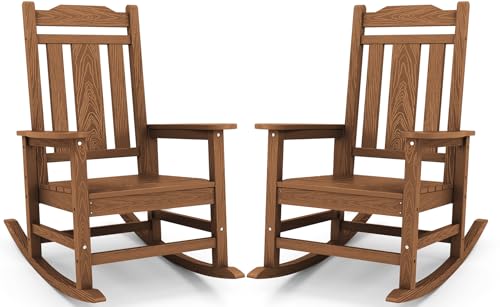
SERWALL Oversized Outdoor Rocking Chairs Set of 2, Patio HDPE Rocker, Brown | Heavy Duty Front Porch Rocker, All Weather Rocking Chairs for Adults, Durable
Check price on Amazon
SERWALL Outdoor Rocking Chair Set of 2, HDPE Rocker for Adults, Brown | 21.1" Widened Seat adds Extra Comfort, Oversized Rocking Chair with Armrest, All Weather Porch Rocker for Lawn Garden
Check price on Amazon
Qsun 3 Pieces Patio Furniture Set Rocking Bistro Set Outdoor Rattan Conversation with Coffee Table for Garden Balcony Backyard Poolside (Grey Cushion)
Check price on Amazon