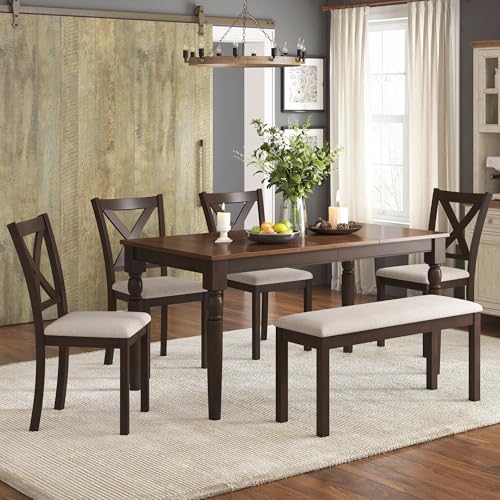
Kitchen Table with Bench Seat and Chairs
A complete buying guide to choosing a bench-and-chair dining set that fits your space, your family, and your everyday routine.
Start the GuideWhy this guide matters: A kitchen table with a bench seat and chairs is one of the most practical dining layouts for busy homes. The bench maximizes seating along one side, chairs keep the opposite side flexible, and the combination fits naturally into breakfast nooks, open kitchens, and family rooms.
This guide walks you through sizing, materials, seating configurations, and the questions to answer before you commit. It is written for shoppers who already know they want a bench-and-chair setup and now need clarity on which version to choose.
What a Bench-and-Chair Kitchen Table Offers
A kitchen table with bench seat and chairs is not simply a smaller dining set. It solves specific spatial and social problems that chair-only arrangements struggle with.
- More seating in the same footprint. A bench accommodates two or three people along one side, where two chairs would normally fit.
- Easy tucking. Benches slide completely under many table aprons, opening floor space in compact kitchens and nooks.
- Social seating. Children and guests naturally sit shoulder-to-shoulder, which makes the table feel more communal.
- Design balance. The visual weight of a bench on one side paired with open chairs on the other creates an intentional, styled look.
These advantages make the configuration popular in farmhouse and modern-rustic interiors, but the idea works equally well in contemporary apartments and townhouses. For a broader look at coordinated dining sets, see the kitchen dining sets collection, which covers table-and-chair pairings beyond the bench format.
Buying Guide: Sizing and Layout
Getting the dimensions right is the single most important step. A bench that is too tall, too deep, or too long will make the entire set uncomfortable regardless of how good it looks.
| Household Size | Suggested Table Length | Seating Configuration | Best For |
|---|---|---|---|
| 2 to 3 people | 36 to 48 inches | Bench + 2 chairs | Small breakfast nooks, apartments |
| 4 people | 48 to 60 inches | Bench + 2 to 3 chairs | Family kitchens, open-plan rooms |
| 5 to 6 people | 60 to 72 inches | Bench + 4 chairs | Larger kitchens, everyday family dining |
| 6 to 8 people | 72 inches and above | Long bench + 4 to 6 chairs | Entertaining, multi-generational homes |
Beyond table length, respect these clearances: 30 inches of table edge per seated person, 36 inches of walking space around the table, and a bench seat height of 17 to 19 inches to match standard chair height. If your kitchen is tight, a kitchen table with bench designed for small spaces will usually use a narrower bench and a shallower tabletop to keep circulation open.
Bench Styles and Their Trade-offs
Backless Bench
The most space-efficient option. It tucks fully under the table and suits casual meals. Entry-level and mid-range sets most often use this style.
Bench with Backrest
Comfortable for long meals and everyday family dining. Premium and high-end tier sets commonly include upholstered or slatted backrests for support.
Upholstered Bench
A softer, more finished look. Balanced-tier to top-tier sets use foam padding and performance fabrics that resist everyday spills and wear.
Storage Bench
Combines seating with hidden space for linens, toys, or small kitchen items. A smart choice for compact homes where every square foot counts. See bench seating with storage for dedicated options.
Corner or L-Shaped Bench
Maximizes corner nooks and turns an awkward kitchen alcove into a full dining area. An L-shaped breakfast nook bench is the classic solution for this layout.
Metal or Mixed-Material Bench
Industrial and modern styles pair metal frames with wood tops. Commercial-grade frames suit heavy daily use in busy households.
Material Comparison
Material choice affects durability, maintenance, and how the set ages in a working kitchen. The table below uses tier descriptors rather than numerical figures so the comparison stays useful over time.
| Material | Typical Tier | Durability | Best For |
|---|---|---|---|
| Solid oak or maple | Premium to luxury tier | Heavy-duty; refinishable | Long-term family investment |
| Solid pine or rubberwood | Entry-level to balanced tier | Solid build; softer surface | Casual family kitchens |
| Engineered wood with veneer | Essential to mid-tier | Stable; not refinishable | Starter homes and apartments |
| Metal frame with wood top | Mid-range to premium tier | Reinforced; resistant to racking | Industrial and modern styles |
| HDPE or resin | Balanced tier | Weather-resistant; low maintenance | Kitchens opening to patios |
If the kitchen flows directly outdoors or you live in a humid climate, HDPE and weather-resistant finishes are worth the consideration. Our HDPE outdoor furniture overview explains why this material performs so well in demanding environments.
Seating Configurations to Consider
The phrase "bench seat and chairs" covers several distinct layouts. Match the configuration to how many people sit down at once and how often the table is moved or reconfigured.
- Bench plus two chairs: The most compact arrangement. Best for two to four diners and small nooks. See kitchen table with bench and 2 chairs.
- Bench plus four chairs: A balanced layout for five to six people. Common in family kitchens and open-plan dining zones. Compare kitchen table with bench and 4 chairs.
- Two benches: Maximizes seating density and visual symmetry. Suited to narrow rooms where chairs would block circulation.
- Bench plus chairs and end seating: Adds one or two seats at the table ends for larger gatherings without extending the main footprint.
Whichever layout you choose, confirm that the bench depth suits your table apron. A deep bench under a shallow apron will not tuck in, which defeats the space-saving purpose.
Style Directions That Work With Bench Seating
Farmhouse
Distressed wood finishes, turned legs, and a long wooden bench. A classic pairing for white or cream kitchens.
Modern Minimalist
Slim profiles, straight lines, and neutral finishes. Backless benches keep the look clean and uncluttered.
Industrial
Metal frames, exposed hardware, and reclaimed-look tops. Mixed-material benches fit this direction naturally.
Transitional
Blends classic wood tones with contemporary upholstery. Works well in kitchens that open to living areas.
Coastal
Light woods, painted finishes, and soft blue or white palettes. Slatted benches suit the airy look.
Rustic
Heavy timber, visible grain, and natural oil finishes. Best paired with durable solid-wood benches.
How to Evaluate Build Quality
At every tier, the same structural details separate a set that lasts from one that loosens within a year. Use this checklist when comparing options in person or reading product specifications online.
- Joinery: Look for mortise-and-tenon or doweled joints in wood benches. Screws alone are a warning sign in mid-range and premium sets.
- Frame rigidity: A bench should not flex or rack when weight shifts sideways. Reinforced metal frames and corner braces solve this.
- Finish: Sealed, lacquered, or oiled surfaces resist moisture. Unsealed wood in a kitchen will show water rings quickly.
- Cushion density: Upholstered benches should use high-density foam that recovers its shape. Low-density foam flattens within months.
- Hardware: Rust-proof or coated hardware matters in humid kitchens and near dishwashers.
- Weight capacity: Check the stated capacity against your household's needs, especially for storage benches with hinged lids.
Higher tiers generally use thicker stock, tighter tolerances, and better hardware. That difference shows up in how the set feels after years of daily use rather than in its first-week appearance.
Bench Seating in Small Kitchens
Small kitchens benefit most from bench seating, but they also punish poor sizing. Three rules keep a compact layout usable:
- Choose a backless bench. It tucks fully under the table and keeps the walkway clear.
- Push the bench against a wall or window. This turns the bench side into fixed seating and saves the floor space a chair would need.
- Keep the table shallow. A 30- to 36-inch-deep table fits a bench and chairs without crowding the room.
For layouts that need to serve double duty, a kitchen table bench seating arrangement can also act as a homework station or a casual workspace between meals.
Care and Maintenance
A kitchen table with bench seat and chairs lives in a high-traffic, high-moisture room. Basic care extends its service life considerably:
- Wipe spills promptly, especially on wood and veneer surfaces.
- Use felt pads under chairs and benches to protect hard floors and prevent joint stress.
- Re-oil or re-seal solid wood every six to twelve months depending on use.
- Vacuum upholstered benches regularly and spot-clean with a fabric-appropriate cleaner.
- Tighten hardware periodically, especially on metal-frame benches.
These habits are the same ones that protect outdoor furniture; our high-quality outdoor furniture guide covers similar principles for pieces that face weather extremes.
Frequently Asked Questions
What is the ideal size for a kitchen table with bench seat and chairs?
For a family of four, a table measuring roughly 36 to 48 inches in length works well with one bench and two chairs. Larger households should look at tables 60 inches or longer paired with a bench and four chairs. Always leave at least 30 inches of clearance per seated person and 36 inches of walking space around the table.
Are bench seats comfortable for everyday dining?
Yes, when properly designed. Upholstered or contoured benches with back support are comfortable for daily use, while simple flat wooden benches suit casual or short meals. Look for bench seats at least 14 to 16 inches deep with a seat height of 17 to 19 inches to match standard chair height.
What materials work best for a kitchen table with bench seating?
Solid wood such as oak, maple, or pine offers the most durable and timeless option for bench seating. Engineered wood and MDF with quality veneers serve well in balanced-tier and entry-level sets. Metal frames pair well with wood tops for industrial styles, while HDPE and resin suit casual or outdoor-adjacent kitchens.
Can a bench seat be used with any kitchen table?
Not every table. Bench seats work best with tables that have open sides and no obstructive apron or leg stretchers near the floor. Rectangular and oval tables are the most compatible, while round and pedestal tables usually pair better with chairs. Confirm bench height matches the table apron clearance before combining pieces.
How many people can a bench seat accommodate?
A bench typically seats two adults per 48 inches of length, and three people on benches 60 inches or longer. For children, three to four can fit on a 48-inch bench. Add chairs on the opposite side or at the table ends to expand total seating without increasing the footprint.
Explore Related Configurations
Final Buying Checklist
- Measure the room, doorway, and walking clearance before ordering.
- Confirm bench seat height matches chair height and table apron clearance.
- Decide between backless, backrest, upholstered, or storage bench styles.
- Choose a material tier that matches your household's daily use.
- Verify joinery, hardware, and finish quality for the tier you are considering.
- Plan the seating count: bench plus two, four, or more chairs.
- Check warranty terms and delivery or assembly requirements before purchase.
A well-chosen kitchen table with bench seat and chairs turns an ordinary dining corner into the most-used gathering spot in the home. Use the sizing tables, material comparisons, and quality checklist above to narrow the field, then compare your shortlisted options against the recommended products below.