Kitchen Table with a Bench and Chairs: The Complete Buying Guide
Thinking about a kitchen table with a bench and chairs? This guide walks you through layouts, seating counts, materials, and design styles so you can pick a set that fits your nook, your family, and your daily routine.
Explore Recommended SetsWhy this guide exists: A kitchen table with a bench and chairs solves a very specific problem. It gives you flexible seating, keeps sightlines open in a small nook, and adds a warm, built-in look that a standard four-chair set cannot match. Below you will find the practical details you need before you commit to a set.
What Makes a Bench-and-Chairs Set Different
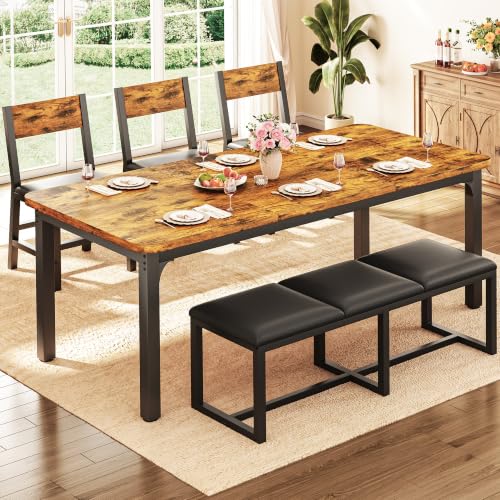
A bench-and-chairs configuration mixes two seating types around one table. The bench usually runs along one long side, often against a wall or window, while chairs sit on the opposite side and at the ends if the table is long enough. This mixed arrangement is popular for three reasons:
- Space efficiency: A bench slides fully under the tabletop, so the walkway around the table stays clear when the set is not in use.
- Flexible capacity: A bench can hold two or three people depending on its length, so one table can shift from a two-person breakfast spot to a four-person family meal.
- Visual anchor: The bench creates a built-in, cohesive look that makes a kitchen nook feel intentional rather than like a collection of mismatched pieces.
If your kitchen has an open wall, a window seat, or a corner alcove, a bench-and-chairs set is often the most natural fit. For tighter footprints, explore kitchen tables with benches for small spaces to see how compact sets handle limited room.
Seating Counts: How Many People Fit
Seating capacity depends on table length and bench length. The table below gives a practical starting point. Always measure your space before ordering, and confirm that the bench length matches or slightly exceeds the table edge so knees are not left unsupported.
| Configuration | Typical Seating | Best For |
|---|---|---|
| Short table, one bench, two chairs | 4 people | Couples, small families, breakfast nooks |
| Medium table, one bench, four chairs | 6 people | Growing families, casual dinner guests |
| Long table, one bench, two chairs, plus end chairs | 6 to 8 people | Open kitchens and dining zones |
| Corner or L-shaped bench with chairs | 4 to 6 people | Alcoves and dedicated dining corners |
For exact combinations, compare a kitchen table with bench and 2 chairs against a kitchen table with bench and 4 chairs. The difference in seating is significant, and the right choice depends on how often you host.
Bench Placement and Layout Rules
The single biggest mistake buyers make is putting the bench on the walkway side. A bench needs a wall, a window, or a solid anchor behind it so people can slide in from one direction. Chairs belong on the open side because they can be pulled out and pushed back individually.
Practical layout checklist
- Place the bench against a wall or window, with at least 24 inches of clearance from the table edge for legroom.
- Keep chairs on the open side and leave 30 to 36 inches of walkway behind them for pulling out.
- Match the bench length to the table length. A bench that is too short leaves an awkward gap; one that is too long blocks the end seats.
- If the table sits in a corner, consider an L-shaped bench to maximize corner seating and eliminate wasted space.
Corner layouts benefit from an L-shaped dining bench, which wraps around the corner and lets chairs handle the open sides. If you want a built-in look with storage, a L-shaped breakfast nook bench adds function without extra furniture.
Materials: What Holds Up in a Busy Kitchen
Kitchen tables take daily abuse: spilled drinks, homework sessions, hot pans set down in a hurry, and kids climbing on benches. Material choice matters more than any other single decision. The tiers below describe relative market positioning, not any specific figure.
Engineered Wood and Laminate
Good value for its tier. Easy to wipe clean and resistant to everyday moisture. Best for light use and rental kitchens where you want a solid look without a long-term commitment.
Solid Wood and Wood Veneer
A balanced tier for family kitchens. Solid wood tops can be sanded and refinished, so the table ages with the household. Oak, rubberwood, and pine are common choices.
Hardwood and Metal Frames
High-end tier construction for heavy daily use. Hardwood tops paired with reinforced steel frames resist wobble and hold up through years of family meals and gatherings.
If your household is hard on furniture, look for a kitchen table bench seating set with a reinforced apron under the tabletop and a bench with a solid frame rather than a folding mechanism. Folding benches are convenient but tend to loosen over time.
Bench Styles and Their Trade-Offs
Not all benches are equal. The style you choose affects comfort, storage, and how the set fits your kitchen.
- Backless bench: The classic choice. It slides fully under the table, keeps the room feeling open, and encourages casual seating. Less supportive for long meals.
- Bench with a back: More comfortable for lingering dinners, but it protrudes above the table line and can make a small nook feel closed in.
- Storage bench: The seat lifts to reveal a compartment for placemats, board games, or kids' craft supplies. Ideal for kitchens short on cabinet space. See kitchen table bench seating with storage for options that combine seating and stowing.
- Upholstered bench: Soft and inviting, but the fabric needs to be cleanable. Choose tight-weave or performance fabrics in a busy family kitchen.
Matching the Set to Your Kitchen Style
The bench-and-chairs format works across design styles. What changes is the material, finish, and profile.
Farmhouse and rustic
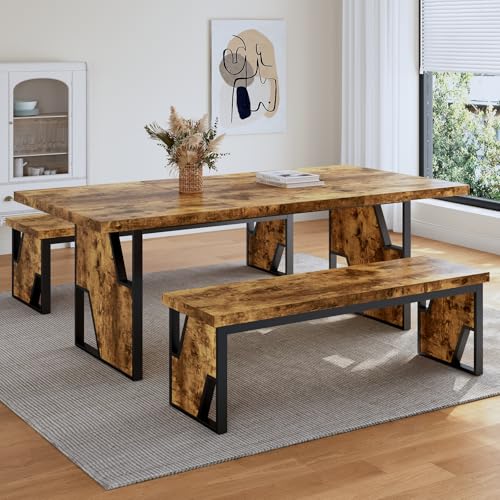
Look for a thick wood top, turned legs, and a bench with a visible grain. A kitchen table with bench seat and chairs in a warm wood finish anchors the farmhouse look without needing extra decor.
Modern and minimalist
Clean lines, a slim bench, and a table with straight legs work best. Metal and wood combinations keep the look light. If you want a set that reads modern, consider a kitchen table set with bench and chairs with a pale top and dark frame.
Industrial
Metal frames with reclaimed or dark-stained wood tops suit open kitchens with exposed brick or concrete. Benches in this style often have a slight taper and a visible weld line as a design feature.
Compact and apartment-friendly
For tighter kitchens, a kitchen table with bench that nests under the top is the most space-efficient option. Pair it with two lightweight chairs that can move to the living room when extra floor space is needed.
Comfort and Ergonomics
A bench is only comfortable if the seat height matches the table height. Standard kitchen tables sit around 30 inches high, which means bench seats should be about 17 to 18 inches from the floor. A bench that is too low forces knees up; one that is too high leaves legs dangling.
Cushions help, but they also raise seat height. If you plan to add a bench cushion, measure the seat height with the cushion in place. A 2-inch cushion is usually enough for casual meals; thicker cushions are better for long dinners but may make the bench too tall for the table.
Durability and Everyday Care
Wood tops need occasional oiling or sealing, especially around the bench where hands and plates rest. Painted finishes hide scratches less well than natural wood but are easier to touch up. Metal frames should have a powder-coated or rust-proof finish in humid climates.
- Wipe spills promptly, especially on veneer and laminate tops.
- Use felt pads under the bench and chair legs to protect hard floors.
- Tighten bench hardware every few months; benches take more lateral stress than chairs.
- Place the set away from direct heat sources and radiators to prevent warping.
For households that want a low-maintenance surface, high-density polyethylene (HDPE) outdoor furniture construction is worth considering for indoor-outdoor kitchen spaces, since it resists moisture and does not need refinishing.
How to Measure Before You Buy
Measure the available floor space, not the room. A bench-and-chairs set needs clearance on the chair side for pulling out, and clearance on the bench side for sliding in. Follow these steps:
- Measure the wall length where the bench will sit.
- Measure the depth from that wall to the nearest obstruction, such as an island or doorway.
- Subtract 30 to 36 inches from the open side for chair pull-out.
- Compare the remaining footprint to the table dimensions, including the bench length.
- Confirm the bench fits under the table apron or between the legs.
If the numbers are tight, a kitchen table with bench and two chairs is the most forgiving configuration because the chair side needs less clearance than a four-chair setup.
Common Mistakes to Avoid
- Buying a bench that is too short. A bench should span most of the table edge. A short bench looks accidental and leaves an unusable gap.
- Ignoring seat height. A bench that does not match the table height is uncomfortable no matter how good it looks.
- Placing the bench on the traffic side. Benches need a wall or anchor behind them. Chairs belong on the open side.
- Overlooking storage. In a small kitchen, a storage bench turns dead space into useful stowing.
- Skipping the measurement step. A set that crowds the walkway will be annoying every single day.
Frequently Asked Questions
Is a kitchen table with a bench and chairs good for small spaces?
Yes. A bench tucks completely under the table, which frees up walking space around the kitchen nook. Pair it with two chairs on the opposite side and you get flexible seating without crowding the room.
How many people can sit at a table with a bench and chairs?
A typical rectangular table with one bench and two chairs seats four adults comfortably. Longer tables with a bench and four chairs can seat six. Always confirm the bench length matches the table edge.
What materials work best for a kitchen table with bench seating?
Solid wood and engineered wood are the most popular for family kitchens. Metal frames with wood tops offer a durable, industrial look. High-density polyethylene (HDPE) options suit busy households that want a low-maintenance surface.
Should the bench be on a wall side or a walkway side?
Place the bench on the wall or window side so people slide in from one direction, and keep chairs on the open side for easy access. This arrangement keeps traffic flow clear and makes the nook feel intentional.