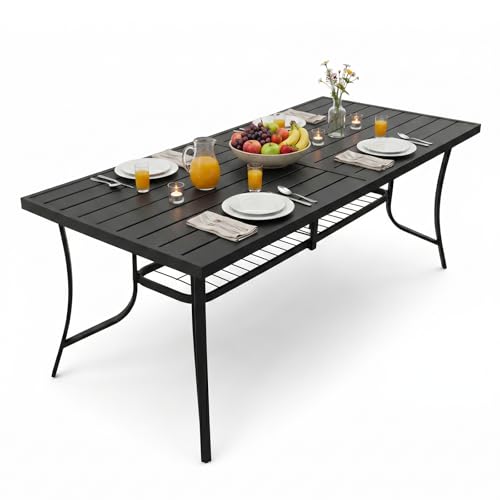
Large Outdoor Dining Table with Umbrella Hole: The Complete Buying Guide
Everything you need to know about choosing a spacious patio dining table with a built-in umbrella hole — sizes, materials, shapes, and setup tips for confident outdoor entertaining.
START EXPLORINGWhy this guide matters: A large outdoor dining table with an umbrella hole is the centerpiece of backyard entertaining. It anchors family meals, summer gatherings, and quiet morning coffees under shade. But choosing the right one involves more than picking a style — size, material, shape, and umbrella compatibility all shape how the table performs for years. This guide walks you through every decision point so you can buy with confidence.
Why a Large Outdoor Dining Table with Umbrella Hole Is Worth It
A large outdoor dining table transforms a patio from a pass-through space into a destination. When you add a built-in umbrella hole, you gain shade without a freestanding canopy that blocks sightlines or crowds the deck. The combination solves two problems at once: seating capacity and sun protection.
Families with growing children benefit from the extra surface area for serving dishes, crafts, and homework. Hosts who entertain frequently appreciate that an umbrella hole keeps the table usable even in midday sun. And because the umbrella inserts directly into the table, there are no trip hazards from offset bases or weighted plates scattered across the patio.
From a design perspective, a large table creates a natural focal point. Paired with a matching set of six outdoor dining chairs or a dining bench seat, it defines the dining zone and makes the rest of the patio feel intentional rather than improvised.
Choosing the Right Size for Your Space
Size is the first decision because it determines everything downstream — chair count, umbrella canopy, and clearance around the table. A table that looks generous in a showroom can overwhelm a small deck, while an undersized table leaves guests cramped.
| Seating Capacity | Typical Table Length | Best For |
|---|---|---|
| 4 people | 48–60 inches | Compact patios and balconies |
| 6 people | 66–78 inches | Standard family dining |
| 8 people | 84–96 inches | Frequent entertaining |
| 10+ people | 96 inches and above | Large gatherings and events |
Beyond seating, measure clearance. Plan for at least 36 inches between the table edge and any wall, railing, or planter so chairs can slide back comfortably. For a table that seats eight, that usually means a patio depth of at least 10 feet. If your space is tight, consider a modern outdoor dining table with umbrella hole that uses a pedestal base to free up legroom.
Also think about the umbrella canopy relative to table size. A canopy that is too small leaves the ends of a long table exposed; one that is too large can overwhelm the space. As a rule, the canopy diameter should exceed the table's widest dimension by roughly 12 to 24 inches on each side.
Table Shapes and What They Mean for Entertaining
Shape affects traffic flow, conversation, and umbrella placement. Each option has a distinct personality.
Rectangular Tables
Rectangular tables are the workhorse of outdoor dining. They seat the most people per square foot, line up neatly against a wall or railing, and accommodate an umbrella hole in the center without disrupting place settings. Long rectangular tables suit buffet-style serving and pair naturally with bench seating. If you plan to host holiday meals or birthday parties, this is the most versatile shape.
Oval Tables
Oval tables soften a rectangular footprint. They offer the same seating capacity but with rounded ends that improve traffic flow around tight corners. The curved edge also makes conversation easier at large gatherings because guests can angle toward the center. An oval table with a center umbrella hole is an excellent compromise for patios that need to feel elegant but functional.
Round Tables
Round tables excel at conversation. Everyone faces the center, and the absence of corners means no one gets stuck at an awkward angle. A large round table — 60 inches in diameter or more — seats six to eight and looks striking on square patios. The center umbrella hole is naturally positioned for even shade distribution. Round tables also work well on lanai patios where symmetry matters.
Square Tables
Square tables are space-efficient and visually balanced. A 60-inch square seats eight when chairs are placed on all four sides. They work best in square or nearly square patio zones and pair beautifully with a centered umbrella. However, square tables can feel crowded if your patio is narrow, since chairs on all sides need clearance.
Materials: Durability, Maintenance, and Climate Fit
The material you choose determines how the table ages, how much maintenance it demands, and how well it handles your local weather. Here is a practical comparison.
| Material | Tier | Best For | Maintenance Level |
|---|---|---|---|
| Powder-coated aluminum | Mid-range to premium | Humid and coastal climates | Low — wipe clean, rust-resistant |
| Teak or eucalyptus | Premium to luxury | Natural aesthetic, dry climates | Moderate — annual sealing |
| HDPE (high-density polyethylene) | Mid-tier | All-weather, low-maintenance patios | Very low — soap and water |
| Composite stone or concrete top | High-end tier | Windy areas, permanent setups | Low — seal periodically |
| Wrought iron or steel | Entry-level to mid-range | Traditional styling, covered patios | Moderate — touch-up paint for chips |
Aluminum frames with a powder-coated finish are the most forgiving choice for homeowners who want a durable table without a maintenance calendar. They resist rust, weigh less than steel, and hold up in humid or coastal environments. Look for reinforced welds and a thick gauge frame for longevity.
Wood tables bring warmth and character that synthetic materials struggle to match. Teak is the classic choice for outdoor furniture because of its natural oils, while eucalyptus offers similar durability at a more accessible position in the market. Both benefit from annual sealing to preserve color and prevent cracking. If you prefer a table that develops a silver-grey patina, you can skip the sealing and let nature take its course.
HDPE tables are the practical pick for busy households. They resist moisture, UV fading, and insects, and they clean up with a garden hose. The trade-off is a more uniform, manufactured look. For a design-forward alternative, explore modern outdoor furniture with clean lines that uses composite or metal surfaces for a polished finish.
Umbrella Hole Specifications: What to Check Before Buying
The umbrella hole is a small detail with outsized importance. A mismatch between hole size and umbrella pole can cause wobbling, leaning, or instability. Here is what to verify.
Hole Diameter and Pole Fit
Most outdoor dining tables use a standard hole diameter of roughly 1.5 to 2 inches. Umbrella poles are typically 1.5 inches in diameter, but some heavy-duty models use larger poles. Always confirm both measurements. If the hole is too large, the umbrella will wobble; if too small, the pole will not fit at all. Some tables include a reducing ring or sleeve to accommodate different pole sizes.
Tabletop Thickness and Stability
A thicker tabletop provides more surface area for the pole to rest against, which improves stability. Thin tabletops can allow the umbrella to lean under wind load. If you live in a breezy area, prioritize tables with a reinforced hole collar or a thicker top.
Umbrella Base Requirements
The table hole is not a substitute for a base. A weighted base sits beneath the table and anchors the pole. Choose a base rated for your canopy size — larger canopies catch more wind and require heavier bases. Bases with wheels or handles make seasonal repositioning easier. For patios with limited space, a flush-mount base keeps the area under the table clear for chairs and feet.
Offset vs. Center-Pole Umbrellas
Center-pole umbrellas are the natural pairing for a table with an umbrella hole. Offset umbrellas use a side arm and do not require a hole, but they need a separate weighted base and can be less stable in wind. If you already own an offset umbrella and want a large table, look for models without a hole or use a hole cover to keep the surface flat.
Key Buying Factors Beyond Size and Material
Once you have narrowed size, shape, and material, evaluate these secondary factors. They separate a table that works from one that delights.
Frame Construction and Weight
Heavy frames resist tipping and wind uplift. Aluminum is lighter than steel but can be engineered with thicker walls for comparable strength. Check the weight capacity and look for cross-bracing or aprons under the tabletop. A solid build is especially important for large tables because the surface area catches wind.
Assembly and Delivery
Large tables often ship in multiple boxes. Review assembly instructions and required tools before ordering. Some models include pre-drilled holes and labeled parts for straightforward setup; others require two people and a few hours. If assembly is a concern, look for tables that arrive mostly pre-assembled or offer white-glove delivery.
Warranty and Replacement Parts
A generous warranty signals manufacturer confidence. Check whether the warranty covers frame, finish, and tabletop separately, and whether replacement parts are available. For wooden tables, confirm whether the warranty covers cracking or only structural failure. A table that can be repaired extends its useful life.
Matching Chairs and Accessories
Chair height must match table height. Standard dining height is 28 to 30 inches from floor to tabletop, with chairs at 17 to 19 inches seat height. Counter-height and bar-height tables require corresponding chairs. If you prefer a unified look, buy a set; if you want flexibility, choose a table with a timeless profile that pairs with multiple chair styles. A set of four outdoor dining chairs can be expanded with additional seats as your needs grow.
Cushions and Comfort
Outdoor dining involves long meals and lingering conversations. Cushioned chairs improve comfort, but cushions need care. Look for quick-dry foam and solution-dyed acrylic fabrics that resist fading and mildew. Store cushions during heavy rain or winter to extend their life. If you already own wrought iron chairs, explore outdoor chair cushions for wrought iron chairs to refresh the set without replacing it.
Placement, Shade, and Patio Layout
Where you place the table matters as much as the table itself. A large table needs breathing room, and the umbrella needs sun exposure to be useful.
Position the table so the umbrella shades the seating area during the hottest part of the day. If your patio faces west, afternoon sun will be intense; a centered umbrella with a wide canopy provides relief. For patios with existing shade structures, a table without an umbrella hole may be sufficient, but the hole gives you flexibility to add shade later.
Leave space for serving. A sideboard, bar cart, or small outdoor side table near the dining table keeps platters and drinks within reach without crowding the main surface. If your patio is small, choose a table that seats six rather than eight and use a dining bench seat to maximize seating along one side.
Consider the view. An umbrella pole in the center of the table can obstruct sightlines. If your patio overlooks a garden or water feature, position the table so the pole aligns with a less important sightline, or choose an oval table where the pole sits slightly off-center relative to the longest dimension.
Maintenance and Seasonal Care
A large outdoor dining table is an investment in outdoor living. Proper care keeps it looking sharp and functioning well for years.
Clean the tabletop regularly with mild soap and water. Avoid abrasive cleaners that can scratch finishes or strip sealants. For wooden tables, inspect the surface each season and reapply sealant as needed. For metal tables, touch up chips promptly to prevent rust from spreading. For composite tops, use a soft brush and avoid harsh chemicals.
During winter or extended periods of disuse, cover the table with a breathable cover. Trapped moisture under a non-breathable cover can cause mold and mildew, especially on wood. Store cushions indoors and remove the umbrella to reduce wind load on the table and base.
Inspect the umbrella hole and base periodically. Tighten any loose collars, check the base for cracks, and ensure the pole sits straight. A small amount of maintenance prevents bigger problems later.
Frequently Asked Questions
What size umbrella hole do outdoor dining tables have?
Most large outdoor dining tables feature a standard umbrella hole measuring roughly 1.5 to 2 inches in diameter. Always confirm the exact opening size and the thickness of the tabletop, since some umbrella poles and bases require a specific fit.
How many people can a large outdoor dining table seat?
A large outdoor dining table typically seats six to eight people. Rectangular tables around 72 to 84 inches long comfortably seat six, while tables 90 inches or longer can seat eight. Oval and round tables of similar dimensions offer flexible seating with easier conversation flow.
What is the best material for a large outdoor dining table with umbrella hole?
The best material depends on your climate and maintenance preference. Aluminum and powder-coated steel are durable and rust-resistant, teak and eucalyptus offer natural beauty with proper sealing, and high-density polyethylene (HDPE) delivers excellent weather resistance with minimal upkeep. Composite and concrete tops suit windy locations because of their weight.
Do I need a separate umbrella base for a table with umbrella hole?
Yes. The table hole stabilizes the pole but does not support the umbrella. A weighted base placed beneath the table is essential for safety, especially on windy days. Choose a base rated for your umbrella canopy size and consider a base with a locking mechanism.
Can a large outdoor dining table with umbrella hole stay outside year-round?
Many modern tables are designed for year-round outdoor use, but longevity depends on material and climate. Aluminum, HDPE, and composite tables tolerate harsh weather well. Wood tables benefit from covers and seasonal sealing. In freezing climates, store cushions indoors and consider covering the table during winter storms.
Ready to Choose Your Table?
A large outdoor dining table with an umbrella hole is more than furniture — it is the stage for years of meals, celebrations, and quiet afternoons. Focus on the right size for your space, a material that matches your climate and maintenance style, and an umbrella setup that keeps everyone comfortable. With those decisions made, the rest is enjoyment.
Browse our recommended options below and compare features side by side. Whether you prefer the warmth of wood or the resilience of aluminum, there is a table that fits your patio and your life.