
Outdoor Cushions on Sale: How to Choose Cushions That Actually Last
Everything you need to know before refreshing your patio seating — fabric performance, foam grades, correct sizing, and long-term care, explained in plain language.
Why this guide exists: Replacing outdoor cushions is one of the highest-impact upgrades you can make to a patio. New cushions instantly modernize older furniture, restore comfort to tired seating, and let you change the entire color story of your outdoor room without replacing the frame. But cushions are also one of the most commonly mis-bought outdoor items — wrong fabric, wrong foam density, wrong dimensions. This guide walks you through every decision point so your next set performs for many seasons.
Start With Your Frame, Not the Cushion
Before browsing any outdoor cushions on sale, measure what you already own. Cushion fit is not forgiving: a seat cushion that is 2 inches too deep will slide forward every time someone sits down, and a back cushion that is too tall will buckle against the frame. Take three measurements for every seat — width, depth, and thickness — and two for every back rest — width and height. Write them down and keep them with you while you shop.
Pay attention to the shape of the frame as well. Deep seating sofas and loveseats use thicker, boxier cushions, while dining chairs and benches typically use slimmer pads. If your frame is wicker or rattan, the cushion needs to be dense enough that the weave does not press through; if your frame is metal sling or aluminum, thinner cushions with grip backing work better. Matching the cushion profile to the frame style is the single biggest factor in whether the result looks intentional or improvised.
Fabric Performance: The Decision That Determines Longevity
Fabric is where most of the long-term performance lives. A cushion with a beautiful pattern but poor UV resistance will fade within a single season of direct sun, while a plainer fabric with a solution-dyed acrylic weave may hold its color for years. Understanding the main fabric families makes the selection much simpler.
| Fabric Family | Tier | Best For | Key Considerations |
|---|---|---|---|
| Polyester & polyester blends | Entry-Level | Covered porches, seasonal use | Light and wrinkle-resistant; benefits from a protective spray and should be brought in during harsh weather. |
| Solution-dyed acrylic | Mid-Range | Everyday sun exposure | Color is locked into the fiber itself, giving strong fade resistance; breathable and comfortable to sit on. |
| Olefin (polypropylene) | Mid-Range | Humid climates, poolside areas | Naturally moisture-resistant and quick-drying; texture can feel slightly firmer than acrylic. |
| High-performance acrylic blends | Premium | Uncovered patios, full sun | Engineered for stain release and UV stability; often carries multi-year fabric warranties. |
| Marine-grade & commercial fabrics | Luxury | Coastal homes, high-traffic entertaining | Specified for salt air, mildew resistance, and heavy use; the most demanding option but also the longest-lived. |
Whichever fabric family you land on, look for three traits on the label: UV resistance, water repellency, and a removable, machine-washable cover. The removable cover is the practical detail most buyers overlook — it is what makes a cushion genuinely maintainable rather than disposable. If you prefer to keep your existing inserts and only replace the outer shell, explore dedicated outdoor cushion covers for patio furniture and confirm that the cover depth matches your foam thickness.
Foam and Fill: Where Comfort Is Won or Lost
Fabric protects the cushion; foam determines whether anyone actually enjoys sitting on it. Outdoor foam is measured by density and by its ability to drain. Standard upholstery foam traps rainwater and turns into a sponge, which leads to mildew inside the cushion — the most common cause of premature replacement.
Look for open-cell or reticulated foam, which is specifically engineered to let water pass straight through and dry quickly. In terms of firmness, entry-level cushions often use softer foam that feels plush on day one but flattens within a season; mid-range options typically use denser foam that recovers its shape; premium and luxury tiers combine a supportive core with a softer top layer so the cushion feels comfortable without collapsing. For dining chairs and benches, a firmer fill is usually the better choice because it keeps the cushion from compressing under repeated use.
A quick foam checklist
- Drainage: open-cell or reticulated foam, never standard furniture foam.
- Recovery: press the cushion firmly — it should spring back rather than stay indented.
- Wrapping: a thin polyester wrap over the core adds softness and protects the foam from friction.
- Consistency: if you are replacing a set, keep foam thickness uniform so all seats sit at the same height.
Sizing and Fit: The Five Measurements That Matter
Most cushion returns happen because of sizing, not quality. Work through these five measurements before you commit:
Seat width
Measure the clear width between the arms or frame uprights. If the cushion is wider than the gap, it will bunch at the corners.
Seat depth
Measure from the front edge of the seat to the backrest. Add a small allowance if you want the cushion to tuck slightly under the back cushion.
Cushion thickness
Check how much clearance the frame allows. A thicker cushion raises the seat height and can make a low sofa feel awkward.
Back height
Measure from the seat surface to the top of the back frame. A back cushion that overshoots will flop forward.
Corner radius
Rounded or sloped frames need cushions with matching corner shaping; square cushions on curved frames leave visible gaps.
If your furniture came as a set, the manufacturer's original dimensions are the safest reference. For sectionals and modular pieces, confirm whether the cushions are shared across modules or cut specifically for each unit — the difference matters when ordering replacements individually. Buyers refreshing a full sofa often find that outdoor couch cushions sold as complete sets offer better dimensional consistency than mixing separate pieces.
How to Evaluate a Cushion Before You Commit
Because you cannot physically inspect cushions bought online, use the product listing itself as your inspection. A well-made cushion listing will state the fabric brand or composition, the foam type, the cover's closure method, and the care instructions. Vague listings that describe the cushion only by color and dimension are usually a signal of lower specification.
Check the closure system next. Zippers are the most reliable because they allow the cover to be fully removed for washing and let you inspect the foam. Hook-and-loop flaps are acceptable but wear out faster. Look also for tie-downs, grip backing, or elastic straps on seat cushions — these keep cushions in place on smooth surfaces and reduce daily repositioning. Finally, read a handful of reviews specifically for comments about fading, flattening, and water retention after rain. Those three issues reveal more about real-world performance than any marketing copy.
Care and Storage: Extending the Life of Your Cushions
Even the best cushion will not survive neglect. A simple routine makes a substantial difference:
- Brush off debris weekly to prevent dirt from working into the weave, which abrades fibers over time.
- Clean with mild soap and water rather than harsh detergents, and rinse thoroughly so no residue attracts dirt.
- Dry cushions on edge after rain so water drains out and air circulates through the core.
- Store cushions during off-season in a dry, ventilated space — a cushion storage box keeps them protected without trapping moisture.
- Rotate seat cushions periodically so wear is distributed evenly across the set.
For a deeper seasonal routine, including fabric-specific cleaning methods and mildew prevention, our outdoor cushion guide covers the full maintenance calendar. If you plan to leave cushions outside year-round, prioritize waterproof covers and quick-drying foam — the combination handles rain far better than either feature alone.
Understanding Tiers When Comparing Options
Because product listings vary widely in how much specification they disclose, it helps to think in terms of tiers rather than isolated features. Entry-level cushions are usually a good fit for covered spaces and occasional use; mid-range cushions deliver the balance most homeowners need for everyday patios; premium cushions focus on UV stability and stain release for uncovered spaces; and luxury or commercial-grade cushions are specified for coastal conditions and heavy entertaining. Comparing within a tier — rather than across tiers — keeps the evaluation fair and focused on what actually matters for your setting.
It also pays to match the tier to the furniture. A luxury cushion on an entry-level frame is a mismatch, just as an entry-level cushion on a premium deep-seating sofa will feel like a downgrade. Aim for consistency across the set, and if you are refreshing a full seating group, consider whether the frame itself is worth the investment — sometimes replacing the cushions is the smarter move, and sometimes the frame is the limiting factor.
Mixing and Matching Without It Looking Accidental
Once the practical decisions are settled, the fun part begins: color and pattern. A reliable approach is to anchor the scheme with one solid neutral across the largest surfaces, then introduce pattern on smaller accent cushions. This gives the eye a resting place and makes the patterned pieces feel deliberate. Keep the fabric family consistent across the set so sunlight, rain, and cleaning affect all cushions in the same way — mixing fabric types across a single sofa rarely ages well.
For deep seating, seat and back cushions in the same color create a calm, tailored look; a contrasting back cushion adds visual depth without overwhelming a small patio. On dining chairs, matching cushions across the full set reads as intentional, while a subtle pattern hides everyday wear better than a solid light color. Whatever scheme you choose, confirm that every piece is from the same fabric family so the colors stay in step as they age.
Ready to Compare Cushion Options?
Use the measurement notes and fabric checklist above to shortlist cushions that fit both your frame and your climate. Browse the recommended options below to see how each one lines up.
Frequently Asked Questions
How often should outdoor cushions be replaced?
Can I use indoor cushions outdoors?
What is the difference between solution-dyed and piece-dyed fabric?
Do I need to bring cushions inside every night?
How do I stop seat cushions from sliding forward?
Can I replace just the cushion covers instead of the whole cushion?
Recommended Outdoor Cushions on Sale
⚠️ AFFILIATE DISCLOSURE: This website contains affiliate links. As an Amazon Associate, we earn from qualifying purchases. If you make a purchase through these links, we may receive a small commission at no additional cost to you. Read our full affiliate policy.

Summsun Outdoor Chair Cushions Set of 4, Faux Linen Patio Furniture Cushions, Water Resistant Backrest and Deep Seat Cushion Set with Ties, Removable Cover, Non-Slip Bottom, 24 x 24 Inch, Nature
Check price on Amazon
Summsun Outdoor Chair Cushions Set of 4: Water Resistant Seat Cushion for Patio Furniture - 18.5 x 16 x 2 Inch Chair Pads with Ties and Hidden Zipper - Patio Chair Cushion Replacement, Beige
Check price on Amazon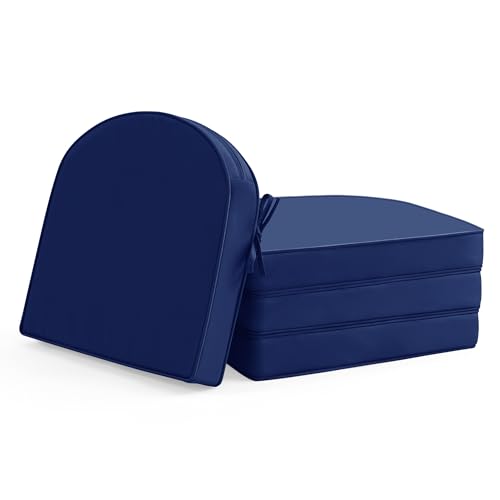
Summsun Outdoor Chair Cushions D-Shape, 17 x 16 Inch, Navy, Set of 4 | Patio Furniture Seat Chair Pads Replacement with Ties, High-Resilience Foam, Water Resistant, Removable Cover, Arc-shaped
Check price on Amazon
IASEAHK Patio Chair Cushions, 19" x 19" x 3" Outdoor Chair Cushions Set of 4, Waterproof Outdoor Cushions for Patio Furniture, Outdoors Seat Cushions with Handle and Ties, Navy Blue
Check price on Amazon
MuaMelop Outdoor Deep Seat Cushion Set, 24x24 Inch, Navy Blue, Set of 1 | Water-Resistant, Fade-Resistant, Removable Cover, For Patio Chair & Sofa&Furniture
Check price on Amazon
IPYNBAP Outdoor Cushions for Patio Furniture,Outdoor Seat Cushion Set 24 x 24 x 5.75 Inch,Waterproof & Fade Resistant Outdoor Chair Cushions,Deep Patio Chair Cushion with Removable Cover,Navy Blue
Check price on Amazon
Fitfree Outdoor Chair Cushions, Set of 4, 19 x 19 Inch, Navy Blue | Water Resistant, Fade Resistant, Patio Furniture Square Seat Replacement, Removable Cover with Ties, Non-Slip Bottom
Check price on Amazon