Outdoor Glider: Your Complete Patio Glider Buying Guide
Discover how to choose the perfect outdoor glider — from glider benches to single chairs — and create a soothing, breezy retreat in your backyard.
EXPLORE GLIDER TYPESWhy an outdoor glider? Unlike a traditional rocking chair that can tip, a glider moves in a smooth, horizontal motion using a stable frame and bearing system. That makes it one of the most comfortable and secure seating options for porches, decks, and patios — especially for families and older adults. This guide walks you through every decision point so you can buy with confidence.
What Exactly Is an Outdoor Glider?
An outdoor glider is a type of patio seating that moves back and forth on a fixed track or bearing mechanism, rather than rocking on curved runners. The motion is smooth, controlled, and quiet — which is why gliders are a favorite for relaxing with a book, watching the sunset, or gently soothing a child. You will find them as standalone glider chairs, two-seat loveseats, and full-size glider benches that seat three. Many models pair with a matching glider footrest or a small side table to complete the setup.
Because the gliding mechanism is built into the frame, the seat stays level throughout the motion. That level seat makes gliders easier to get in and out of than rockers, and it reduces the tipping risk that comes with curved rockers on uneven patio surfaces. If you are furnishing a small porch or a compact balcony, a single outdoor glider chair delivers the same soothing motion without eating up floor space.
Types of Outdoor Gliders
The right glider depends on how many people you want to seat and how much room you have. Here are the main categories to compare.
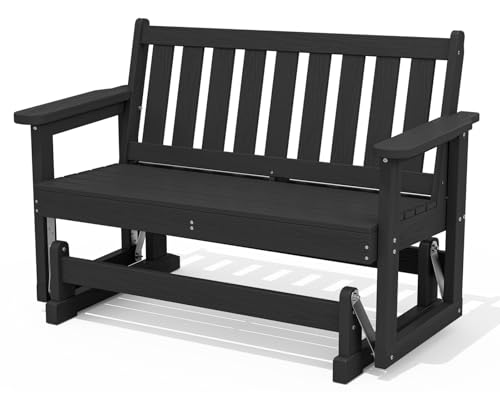
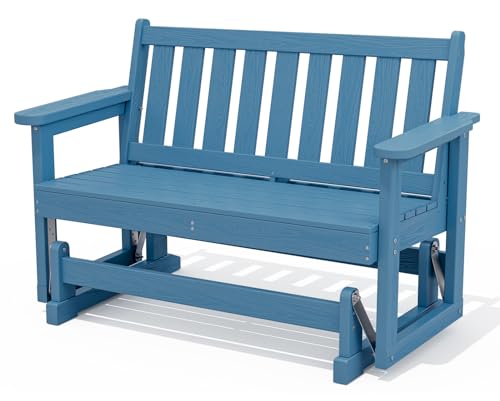
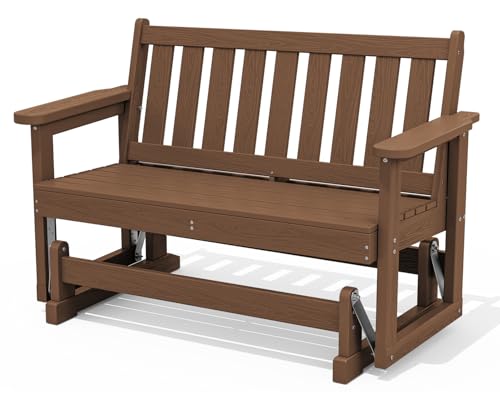
Glider Bench
A wide, bench-style glider that typically seats two to three people. It is the classic porch centerpiece and works well as the anchor seat on a front porch or a large deck. Bench models often include armrests and a gently contoured back for longer lounging sessions.
Glider Chair
A single-seat glider that is ideal for compact patios, balconies, and reading nooks. It glides just as smoothly as a bench but takes up far less room, making it a smart pick for apartment outdoor spaces or pairing two chairs with a small side table.
Glider Loveseat
A two-seat glider that sits between the chair and the full bench in size. It is a great compromise for couples who want shared seating without committing to a three-seat footprint. Many loveseat gliders include a center console or cup holders.
Glider with Canopy
Some gliders come with an attached canopy or sunshade, which is useful for uncovered patios and sunny afternoons. These models are heavier and need more clearance, but they add shade and a bit of privacy without a separate umbrella.
Glider Materials: What Holds Up Outdoors
Material choice affects comfort, maintenance, and how long the glider lasts through sun, rain, and temperature swings. The table below compares the most common frame materials used in outdoor gliders.
| Material | Best For | Key Traits |
|---|---|---|
| Powder-Coated Steel | High-traffic patios and windy locations | Heavy-duty and stable; rust-proof finish needed for coastal areas. Entry-level to mid-range tier. |
| Aluminum | Balconies and spaces where weight matters | Lightweight and rust-resistant; mid-range to premium tier depending on frame thickness. |
| Wood (Teak, Eucalyptus, Cedar) | Classic porches and natural-style decks | Warm look and solid build; needs periodic sealing. Mid-tier to high-end tier. |
| Wicker / Rattan (Resin) | Coastal, bohemian, and covered porches | All-weather resin weave over a metal frame; comfortable and low-maintenance. Mid-range tier. |
| HDPE / Recycled Plastic | Sun-heavy yards and low-maintenance setups | Weather-resistant coating, fade-resistant, and easy to clean. Essential tier to balanced tier. |
Whichever material you pick, check the gliding mechanism separately from the frame. A heavy-duty frame paired with a flimsy bearing track is a weak point. Look for sealed bearings, nylon glides, or reinforced steel tracks — these are the parts that determine how smooth and quiet the motion feels over time. If you want seating that needs almost no upkeep, outdoor furniture that doesn't need cushions is worth a look, since many resin and sling gliders fall into that category.
Features That Make a Difference
Two gliders can look identical in a photo and feel completely different after a season outdoors. These are the details worth checking before you commit.
- Sealed gliding track: Prevents grit and moisture from jamming the mechanism; a smoother glide for years.
- Weather-resistant coating: A rust-proof finish or UV-stable resin keeps the frame looking fresh through rain and sun.
- Cushion drainage: Quick-dry foam and breathable fabric prevent soggy seats after a storm.
- Weight capacity and frame gauge: A heavier gauge frame with a solid build stays stable when two or three people share a bench.
- Armrest and back height: Higher backs and padded armrests make longer lounging sessions more comfortable.
- Locking mechanism: A simple lock keeps the glider still while you get in or out — a helpful safety feature for households with kids or older adults.
How to Choose the Right Glider for Your Space
Start with the footprint. Measure your porch or patio and leave at least two feet of clearance in front of the glider so it can travel through its full motion without bumping a railing or table. A glider bench needs a wider footprint than a chair, so sketch the layout before you shop. If your space is tight, a single glider chair plus a folding side table with a glass top gives you a full relaxation corner without crowding the area.
Next, think about how you will use it. For daily coffee-and-book sessions, prioritize cushion comfort and a high back. For a front porch that greets guests, a glider bench with a classic silhouette anchors the space. For sun-exposed decks, a canopy model or a spot under a patio umbrella keeps the seat usable on hot afternoons. And if you entertain often, consider pairing the glider with a conversation set with a fire pit so the seating area works well into the evening.
Finally, match the glider to the rest of your outdoor furniture. A resin wicker glider suits a coastal or bohemian deck, while a teak glider fits a natural-wood theme. Consistent materials and colors make even a small patio feel intentional. If you are still building out the space, our outdoor furniture overview and outdoor essentials checklist can help you plan the full layout.
Care and Maintenance Tips
Gliders are low-maintenance, but a little routine care keeps the motion smooth and the frame looking new. Wipe the gliding track with a damp cloth every few weeks to clear dust and pollen, then apply a silicone-based lubricant to sealed bearings once a season. For wooden frames, reseal every year or two depending on your climate. For metal frames, touch up any scratched paint promptly to prevent rust from spreading. During winter or long periods of disuse, a furniture cover protects the frame and cushions from debris and moisture. If your cushions are removable, store them in a cushion storage solution to extend their life.
Frequently Asked Questions
Is an outdoor glider safe for children and older adults?
Yes — that is one of the glider's biggest advantages. Because the seat stays level and moves horizontally on a fixed track, it is far less prone to tipping than a curved rocker. Look for a locking mechanism so the glider stays still while someone gets in or out.
How much space does a glider need?
Leave at least two feet of clearance in front of the glider so it can complete its full glide without hitting a railing, table, or wall. A glider bench needs a wider footprint than a single chair, so measure before you buy.
Can I leave an outdoor glider outside all year?
Most modern gliders are designed for outdoor use, but the gliding track and cushions benefit from protection. In harsh winters, cover the frame or move it to a covered area, and store removable cushions indoors to prevent mildew.
What is the difference between a glider and a rocking chair?
A rocker moves on curved runners and can tip on uneven surfaces. A glider moves horizontally on a stable track or bearing system, keeping the seat level. Many people find gliders more comfortable and easier to get in and out of.