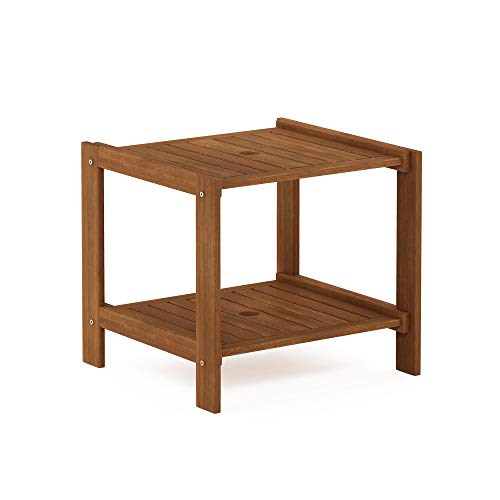
Why an Umbrella Hole Changes Your Patio
A standard coffee table is a resting place for drinks, trays, and books. An outdoor patio coffee table with an umbrella hole does the same job while also anchoring shade exactly where people sit. Instead of placing a freestanding umbrella somewhere nearby and hoping the shadow lands in the right place, the table itself becomes the center point of the shade. This is especially useful on small patios, balconies, and conversation set layouts where floor space is limited and a separate umbrella base would clutter the walkway.
The result is a compact, multi-purpose focal point: a coffee table, an umbrella mount, and a natural gathering spot all in one. For anyone building a lounge-oriented outdoor living space, this combination is one of the most efficient furniture decisions available. The table earns its footprint twice over — as surface and as shade infrastructure.
Anatomy of an Umbrella-Hole Coffee Table
Before comparing models, it helps to understand the parts that determine whether a table will serve you well for years. Most quality pieces share a few core elements:
- Tabletop: The upper surface, usually slatted, solid, or perforated. Slatted tops drain rainwater and dry faster; solid tops offer a smoother surface for trays and glassware.
- Umbrella hole and reducer ring: The central opening, typically between 1.5 and 2 inches, often paired with a reducer ring that adapts the hole to smaller umbrella poles for a snug, wobble-free fit.
- Hole cap or plug: A removable cover that restores a flat surface when the umbrella is not in use. This is a small feature that makes a big difference in everyday usability.
- Frame: The legs and apron. Welded aluminum or steel frames are common; wood frames use mortise-and-tenon or reinforced joinery. Frame rigidity matters more on umbrella tables because the table must resist the lateral force of a pole.
- Base plate or mounting collar: Some tables include an integrated collar or plate under the top that cradles the umbrella pole. This improves stability but does not replace a weighted base.
- Feet and levelers: Adjustable feet keep the table steady on uneven pavers, decks, and flagstone.
Materials Compared: Which Performs Best
Material choice drives durability, maintenance, and the visual character of your patio. Each option below is widely available and suitable for outdoor use when properly finished.
| Material | Best For | Weather Resistance | Maintenance |
|---|---|---|---|
| Powder-coated aluminum | Humid and coastal climates; modern and transitional looks | Excellent — rust-proof when coated | Wipe with mild soap; rinse seasonally |
| High-grade steel with rust-proof finish | Stable, weighty frames; wind-exposed patios | Very good — inspect for chips | Touch up scratches; cover in winter |
| Teak and acacia hardwood | Natural, warm aesthetics; covered patios | Good — weathers to silver if untreated | Oil annually to preserve color |
| HDPE resin (poly lumber) | Low-maintenance households; rainy regions | Excellent — moisture and UV resistant | Soap and water; no sealing required |
| Wicker and rattan over metal frame | Cozy, textured conversation areas | Good — synthetic weave preferred outdoors | Brush weave; avoid prolonged soaking |
| Concrete or composite stone top | Premium, heavy-duty anchor tables | Excellent — impervious to rain | Seal occasionally; wipe spills promptly |
Editor's note: On umbrella tables, the frame matters more than the top. A beautiful top on a flimsy frame will wobble the moment a breeze catches the canopy. Prioritize welded joints, a wide footprint, and a reinforced hole collar.
Sizing and Hole Diameter: Getting the Fit Right
Coffee table height and diameter should follow the seating around it. As a general rule, the tabletop should sit within a couple of inches of the seat height of your chairs or sofa, and there should be roughly 14 to 18 inches of clearance between the table edge and the seat front for comfortable legroom.
- Small conversation sets (2–3 seats): A round table around 24 to 30 inches in diameter keeps the layout tight and walkable.
- Standard lounge sets (4–6 seats): A 32 to 40 inch round or square table gives everyone room for a drink and a plate.
- Large sectional layouts: A rectangular table 40 to 48 inches long works well, provided the umbrella hole stays centered over the seating focal point.
Hole diameter deserves equal attention. Most patio umbrella poles measure roughly 1.5 inches, but poles vary. Measure your pole before buying, and confirm whether the table includes a reducer ring for smaller poles. If you plan to pair the table with a tilt-and-crank umbrella — a common feature on patio furniture sets with umbrella — check that the crank housing clears the tabletop when the umbrella is fully lowered.
Matching the table to an existing umbrella
If you already own an umbrella, bring its pole diameter and canopy size to the decision. A canopy that is too large for the table's footprint can shade the table but leave guests at the edges in full sun. Conversely, a small canopy over a large table shades only the center. A canopy spanning roughly 7 to 9 feet pairs well with most coffee table conversation sets, while compact balconies often suit a 6 to 7 foot canopy. For ideas on pairing shade with lounging furniture, see our guide to patio furniture for apartment balconies.
Stability and Umbrella Base Pairing
This is the single most overlooked part of buying an umbrella coffee table. A coffee table sits low and is relatively light. It is not designed to be the sole anchor for a tall umbrella, and relying on it alone is a common cause of tipping in gusty weather. The right approach is to pair the table with a weighted umbrella base rated for your canopy size.
Depending on the table design, the base can sit beneath the table on the ground, or the table may be designed to straddle a base plate. Check the product specifications for the recommended base type. Heavier frames and wider footprints improve resistance to lateral force. If your patio is exposed to strong winds, consider a table with a concrete or composite top, or a steel frame with a low center of gravity.
Practical tip: Lower or close the umbrella whenever it is unattended. A tilt-and-crank mechanism makes this quick, and it dramatically reduces the wind load on both table and base.
Style and Layout Ideas
Umbrella coffee tables fit nearly every design language. Here are a few directions that work especially well:
- Modern and minimalist: Slim aluminum frames with slatted tops and a single neutral canopy. Keep accessories minimal so the clean lines read clearly.
- Coastal and nautical: White or weathered wood finishes with navy or sand-toned canopies. Pair with outdoor lounge chairs in light tones.
- Rustic and farmhouse: Teak or acacia tops with a natural or charcoal canopy. Layer with textured outdoor rugs to ground the seating zone.
- Bohemian oasis: Round resin or wicker tables with a fringed or patterned canopy, layered with lanterns and outdoor lighting for evening ambiance.
Layout matters as much as style. Center the table within the seating arc so the umbrella shades the people, not the walkway. On a long patio, a rectangular umbrella table can anchor one end while a fire feature or grill station anchors the other — our outdoor patio conversation sets guide covers zoning in more detail. If you plan to add a dining zone nearby, a high-top table and chairs with umbrella can extend the shaded footprint without duplicating the coffee table's role.
For compact layouts, a lounge furniture set for small spaces combined with an umbrella coffee table often replaces both a side table and a freestanding umbrella base, freeing up valuable floor area.
Quality Tiers Explained
Product positioning varies widely, but the tiers below describe what you can generally expect at each level of the market. Use them as a relative comparison rather than an absolute measure.
| Tier | Typical Characteristics | Best For |
|---|---|---|
| Entry-level | Thinner frames, simpler joinery, basic powder coating. Functional but less rigid over time. | Seasonal use, sheltered balconies, starter patios |
| Mid-range | Welded frames, better coatings, reducer ring and cap often included. Noticeably steadier under an umbrella. | Everyday family use, mixed-climate patios |
| Premium | Reinforced hole collar, adjustable feet, high-grade finishes, hardwood or composite tops. | Frequent entertaining, windy or coastal locations |
| Luxury | Architectural design, commercial-grade frame construction, integrated base mounting, fine detailing. | Design-led patios, long-term investment pieces |
A mid-range model usually offers the best balance of rigidity and finish for a typical residential patio. Moving up a tier typically buys smoother mechanisms, tighter tolerances, and better resistance to the constant lateral load an umbrella places on the table.
Care and Seasonal Maintenance
An umbrella coffee table sees rain, sun, and the occasional spilled drink. A simple routine keeps it looking sharp and extends its service life:
- Weekly: Wipe the top with mild soap and water. Empty any standing water from slats or recessed areas.
- Monthly: Check the hole collar and reducer ring for looseness. Tighten hardware and inspect the base for rust or wobble.
- Seasonally: Clean the umbrella pole and the hole opening to prevent grit from scratching the finish. Re-oil hardwood tops if the surface looks dry.
- Before winter: Remove the umbrella, insert the cap, and cover the table or store it if your climate brings heavy snow. Our weatherproofing guide covers protective covers and storage in detail.
For homeowners furnishing a new space from scratch, the patio essentials checklist is a useful companion to this guide — it helps you sequence shade, seating, and surface purchases so nothing is forgotten.
Frequently Asked Questions
What is the standard umbrella hole size for a patio coffee table?
Most patio coffee tables with an umbrella hole feature an opening between 1.5 and 2 inches in diameter. This range accommodates the majority of standard patio umbrella poles. Before purchasing, measure your umbrella pole and confirm the table's hole diameter matches, and check whether a reducer ring is included for a snug fit.
Do I need a separate umbrella base if my coffee table has an umbrella hole?
Yes, in most cases. A coffee table is relatively low and lightweight compared with dining tables, so it cannot reliably anchor a tall umbrella on its own. A weighted umbrella base placed beneath or beside the table is strongly recommended. Some tables include a built-in base plate, but a dedicated weighted base offers better stability in windy conditions.
Which material is best for an outdoor coffee table with an umbrella hole?
Aluminum and high-grade steel with a rust-proof finish are excellent for wet climates because they resist corrosion. Teak and acacia are durable hardwoods that weather gracefully when maintained. HDPE resin is a low-maintenance option that resists moisture, insects, and UV fading. The best choice depends on your climate, maintenance preference, and the look you want to achieve.
Can a patio coffee table with an umbrella hole be used without an umbrella?
Absolutely. When the umbrella is removed, the hole can be covered with an included cap or plug, restoring a flat surface for drinks, trays, and decor. Many tables ship with a plug, and aftermarket caps are widely available if yours does not include one.
How do I keep an umbrella coffee table stable in windy conditions?
Use a heavy weighted base rated for your umbrella's size, close the umbrella when it is not in use, and position the table in a spot sheltered from prevailing winds. Choose a table with a wider footprint or a heavier frame for better resistance to tipping. A tilt-and-crank umbrella mechanism also lets you lower the canopy quickly when gusts pick up.
Ready to Compare Options?
Browse curated outdoor patio coffee tables with umbrella holes and find the right fit for your seating layout, climate, and style.
Explore Recommended Tables