
Outdoor Standing Hammock: The Complete Buying Guide
Everything you need to know about freestanding hammocks — frames, fabrics, weight capacity, setup, care, and how to choose the right model for your backyard, deck, or patio.
Explore Top PicksWhy a standing hammock? An outdoor standing hammock is a self-contained relaxation station. Unlike traditional hammocks that need two mature trees, a freestanding model includes its own support frame, so you can set it up on a patio, deck, lawn, or balcony without any permanent installation. It is the most flexible way to add a hammock to a modern outdoor space — and this guide walks you through every decision point.
What Is an Outdoor Standing Hammock?
An outdoor standing hammock — also called a freestanding hammock or hammock with stand — combines a hammock bed with a dedicated metal or wood frame. The frame holds the hammock taut at the correct height, so you never need trees, posts, or wall anchors. Most models break down into a few pieces and can be moved around the yard or stored for the off-season.
This format has become especially popular for renters and homeowners with small yards, because it delivers the full hammock experience on a concrete patio or compact balcony. If you are still exploring broader outdoor seating options, our outdoor setting guide covers how hammocks fit into a complete patio layout.
Key Components of a Standing Hammock
The Frame
Usually steel, aluminum, or wood. Steel frames with powder-coated or rust-proof finishes are the most common for outdoor use. Aluminum is lighter and easier to relocate, while wood frames offer a more natural look for rustic patios.
The Hammock Bed
Fabric options include quilted polyester, cotton, Sunbrella acrylic, and mesh. Quilted fabrics feel softer and are better for lounging, while mesh dries faster and suits poolside or humid climates.
Spreader Bars
Rigid bars at each end keep the hammock bed open and flat. Models with spreader bars are easier to get in and out of than traditional gathered-end hammocks.
Hanging Hardware
Chains, S-hooks, and carabiners connect the hammock bed to the frame. Heavy-duty chains with multiple adjustment points let you fine-tune the hang height.
The Base
A wide, weighted base keeps the frame stable. Some models include ground stakes for lawn placement; others use a flat base plate for decks and patios.
Carry Bag
Portable models often include a carry bag for the hammock bed and a separate bag for the frame — a useful feature for camping, beach trips, or seasonal storage.
Frame Materials: Steel vs. Aluminum vs. Wood
The frame is the backbone of any standing hammock, and its material determines weight, durability, and how easy the unit is to move.
| Material | Durability | Weight & Portability | Best For |
|---|---|---|---|
| Powder-Coated Steel | Heavy-duty, resists rust with proper coating | Heavy; best left in one spot | Permanent patio or lawn setups |
| Aluminum | Good corrosion resistance; lighter gauge | Lightweight and easy to relocate | Balconies, renters, portable use |
| Wood (Cedar, Teak, Pine) | Natural look; requires sealing and seasonal care | Moderate to heavy | Rustic, coastal, or cottage-style patios |
For most outdoor environments, a powder-coated steel frame offers the best balance of stability and weather resistance. If you need to move the hammock frequently, aluminum is the more practical choice. Wood frames are a style statement but demand more maintenance — similar to the care routines covered in our weatherproofing guide.
Choosing the Right Hammock Fabric
The fabric affects comfort, drying time, and how the hammock holds up to sun and rain. Here is how the main options compare:
- Quilted Polyester: Soft, padded feel with good UV resistance. Dries reasonably fast and is the most popular choice for backyard lounging.
- Sunbrella Acrylic: Premium-tier fabric with excellent fade resistance and water repellency. A long-term investment for sunny climates.
- Cotton: Breathable and comfortable but absorbs moisture and can mildew if left outside. Best for covered porches or seasonal use.
- Mesh / Net: Fast-drying and breathable — ideal for poolside or humid regions. Less padded, so it suits reading and quick rests more than long naps.
- Canvas: Heavy-duty and supportive, often used in quilted models. Holds shape well but takes longer to dry after rain.
If your hammock will stay outside year-round, prioritize synthetic fabrics with UV treatment. Pair the hammock with an outdoor shade solution or a umbrella holder to protect the fabric from direct sun and extend its lifespan.
Weight Capacity and Sizing
Weight capacity is the single most important safety specification. Most outdoor standing hammocks fall into these ranges:
| Tier | Typical Weight Capacity | Best For |
|---|---|---|
| Entry-Level | 250–300 lbs | Single adults, light use, occasional lounging |
| Mid-Range | 300–400 lbs | Daily use, couples sharing occasionally |
| Premium | 400–450 lbs | Heavy daily use, larger adults, two-person lounging |
| Luxury / Commercial-Grade | 450+ lbs | Resort-style setups, high-traffic households |
Also check the hammock bed dimensions. A standard single bed runs about 78–80 inches long and 55–60 inches wide. Two-person models stretch to 90 inches or more. Make sure the footprint of the frame fits your space — a typical standing hammock needs a clearance of roughly 10–12 feet in length.
How to Set Up and Place Your Standing Hammock
Setup is straightforward for most models, typically taking 15–30 minutes with basic hand tools. Follow these steps for a safe and comfortable result:
- Choose a flat, level surface: Decks, patios, concrete slabs, and firm lawns work best. Avoid slopes and soft ground that can cause the frame to sink or tip.
- Assemble the frame first: Connect the base, legs, and upright arms according to the manual. Tighten all bolts fully before hanging the bed.
- Attach the hammock bed: Use the included chains or carabiners. Most frames offer multiple hook points so you can adjust the hang height.
- Set the hang height: The lowest point of the hammock should sit about 15–18 inches off the ground — high enough to avoid scraping, low enough to step in comfortably.
- Test stability: Gently push the frame from side to side. If it wobbles, re-tighten the joints or reposition on a flatter surface. Use ground stakes if the manufacturer provides them.
For small spaces, position the hammock along the edge of a patio so it does not block walkways. Our small-space furniture guide has more layout ideas for compact outdoor areas.
Care and Maintenance
A standing hammock is exposed to sun, rain, and temperature swings, so a little routine care goes a long way:
Weekly
Brush off debris and check that chains, hooks, and bolts remain tight. A quick visual inspection catches loose hardware before it becomes a safety issue.
Monthly
Spot-clean the fabric with mild soap and water. Rinse thoroughly and let it air-dry fully before use. Inspect the frame for scratches that could lead to rust.
Seasonally
Deep-clean the hammock bed, apply touch-up paint to any frame chips, and check the base for corrosion. Store the hammock bed indoors during winter if your climate freezes.
Storage
Most standing hammocks disassemble for storage. Keep the fabric dry and folded loosely to prevent creasing. A breathable storage bag prevents mildew.
If you plan to leave the hammock out during the off-season, consider an outdoor storage box for cushions and accessories, and use a fitted cover on the frame. Our outdoor care hub covers broader maintenance routines for all patio furniture.
Buying Checklist: What to Verify Before You Buy
Before committing to a model, run through this checklist to avoid surprises:
- Weight capacity: Confirm the rated capacity exceeds the heaviest expected user by at least 20%.
- Frame finish: Look for powder-coated or rust-proof finishes — essential for humid or coastal climates.
- Fabric type: Match the fabric to your climate and use pattern (quilted for comfort, mesh for fast drying).
- Footprint: Measure your patio or deck and compare it with the assembled frame dimensions.
- Assembly: Check whether tools are included and whether the frame breaks down for storage.
- Warranty: A frame warranty of at least one year signals confidence in build quality. See our warranty guide for how to evaluate coverage.
- Portability: If you plan to move the hammock, prioritize aluminum frames and included carry bags.
Useful Accessories for Your Hammock Setup
A few add-ons make a standing hammock more comfortable and your outdoor space more cohesive:
- Side table: A small table keeps drinks and books within reach. Browse our outdoor side table options for compact designs that fit beside a hammock frame.
- Throw pillows: Add outdoor throw pillows for lumbar support and a pop of color.
- String lights: Hang outdoor string lights above the hammock to create a cozy evening retreat.
- Weather cover: A hammock cover protects the fabric from rain and UV damage when not in use.
Common Mistakes to Avoid
- Ignoring the weight rating: Overshooting the capacity is a safety hazard, not a comfort upgrade.
- Placing on soft or sloped ground: The frame can sink or tip. Always use a flat, firm surface.
- Leaving cotton hammocks in the rain: Cotton absorbs water and can mildew quickly. Choose synthetic fabrics for uncovered setups.
- Skipping hardware checks: Loose bolts and worn chains are the leading cause of hammock accidents. Check them monthly.
- Underestimating the footprint: Measure twice — a standing hammock needs roughly 10–12 feet of clearance.
Frequently Asked Questions
What is an outdoor standing hammock?
An outdoor standing hammock is a freestanding hammock that comes with its own support frame or stand. Unlike traditional hammocks that require two trees or posts, a standing hammock is self-contained and can be placed on any flat surface such as a patio, deck, lawn, or balcony.
How much weight can a standing hammock hold?
Weight capacity varies by model, but most quality outdoor standing hammocks are rated for 250 to 450 pounds. Entry-level models typically support around 250 pounds, while mid-range and premium models often handle 350 to 450 pounds. Always check the manufacturer's stated capacity before purchase.
Can a standing hammock stay outside in the rain?
It depends on the materials. Hammocks made from synthetic fabrics like polyester or Sunbrella are water-resistant and can handle light rain, while quilted or cotton models should be brought inside or covered. Steel frames with powder-coated or rust-proof finishes are designed for outdoor use, but storing the hammock in a cover during heavy weather extends its lifespan.
How do I set up an outdoor standing hammock?
Most standing hammocks assemble in 15 to 30 minutes with basic tools. Place the frame on a flat, level surface, attach the hammock bed to the frame's hooks or chains, and adjust the tension so the hammock hangs about 15 to 18 inches off the ground. Always follow the manufacturer's instructions for safe assembly.
What is the best surface for a standing hammock?
Flat, level surfaces work best: decks, patios, concrete slabs, or firm lawns. Avoid soft or uneven ground that can cause the frame to sink or tip. If placing on grass, consider using ground stakes or a base plate for added stability.
Is a standing hammock worth it compared to a tree-hung hammock?
Yes, if you lack suitable trees or want flexibility. A standing hammock can go anywhere with a flat surface, moves easily, and requires no drilling or permanent installation. Tree-hung hammocks are more portable for camping but depend on finding the right anchor points. For backyard use, a freestanding model is generally the more practical choice.
Related Guides on PatioFocus
- Outdoor Setting: Complete Layout Guide
- Outdoor Shade Solutions
- Outdoor Side Table Ideas
- Outdoor Side Tables Collection
- Outdoor Swing Chair Guide
- Outdoor String Lights
- Outdoor Throw Pillows
- Outdoor Umbrella Holder
- Outdoor Storage Box
- Outdoor Care & Maintenance Hub
- Weatherproofing Guide
- Warranty & Returns Guide
- Small-Space Furniture Ideas
Recommended Outdoor Standing Hammocks
⚠️ AFFILIATE DISCLOSURE: This website contains affiliate links. As an Amazon Associate, we earn from qualifying purchases. If you make a purchase through these links, we may receive a small commission at no additional cost to you. Read our full affiliate policy.
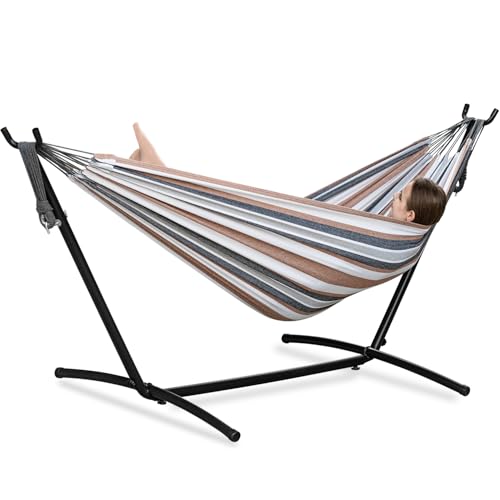
PNAEUT Double Hammock with Stand for Outside, Heavy-Duty, Portable (Coffee) | 450 lbs, 9FT, Space Saving, 2 Person, Heavy-Duty Steel Frame, Easy Assembly, Indoor Outdoor Patio
Check price on Amazon
Everyfun Double Hammock with Stand for 2 Person, 600 lb Capacity, Rainbow | Free Standing Hammock with Steel Stand, Carrying Bag Included – Hamaca para Adultos, Indoor & Outdoor Patio
Check price on Amazon
SUNCREAT Double Portable Hammock with Stand, 2 Person Hammock with Curved Spreader Bar, Balance Ropes Included, Dark Gray
Check price on Amazon
ANAGOO Double Hammock with Stand 500lbs Heavy Duty Outdoor Two Person White | 500 LBS Capacity, Stable Steel Frame, Balance Strap, Tool-Free Assembly, For Patio Garden
Check price on Amazon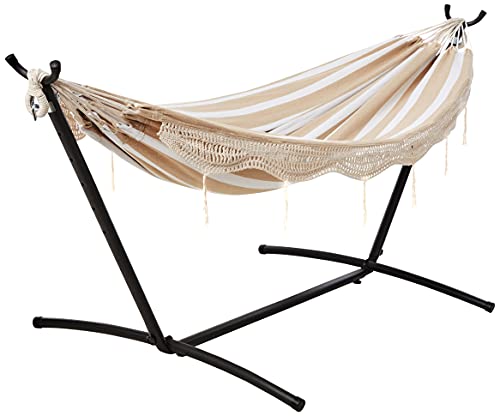
Amazon Basics Double Hammock with 9-Foot Space Saving Steel Stand and Carrying Case, 2 Person, 450 lb Capacity, Beige Stripe with Lace, 110" x 47" x 43"
Check price on Amazon
Lazy Daze Portable Hammock with Stand, Free Standing Hammocks for Indoor Outdoor Patio Yard, Has a Carrying Bag and Pillow, 9ft Steel Hamacas Heavy Duty 2 Person Amaca 450 lbs Capacity(White)
Check price on Amazon
ANAGOO 2 Person Hammock with Stand, 500 lb Indoor Outdoor, Wide Blue | Adjustable Height | Heavy Duty Steel Stand | Anti-Tip Spreader Bars | Tool-Free 10-Min Setup
Check price on Amazon