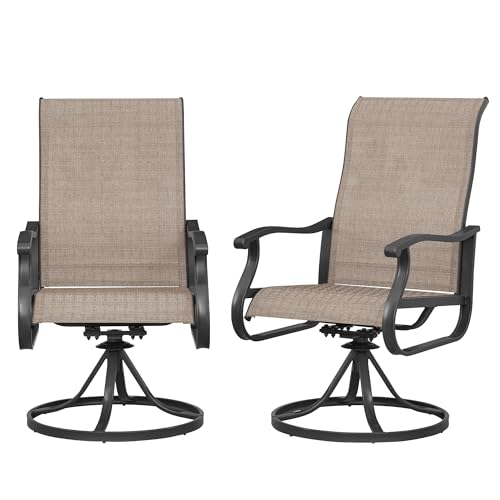
Outdoor Swivel Rocking Chair Set of 2: The Complete Buying Guide
Two chairs, two motions, one smarter seating decision. Learn how a swivel rocking chair pair can transform a patio, porch, or deck — and exactly what to check before you commit.
Why this guide matters: If you already know you want an outdoor swivel rocking chair set of 2, you are past the browsing stage and into the decision stage. This guide focuses on the details that actually affect daily use — the swivel mechanism, the rocking arc, frame materials, cushion construction, and how a pair of chairs fits into a real outdoor layout. Read it once and you will be able to evaluate any set with confidence.
What Makes a Swivel Rocking Chair Different
A swivel rocking chair combines two distinct motions in a single base. The swivel lets the seat rotate a full circle, so you can turn from a conversation to a view to a dining table without standing up. The rocking motion is a gentle front-to-back glide, usually achieved through a curved rocker plate, a spring-loaded mechanism, or a glider-style track hidden under the seat.
That combination is what separates these chairs from a standard patio chair or a plain outdoor swivel chair. A fixed chair asks you to move it. A swivel rocker asks you to move in it. For a pair of chairs shared by two people, that difference is felt every single evening.
Swivel rocker vs. swivel glider vs. standard rocker
- Swivel rocker: rotates 360 degrees and rocks front-to-back. The most versatile motion for patios and porches.
- Swivel glider: rotates and glides on a horizontal track rather than rocking on a curve. Smoother, quieter, and often preferred on hard deck surfaces.
- Standard rocker: rocks only, no rotation. Simple and stable, but you must reposition the chair to change your view.
For a two-person setup, swivel rockers or swivel gliders usually win because each person can angle toward the other, toward a fire pit, or toward the yard independently. If you want a broader comparison of motion styles, our guide to outdoor swivel rockers covers the trade-offs in more depth.
Why Buy a Set of 2 Instead of Single Chairs
A matched pair solves several practical problems at once. The frames share the same finish, the cushions share the same fabric lot, and the two chairs have identical seat height and rocking feel — which matters more than most buyers expect.
- Visual consistency: two chairs from the same production run match in color and texture. Buying singles later often produces a subtle mismatch.
- Balanced comfort: identical mechanics mean neither person gets the "worse" chair.
- Simpler layout: a pair naturally forms a conversation zone, often anchored by a small outdoor side table between them.
- Easier storage planning: covers, cushion storage, and winter storage are sized for two identical pieces.
Frame Materials: What Holds Up Outdoors
The frame decides how long the set lasts. Cushions can be replaced; a rusted or wobbling frame usually cannot be saved. Here is how the common materials compare.
| Frame Material | Tier Positioning | Best For | Key Consideration |
|---|---|---|---|
| Powder-coated aluminum | Mid-range to premium | Year-round outdoor use, coastal areas | Lightweight, rust-proof finish; check weld quality at joints |
| High-grade steel | Entry-level to mid-range | Stable, heavy frames on covered porches | Requires a rust-proof coating; heavier to move |
| All-weather wicker over aluminum | Mid-range to premium | Traditional and coastal patio styles | Inspect weave tightness; UV-stabilized resin resists fading |
| Teak or acacia hardwood | Premium to luxury | Natural, warm design schemes | Needs periodic sealing; teak weathers to a silver patina |
For most buyers, powder-coated aluminum is the sweet spot: it is light enough to reposition, it does not rust, and the coating holds color well. If the set will sit on an exposed deck with salt air, prioritize aluminum over steel. If you love the look of woven furniture, our notes on outdoor swivel rocking chairs with cushions explain how wicker frames pair with fabric choices.
The Swivel and Rocking Mechanism
This is the part buyers most often overlook, and the part most likely to disappoint later. A well-built mechanism feels smooth and silent; a poor one grinds, squeaks, or develops a wobble within a season.
What to check
- Base plate and bearing: a sealed bearing ring or a heavy-duty nylon ring rotates more smoothly than bare metal-on-metal contact.
- Rocking hardware: spring-loaded or curved-plate rockers should return to center without a hard stop.
- Weight capacity and stability: a wider base footprint reduces tipping during rotation.
- Noise: glider-style tracks are usually quieter than curved rockers on hard surfaces.
Entry-level sets often use simpler mechanisms that are perfectly serviceable for light use. Mid-range sets typically add smoother bearings and tighter tolerances. Premium and luxury sets tend to combine a sealed swivel bearing with a damped rocking motion, which feels noticeably more controlled.
Cushions and Comfort
A swivel rocker is only as comfortable as its cushion. For an outdoor set of 2, look at three things: foam type, fabric, and cover removal.
- Foam: quick-dry foam with an open-cell structure sheds water and resists mildew. High-density foam holds shape longer but dries more slowly.
- Fabric: solution-dyed acrylic and olefin are the most fade- and water-resistant choices. Polyester blends are common at entry level.
- Covers: removable, machine-washable covers make long-term care far easier.
- Fit: if cushions are included, confirm they are secured with ties or a non-slip backing so they do not slide during rocking.
If the set you like is frame-only, measure the seat width and depth carefully before ordering aftermarket cushions. A mismatch of even an inch affects how the chair rocks.
Sizing and Layout for a Pair
Two swivel rockers need more room than two static chairs because each chair rotates. Plan for clearance behind and beside each chair.
- Measure the footprint: note the chair width and the depth of the rocking arc, then add at least 12 inches of clearance behind each chair.
- Plan the angle: angle the pair slightly toward each other, or toward a shared focal point such as a fire pit or garden view.
- Add an anchor table: a small round or square table between the chairs completes the conversation zone. A compact outdoor side table works well without blocking rotation.
- Consider shade: if the chairs face the sun, plan an umbrella or a shade structure. Our outdoor shade overview covers the options.
Style Pairing: What the Set Should Sit Next To
A pair of swivel rockers rarely lives alone. How you pair them determines whether the patio feels intentional or assembled at random.
- With a fire pit: angle both chairs toward the pit and leave the rocking arc clear. A set arranged around a table with a fire pit and chairs creates a natural evening zone.
- With a sofa: two swivel rockers opposite an outdoor sofa form a complete conversation layout.
- With dining: keep the rockers separate from the dining zone so the rocking motion does not interfere with meals. A table and chairs set for four plus a rocker pair covers both dining and lounging.
- On a porch: a rocker pair plus a small table is the classic porch arrangement and works with almost any facade style.
If you are building the whole layout from scratch, start with the seating anchor and work outward. Our outdoor setting guide walks through the sequence.
Care and Longevity
A well-maintained swivel rocker pair can last many seasons. The routine is simple.
- Rinse frames with mild soap and water; dry thoroughly, especially at joints.
- Lubricate the swivel mechanism lightly once or twice a year with a silicone-based product.
- Bring cushions indoors during heavy rain or extended wet weather.
- Store cushions in a waterproof outdoor storage box for cushions during the off-season.
- Use a fitted cover if the set stays outside through winter.
Common Mistakes to Avoid
- Ignoring the rocking clearance: a chair that rocks into a wall or railing is unusable.
- Buying mismatched singles: color and fabric lots can differ between production runs.
- Skipping the mechanism check: a sticky swivel ruins the entire point of the chair.
- Overlooking cushion drying: standard foam traps water and mildews; quick-dry foam does not.
- Placing the set on uneven ground: rockers need a level surface to glide smoothly.
Ready to Compare Swivel Rocking Chair Sets?
Use the checklist above — frame material, mechanism quality, cushion construction, and clearance — to evaluate any set of two. The shortlist below is a practical starting point.
View Recommended SetsFrequently Asked Questions
What is an outdoor swivel rocking chair set of 2?
It is a pair of patio chairs that combine a 360-degree swivel base with a gentle rocking motion. The set is designed for two people to relax together, and is typically sold with matching cushions and a consistent frame finish.
Are swivel rocking chairs suitable for small patios?
Yes. A set of two swivel rockers is one of the most space-efficient seating arrangements for small patios because the swivel lets each chair rotate toward a table, fire pit, or view without being moved. Choose a compact frame and measure the rocking arc before buying.
What materials are best for outdoor swivel rockers?
Powder-coated aluminum and high-grade steel are the most durable frame materials because they resist rust. Wicker over aluminum offers a softer look, while teak and acacia bring natural warmth. Cushions should use solution-dyed acrylic or olefin fabric for fade resistance.
Do I need cushions for outdoor swivel rocking chairs?
Most swivel rockers are designed to be used with cushions, and a set of 2 usually includes them. Look for quick-dry foam, removable covers, and UV-resistant fabric. If you buy frame-only, confirm seat dimensions so aftermarket cushions fit.
How do I maintain an outdoor swivel rocking chair set?
Rinse frames with mild soap and water, dry thoroughly, and lubricate the swivel mechanism occasionally. Bring cushions inside during heavy rain or store them in a waterproof cushion box. A fitted cover during the off-season extends the life of the set.