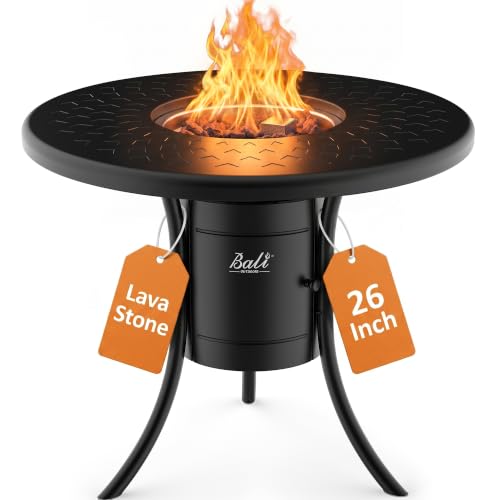
Outdoor Tables with Fire in the Middle: Complete Buying Guide
Imagine gathering around a warm flame while dining under the stars. Fire pit dining tables combine the social magic of a fire with the practicality of an outdoor table — here is everything you need to choose the right one.
Explore Fire Tables🔥 Quick Verdict
A fire pit table is a long-term investment that transforms a patio into a year-round gathering spot. For most households, a mid-range propane model with an aluminum frame and tempered glass top delivers the best balance of durability, ambiance, and ease of use. Choose a premium or luxury tier if you want natural gas convenience, integrated seating, or designer-grade materials.
Why Outdoor Tables with Fire in the Middle Are Worth It
An outdoor table with a built-in fire pit in the center is more than a furniture piece — it is the anchor of backyard entertaining. Unlike separate fire bowls and dining tables, an integrated fire table lets guests eat, chat, and warm up in one cohesive space. This solves the classic problem of a fire pit pushing people into a circle away from the dining area.
The category has matured rapidly. Early models were propane-only and bulky; today you can find tables with built-in fire pits that run on natural gas, produce smokeless flames, and even convert to a flat dining surface when not in use. If you are still comparing formats, the broader collection of outdoor table with fire pit in middle options covers rectangular, round, and bar-height layouts.
Year-Round Use
Extend patio season into cooler months. A central flame keeps hands and faces warm without leaving the table.
Social Focal Point
One piece of furniture serves as dining surface and gathering hearth, keeping conversation centered.
Space Efficient
Replaces a separate dining table plus a fire pit, freeing up valuable patio or deck footprint.
Ambiance Boost
Soft flame light creates evening atmosphere without the glare of overhead lighting.
Types of Fire Pit Tables
Understanding the main formats helps you match a table to your space, fuel preference, and dining habits. The three dominant configurations are dining-height, counter-height, and coffee-height fire tables.
Dining-Height Fire Tables
Typically 28–30 inches tall with a standard dining surface around a central burner. Seats four to eight and doubles as a full dining table. Best for families who eat outside regularly.
Best for daily diningCounter & Bar-Height Fire Tables
36–42 inches tall, designed for stools or high chairs. Works well on compact patios and creates a casual pub-style feel. Pairs naturally with swivel bar stools with backs and arms.
Best for compact patiosCoffee-Height Fire Tables
16–24 inches tall, paired with lounge seating. Functions as a low conversation table rather than a dining surface. Ideal when your primary seating is a sofa set.
Best for lounge zonesFire Pit Table Tiers Compared
The market segments cleanly into four tiers. The table below compares them by construction quality, fuel options, and intended use — no pricing involved, just relative positioning.
| Tier | Typical Construction | Fuel Options | Best For |
|---|---|---|---|
| Entry-Level | Powder-coated steel, basic burner, manual ignition | Propane tank (external or hidden) | First-time buyers testing the concept |
| Mid-Range | Aluminum frame, tempered glass or tile top, electronic ignition | Propane with conversion kit option | Most households wanting durability |
| Premium | Stainless steel burner, stone or porcelain top, wind guard | Propane or natural gas hardline | Frequent entertainers, permanent setups |
| Luxury | Cast aluminum or concrete composite, designer finish, integrated storage | Natural gas, dual-fuel, or bioethanol | Custom builds and high-end landscapes |
As a rule, mid-range models offer noticeably smoother ignition and better heat distribution than entry-level tables, while premium and luxury tiers add hardline gas compatibility and refined materials. If you want to pair a fire table with lounge seating, a sofa set with a fire pit table is a coordinated alternative to buying pieces separately.
Propane vs Natural Gas vs Bioethanol
Fuel choice is the single most consequential decision after table size. Each option changes installation, running logistics, and flame character.
Propane
The most common fuel for freestanding fire tables. A standard tank lasts roughly 8–12 hours on low flame. No permanent hookup required, so the table can move with you. Downside: tanks need refilling and must be hidden in a base compartment or nearby.
Most flexibleNatural Gas
Connects to your home gas line for an endless flame with no tank swaps. Requires a licensed plumber and a fixed location. Best for premium and luxury tables intended as permanent patio fixtures.
Best for permanent setupsBioethanol
Smokeless, ventless, and tank-free — fuel is poured directly into a burner. Flames are smaller and heat output is lower, but installation is trivial and indoor-adjacent covered patios benefit. Typically found in designer and luxury-tier tables.
Cleanest flameTabletop and Frame Materials
Because the center of the table radiates heat, material quality matters more here than on a standard patio table. Heat cycling accelerates wear on weak finishes.
- Aluminum frames — rust-proof and lightweight; the standard for mid-range and premium tables.
- Stainless steel — heavy-duty and heat-tolerant; common in commercial-grade burners and premium surrounds.
- Cast aluminum and concrete composite — dense, stable, and designer-friendly; typical of luxury tier.
- Tempered glass and porcelain tops — easy to clean and heat-resistant when rated for fire table use.
- Powder-coated steel — solid build at entry level, but check for rust-proof finish and touch up chips promptly.
Pair your table with complementary pieces such as an outdoor side table for drinks and serving space, or a weatherproof outdoor storage box for cushions and covers.
⚠️ Safety and Placement Checklist
- Keep the table at least 10 feet from walls, fences, and overhead structures unless the manufacturer specifies otherwise.
- Never place a fire table under a low pergola or fabric canopy without checking clearance ratings.
- Use on a level, non-combustible surface — not directly on wood decking unless a heat shield is included.
- Keep children and pets supervised; choose tables with a child-safety valve if available.
- Store propane tanks upright and outdoors; check hoses for cracks each season.
- Allow the table to cool fully before covering or moving it.
- Test the ignition system and flame height before each gathering.
Related Buying Guides
Fire tables rarely live alone. If you are building out a full outdoor dining zone, these guides pair naturally with this topic:
- Outdoor table and chairs with fire pit — complete matched sets
- Table and chair set with fire pit — compact configurations
- Outdoor table with fire pit and chairs — seating-inclusive options
- Table with four chairs and umbrella — shade-focused alternative
- Table and chairs for six people — larger family layouts
- Outdoor setting ideas — styling and layout inspiration
- Outdoor side tables — landing spots for drinks and plates
- Waterproof cushion storage box — protect fabric when flames are off