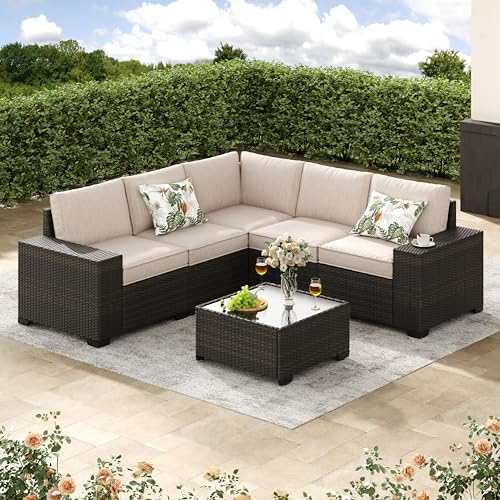
Outdoor Wicker Sectional: The Complete Buying & Design Guide
Everything you need to know before choosing a wicker sectional for your patio — materials, sizing, layout, cushions, and long-term care, explained in plain language for confident buyers.
Start ExploringWhy an outdoor wicker sectional? A wicker sectional blends generous seating with a warm, textured look that works across coastal, modern, and traditional patios. This guide walks you through the decisions that matter most — frame construction, weave quality, cushion fabrics, and layout — so you can choose a set that fits your space and stands up to the seasons.
What Makes an Outdoor Wicker Sectional Different?
An outdoor wicker sectional is a multi-seat patio sofa — often L-shaped or U-shaped — wrapped in a woven material over a structural frame. Unlike indoor wicker, outdoor versions use synthetic resin (polyethylene or PVC) woven over aluminum or powder-coated steel. That combination is what makes them suitable for patios: the frame resists rust, and the weave resists moisture, UV fading, and cracking.
The sectional format is popular because it lets you seat a group in a single footprint, define a conversation zone, and often reconfigure modules to suit different layouts. If you're still comparing formats, our guide to wicker deep seating patio furniture explains how sectionals differ from fixed sofas and chairs.
Key Buying Factors for a Wicker Sectional
Before you compare specific sets, focus on these five factors. They determine how comfortable the sectional feels, how long it lasts, and how well it fits your patio.
- Frame material: Aluminum frames are lightweight, rust-proof, and easiest to move. Powder-coated steel adds strength but is heavier. Both are acceptable; aluminum is generally the safer choice in humid or coastal climates.
- Weave quality: Look for tight, even weaving with no sharp edges or gaps. High-density synthetic resin resists cracking and fading better than thin, loosely woven strands.
- Cushion fabric: Solution-dyed acrylic and olefin are the most weather-resistant options. Quick-dry foam cores prevent waterlogging after rain.
- Configuration: L-shaped, U-shaped, and modular sectionals each suit different patio dimensions. Measure your space and account for walkways before committing.
- Weight and mobility: Heavier sectionals stay put in wind but are harder to rearrange. Modular pieces are easier to reconfigure but may need connectors or clips.
If you want to compare seating styles beyond sectionals, browse our broader collection of outdoor wicker chairs to see how individual pieces pair with a sectional.
Quality Tiers: What to Expect at Each Level
Outdoor wicker sectionals fall into recognizable quality tiers. The descriptors below describe relative positioning in the market — not specific figures — so you can set expectations before you shop.
| Tier | Best For | Typical Characteristics |
|---|---|---|
| Entry-level | Occasional use, covered patios, first-time buyers | Lighter aluminum frames, thinner weave, basic polyester cushions. Adequate for sheltered spaces with gentle use. |
| Mid-range | Regular family use, open patios in mild climates | Sturdy aluminum frames, denser resin weave, solution-dyed acrylic or olefin cushions. A balanced tier with good durability for daily use. |
| Premium | Frequent entertaining, exposed patios, coastal homes | Heavy-gauge aluminum, tightly woven all-weather resin, high-density quick-dry cushions with reinforced stitching. Long-term investment territory. |
| Luxury | Design-focused outdoor living rooms, full-sun exposures | Architectural frames, hand-finished weave details, premium performance fabrics, and modular systems engineered for reconfiguration. Top-tier comfort and longevity. |
Across all tiers, cushions are the first component to show wear. If you already own a set, our guide to outdoor wicker sectional replacement cushions covers how to refresh comfort without replacing the frame.
Sizing and Layout: Matching the Sectional to Your Patio
Sectionals are large by nature, so layout planning is essential. As a rule of thumb, allow at least 18 to 24 inches of clearance around the sectional for walkways, and 14 to 18 inches between the sectional edge and a coffee table.
- Small patios: Choose a compact L-shaped sectional or a two-piece modular setup. A corner arrangement uses space more efficiently than a long straight sofa.
- Medium patios: An L-shaped sectional with a chaise or ottoman anchors the seating zone. Add a wicker coffee table with glass top to complete the conversation area.
- Large patios: U-shaped or multi-module sectionals can define distinct lounging and dining zones. Pair with a wicker end table for lamps and drinks.
Shade and dining elements often sit alongside the sectional. If your layout includes meals, consider a wicker dining table with umbrella hole so the two zones share a cohesive look.
Comfort, Cushions, and Fabric Choices
Comfort in a wicker sectional comes down to cushion thickness, foam quality, and fabric performance. Deep seating typically uses 5 to 8 inches of foam; thinner cushions suit occasional use. Quick-dry foam with an open-cell structure allows water to pass through and air to circulate, reducing mildew risk after rain.
For fabric, solution-dyed acrylic holds color best under UV exposure, while olefin offers strong moisture resistance at a lower tier. Polyester is common in entry-level sets but fades faster in full sun. Whichever fabric you choose, plan to store cushions in a waterproof cushion storage box during wet or off-season weeks.
Want to customize the look? Our guide to outdoor wicker couch replacement cushions explains how to match cushion dimensions and fabric to your existing frame.
Care and Maintenance for Long-Term Durability
A wicker sectional is a long-term investment, and a simple maintenance routine keeps it looking sharp for years.
- Weekly: Vacuum the weave with a brush attachment or sweep with a soft brush to remove dust and pollen.
- Monthly (in season): Wipe with mild soap and water, rinse, and air dry fully. Avoid harsh solvents and power washers.
- After rain: Stand cushions on edge to drain and dry. Never stack damp cushions.
- Off-season: Cover the frame with a breathable cover and store cushions indoors or in a dry storage cabinet.
For a deeper dive into protective treatments and fabric care, see our guide on waterproof material for garden furniture. If you need storage for smaller accessories, an outdoor waterproof storage box with wheels keeps items dry and movable.
Complementary Pieces That Complete the Set
A sectional rarely stands alone. The right companion pieces improve function and visual cohesion.
- Wicker ottoman — doubles as extra seating or a footrest.
- Wicker coffee table with storage — hides throws and remote controls.
- Wicker swivel chairs with cushions — adds flexible seating around the conversation zone.
- Wicker loveseat — a good secondary seat for smaller patios.
- Wicker rocking chairs with cushions — introduces motion and a relaxed feel.
For shade, pair the sectional with a patio umbrella or an umbrella with solar lights and stand for evening ambiance.
Frequently Asked Questions
Is an outdoor wicker sectional weather-resistant?
Most outdoor wicker sectionals are built with synthetic resin wicker over an aluminum or steel frame, both of which are designed to resist moisture, UV rays, and temperature changes. However, cushions should be made from solution-dyed acrylic or olefin fabric and stored or covered during harsh weather to extend their lifespan.
How do I clean an outdoor wicker sectional?
Use a soft brush or vacuum with a brush attachment to remove loose debris from the weave. For deeper cleaning, wipe with a mild soap-and-water solution, rinse thoroughly, and let it air dry completely. Avoid abrasive cleaners and power washers, which can damage the wicker weave.
Can an outdoor wicker sectional stay outside all year?
Synthetic wicker and aluminum frames can typically stay outdoors year-round in most climates. Cushions and fabric components should be brought inside or covered with waterproof patio furniture covers during winter or extended rain to prevent mildew and fading.
What size outdoor wicker sectional fits a small patio?
For small patios, look for modular or L-shaped sectionals with a compact footprint, typically measuring around 70 to 90 inches in width. Curved or corner configurations can maximize seating while preserving walkway space. Always measure your patio and account for clearance before purchasing.
Choosing With Confidence
An outdoor wicker sectional is one of the most versatile ways to build a comfortable patio seating area. Focus on frame material, weave density, cushion fabric, and layout fit — those four decisions do most of the work. Match the tier to your intended use, plan for storage and care from day one, and the sectional will serve your patio for many seasons. For broader patio design context, explore our outdoor umbrella collection and other patio essentials to round out your space.