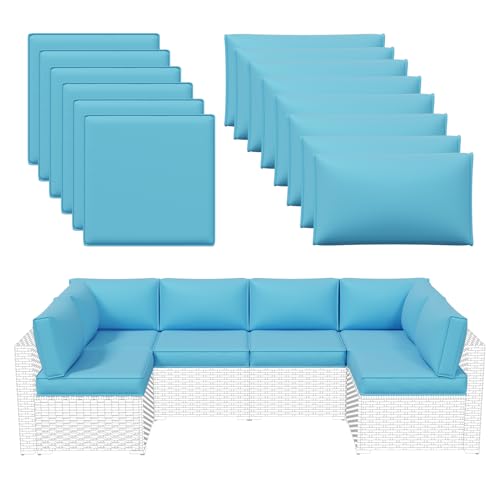
Outdoor Wicker Sectional Replacement Cushions: The Complete Buying Guide
Your wicker sectional frame is still solid, but the cushions have flattened, faded, or lost their shape. This guide walks you through measuring, fabric selection, foam density, fit, and long-term care so you can restore comfort without replacing the entire set.
Explore Cushion OptionsWhy this guide exists: Replacing cushions is one of the most efficient ways to extend the life of an outdoor wicker sectional. The frame is usually the most durable part of the set, while cushions take the brunt of sun, rain, and daily use. Getting the replacement right comes down to three things: accurate measurements, the right fabric, and foam that matches your seating habits. This guide covers each in practical detail.
When Replacement Cushions Make Sense
Wicker sectionals are built around a rigid frame, typically woven resin or natural rattan over a metal or wood structure. That frame can last many seasons, but the cushions are a wear item. Common signs that it is time for a refresh:
- Compressed foam: Seat cushions no longer spring back after sitting, or you can feel the frame underneath.
- Fading and discoloration: Fabric has lost its original color from UV exposure, even if the weave is intact.
- Moisture and odor: Persistent dampness or mildew smell that cleaning no longer resolves.
- Cover damage: Rips, seam failures, or zipper breakage that expose the insert.
- Style refresh: You want a new color or texture without replacing a structurally sound frame.
If the wicker weave itself is cracked, sagging, or rusting at the joints, cushion replacement alone will not fix the set. In that case, review the broader options in our outdoor wicker sectional guide before deciding.
Step One: Measure the Frame and the Old Cushions
Measurement is the most common failure point in cushion replacement. A cushion that is one inch too deep will not sit properly, and one that is too narrow will slide. Work methodically:
Measure each cushion separately
- Width: The widest point of the cushion, measured side to side.
- Depth: Front to back, measured at the center of the cushion.
- Thickness: The compressed height of the foam, not the lofted height.
Measure the frame seat pan and backrest
Measure the actual seat pan width and depth, and the backrest height and width. Compare these against the old cushion dimensions. If the old cushions were a loose fit, the frame measurement is the more reliable reference. Round to the nearest half inch and note whether corners are squared or rounded.
Check for corner and arm variations
Sectionals typically include corner pieces, armless chairs, and chaise sections. Corner cushions often have a different footprint than standard seats. Measure each section type separately rather than assuming uniformity.
Step Two: Choose the Right Fabric
Fabric determines how the cushions age outdoors. The most reliable options share one trait: solution-dyed fibers, where color is added during fiber production rather than applied to the surface. That makes the color far more resistant to UV fading.
- Solution-dyed acrylic: The benchmark for outdoor upholstery. Strong fade resistance, good moisture behavior, and a soft hand feel.
- Solution-dyed polyester: A strong mid-range choice with good durability and a wide range of textures.
- Olefin: Moisture-resistant and durable, often used in entry-level and mid-tier sets. Less soft than acrylic.
- Performance blends with water-repellent finishes: Often the top-tier choice for sun-exposed sectionals, combining UV stabilization with a finish that helps water bead and roll off.
For a deeper look at weather resistance across furniture materials, see our guide to outdoor waterproof material for garden furniture.
Step Three: Match Foam Density to Your Seating Habits
Foam is where comfort lives, and density is the variable that separates a cushion that lasts several seasons from one that flattens quickly. Outdoor cushions typically use polyurethane foam, sometimes wrapped in polyester fiber for a softer surface feel.
- Entry-level foam: Lower density, softer initial feel, compresses faster under regular use. Suitable for occasional seating.
- Mid-range foam: Balanced density that holds shape through regular family use. The most common choice for replacement sets.
- High-end and top-tier foam: Higher density with better resilience. Recommended for daily use, heavier users, or sectionals used as primary lounging furniture.
Seat cushions are commonly 4 to 6 inches thick, while back cushions run 4 to 8 inches. Deep seating wicker sectionals usually pair a 5 to 6 inch seat cushion with a thicker back cushion. If you are also refreshing the rest of the set, our outdoor wicker couch replacement cushions guide covers the matching sofa pieces.
Step Four: Get the Fit Details Right
Fit is more than dimensions. These details determine whether the cushions stay put and how the set looks once assembled:
- Corner shape: Squared versus rounded corners change how the cushion sits in the frame.
- Tie-downs and straps: Essential for back cushions on wicker frames, which tend to slide.
- Non-slip backing: A grip surface on the underside reduces shifting on smooth wicker seat pans.
- Zipper access: A hidden or covered zipper makes cover removal for cleaning practical.
- Piping and seams: Double-stitched seams and reinforced stress points extend cover life.
If the frame itself needs attention, our outdoor wicker deep seating patio furniture guide covers frame construction and what to check before investing in new cushions.
Replacement Cushion Tiers at a Glance
To keep the comparison neutral, this guide uses tier descriptors rather than figures. Each tier reflects relative market position and construction quality.
Entry-Level Sets
Standard polyester covers and lower-density foam. A reasonable starting point for occasional seating and covered patios. Best suited to light use and sheltered spaces.
Mid-Range Sets
Solution-dyed polyester or olefin covers with mid-density foam and tie-downs. A solid choice for regular family use and the most common replacement category.
Premium & Luxury Sets
Solution-dyed acrylic or performance blends, high-density foam, non-slip backing, and reinforced seams. The strongest option for daily use and full-sun exposure.
Comparing Cushion Options by Category
| Tier | Fabric | Foam | Best For |
|---|---|---|---|
| Essential tier | Standard polyester | Lower density | Occasional seating, covered patios |
| Balanced tier | Solution-dyed polyester or olefin | Mid-density | Regular family use, mixed sun exposure |
| Top-tier | Solution-dyed acrylic or performance blend | High-density | Daily use, full-sun exposure, heavy traffic |
Making Replacement Cushions Last
A few habits extend cushion life significantly, regardless of tier:
- Brush off debris weekly: Dirt and pollen work into fabric fibers and accelerate wear.
- Clean with mild soap and water: Rinse thoroughly and allow to air dry fully before use.
- Store cushions during off-season: Use a dedicated outdoor waterproof storage box for cushions to keep them dry and free of pests.
- Rotate cushions periodically: Even wear across seat positions extends the usable life of the set.
- Use covers when not in use: A breathable cover protects against UV and rain without trapping moisture.
For broader storage strategies, see our guide to outdoor vertical storage cabinet waterproof options, which are useful for smaller patios.
Common Mistakes to Avoid
- Ordering before measuring every section: Sectionals are rarely uniform across all seats.
- Choosing fabric by look alone: Texture and color matter, but fade resistance and moisture behavior matter more outdoors.
- Ignoring foam density: A well-made cover over low-density foam will still flatten quickly.
- Skipping tie-downs on back cushions: Wicker frames are smooth, and back cushions slide without them.
- Replacing covers but keeping worn inserts: If the foam has compressed or crumbled, new covers will not fix the comfort problem.
Ready to Refresh Your Wicker Sectional?
Browse recommended outdoor wicker sectional replacement cushions and compare tiers, fabrics, and fit options in one place.
View Cushion OptionsFrequently Asked Questions
How do I measure my outdoor wicker sectional for replacement cushions?
Measure each seat and back cushion individually along the widest point of the width, depth, and thickness. Measure the frame seat pan and backrest separately, then compare against the old cushion dimensions. Always round to the nearest half inch and note whether cushions have rounded or squared corners.
What fabric is best for outdoor wicker sectional replacement cushions?
Solution-dyed acrylic and solution-dyed polyester are the most reliable choices for fade and moisture resistance. Olefin is a solid mid-range option. Performance fabrics with water-repellent finishes and UV stabilization are the strongest choice for sun-exposed wicker sectionals.
Can I replace only the cushion covers instead of the whole cushion?
Yes, if the existing foam inserts are still firm and intact, replacement covers alone can extend the life of the set. However, if foam has flattened, compressed, or crumbled, replacing both the cover and insert delivers better comfort and a more consistent fit.
How thick should replacement cushions be for a wicker sectional?
Seat cushions are commonly 4 to 6 inches thick, while back cushions are typically 4 to 8 inches. Deep seating wicker sectionals usually pair a 5 to 6 inch seat cushion with a thicker back cushion for a lounging feel.
How do I keep replacement cushions from sliding on a wicker frame?
Look for cushions with non-slip backing, tie-down straps, or hook-and-loop fasteners. Grip pads placed between the cushion and the frame also reduce shifting on smooth wicker surfaces.