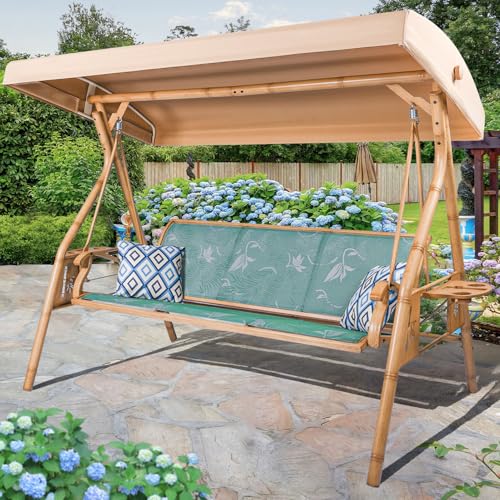
Patio Swing with Canopy and Cup Holder: The Complete Buying Guide
Everything you need to know before choosing a canopy swing for your backyard — from frame materials and canopy fabrics to cup holder design, weight capacity, and long-term care.
Explore Top PicksWhy this guide matters: A patio swing with canopy and cup holder is one of the most rewarding outdoor furniture investments you can make. It combines shade, comfort, and convenience in a single freestanding structure — but the differences between entry-level and premium models are significant. This guide walks you through every decision point so you can buy with confidence.
What Is a Patio Swing with Canopy and Cup Holder?
A patio swing with canopy and cup holder is a freestanding outdoor seating structure built around a suspended bench seat. Unlike a traditional porch swing that must be anchored to a ceiling or beam, a freestanding patio swing includes its own A-frame or arc frame, allowing it to be placed almost anywhere on a lawn, deck, or patio surface.
The canopy — typically a fabric roof stretched over a powder-coated steel or aluminum frame — provides overhead shade, making the swing usable during midday sun. The cup holder is usually integrated into the armrests or the front rail, giving each seated person a stable place to rest a beverage while relaxing.
Most models seat two to three adults, and many include removable cushion sets for added comfort. If you are still comparing broader seating options, our guide to patio swings in general covers the full spectrum of swing styles, while this page focuses specifically on the canopy-and-cup-holder configuration.
Key Benefits of a Canopy Swing with Cup Holders
Built-In Shade
The canopy blocks direct sunlight so you can enjoy the swing through the hottest part of the day without moving it under a tree or umbrella.
Convenient Beverage Access
Integrated cup holders keep drinks secure and within reach, reducing spills and the need for a separate side table.
Freestanding Placement
No ceiling anchoring required — set it on grass, concrete, or composite decking and reposition it as your landscape evolves.
Gentle Gliding Motion
The suspended seat provides a smooth, soothing swing that is ideal for reading, conversation, or simply unwinding.
Multi-Person Seating
Three-seater configurations comfortably accommodate couples, small families, or guests without needing additional chairs.
Design Flexibility
Available in steel, aluminum, and wood-look finishes to match styles ranging from modern patio to rustic farmhouse.
Frame Materials: Steel vs. Aluminum vs. Wood-Look
The frame determines durability, weight, and how much maintenance the swing will require over time. Understanding the trade-offs helps you match the swing to your climate and usage patterns.
Powder-coated steel is the most common choice for mid-range and premium canopy swings. It offers excellent structural rigidity and supports higher weight capacities, but it is heavier and requires a rust-proof finish to resist moisture over time. Aluminum frames are lighter and naturally resistant to rust, making them a strong option for humid or coastal environments, though they may flex more under heavy loads. Wood-look steel or resin composites mimic the appearance of natural timber while retaining the weather resistance of synthetic materials — a practical choice if you want a rustic aesthetic without the upkeep of real wood.
For a deeper comparison of material behavior across outdoor furniture categories, see our resin and plastic materials guide and our metal vs aluminum breakdown.
Canopy Fabric and Sun Protection
The canopy is arguably the most important component for comfort, yet it is often overlooked during purchase. Look for fabrics explicitly rated for UV resistance and water repellency. Polyester canopies with a PVC or PU coating are common in the mid-range segment and offer solid protection for several seasons. Premium models often use solution-dyed acrylic or heavy-duty polyester that resists fading and mildew more effectively.
Consider whether the canopy is adjustable. Some models allow you to tilt the canopy angle to block low-angle sun in the morning or late afternoon. Also check whether replacement canopies are sold separately — a swing with a replaceable canopy top will last far longer than one with a permanently fixed fabric.
Tip: If you plan to leave the swing outdoors through rainy seasons, confirm that the canopy fabric is removable. Taking it off during storms and winter prevents sagging, mildew, and seam failure.
Cup Holder Design: What to Look For
Cup holders on patio swings vary widely in quality. The best designs are molded into the armrest or front rail with a recessed, slightly tapered well that fits standard tumblers, cans, and bottles without wobbling. Some models include a small drainage hole at the bottom so rainwater does not pool inside the holder.
Check whether the cup holder is sized for insulated tumblers — many older designs were built for narrow cans and cannot accommodate modern drinkware. If the swing will be used by children or guests, a deeper holder reduces the chance of tipping. For households that frequently entertain, a swing with two cup holders (one per armrest) is generally more practical than a single center holder.
Quality Tiers: How to Position Your Purchase
Patio swings with canopies and cup holders fall into distinct quality tiers. Rather than comparing specific figures, it helps to understand what each tier typically delivers so you can decide where your priorities lie.
| Tier | Typical Frame | Canopy & Cushions | Best For |
|---|---|---|---|
| Entry-level | Lighter steel tubing, basic powder coat | Thin polyester canopy, minimal cushioning | Occasional use, seasonal placement, first outdoor swing |
| Mid-range | Reinforced steel frame, rust-resistant finish | UV-rated canopy, removable cushions, dual cup holders | Regular family use, full-season outdoor exposure |
| Premium | Heavy-duty steel or aluminum, welded joints | Solution-dyed acrylic canopy, thick cushions, weatherproof stitching | Frequent entertaining, harsh climates, long-term investment |
| Luxury | Architectural aluminum or hardwood-composite frame | Designer fabric canopy, premium cushion set, integrated accessories | Statement outdoor living spaces, resort-style backyards |
Mid-range models usually offer the best balance: they include the canopy and cup holder features most buyers want, with enough structural integrity to last multiple seasons. Entry-level options are fine for light, occasional use, while premium and luxury tiers make sense when the swing will be a focal point of daily outdoor living.
Weight Capacity and Seating Dimensions
Before ordering, measure your intended placement area and confirm the swing's footprint against your available space. A typical three-seater canopy swing spans roughly 60 to 80 inches in width, and the A-frame base extends further than the seat itself. Leave clearance on all sides so the swing can glide without striking walls, railings, or planters.
Weight capacity is equally important. Mid-range and premium three-seater models commonly support 500 to 800 pounds when evenly distributed. Entry-level swings often have lower ratings. Always verify the manufacturer's stated capacity rather than assuming, and avoid concentrating weight on one side of the seat.
Assembly, Placement, and Setup Tips
Most canopy swings ship flat-packed and require assembly. Budget one to three hours and plan for two people — the canopy frame in particular is easier to attach with a helper. Follow these steps for a smooth setup:
- Unpack and sort all hardware by label before starting; missing or swapped bolts are the most common assembly delay.
- Assemble the base frame on a flat surface, then attach the uprights and canopy frame before hanging the seat.
- Place the swing on level ground; use shims or reposition if the frame rocks, since an uneven base stresses the joints.
- If placing on a deck, confirm that the deck surface can bear the combined weight of the swing and occupants.
- Attach the canopy fabric last and tension it evenly to prevent sagging or wind flutter.
- Check all bolts again after the first week of use, as components settle under load.
If you are furnishing a larger seating area around the swing, our guides to patio side tables and patio shade solutions can help you complete the layout without overcrowding the space.
Maintenance and Seasonal Care
Canopy swings are exposed to sun, rain, and temperature swings, so a simple maintenance routine pays off. Clean the frame with mild soap and water, and touch up any scratches in the powder coat promptly to prevent rust from spreading. Remove the canopy and cushions during storms and store them dry; mildew develops quickly when damp fabric is folded and left in place.
During winter, either move the swing into a shed or garage, or cover it with a fitted, breathable cover. Avoid plastic tarps that trap condensation. If your swing uses replaceable cushions, consider a spare set — our guide to 3-seater swing cushion replacements explains how to match sizing and fabric ratings. For broader care guidance, see our weatherproofing guide.
Common Mistakes to Avoid
- Skipping the canopy replacement check. Confirm the manufacturer sells replacement canopies before buying; a swing with a discontinued canopy becomes unusable once the fabric fails.
- Ignoring wind exposure. Freestanding swings can tip in strong gusts. Anchor the frame with ground stakes or sandbags if your yard is exposed.
- Overlooking cup holder size. Test with your typical drinkware before finalizing; narrow holders frustrate anyone using insulated tumblers.
- Placing on soft, uneven ground. The frame will twist over time. Use a level base, pavers, or a reinforced surface.
- Assuming all three-seaters are equal. Seating width, cushion thickness, and frame gauge vary widely — read the specifications rather than relying on the label.
Frequently Asked Questions
What is a patio swing with canopy and cup holder?
A patio swing with canopy and cup holder is an outdoor seating structure that combines a suspended bench seat, a built-in sunshade, and integrated beverage holders. It provides comfortable seating for two to three people while offering protection from direct sunlight and a convenient place to rest drinks.
How much weight can a 3-seater patio swing hold?
Most mid-range and premium 3-seater patio swings are engineered to support between 500 and 800 pounds when evenly distributed across the seat. Entry-level models typically support lower capacities, so always verify the manufacturer's stated weight limit before use.
Can I leave my patio swing outdoors year-round?
It depends on the materials and construction quality. Powder-coated steel frames with weather-resistant finishes can handle most climates, but the canopy fabric and cushions should be removed or covered during harsh winter months. Using a dedicated patio swing cover extends the life of any model.
How do I assemble a patio swing with canopy?
Assembly typically requires two people and basic hand tools. Most models come with pre-drilled frames, labeled hardware, and illustrated instructions. Expect one to three hours depending on the complexity of the canopy frame and the number of parts.
Related Guides to Explore Next
Continue Your Research
- Patio swing with canopy: full overview
- Patio swing chair styles compared
- 3-seater swing cushion replacement guide
- Canopy swing replacement cushions
- All patio swing types
- Patio side tables to pair with your swing
- Patio shade options
- Patio design styles
- Adirondack chairs with cup holders
- Patio storage boxes for cushions
- Patio umbrellas for additional shade
- Weatherproofing outdoor furniture