
Plastic Picnic Table with Umbrella: The Complete Buying Guide
A practical, low-maintenance outdoor dining solution for families, patios, and backyard gatherings. Learn how to choose, use, and care for an all-weather plastic picnic table with an integrated umbrella.
Why this guide matters: A plastic picnic table with umbrella combines three things outdoor hosts value most: durability, shade, and easy cleanup. But not every model delivers on all three. This guide breaks down materials, stability, umbrella mechanics, seating capacity, and long-term care so you can make a confident decision before you buy.
What Exactly Is a Plastic Picnic Table with Umbrella?
A plastic picnic table with umbrella is a one-piece or partly assembled outdoor dining table, typically molded from high-density polyethylene (HDPE) or resin, with attached bench seating on two sides and a center hole that accepts a market-style umbrella. The umbrella provides overhead shade while the table handles seating for four to eight people depending on the model.
Unlike wooden picnic tables that need sealing and staining, plastic models are engineered for weather exposure. The best versions use UV-stabilized resin that resists fading, cracking, and moisture absorption. Many also feature a powder-coated steel or aluminum frame hidden beneath the plastic shell for structural support.
If you are still comparing broader backyard dining options, the picnic table and chairs category covers fixed-seat and detached-chair designs side by side.
Why Homeowners Choose Plastic Over Wood or Metal
Weather Resistance
HDPE and resin do not rot, warp, or absorb water the way untreated wood does. Rain rolls off, and a quick wipe-down restores the surface.
Low Maintenance
No sanding, staining, or sealing. Mild soap and water handle most messes, including food spills and bird droppings.
Lightweight Portability
Most plastic picnic tables weigh between 40 and 90 pounds, so two adults can reposition them for shade, lawn care, or seasonal storage.
Integrated Shade
The built-in umbrella hole means no separate umbrella stand is needed, saving floor space and reducing trip hazards around the table.
Child-Friendly Edges
Molded plastic edges are rounded and splinter-free, which is a meaningful advantage for families with young children.
Consistent Color Options
Plastic tables come in neutral tones, bold primary colors, and wood-grain finishes, making it easier to match your outdoor palette.
Key Features to Evaluate Before Buying
1. Resin Density and Wall Thickness
Thicker tabletop walls resist flexing when someone leans on the edge. Entry-level models often use thinner shells that can bow under repeated weight. Mid-range and premium models typically use denser HDPE with visible internal ribbing underneath the tabletop.
2. Frame Construction
Even all-plastic tables benefit from a hidden metal frame. Look for powder-coated steel or aluminum cross-bracing beneath the table and benches. This reinforcement is what separates a table that lasts several seasons from one that sags after a single summer.
3. Umbrella Hole and Holder
The center hole should be reinforced with a molded collar to prevent stress cracks. Some tables include a built-in umbrella holder or locking collar, while others require a separate weighted base. If you plan to use a large canopy, confirm that the table's hole diameter matches your umbrella pole.
4. Seating Capacity and Bench Width
Standard models seat four adults comfortably, while larger eight-seat versions suit extended families. Bench width matters: narrower benches feel less stable during entry and exit, especially for older guests.
5. Umbrella Canopy Quality
If the table ships with an umbrella, inspect the canopy fabric. Solution-dyed polyester and acrylic resist fading better than basic polyester. Also check whether the umbrella has a push-up or crank-lift mechanism, and whether the ribs are fiberglass or steel.
6. Weight and Portability
Heavier tables stay put in wind but are harder to move. Lighter tables are easier to reposition but may need sandbags or a weighted umbrella base to stay stable. Decide which trade-off fits your yard.
Materials, Stability, and Wind Considerations
Plastic picnic tables perform best when the material and the umbrella base work together. The table itself is rarely the weak point; the umbrella is. An open canopy acts like a sail, and a sudden gust can tip a lightweight table or snap the umbrella pole.
- High-density polyethylene (HDPE): The most common material. UV-stabilized, impact-resistant, and easy to clean. Premium HDPE feels denser and has a smoother finish.
- Resin blends: Often used in entry-level and mid-range models. Lighter and less expensive to produce, but more prone to surface fading over several seasons.
- Polypropylene: Sometimes used for folding picnic tables. More rigid than HDPE but can become brittle in extreme cold.
For stability, always use a weighted umbrella base rated for your canopy size. A 50-pound base is a reasonable starting point for a 7-foot canopy, while larger 9-foot canopies benefit from 100 pounds or more. On windy days, close the umbrella entirely and store it upright.
If your yard is exposed to strong prevailing winds, consider a table that can be anchored to a patio surface or weighted with sandbags on the bench crossbars. Pairing the table with a patio umbrella that has a vented canopy also reduces lift.
Comparing Tiers: Entry-Level, Mid-Range, and Premium
| Tier | Best For | Typical Construction | Umbrella Quality | Longevity Outlook |
|---|---|---|---|---|
| Entry-Level | Occasional use, rentals, small balconies | Thinner resin shell, minimal framing | Basic polyester canopy, push-up lift | Several seasons with careful storage |
| Mid-Range | Everyday family use, patios, decks | Denser HDPE, powder-coated steel bracing | Solution-dyed fabric, crank lift | Many seasons with routine care |
| Premium | Frequent entertaining, exposed yards | Thick HDPE walls, reinforced frame, UV package | Acrylic canopy, fiberglass ribs, vented top | Long-term outdoor fixture |
Mid-range models usually offer the best balance for most households. They provide noticeably better frame rigidity than entry-level tables without the premium tier's higher investment. Premium tables make sense when the table will stay outside year-round in a sunny or windy location.
Placement and Space Planning
Plan for at least 36 inches of clearance on all sides of the table so guests can pull benches out and walk behind seated people. On a compact small patio, orient the table lengthwise along the longest wall and keep the umbrella on the side that receives the most afternoon sun.
If your space is tight, a small outdoor table may be a better fit than a full picnic table. But if you regularly host four or more people, the picnic format is hard to beat for its combined seating and shade footprint.
For lawn placement, choose a level spot. Plastic benches can rock on uneven ground, and an unlevel table puts extra stress on the umbrella pole. A patio deck provides the flattest surface, while grass works well if you level the area first.
Care and Maintenance for Long-Term Performance
- Clean the tabletop weekly during use season: Mild dish soap, warm water, and a soft brush remove food residue and pollen.
- Avoid abrasive cleaners: Scouring pads and solvent-based products dull the plastic finish and can void warranties.
- Rinse the umbrella canopy monthly: Dirt and bird droppings degrade fabric over time. Let it dry fully before closing.
- Store the umbrella closed during storms: Wind is the leading cause of canopy and pole damage.
- Check hardware each season: Tighten bolts on the frame and inspect the umbrella hub for wear.
- Use a cover during off-season: A fitted cover keeps leaves and standing water off the tabletop.
If your table sits under trees, expect more frequent cleaning. Sap and bird droppings are easier to remove when fresh. For broader seasonal protection advice, see our outdoor weatherproofing guide.
When to Consider a Different Shade Solution
An integrated umbrella works well for portable shade, but it is not the only option. If your table stays in one spot, a pergola offers permanent overhead structure and better wind resistance. For larger dining setups, a patio dining set with umbrella provides more formal seating and a larger canopy.
For families who want a dedicated outdoor dining zone, a patio table and chairs with umbrella combination may suit better than a fixed-bench picnic table. The right choice depends on whether you prioritize portability (picnic table) or flexible seating (dining set).
Recommended Plastic Picnic Tables with Umbrellas
⚠️ AFFILIATE DISCLOSURE: This website contains affiliate links. As an Amazon Associate, we earn from qualifying purchases. If you make a purchase through these links, we may receive a small commission at no additional cost to you. Read our full affiliate policy.
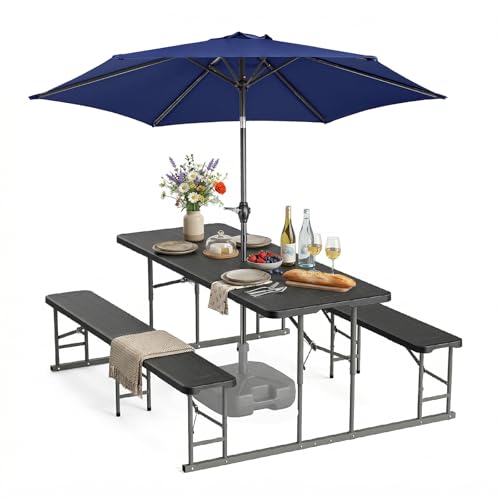
VINGLI Folding Picnic Table and Bench Set with Umbrella, Portable Outdoor Dining Furniture for Camping, Patio, Backyard, Wood Grain Plastic Top with Metal Frame with Dark Blue Umbrella
Check price on Amazon
LIFETIME 6‑Foot Folding Picnic Table, Outdoor Portable Bench Seating for 8, UV‑Protected HDPE, Powder‑Coated Steel Frame, Stain‑Resistant, Folds Flat for Storage
Check price on Amazon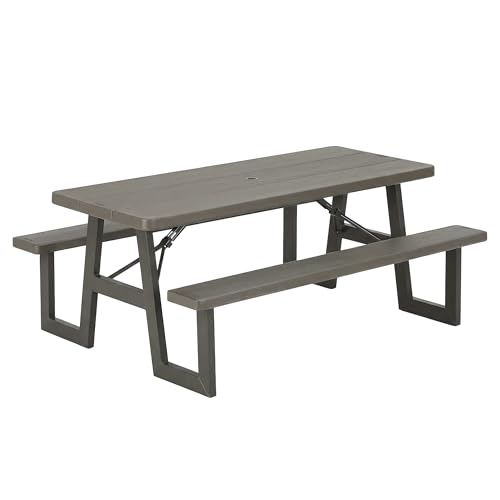
LIFETIME 6-Foot Folding Picnic Table with Benches, Seats 8, Heavy-Duty HDPE Tabletop, Steel Frame, Weather & UV Resistant Outdoor Picnic Table with Umbrella Hole
Check price on Amazon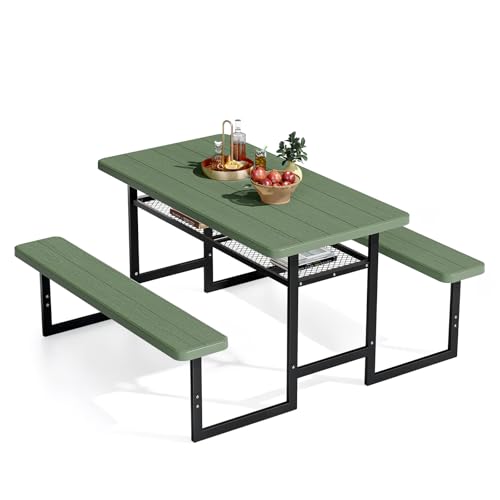
VINGLI Outdoor Picnic Table with Storage Shelf & Umbrella Hole, 4.5FT All Weather Plastic Picnic Table Metal Frame HDPE Tabletop for Small Patio(Green)
Check price on Amazon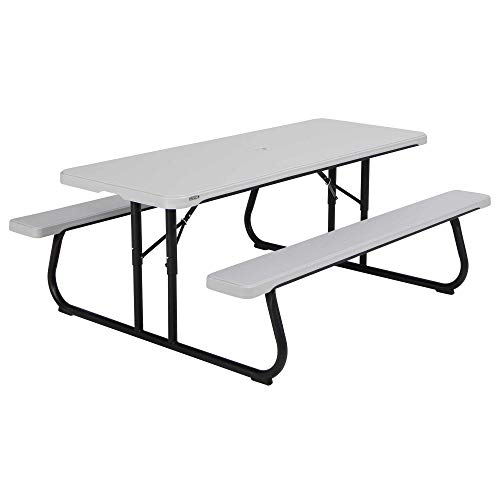
Lifetime Folding Picnic Table, 6-Foot
Check price on Amazon
Step2 Naturally Playful Kids Picnic Table with Umbrella, Seats 6 | Toddler Picnic Table, Indoor/Outdoor Use, 60 in Removable Umbrella Included, Durable Easy-Clean Plastic, Ages 3+
Check price on Amazon
VINGLI Folding Picnic Table and Bench Set with Umbrella, Portable Outdoor Dining Furniture for Camping, Patio, Backyard, Wood Grain Plastic Top with Metal Frame
Check price on Amazon
Little Tikes Fold 'n Store Picnic Table with Market Umbrella, Brown (632433M)
Check price on AmazonFrequently Asked Questions
Is a plastic picnic table with umbrella strong enough for everyday family use?
Yes. Modern high-density polyethylene tables with reinforced frames are designed for regular family use. Look for models with thick tabletop walls, cross-bracing under the surface, and a weighted or ballasted umbrella base to keep the whole setup stable in windy conditions.
Can the umbrella be used on a windy day?
An open umbrella catches wind like a sail. For breezy days, close the canopy or remove it entirely, and always use a weighted base with at least 50 to 100 pounds of ballast depending on the canopy size. Some tables include a built-in umbrella holder, but the table itself cannot anchor the umbrella against strong gusts.
Will a plastic picnic table fade in the sun?
Quality high-density polyethylene tables are treated with UV stabilizers that slow fading and prevent the plastic from becoming brittle. Entry-level models may still show color shift after several seasons of direct sun, while premium models typically hold their color much longer.
How do I clean a plastic picnic table with an umbrella?
Wash the tabletop with mild dish soap and water using a soft brush or cloth. Avoid abrasive pads and harsh solvents that can dull the surface. Rinse the umbrella canopy, let it dry fully before folding, and store it closed during the off-season to extend its lifespan.
Do I need a separate umbrella base if the table has a center hole?
A center hole only keeps the pole upright; it does not anchor it. A weighted base is still essential for stability, especially when the canopy is open. Some tables include a base collar, but you will usually need to add ballast separately.
Ready to Choose Your Plastic Picnic Table with Umbrella?
Compare the recommended models above, check seating capacity against your guest list, and confirm the umbrella base requirements before you commit. A well-chosen table can serve your backyard for many seasons.
Explore Umbrella Table Options