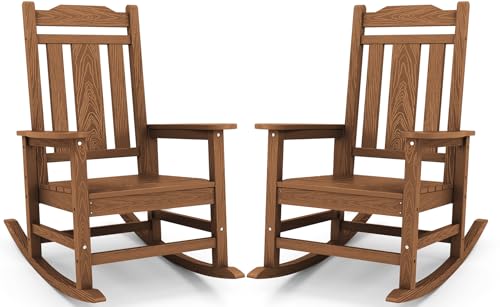
Porch Rockers: The Complete Buying Guide
Everything you need to choose the right outdoor rocking chair — materials, sizing, comfort, and style — so you can relax on your porch with total confidence.
START THE GUIDEWhy porch rockers deserve careful thought: A rocking chair is one of the few pieces of outdoor furniture you will use almost daily. It is where you drink your morning coffee, read a book in the evening, and greet neighbors passing by. Because it stays outside in sun, rain, and seasonal temperature swings, the material, construction, and fit matter far more than most people expect.
This guide walks you through every decision point so you can pick a porch rocker that suits your space, your climate, and the way you actually live.
What Makes a Great Porch Rocker
A porch rocker is more than a chair with curved runners. The best models combine a smooth rocking arc, a supportive seat, and weather-ready construction. When those three elements line up, the chair feels effortless to use and holds up season after season.
The rocking arc itself is the first thing to evaluate. A shallow arc produces a gentle, short rock that suits smaller porches and older users. A deeper arc creates a longer, more pronounced swing. Sit in a floor model whenever possible, or read reviews carefully to understand the motion before you commit.
Next, consider seat height and depth. A seat that is too deep pushes pressure into the back of your thighs, while a seat that is too shallow leaves you perched forward. Ideally, your feet should rest flat on the floor with your knees at roughly a right angle. If you plan to add a cushion, account for the extra seat height it creates.
Finally, think about armrests. Wide, flat armrests are easier to push up from, which matters for anyone with limited mobility. Curved or narrow armrests look elegant but offer less leverage. For a deeper look at how these chairs compare to other porch seating, our guide to porch rocking chairs breaks down additional models and configurations.
Choosing the Right Material for Your Climate
Material choice is the single biggest factor in how long your porch rocker lasts and how much upkeep it demands. Each material sits in a different tier of the market, and each has a distinct personality.
Solid Wood
Classic oak, teak, and cedar rockers offer timeless craftsmanship and a warm, traditional look. Teak is naturally weather-resistant, while cedar is lightweight and aromatic. Wood requires periodic sealing or oiling to prevent cracking, and it is best suited to covered porches or regions with moderate humidity.
Recycled Poly Lumber
Made from recycled plastics, poly lumber rockers resist rot, insects, and fading with virtually no maintenance. They are heavier than wood but will not splinter or crack. This is the strongest choice for uncovered porches and coastal climates. Learn more about this material in our poly lumber overview.
Powder-Coated Aluminum
Lightweight and rust-resistant, aluminum rockers are easy to move and ideal for humid or coastal areas. Powder-coated finishes hold color well and resist chipping. These chairs tend to be lighter in weight, so check for reinforced joints on heavier users.
Wicker & Resin Weave
Woven resin over an aluminum frame delivers a relaxed, coastal feel. Quality resin weave resists UV damage better than natural rattan. These rockers are a solid choice for covered porches and readers who prioritize visual style alongside comfort.
If you are furnishing a full porch, it helps to coordinate your rocker material with the rest of your setup. Our broader porch furniture guide explains how seating, tables, and swings work together as a cohesive arrangement.
Sizing Your Porch Rocker Correctly
Getting the size right prevents the most common regret: a beautiful rocker that does not fit the space or the person using it.
Measure Your Porch First
Before shopping, measure the usable depth and width of your porch. A rocker needs clearance behind it for the rocking arc — roughly 30 inches is a safe minimum. Leave 6 to 12 inches between chairs so they can rock independently without colliding.
Match the Chair to the User
Standard porch rockers fit most adults comfortably. However, taller users should look for models with higher backs and deeper seats, while shorter users benefit from lower seat heights that let their feet reach the floor. Weight capacity also varies widely across tiers:
- Entry-level models typically support around 250 pounds.
- Mid-range models usually reach the 300-pound range.
- Heavy-duty and commercial-grade models are reinforced to support 350 to 500 pounds.
Always confirm the stated capacity in the product listing. For households with mixed users, a heavier-duty model is the safer all-around choice.
Porch Rocker Tiers at a Glance
| Tier | Best For | Typical Construction | Maintenance Level |
|---|---|---|---|
| Entry-Level | First-time buyers, seasonal porches | Lightweight aluminum or basic resin | Low to moderate |
| Mid-Range | Everyday use on covered porches | Solid wood or upgraded resin weave | Moderate, seasonal sealing |
| Premium | Uncovered porches, coastal climates | Recycled poly lumber, heavy-duty hardware | Very low |
| High-End Tier | Long-term investment, design-focused homes | Teak, precision-machined joinery, premium finishes | Moderate but worthwhile |
For readers comparing broader outdoor seating categories, our porch chair guide covers stationary chairs and accent seating that pair well alongside rockers.
Comfort Features Worth Prioritizing
Comfort is subjective, but a few features consistently separate satisfying rockers from forgettable ones.
- Contoured seat and back: Subtle curves support the spine and reduce pressure points during longer sittings.
- Wide armrests: Flat, generous armrests make it easy to push up and are comfortable for resting a mug or book.
- Cushion compatibility: Many rockers accept aftermarket seat cushions. Check whether the seat is flat enough to hold one without sliding.
- Joint reinforcement: Look for glued, screwed, or bolted joinery rather than staples alone. Reinforced joints are the hallmark of durable construction.
- Rocker runner grip: Some runners include textured pads that improve stability on smooth decking.
If you enjoy matching accessories, consider pairing your rocker with a small porch table for drinks and reading materials.
Keeping Your Porch Rocker in Shape
Maintenance requirements vary by material, but a few habits extend the life of any rocker.
- Clean regularly: Wipe down surfaces with mild soap and water. Avoid abrasive cleaners that strip finishes.
- Inspect hardware: Tighten bolts and screws at the start of each season. Loose joints accelerate wear.
- Protect wood: Reapply sealant or oil annually, especially before winter.
- Use covers or storage: During off-season months, a fitted cover protects against moisture and UV damage.
- Check runners: Ensure rocker runners are free of debris and not resting on uneven surfaces, which can warp the frame over time.
If you are building a full porch seating arrangement, our guide to porch and patio layouts offers ideas for combining rockers with benches and swings.
Matching Porch Rockers to Your Home's Style
Porch rockers come in a range of design languages. Traditional slat-back rockers in wood suit farmhouse and craftsman homes. Low-profile modern rockers in aluminum or resin fit contemporary and minimalist exteriors. Coastal homes often pair white or weathered-gray poly rockers with woven accent pieces.
Think about placement too. A single rocker angled toward the street invites conversation with neighbors. A pair placed side by side creates a shared seating area. For homes with a swing, a rocker positioned nearby extends the seating without crowding the space.
If your porch also includes a bench or glider, our porch bench guide can help you balance the arrangement so each piece has room to breathe.
Porch Rocker Buying Checklist
Before you finalize a purchase, run through this checklist to avoid common mistakes.
- Measure the porch: Confirm depth, width, and clearance behind the rocking arc.
- Confirm weight capacity: Match the stated capacity to every user in the household.
- Choose a climate-appropriate material: Poly lumber for exposed porches, wood for covered spaces, aluminum for humid regions.
- Test the rocking arc: Shallow arcs suit smaller spaces; deeper arcs feel more dramatic.
- Check assembly requirements: Some models arrive partially assembled; others require full setup.
- Review warranty terms: Frame warranties vary significantly across tiers.
- Plan cushion compatibility: Decide whether you want a cushion and confirm the seat is suited to one.
Ready to Choose Your Porch Rocker?
Once you have narrowed down your material, size, and comfort priorities, you are ready to compare specific models. Explore our curated recommendations below to find a rocker that fits your porch and your lifestyle.
Explore Recommended ModelsFrequently Asked Questions
What is the best material for porch rockers?
The best material depends on your climate and maintenance preference. Recycled poly lumber offers the strongest weather resistance with minimal upkeep, solid wood delivers timeless craftsmanship but needs seasonal care, and powder-coated aluminum provides lightweight durability for humid or coastal areas.
How much weight can a standard porch rocker support?
Most entry-level and mid-range porch rockers support between 250 and 300 pounds, while heavy-duty and commercial-grade models are reinforced to support 350 to 500 pounds. Always verify the stated weight capacity before choosing a rocker for larger users.
Are porch rockers suitable for year-round outdoor use?
Yes, provided you choose a weather-resistant material. Recycled poly lumber and powder-coated aluminum are designed for full outdoor exposure. Solid wood rockers benefit from a protective cover or storage during harsh winters to preserve their finish.
How do I measure for a porch rocker?
Measure the usable depth and width of your porch, then add at least 30 inches of clearance behind the rocker for the rocking arc. Leave roughly 6 to 12 inches between chairs so they can rock freely without bumping each other.
Do porch rockers require assembly?
Many models ship partially assembled or flat-packed. Mid-range and premium rockers often include pre-drilled holes and clear instructions, while some high-end tier models arrive fully assembled. Check the product listing for assembly requirements before ordering.