
Potting Bench Buying Guide: Setup, Storage & Care Tips
Turn any corner of your yard into a practical, organised garden workstation. This guide explains potting bench types, storage options, materials, placement, and maintenance so you can buy with confidence.
Explore Bench TypesWhy a potting bench matters: Repotting, seed starting, and soil mixing are far easier when you work at a comfortable height with tools and supplies within reach. A well-chosen bench reduces back strain, keeps soil off your patio, and gives every garden task a dedicated space.
What a Potting Bench Actually Does for You
A potting bench is a dedicated outdoor workstation built around the height and reach you need for soil work. Instead of crouching on the ground or balancing pots on a folding table, you get a stable surface at roughly waist height, with room for trays, tools, and amendments. For anyone who starts seeds, repots houseplants, or maintains a steady rotation of containers, the difference in comfort and efficiency is immediate.
The practical benefits stack up quickly. A raised work surface protects your back and knees during long sessions. A lip or recessed area keeps soil from sliding onto the ground. Many designs include hooks for hand tools, shelves for pots, and a lower cabinet or drawer for gloves and twine. Because everything has a home, cleanup takes minutes rather than an afternoon.
If you are already building out a garden zone, a potting bench pairs naturally with adjacent features such as raised garden beds and outdoor planters. The bench becomes the preparation station, while the beds and planters are the growing spaces. For watering and irrigation support nearby, rain barrels are a useful companion addition.
Bench Types: Freestanding, With Storage, and Compact
Potting benches generally fall into a few clear categories. Understanding the trade-offs between them is the fastest way to narrow your shortlist.
Standard freestanding bench
A simple open-frame bench with a flat work surface and often a lower shelf. The essential tier of the category, best for gardeners who already store supplies in a shed or garage and mainly need a stable working height.
Potting bench with storage
Adds drawers, cabinets, or a bin for soil beneath the worktop. This is the balanced tier for most households: it consolidates tools, pots, and amendments in one place and cuts down trips to the shed. See our dedicated guide to a potting bench with storage for a deeper breakdown.
Compact and foldable models
Narrow footprints and folding frames suit balconies, small patios, and renters. They trade storage capacity for portability, but the best compact models still include a lower shelf and tool hooks.
Potting table with sink or bin
Higher-specification designs integrate a removable basin or a soil bin, making mixing and cleanup much cleaner. This is the premium tier aimed at frequent, heavy-duty garden work.
If your garden area doubles as a relaxation space, think about how the bench will sit alongside other outdoor furniture. Pages such as porch and patio ideas and poly furniture guidance can help you coordinate the look. A potting rack is a lighter alternative when you only need vertical storage rather than a full work surface.
Storage Features That Earn Their Keep
Storage is where potting benches diverge most. Before you commit, list what you actually use during a typical session. Most gardeners need a landing zone for pots, a place for hand tools, and somewhere to keep a bag of soil or compost off the ground.
- Lower open shelf: the most common feature and genuinely useful for soil bags, buckets, and bulky pots. It keeps heavy items off the floor without adding drawers that can jam.
- Drawers and cabinets: best for gloves, twine, seed packets, and small tools that need protection from rain and damp. Look for tight-fitting doors and rust-resistant hardware.
- Tool hooks and side rails: inexpensive to include and hugely practical. Hooks keep trowels, snips, and brushes within reach instead of buried in a bucket.
- Removable soil bin: a bin or tray lets you mix and scoop without scattering soil across the worktop. Removable designs are easier to rinse out.
- Backsplash or hutch: a raised back panel stops soil from rolling off the rear edge and can double as a hook rail. Hutches add storage but increase the footprint and wind exposure.
Materials Compared by Tier
Potting benches live outdoors and take constant moisture, soil, and sun exposure. Material choice is the single biggest factor in how long your bench stays solid. Instead of thinking in terms of numbers, compare materials by market tier and the trade-offs each one makes.
- Cedar and other rot-resistant wood (mid-range to premium): naturally resistant to decay, pleasant to work on, and repairable. Requires periodic sealing to keep its appearance, but ages gracefully. If you want to understand how wood behaves outdoors, our guide to pressure-treated wood for outdoor furniture covers the fundamentals.
- Pressure-treated pine (entry-level): solid structural choice for the starter tier. Heavier and more prone to checking over time, but a good value for its tier when sealed regularly.
- Powder-coated aluminium (mid-range): lightweight, rust-resistant, and easy to move. Coatings can chip at edges, but the frame itself will not rot. More on coatings in our article on powder-coated outdoor furniture.
- Galvanised steel (mid-range, professional-grade in heavy gauges): very durable and stable, though heavier to reposition. Look for fully welded joints and a rust-proof finish.
- Poly lumber (high-end tier for weather resistance): does not rot, split, or need sealing, and holds colour well. Heavier than wood and less forgiving to repair, but excellent for wet climates. Our poly lumber overview explains the material in more detail.
- Resin and plastic (entry-level): the lightest and easiest to clean, though less rigid under heavy loads. Best suited to light use and compact spaces.
In practice, the mid-range tier is where most buyers land: a cedar or powder-coated aluminium bench offers a good balance of durability, weight, and maintenance demands. Step up to poly lumber or heavier steel if the bench will stay outside year-round in a wet or coastal climate.
Placement and Workspace Planning
Where the bench goes matters as much as what it is made of. A potting bench needs a level, firm surface, reasonable shelter, and enough clearance to move around with a watering can and a tray of plants.
- Surface: place the bench on paving, decking, or compacted gravel. Soft ground causes legs to sink and the worktop to tilt.
- Shelter: a spot near a wall, fence, or under a roof overhang reduces rain exposure and wind uplift. Avoid fully exposed corners where gusts can topple a tall hutch model.
- Access: keep at least 60 cm of clear space in front of the bench for standing and turning. If you work seated, allow room for a stool.
- Water and waste: position the bench within easy reach of a tap or water source, and consider a bin nearby for spent soil and trimmings.
- Sun: partial shade is kinder to seedlings and to you during long sessions. Full afternoon sun dries out soil mixes quickly.
If the bench will sit on a porch or covered deck, our porch decor ideas can help you integrate it with the rest of the space. On a small balcony, a compact model works well alongside the storage and layout advice in our potting table guide.
Quick Comparison Table
Use this table to match bench styles to your situation. Tiers describe relative market position and build quality, not a specific figure.
| Bench Style | Tier | Best For | Key Trade-off |
|---|---|---|---|
| Open freestanding bench | Essential tier | Gardeners with existing shed storage | No enclosed storage; supplies stay exposed |
| Bench with drawers and cabinet | Balanced tier | Households that want everything in one place | Heavier; drawers need occasional cleaning |
| Compact or foldable bench | Starter tier | Balconies, small patios, renters | Limited work surface and storage depth |
| Bench with sink or soil bin | Premium tier | Frequent repotting and seed starting | Larger footprint; basin needs regular rinsing |
| Hutch or backsplash model | High-end tier | Dedicated garden work zones | Taller profile; more wind exposure |
Buying Checklist
Run through these points before you order. Each one maps to a common source of buyer regret.
- Measure the available footprint, including clearance for doors and gates.
- Confirm the work surface height suits your standing or seated posture.
- Check whether the lower shelf fits your largest soil bag upright.
- Verify the material is rated for outdoor use and has a weather-resistant coating or finish.
- Look for tool hooks or a rail — they are cheap to include and constantly used.
- Check the weight rating of the worktop if you plan to mix soil directly on it.
- Confirm assembly requirements and whether the hardware is rust-resistant.
- Review the warranty and whether replacement parts are available.
Care and Maintenance
A potting bench is a working surface, so maintenance is mostly about preventing moisture damage and keeping hardware functional.
- Wood benches: seal or oil the surface annually, and touch up any bare patches before winter. Wipe soil off the worktop after each session rather than letting it trap moisture.
- Metal benches: rinse off soil and fertiliser residue, which can accelerate corrosion. Touch up chips in powder coating promptly to protect the frame beneath.
- Poly lumber: soapy water and a soft brush are usually enough. Avoid abrasive pads that dull the surface.
- Hardware: check hinges, hooks, and fasteners each season. A drop of lubricant on drawer slides keeps them moving freely.
- Winter: move portable benches under cover or into a shed if possible. For fixed benches, clear the worktop and check that drainage paths are not blocked.
If you keep other outdoor pieces nearby, the same seasonal routine applies. Our weatherproofing guide covers protective treatments in more depth, and outdoor care collects the broader maintenance checklist.
Frequently Asked Questions
What height should a potting bench be?
Most people work comfortably with the surface at roughly waist height. If you plan to work seated, a lower surface or an adjustable stool is more suitable. Test the height against your own posture before committing, especially if you will use it for long sessions.
Is a potting bench with storage worth it?
For most households, yes. Consolidating tools, pots, and soil in one place saves repeated trips to the shed and keeps the work area tidy. The balanced tier of storage benches tends to offer the best combination of capacity and footprint.
Can a potting bench stay outside all year?
It depends on the material. Poly lumber and powder-coated aluminium handle year-round exposure well. Wood benefits from annual sealing and some shelter. Resin benches are fine in mild climates but can become brittle in hard freezes.
How do I keep soil from falling off the worktop?
Look for a bench with a raised lip, a recessed tray, or a backsplash. A removable soil bin is the cleanest solution if you mix batches regularly. Working over a tray also makes cleanup much faster.
What is the difference between a potting bench and a potting table?
The terms are often used interchangeably. Benches typically have a taller standing-height surface and more storage, while tables may be lower and simpler. Our potting table guide explains the variations in more detail.
Once your bench is set up, you may want to expand the surrounding garden zone. Related reads include privacy hedges for screening, rain chains for downspout drainage, and garden ponds if you are planning a water feature nearby.
Recommended Potting Benches & Garden Workstations
⚠️ AFFILIATE DISCLOSURE: This website contains affiliate links. As an Amazon Associate, we earn from qualifying purchases. If you make a purchase through these links, we may receive a small commission at no additional cost to you. Read our full affiliate policy.

Yaheetech Potting Bench Outdoor Potting Table with Storage,Natural Wood | Outdoor Potting Bench with Spacious Metal Tabletop Keeps Soil and Water Contained while Providing a Durable Work Surface
Check price on Amazon
SERWALL Outdoor Potting Bench with Removable Sink,Gardening Table,Brown | Waterproof HDPE Structure,Expandable Tabletop,Spacious Storage,Tool Hooks,Perfect for Gardening Use
Check price on Amazon
Jocisland Outdoor Solid Wood Potting Bench with Sink & Shelf, Natural Wood | 25.1"D×51.2"W×57.0"H, Removable Sink, Multi-Level Storage Shelf, Ergonomic Height, Tool Hooks, Easy Assembly 20-Min
Check price on Amazon
Polyhouz Outdoor Potting Bench with 3 Tier, All-Weather Patio Potting Table with Tool Hooks, HDPE Gardening Table for Backyard, Garden, Brown
Check price on Amazon
SERWALL 3-Tier Outdoor Potting Bench with Storage,Gardening Table,Black | Waterproof HDPE Structure,Spacious Storage,Angled Legs & Tool Hooks,Perfect for Gardening Use
Check price on Amazon
SERWALL Outdoor Potting Bench with Removable Sink,Gardening Table,Grey | Waterproof HDPE Structure,Expandable Tabletop,Spacious Storage,Tool Hooks,Perfect for Gardening Use
Check price on Amazon
SERWALL 3-Tier Outdoor Potting Bench with Storage,Gardening Table,Blue | Waterproof HDPE Structure,Spacious Storage,Angled Legs & Tool Hooks,Perfect for Gardening Use
Check price on Amazon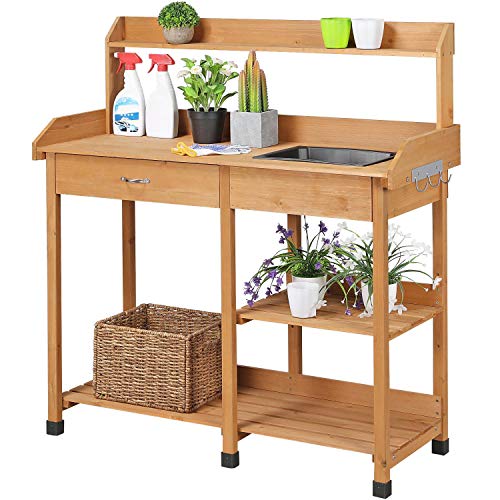
Yaheetech Potting Bench with Sink & Drawer, Outdoor Gardening Table, Wood | Fir Wood Planting Table with 132 lb Weight Capacity, Basin, Storage Drawer, Shelves and Hooks Keeps Pots and Tools Organized.
Check price on AmazonDisclaimer
The information provided on PatioFocus is for educational and informational purposes only. We are not professional landscapers or contractors, and our content should not replace professional advice. Always consult with a qualified expert regarding structural, safety, or weather-related concerns. Some content may use AI assistance. Always check product warranties and safety standards before purchasing. If you do not agree, please do not use this website. Read the full disclaimer.