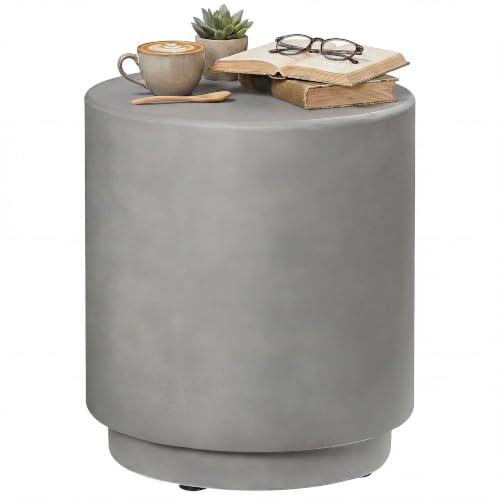
Concrete Side Table: The Complete Outdoor Buying Guide
A well-chosen concrete side table anchors your seating area with quiet mass, tactile texture, and weather-ready resilience. This guide explains how to pick the right one for your patio, balcony, or garden corner.
Why concrete side tables deserve a place in your outdoor plan: They resist wind, hold their ground, and develop a lived-in patina that improves with age. Unlike lightweight resin or hollow metal accents, a concrete side table stays put beside a lounge chair or between two outdoor seats. The considerations below will help you choose with confidence.
What Makes a Concrete Side Table Different
A concrete side table is a compact surface piece cast or formed from cement-based material, usually with aggregate and reinforcement. It sits beside seating—often at 18 to 24 inches tall—and serves as a resting spot for drinks, books, planters, or a small lantern. The appeal is not just visual. Concrete has thermal mass, so it stays cooler in shade and warms slowly in direct sun. It also tolerates rain, sun, and frost far better than untreated wood or fabric-wrapped frames.
Many shoppers compare a concrete piece with a standard outdoor side table. The practical difference is weight and permanence. A concrete table is less likely to tip in gusty weather, and it pairs naturally with stone paving, gravel, and modern architecture. The trade-off is that you generally place it once and leave it in position.
Types of Concrete Side Tables
Not all concrete tables are made the same way. Understanding the construction helps you match the piece to your climate and how much moving you expect to do.
Solid Cast Concrete
Solid cast tables are formed in one piece or from thick cast sections. They are the heaviest option and the most stable in wind. Because there are no thin walls, they resist chipping at the edges. These are the best fit for ground-level patios and permanent seating arrangements.
Glass-Fiber Reinforced Concrete (GFRC)
GFRC uses glass fibers to add tensile strength while reducing wall thickness and overall mass. A GFRC side table looks like solid concrete but is easier for two people to reposition. It is a good choice for balconies where structural loading matters, and for anyone who likes to rearrange furniture seasonally.
Composite and Concrete-Look Tables
Some tables combine a cement-rich surface with a lighter core. These deliver the concrete aesthetic at a lower weight. Inspect the seams and the base—well-made composites have consistent texture and sealed edges. If authenticity matters to you, ask whether the piece is cast concrete or a composite shell.
Quality Tiers in Plain Terms
Rather than sorting by figures, use construction signals and finish quality to place a concrete side table in its market tier. The three tiers below are consistent across the category and will not go stale as the market shifts.
Starter Tier
Basic formed shape, thinner walls, simpler sealant. Suitable for sheltered patios and light-duty use. Check that the base is level and the top is evenly finished.
Balanced Tier
Reinforced construction, cleaner edges, factory-applied sealer. Offers good value for its tier and handles year-round outdoor exposure in most climates.
High-End Tier
Dense mix, refined finish, consistent aggregate, durable penetrating sealer. Designed as a long-term investment piece with architectural presence.
Comparing Concrete Side Table Options
Use this comparison to weigh construction types against your space. The "Best For" column focuses on use cases rather than figures.
| Type | Construction | Best For | Handling |
|---|---|---|---|
| Solid Cast | Thick cast concrete, reinforced | Ground-floor patios, windy sites, permanent layouts | Two-person lift; place once |
| GFRC | Fiber-reinforced, thinner walls | Balconies, rentals, seasonal rearranging | Two-person lift; more manageable |
| Composite Shell | Cement surface over lighter core | Sheltered courtyards, style-led setups | Easier to reposition |
| Pedestal / Column | Narrow base, sculptural form | Design focal points, tight seating gaps | Stable but top-heavy; lift carefully |
| Block / Cube | Simple geometric cast | Modern patios, beside loungers and sofas | Heavy; best left in place |
Placement and Pairing Ideas
Concrete side tables work best when they relate to the seating around them. Here are placement patterns that read well in real outdoor spaces.
- Between two lounge chairs: A low cube or round concrete table acts as a shared landing spot for drinks and a small tray. Pair it with a set of two outdoor chaise lounge chairs for a balanced poolside layout.
- Beside a small patio set: A compact round table adds surface without crowding. It suits a small outdoor patio set where floor space is tight.
- Next to a bistro arrangement: A narrow pedestal table fits alongside a small outdoor bistro table and two chairs, creating a café-style corner.
- Balcony anchor: On a balcony, choose GFRC or composite to respect load limits, and place it beside a small balcony set for a cohesive nook.
- Poolside utility: A block-style table holds towels and a lantern. It pairs naturally with small poolside tables used elsewhere on the deck.
Keep at least 14 to 18 inches of clearance between the table and the seat edge so people can rise without knocking the surface. On uneven paving, use shims under one corner rather than forcing the table level, which can stress the concrete.
Durability, Sealing, and Seasonal Care
Concrete is durable, but sealing determines how well it resists stains and freeze-thaw damage. A penetrating sealer applied at the factory or by the owner reduces water absorption. Reapply every one to two years, and more frequently in humid or coastal climates.
- Cleaning: Use mild soap and water with a soft brush. Avoid acidic cleaners, which etch the surface.
- Stain prevention: Wipe up oil, wine, and plant sap promptly. A sealed surface gives you time to react.
- Winter: In freezing climates, ensure the table drains and is not sitting in pooled water. A cover helps but is not a substitute for proper sealing.
- Protecting the patio: Add felt pads or a rubber mat under the base to prevent scratching on delicate decking or tile.
If you are building a broader care routine, our weatherproofing guide covers seasonal protection across outdoor furniture categories.
A Practical Buying Checklist
Before you commit, run through these checks. They take a few minutes and prevent most post-purchase regrets.
- Measure the gap: Confirm the table fits between your seats with clearance to spare.
- Check the height: The top should sit near the armrest height of the adjacent chair for comfortable reach.
- Ask about reinforcement: Reinforced concrete resists edge chipping better than unreinforced castings.
- Confirm the sealer: Factory-sealed pieces start with better protection; plan to reapply regardless.
- Inspect the base: A level, broad base distributes weight and reduces wobble on pavers.
- Plan the move: Measure doorways and steps. Solid concrete pieces need a clear path and two people.
If your layout includes a larger seating arrangement, a concrete accent can coexist with a small outdoor side table for flexible surface options.
Frequently Asked Questions
Are concrete side tables weather-resistant for year-round outdoor use?
Yes, properly sealed concrete side tables are highly weather-resistant and can remain outdoors year-round in most climates. Sealing is the key step that protects against moisture penetration, freeze-thaw cycles, and staining.
How heavy is a concrete side table and can one person move it?
Concrete side tables are typically heavy for their size and may require two people to move safely. Lighter composite and GFRC designs exist, but solid concrete pieces are best positioned once and left in place.
Will a concrete side table scratch or stain my patio surface?
A concrete side table can scratch delicate surfaces if dragged. Use felt pads or a protective mat underneath, and always lift rather than slide the table when repositioning it.
How do I clean and maintain a concrete side table?
Clean with mild soap and water using a soft brush or cloth. Avoid acidic cleaners. Reapply a penetrating sealer every one to two years, or more often in high-moisture climates, to maintain stain resistance.
Ready to Compare Concrete Side Tables?
Review our recommended options below to find the right fit for your patio, balcony, or garden seating area.