Small Poolside Tables: The Complete Buying Guide
Everything you need to choose a compact, durable, and stylish side table for your pool deck — from material science to space-planning tips.
START WITH THE CHECKLISTWhy this guide matters: A poolside table is one of the most heavily used — and most abused — pieces of outdoor furniture. It faces splashing water, chlorine mist, blazing sun, and constant repositioning. Choosing the right small table means understanding materials, weight, footprint, and how it interacts with your loungers and pool edge. This guide walks you through every decision so you can buy with confidence.
Why a Dedicated Poolside Table Changes Your Setup
Most homeowners start with a full patio set and then realize the pool deck has its own unique needs. You need a surface for drinks, sunglasses, sunscreen, a book, and maybe a small speaker — but you do not want a bulky dining table blocking the walkway between loungers and water. That is exactly where a small poolside table earns its place.
A well-chosen compact table bridges the gap between functionality and flow. It keeps essentials within arm's reach while preserving the open, uncluttered feeling that makes a pool area feel inviting. Unlike full-size patio tables, poolside side tables are designed to be moved easily, tucked between chairs, and wiped down after every splash.
If your pool deck is part of a larger compact outdoor space, you may also want to review our guide on small patio layouts and space-saving patio furniture to ensure every piece works together.
What Makes a Good Small Poolside Table?
Not every outdoor side table is built for pool duty. The combination of water, chlorine, and sun exposure demands specific qualities. Here are the non-negotiables:
Moisture & Chlorine Resistance
The table surface and frame must tolerate repeated wet contact. Powder-coated aluminum, HDPE, and sealed teak are top-tier for this environment. Untreated steel and low-grade resin will degrade quickly.
UV Stability
Constant sun exposure fades inferior materials. Look for UV-stabilized resin or marine-grade finishes that hold color season after season.
Compact Footprint
A top diameter between 16 and 20 inches fits neatly beside most loungers. Round shapes reduce injury risk near pool edges and flow better in tight layouts.
Stable Base
Weighted bases or fillable legs keep the table planted on windy decks. Avoid ultra-light hollow tables unless you plan to store them after each use.
Easy-Clean Surface
Smooth, non-porous tops wipe clean in seconds. Slatted designs drain water but require more frequent wiping. Glass tops look premium but show water spots.
Safe Edges
Rounded corners and smooth rims are essential on wet surfaces. Sharp metal edges and hard square corners are a hazard on a slippery pool deck.
If you are pairing your table with loungers, our guide to compact lounge chairs and chaise lounge sets can help you coordinate heights and spacing.
Material Guide: What Holds Up Beside the Pool?
Material choice is the single biggest factor in how long your poolside table will last and how much maintenance it will demand. Here is how the most common options compare.
| Material | Market Tier | Best For | Key Consideration |
|---|---|---|---|
| Powder-Coated Aluminum | Mid-range to premium | Year-round exposed decks | Rust-proof frame; check coating quality at joints |
| High-Density Polyethylene (HDPE) | Mid-tier to high-end tier | Families with kids and pets | UV-stabilized grades resist fading; very low maintenance |
| Marine-Grade Teak | Premium to luxury | Design-forward poolscapes | Naturally water-resistant; needs occasional oiling |
| Resin / Plastic | Entry-level to starter tier | Occasional use, covered decks | Lightweight; may need seasonal storage in harsh climates |
| Powder-Coated Steel | Essential tier to mid-range | Budget-conscious setups | Must be inspected for rust at welds and feet |
| Tempered Glass Top | Mid-range to premium | Modern, minimal aesthetics | Shows water spots; ensure shatter-resistant rating |
For a deeper dive into frame construction, see our metal vs aluminum furniture guide and wicker and rattan care guide.
Sizing & Placement: Getting the Proportions Right
Pool decks are often tighter than they appear. Before committing to a table, measure the actual clear space between your loungers, the pool coping, and any walkways.
Between Loungers
Leave at least 4 inches of clearance on each side so the table does not crowd armrests. A 16–18 inch round top is ideal here.
Beside a Single Chaise
A slightly larger 20-inch top gives room for a drink, sunscreen, and a book without dominating the deck.
Near the Pool Edge
Keep tables at least 12 inches back from the coping to avoid splashes and tripping hazards. Round tops are safest here.
On a Small Deck
Consider a nesting or folding table that stows when not in use. Pair with compact outdoor side tables for maximum flexibility.
If your pool area is part of a balcony or porch setup, our small balcony furniture sets and porch table sets guides cover complementary layouts.
The Poolside Table Buying Checklist
Use this checklist before you finalize any purchase. Each item addresses a real-world failure point we see in poolside furniture.
- Confirm the material rating: Is the frame explicitly rated for outdoor or marine use? Vague descriptions like "weather-friendly" are a warning sign.
- Check the base weight: A table under 10 pounds needs either a weighted base or a plan to store it during wind events.
- Verify UV stabilization: Resin and plastic tables should state UV-stabilized construction. Without it, fading is inevitable.
- Inspect the edges: Rounded corners and smooth rims matter on wet, slippery surfaces.
- Measure your clear space: Confirm the table fits between loungers with room to spare for feet and arms.
- Plan for drainage: Slatted or perforated tops drain quickly but need more wiping. Solid tops pool water — tilt or wipe after rain.
- Check the warranty language: A warranty that excludes "chlorine exposure" tells you the table is not truly pool-ready.
- Consider storage: If you live in a freezing climate, confirm the table is light enough to move indoors or cover easily.
Coordinating Your Poolside Table with the Rest of the Deck
A poolside table rarely stands alone. It sits between loungers, near a bistro set, or beside a fire feature. Coordinating height, finish, and style keeps the deck cohesive.
If you already own a small outdoor patio set or a compact bistro table set, choose a side table with a matching frame finish. For decks anchored by a fire feature, our patio set with fire pit guide shows how side tables fit into the conversation circle.
Homeowners with umbrella-shaded loungers should also review side tables with umbrella holes — a smart way to combine shade and surface area in one footprint.
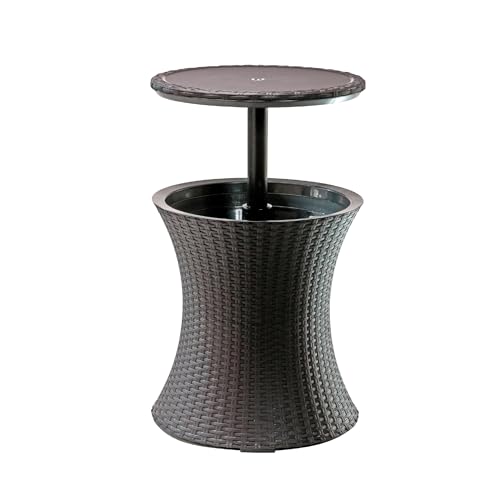
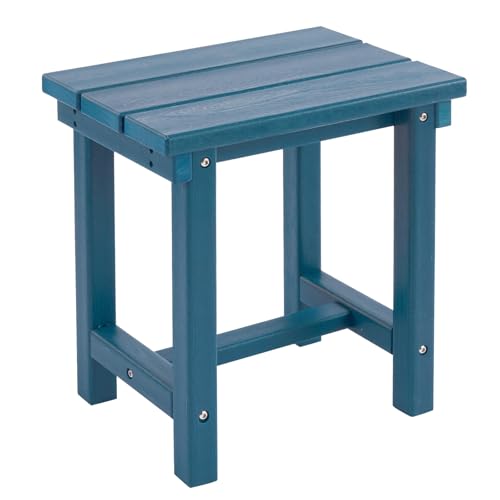
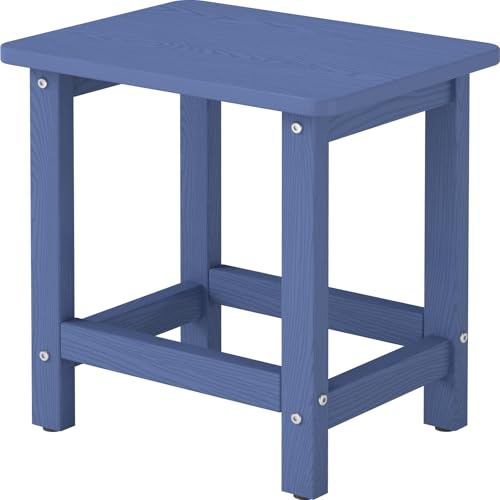
Ready to compare options? Browse our curated selection of small poolside tables below. Each pick is evaluated for moisture resistance, footprint, and stability — the three factors that matter most beside a pool.
Frequently Asked Questions
What material is best for a small poolside table?
Powder-coated aluminum, UV-stabilized HDPE, and marine-grade teak are the strongest choices. They resist moisture, chlorine mist, and sun fade. Entry-level resin can work for occasional use but may warp or fade over several seasons.
How do I choose the right size poolside table?
Measure the clear space between loungers and the pool edge. A 16–20 inch round top fits most lounge-side gaps. Round tables are safer near coping because they have no sharp corners.
Should poolside tables be weighted or anchored?
Yes, on windy decks. Look for weighted bases or hollow legs you can fill with sand or water. Ultra-light tables should be stored during high winds to prevent them from blowing into the pool or damaging nearby furniture.
Can I leave a small poolside table outside year-round?
Premium aluminum and HDPE tables are designed for full exposure. Wood and lower-tier metal tables benefit from a cover or seasonal storage, especially in freezing climates where ice can crack joints and finishes.
Do I need a table with a lower shelf or storage?
Not necessarily, but a lower shelf keeps sunscreen and towels off the deck and out of splash zones. On very tight decks, prioritize a smaller footprint over storage to preserve walkway space.
Final Thoughts
A small poolside table is a small purchase with an outsized impact on how your pool deck feels and functions. Prioritize material durability, a compact footprint, and a stable base — then choose a style that complements your loungers and surrounding patio pieces. With the checklist above, you can buy with confidence and spend less time worrying about your table and more time enjoying the water.
For more space-conscious outdoor solutions, explore our guides on small patio furniture, compact outdoor tables, and small deck storage boxes.