Small Outdoor Table Buying Guide
Everything you need to choose, size, and set up a compact outdoor table for balconies, patios, porches, and decks — from top dimensions and material choices to umbrella compatibility and everyday care.
Who this guide is for: You already know you want a compact outdoor table — maybe for a small balcony, a breakfast nook on the porch, or a tight patio corner. What you still need is clarity: which size actually fits, which material survives the seasons, and whether an umbrella hole is worth it.
This guide walks you through every decision point in a logical order, so by the end you can shortlist the right configuration with confidence and move straight to the product options below.
Why a Small Outdoor Table Works Harder Than You Think
A compact outdoor table is one of the most versatile pieces you can add to a small outdoor space. It functions as a breakfast spot, a workspace on mild mornings, a serving station during gatherings, and a display surface for planters or lanterns. Because it occupies a modest footprint, it can transform a balcony or porch that would otherwise be purely decorative into a genuinely usable living area.
The key is treating the table as part of a system rather than a standalone purchase. The table determines your seating, your shade strategy, and how much walking room remains. Get the size and shape right, and everything else — chairs, umbrella, decor — falls into place naturally.
If you are still mapping out the broader layout, our guide to small patio furniture covers how individual pieces work together. For the table specifically, the next sections break down every decision in sequence.
Sizes and Shapes: Finding Your Footprint
The single most important measurement is not the table itself — it is the clearance around it. As a working rule, leave at least 24 inches between the table edge and any wall, railing, or planter so chairs can pull out and people can walk past. On a narrow balcony, that clearance rule often decides the size before personal preference does.
Common compact dimensions
- Bistro tables: typically 24 to 30 inches across, seating two. Ideal for balconies and porches.
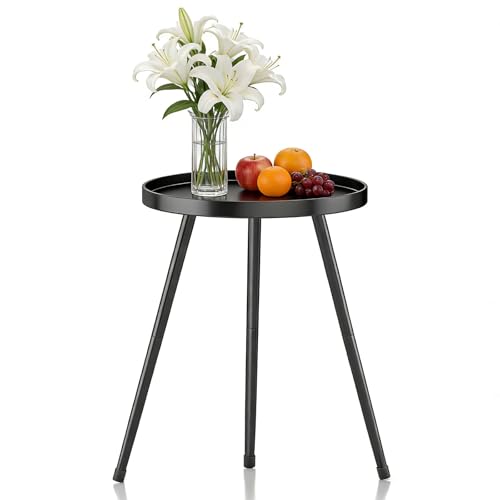
- Round tables: 30 to 36 inches across, seating two comfortably or four tightly. Round tops soften tight corners because there are no sharp edges to navigate.
- Square tables: 28 to 34 inches per side, seating two to four. Square tops maximize usable surface within a given footprint.
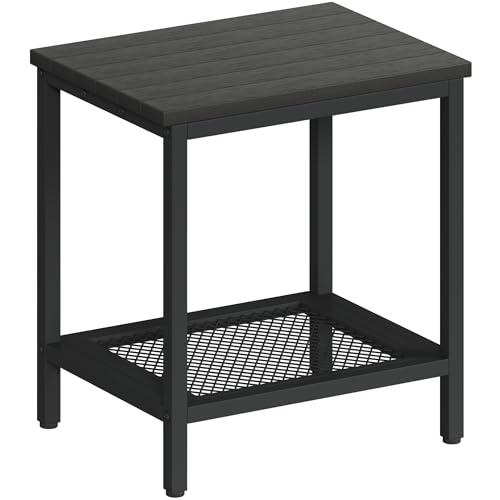
- Rectangular tables: 32 to 48 inches long and 24 to 30 inches deep, seating two to four. The best choice when one wall anchors the table and you need an efficient row layout.
Shape matters as much as size. Round and square tops suit central placement and tight corners. Rectangular tops suit walls and railings. Oval tops split the difference and work well on narrow decks. If you are choosing between a round and a rectangular layout, our guides to a small round garden table and a small rectangular patio table with umbrella hole walk through the trade-offs in detail.
Mark the table footprint on the ground with painter's tape, then place two chairs in position and walk the remaining path. This five-minute test prevents the most common mistake in compact outdoor furniture: a table that technically fits but leaves no room to use it.
Seating Capacity and Chair Pairing
Most small outdoor tables are sold as sets, and the chair count is where compact spaces get complicated. Two chairs are the practical default for a balcony or porch. Four chairs work only if the chairs are armless or tuck fully under the top when not in use.
Chair style strongly affects usable space. Armless bistro chairs and folding chairs take up the least room. Stacking chairs are ideal for balconies because they can be stored away when the table is used as a surface. Full-size armchairs look generous but consume clearance quickly.
- For a two-person breakfast setup, a small outdoor bistro table and 2 chairs is the simplest all-in-one option.
- For a balcony with a view, a small outdoor table and chairs for balcony is configured around tighter clearances.
- For a porch that doubles as a reading spot, a small table and chair set for porch balances comfort and footprint.
- If you want a single coordinated set rather than mixing pieces, a small outdoor table and 2 chair set removes the guesswork.
When the table will occasionally seat four, choose a set where the extra chairs are stackable or foldable. This keeps the default two-person configuration airy while allowing flexibility for guests.
Materials: Durability vs. Upkeep
Material choice determines how the table ages, how often it needs attention, and how it feels underhand. There is no universally best material — only the best match for your climate and your willingness to maintain it.
| Material | Weather Resistance | Upkeep Level | Best For |
|---|---|---|---|
| Powder-coated aluminum | Excellent | Low | Balconies, coastal areas, year-round exposure |
| Stainless steel | Excellent | Low to moderate | Humid climates, heavy use, modern looks |
| Teak & dense hardwoods | Very good | Moderate (seasonal oiling) | Warm, natural aesthetics, covered porches |
| Resin & HDPE | Very good | Very low | Maintenance-free starter setups, family use |
| Wicker & rattan (synthetic) | Good | Moderate (covers advised) | Cozy, textured styling on sheltered patios |
| Tempered glass tops | Good (with care) | Low but fragile | Light, airy looks on covered porches |
For most compact outdoor spaces, powder-coated aluminum is the pragmatic default: it is light enough to move, resistant enough to leave outside, and available across every quality tier. Wood suits covered porches where its warmth is visible and its maintenance is manageable. Resin is the lowest-maintenance choice for households that want a set-and-forget table.
Umbrella Holes and Shade Options
An umbrella hole turns a small table into a shaded retreat, but it is only the right call when the table is exposed to direct sun. If the table sits under a pergola, awning, or deep porch roof, a solid top is cleaner, stronger, and easier to keep level.
When you do choose an umbrella-compatible table, confirm two things: the hole diameter matches your umbrella pole, and the table has a stable base or accepts a weighted stand. A small table with a lightweight top can become unstable under a large canopy in gusty conditions.
- A small outdoor table with umbrella and chairs bundles shade into a single coordinated set.
- A small glass patio table with umbrella hole keeps the look light while supporting a compact canopy.
- A small square patio table with umbrella hole maximizes surface area within a tight footprint.
- For a round layout, a small round outdoor table with umbrella hole is the most space-efficient option.
For a deeper look at pairing shade with seating, our guide to a small patio table with umbrella and chairs covers stability and placement considerations.
Quality Tiers Explained
Compact outdoor tables are available across a wide range of build quality. Rather than focusing on any single number, it helps to understand the three broad tiers and what each one delivers in construction and longevity.
Essential Construction
Lightweight frames, thinner tops, and simpler joints. Suitable for sheltered balconies and seasonal use. Expect a few seasons of dependable service with basic covers. Good value for its tier when the table is not left in harsh weather year-round.
Balanced Build
Reinforced frames, better powder coatings, and more stable bases. Handles year-round exposure in most climates with routine care. This tier typically offers the smoothest combination of stability, finish quality, and reasonable upkeep.
High-End Construction
Heavy-duty frames, high-grade steel or dense hardwood tops, and precision joints. Built as a long-term investment for exposed patios and daily use. Maintenance is minimal relative to lifespan, and finishes hold up through repeated seasons.
As a general rule, mid-range models usually offer noticeably better frame rigidity and coating durability than entry-level options, while premium models add refinement and longevity that matter most in exposed, high-use settings. Choose the tier that matches your climate and how often the table will be left uncovered.
Space-by-Space Recommendations
Different outdoor spaces demand different table strategies. The recommendations below map typical spaces to the configurations that work best.
Balcony
Balconies reward round and square tops that sit flush against a railing without wasting corner space. A two-person bistro configuration is the default. Look for a small balcony set or a small balcony furniture set that includes compact, stackable chairs.
Small patio
Patios often have room for four seats if the chairs are armless. A square or round table with a modest umbrella works well here. The small outdoor patio set category covers coordinated options, while a small outdoor patio table with umbrella hole is the right pick for sun-exposed corners.
Porch
Porches are usually shaded, so a solid-top wood or resin table is ideal. A small table and chair set for patio translates well to porch use, and a small outdoor table and chairs combination keeps the setup simple.
Deck
Decks often have railings that limit clearance on one side. Rectangular tables aligned with the railing work best. A small outdoor table and chairs for 2 fits narrow decks, while a small outdoor table and chairs for 4 suits wider layouts.
For a broader catalog of compact configurations, browse the full small outdoor table collection or the small patio table and chairs selection.
Care and Weatherproofing
A compact table is easy to care for, but it still benefits from a simple seasonal routine. The goal is to prevent standing water, protect finishes, and catch small issues before they become structural.
- Cover metal and wood tables during off-season months to prevent pooling water and UV fading.
- Wipe glass and metal tops after rain to prevent mineral spotting, especially in hard-water areas.
- Apply a seasonal sealant to wood tops according to the manufacturer's guidance.
- Check joints and fasteners at the start of each season and tighten as needed.
- Store cushions and fabric accessories indoors when not in use to extend their life.
- Elevate table legs slightly on damp surfaces to prevent rust rings and moisture wicking.
For a complete seasonal routine, our weatherproofing guide covers covers, cleaners, and storage in more detail.
Final Buying Checklist
Before you commit to a specific table, run through this checklist. It captures the decisions that most often cause regret after purchase.
- Measured the footprint and confirmed at least 24 inches of clearance on all used sides.
- Confirmed seating count and that chairs tuck under or stack away when not in use.
- Selected a material that matches your climate and maintenance willingness.
- Decided whether an umbrella hole is necessary based on sun exposure.
- Verified the table's stability on your specific surface (deck boards, pavers, concrete).
- Chosen a quality tier that matches expected use and exposure.
- Planned a cover or storage solution for the off-season.
If you are still comparing configurations, the small outdoor table collection and the small patio guide are useful next stops.
Frequently Asked Questions
What size small outdoor table fits a balcony?
For a standard balcony, a table with a top diameter or length between roughly 24 and 32 inches is usually the sweet spot. It seats two comfortably, leaves walking room, and pairs well with compact chairs that tuck under the top. Always leave at least 24 inches of clearance between the table edge and any railing or wall.
Do small outdoor tables need an umbrella hole?
An umbrella hole is worth having if the table sits in direct sun for long periods. It lets you add a compact shade canopy without a separate freestanding base. If the table sits under a pergola, awning, or shaded porch, a solid top without a hole is often the cleaner and more stable option.
Which material lasts longest for a small outdoor table?
Powder-coated aluminum and high-grade stainless steel offer the best long-term weather resistance with minimal upkeep. Teak and other dense hardwoods are excellent when oiled periodically. Resin and high-density polyethylene are the most maintenance-free entry-level options. Wicker and rattan look warm but need covers and gentle care.
Can a small outdoor table be left outside in winter?
Metal and resin tables generally handle winter well if they are covered and elevated slightly to prevent standing water. Wood tables should be covered or moved to a sheltered spot and treated with a seasonal sealant. Glass tops should be covered to avoid freeze-thaw stress and checked for chips before the season begins.
The Bottom Line
A small outdoor table is a high-impact addition to a compact space — but only when the size, shape, and material are matched to the actual footprint and climate. Measure the clearance first, decide on seating second, and let material and umbrella compatibility follow from there.
Once those decisions are made, the product section below lets you compare configurations that fit your chosen tier and layout. Browse the options, confirm the dimensions against your measurements, and you are ready to complete the setup.