Small Outdoor Patio Table With Umbrella Hole: The Complete Buying Guide
Everything you need to choose a compact patio table that fits tight spaces, holds your umbrella securely, and lasts through every season. Compare materials, sizes, stability features, and top-tier options.
Explore Top PicksWhy this guide matters: A small patio table with an umbrella hole solves two problems at once: it gives you a functional dining or coffee surface without overwhelming a balcony or compact deck, and it keeps your umbrella stable where freestanding bases simply do not fit. Below, we break down the sizes, materials, stability requirements, and design features that separate a great compact table from one that tips, wobbles, or rusts within a season.
Why a Small Patio Table With an Umbrella Hole Makes Sense
If you have a balcony, a narrow side yard, a condo patio, or a small deck, a full-size dining set usually does not fit. A compact table with a center umbrella hole delivers the essentials in a footprint that leaves room for chairs, planters, and walkways. The hole itself is a structural feature: it anchors the umbrella pole through the tabletop, which reduces the footprint you would otherwise need for a freestanding umbrella base on the floor.
This design also keeps the umbrella centered over the table, so shade falls exactly where you need it. For anyone researching small outdoor patio set with fire pit configurations, a compact umbrella table pairs well as a separate dining zone without crowding the fire pit area.
- Space efficiency: Round tables from 24 to 32 inches and rectangular tables around 28 to 36 inches wide fit balconies and tight corners.
- Integrated shade: The center hole holds the umbrella pole directly over the seating area, maximizing shade with minimal floor clutter.
- Flexible use: Works as a dining surface for two, a coffee table, a work-from-outside desk, or a serving station during gatherings.
- Easy storage: Many compact models fold, stack, or are light enough to move under cover during storms.
Sizing Guide: How Small Is Small Enough?
The right size depends on your available floor area and how many people you need to seat. As a rule of thumb, leave at least 24 inches of clearance on every side where a chair pulls out, and 18 inches along walkways. Measure your space before you shop, not after.
| Table Shape | Typical Footprint | Seats | Best For | Tier |
|---|---|---|---|---|
| Round bistro | 24–30 in diameter | 2 | Balconies, apartment patios | Essential tier |
| Square compact | 28–32 in square | 2–4 | Small decks, corner nooks | Balanced tier |
| Rectangular narrow | 28–36 in wide | 2–4 | Side yards, narrow patios | Balanced tier |
| Round mid-size | 36–42 in diameter | 4 | Compact dining areas | High-end tier |
Measurement tip: Use painter's tape to mark the table's footprint on your patio before ordering. Then place a chair at each seat position to confirm you can pull out comfortably. Check doorway widths and elevator dimensions if delivery access is tight.
Tabletop and Frame Materials Compared
Outdoor tables live in sun, rain, and temperature swings. The material you choose determines how long the table stays level, rust-free, and visually clean. Here is how the main options compare across durability, maintenance, and design fit.
Powder-Coated Aluminum
Aluminum is lightweight, naturally rust-resistant, and easy to move, which suits renters and small-space owners who rearrange often. Powder coating adds color and scratch resistance. Mid-range aluminum tables usually have thicker tubing than entry-level frames, which reduces wobble. Look for a rust-proof finish and welded joints rather than riveted ones.
Steel and Wrought Iron
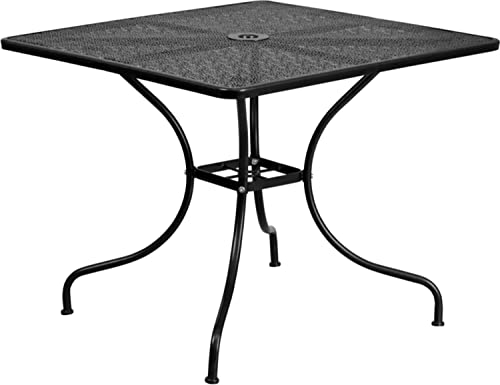
Steel frames feel substantial and hold heavy umbrellas well, but they require a rust-proof finish, ideally powder-coated or galvanized. Wrought iron offers a classic look and high weight for stability, but it is heavy to move and needs touch-up paint if chips appear. For a traditional look, browse wrought iron outdoor dining table and chairs options that include umbrella-ready designs.
Teak and Solid Wood
Teak is a premium material with natural oils that resist moisture and insects. It weathers to a silvery gray or can be oiled to keep a warm tone. Solid wood tables are heavier than aluminum but feel stable and warm. If wood is your preference, the teak furniture guide covers care and long-term maintenance in detail.
Glass Tops
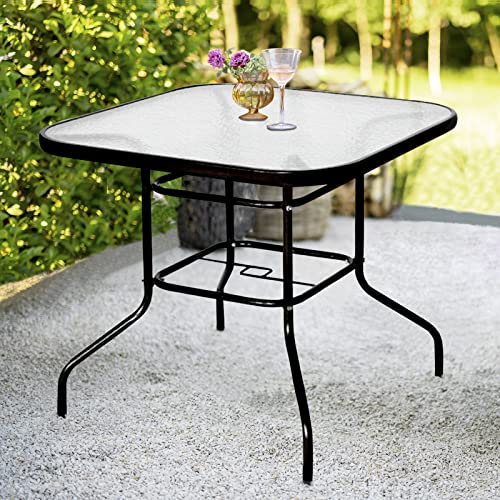
Tempered glass is easy to wipe clean and reflects light, which makes small patios feel more open. Glass needs a frame that supports the full perimeter, and it should be covered or stored during hail or heavy storms. A glass top paired with a metal frame is a common balanced-tier choice for compact dining.
Resin, Plastic, and HDPE
Entry-level resin tables are light, weather-resistant, and easy to hose down. They suit light use and seasonal setups. HDPE (high-density polyethylene) is a step up in durability and often mimics wood grain. These tables are the simplest to move and store, though they may flex more under a heavy umbrella.
Umbrella Hole and Base: What You Must Know
The umbrella hole is only half of the stability equation. The table provides lateral guidance for the pole, while the umbrella base or stand carries the weight. Getting this pairing right prevents tipping on windy days.
- Hole diameter: Standard umbrella poles are about 1.5 inches, but some are 1.375 or 2 inches. Confirm the hole size and whether a reduction ring is included.
- Through-table vs. freestanding: A through-table umbrella relies on an umbrella table stand or a weighted base beneath the tabletop. A cantilever umbrella needs no hole but requires a heavy base.
- Base weight: Match the base rating to your canopy size. Larger canopies catch more wind and need heavier umbrella bases.
- Reinforced center ring: A metal or reinforced ring around the hole prevents cracking and keeps the pole upright.
- Table height and pole length: Check that the umbrella pole is long enough for your table height and that the canopy clears the tabletop.
If your table does not include a built-in stand, plan for a separate base. For windy locations, a umbrella stand metal model with a wide footprint adds stability. On tight balconies where floor space is limited, an umbrella side table can combine a small surface with pole support.
Stability and Wind Resistance Checklist
Small tables are more prone to tipping than large ones because they have less mass and a shorter lever arm. These design details make a measurable difference:
- Wide leg spread: Legs that extend beyond the tabletop edge resist tipping better than legs tucked under the center.
- Cross-bracing: X-braces or stretcher bars between legs reduce wobble on uneven surfaces.
- Adjustable feet: Leveling glides compensate for sloped decks and stone pavers.
- Weighted base compatibility: Confirm the table can accept a weighted umbrella stand without the stand interfering with legroom.
- Low center of gravity: Tables with a lower apron and thicker legs feel more planted.
Wind tip: During storms, close the umbrella and lay it flat or remove it entirely. Even a sturdy table cannot protect an open canopy from gusts. A cover for the table adds protection during off-season storage.
Design Styles That Fit Small Spaces
Compact tables come in styles that either blend into the background or act as a focal point. Choose based on your existing furniture and the visual weight of your space.
- Bistro style: A round top with slim legs and two chairs creates a cafe feel. Look for folding or stackable chairs to save space. A wrought iron bistro set is a classic choice.
- Modern minimal: Slat or solid tops in neutral tones pair with slim aluminum frames. These read as clean and uncluttered on small balconies.
- Coastal and natural: White frames, light wood tops, and woven textures keep the space airy. A white outdoor side table with umbrella hole works well in bright, coastal-inspired setups.
- Rustic and farmhouse: Thicker tops and darker finishes add warmth, though they visually shrink tight spaces. Use one rustic piece as an accent rather than filling the whole patio.
Product Types Worth Comparing
Before you commit, compare the main categories of small tables with umbrella holes. Each suits a different use case, and the right choice depends on how you plan to use the table day to day.
| Type | Best For | Key Feature | Category Tier |
|---|---|---|---|
| Bistro table | Coffee, light meals for two | Compact round top, folding options | Entry-level |
| Dining table | Meals for 2–4 | Larger surface, reinforced center ring | Mid-range |
| Side table with hole | Umbrella support plus small surface | Pairs with lounge seating | Entry-level |
| Bar-height table | Standing gatherings, views | Taller pole, needs extension | Mid-range |
| Premium dining table | Year-round use | High-grade materials, welded frame | Premium |
If you need a bar-height surface, check the umbrella extension pole for bar height table so the canopy clears properly. For standard dining, a umbrella table with a reinforced hole is the most direct fit.
Maintenance and Seasonal Care
A small table is easy to maintain if you stay ahead of dirt, moisture, and UV exposure. Follow these routines to extend the life of the frame and top:
- Wipe the tabletop weekly with mild soap and water; avoid abrasive cleaners on powder-coated and glass surfaces.
- Inspect the umbrella hole ring and center support for cracks or rust every few months.
- Tighten bolts and leg joints at the start of each season to prevent wobble.
- Cover or store the table during off-season months, especially in freezing climates.
- Touch up chips on steel and wrought iron promptly to stop rust from spreading.
- Clean and dry the umbrella before storage to prevent mildew on the canopy.
For broader care routines, the sustainable materials guide covers eco-friendly finishes and long-term material choices. If you store cushions and small accessories nearby, a waterproof outdoor storage box keeps them dry between uses.
Final Buying Checklist
Use this checklist to narrow your options before you buy. It covers the details buyers most often overlook.
- Measure twice: Confirm table footprint, chair clearance, and delivery path.
- Match the hole to your pole: Verify hole diameter and whether a reduction ring is included.
- Plan the base: Confirm whether a stand is included or sold separately, and match the base to canopy size.
- Check the frame: Prefer welded joints, cross-bracing, and a rust-proof finish.
- Confirm seating height: Table height should leave 10–12 inches between the seat and the table apron.
- Think about storage: Folding, stacking, or lightweight designs simplify off-season storage.
- Review the warranty: Frame and finish coverage varies by tier; check before you commit.
Ready to Compare Compact Tables?
Browse top-rated small patio tables with umbrella holes, compare materials and stability features, and find the right fit for your balcony, deck, or patio.
View Recommended ProductsFrequently Asked Questions
What size patio table works best for a small balcony?
Do I need a separate umbrella base for a patio table with an umbrella hole?
Which tabletop material is most durable for outdoor use?
Can a small patio table with an umbrella hole hold a heavy umbrella?
How do I measure my space before buying a small patio table?
Continue Exploring
If you are still refining your outdoor setup, compare related compact options. The white outdoor dining table with umbrella hole guide covers bright finishes and family-size configurations. For a simple two-person setup, a white outdoor side table with umbrella hole keeps the footprint minimal. And if shade flexibility is your priority, review sun shade for patio solutions that work alongside a table-mounted umbrella.