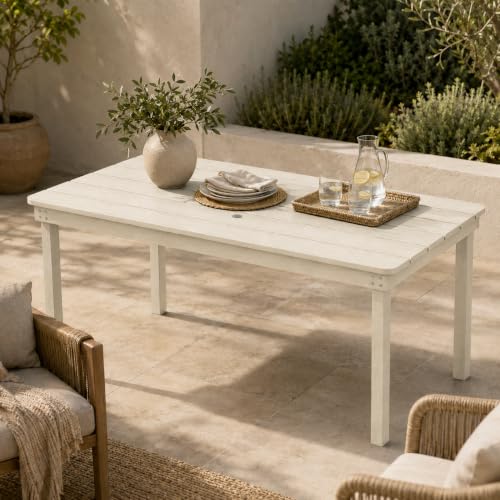
White Outdoor Dining Table with Umbrella Hole: The Complete Buying Guide
Everything you need to know before choosing a white patio dining table with an umbrella hole — materials, sizing, umbrella compatibility, care, and matching chairs for a shade-ready outdoor dining space.
Explore Top PicksWhy this guide matters: A white outdoor dining table with an umbrella hole combines two practical needs — a bright, clean dining surface and built-in shade for sunny afternoons. But not all tables are built the same. Frame material, hole diameter, table shape, and finish quality all affect how well the table performs season after season. This guide walks you through each decision so you can buy with confidence.
Why Choose a White Outdoor Dining Table?
White is one of the most versatile finishes for outdoor dining furniture. It reflects sunlight, keeps the surface cooler under direct sun, and pairs naturally with wood decks, stone patios, and green landscaping. A white table also acts as a neutral anchor that lets colorful cushions, umbrellas, and planters stand out.
- Heat reflection: Light-colored surfaces absorb less solar heat than dark finishes, which is a real comfort advantage during long outdoor lunches.
- Design flexibility: White works with coastal, modern, farmhouse, and minimalist patio styles alike.
- Brightness in small spaces: On compact balconies or shaded porches, a white table visually opens up the area.
- Easy visual matching: White dining chairs, benches, and side tables are widely available, making it simple to build a coordinated set.
The main trade-off is maintenance: white surfaces show dirt and pollen more readily than dark ones. Choosing a quality finish — powder-coated aluminum or UV-stabilized resin — makes cleaning far easier and helps the table hold its color. If you are building a compact dining zone, a small outdoor patio table with umbrella hole in white is often the most space-efficient starting point.
Material Options Compared
The material determines weight, weather resistance, maintenance needs, and how long the white finish lasts. Here is how the main options compare across market tiers.
High-Grade Resin / Plastic
Lightweight, resistant to rust, and easy to wipe clean. UV-stabilized resin holds white color well. Best for balconies, casual patios, and households that rearrange furniture often.
Powder-Coated Aluminum
The most popular choice for white outdoor tables. Rust-proof, lighter than steel, and the powder coating resists chipping and fading. Ideal for year-round exposure in most climates.
Painted or Whitewashed Wood
Solid wood — teak, acacia, or eucalyptus — painted white delivers a warm, traditional look. Requires periodic sealing and touch-ups, but ages gracefully with care.
Marble, Stone, or Composite Top
Heavy, heat-tolerant, and highly durable. Usually paired with a powder-coated aluminum or stainless steel frame. Best for permanent dining setups and high-end patios.
Understanding the Umbrella Hole
The umbrella hole is the detail that makes this table truly useful in summer. Before buying, confirm three specifications: hole diameter, pole compatibility, and whether the table includes a hole cap.
Hole diameter and pole fit
Most patio dining tables are drilled for a standard umbrella pole between 1.5 and 1.75 inches (roughly 38–44 mm) in diameter. Check the product specification to confirm the hole size, and verify that your umbrella pole matches. A hole that is too large lets the umbrella wobble; too small and the pole will not fit at all.
Umbrella support and base requirements
A table hole alone does not secure an umbrella — you still need a base or stand. Freestanding umbrellas use a weighted base placed beside or under the table. Through-table umbrellas rely on the hole for alignment plus a base underneath. For stability on windy patios, a heavier base is essential. Browse standing umbrella base options and umbrella bases to match your table and umbrella type.
Table shape and shade coverage
The table shape affects how much shade a single umbrella provides. Round tables are the most efficient — one centered umbrella shades the whole surface. Rectangular tables usually need a larger canopy or a cantilever umbrella for full coverage.
Choosing the Right Size and Shape
Match the table to your seating needs and patio footprint. As a rule of thumb, allow about 24 inches of table width per diner and at least 30–36 inches of clearance between the table edge and any wall, railing, or planter for chair pull-out space.
| Table Shape | Typical Seating | Best For | Umbrella Notes |
|---|---|---|---|
| Round | 4 people | Small patios, balconies, intimate dining | Single centered umbrella gives full shade coverage |
| Square | 4 people | Compact corners, symmetrical layouts | Centered umbrella works well; good for square patios |
| Rectangular | 6–8 people | Long terraces, family dining, entertaining | May need a larger canopy or two umbrellas for full shade |
| Oval | 6 people | Soft-edged modern patios | Check hole position; center placement is standard |
If your patio is tight, prioritize a round or square table in the mid-size range. If you regularly host large groups, a rectangular table with a generous umbrella canopy is the better investment.
Matching Chairs and Accessories
A white dining table looks intentional when the chairs share the same finish family or a complementary tone. Popular pairings include:
- White chairs for a cohesive look: A coordinated set of white outdoor dining chairs set of 4 keeps the palette clean and bright.
- Mixed materials for contrast: Wicker or rattan chairs add texture against a smooth white top — see wicker porch chairs and wicker patio set options.
- Metal frames for durability: wrought iron chairs or stackable outdoor chairs pair well with white metal tables and store easily.
- Bench seating for long tables: A white outdoor bench along one side maximizes seating on rectangular tables.
Don't overlook shade and comfort accessories. A solar outdoor umbrella adds evening lighting without wiring, while a umbrella side table keeps drinks and plates within reach. For nighttime dining, string lights and solar lights complete the ambiance.
Care and Maintenance for a White Table
White finishes reward regular, simple care. A few habits keep the surface bright and extend the table's service life:
- Weekly wipe-down: Use mild soap and water to remove pollen, dust, and food residue before it stains.
- Avoid abrasive cleaners: Harsh scrubbing pads can dull powder coating and scratch resin surfaces.
- Cover when idle: A fitted cover protects against UV exposure, rain, and falling debris during off-season months.
- Touch up chips promptly: On painted wood or coated metal, small touch-ups prevent moisture from reaching the substrate.
- Store the umbrella: Close and secure the umbrella during high winds and storms to protect both the canopy and the table hole area.
For deeper guidance, see our weatherproofing guide and outdoor care resources.
Market Tiers at a Glance
Use these universal tier descriptors to compare products without relying on fluctuating figures. Each tier reflects relative market positioning and build quality.
| Tier | Typical Build | Best For | Expected Longevity |
|---|---|---|---|
| Entry-level | UV-stabilized resin top, basic metal or plastic legs | Balconies, casual use, first patio setup | Several seasons with basic care |
| Mid-range | Powder-coated aluminum frame, resin or aluminum top | Everyday family dining, covered patios | Many seasons with routine maintenance |
| Premium | Heavy-gauge aluminum or solid wood, reinforced joints | Full-sun patios, frequent entertaining | Long-term investment |
| Luxury / commercial-grade | Stone, marble, or composite top with premium metal frame | Permanent dining areas, high-end landscapes | Decade-plus with proper care |
Pre-Purchase Checklist
Before you finalize a purchase, confirm each of these points:
- Hole diameter matches your umbrella pole (typically 1.5–1.75 inches).
- A hole cap or plug is included for use without an umbrella.
- Frame material suits your climate and exposure level.
- Table dimensions fit your patio with adequate chair clearance.
- Seating capacity matches your typical guest count.
- Assembly requirements and included hardware are clear.
- Finish warranty and return policy are acceptable.
For related options, compare a white metal patio table with umbrella hole and a white plastic patio table with umbrella hole to see how frame materials change the overall feel of the set.
Frequently Asked Questions
What size umbrella fits a white outdoor dining table with umbrella hole?
Most tables accept a standard pole between 1.5 and 1.75 inches. Choose a canopy that overhangs the table edge by at least 2 feet on all sides for proper shade. Round tables work efficiently with one centered umbrella; long rectangular tables may need a larger canopy.
Do white outdoor dining tables fade in the sun?
Powder-coated aluminum and solution-dyed resin resist fading well. Entry-level plastic tables may yellow over time. Look for UV-stabilized finishes and store or cover the table during prolonged off-season exposure.
Can I use the table without an umbrella?
Yes. Many tables include a plug or cap for the hole. This keeps the surface flat, prevents water pooling, and lets you use the table as a standard dining surface.
What is the best material for a white patio dining table?
Powder-coated aluminum is the best all-round choice for durability, weight, and rust resistance. High-grade resin suits entry-level and mid-range needs, while painted or whitewashed solid wood appeals to those who prefer a traditional look and are willing to maintain it.
How much clearance do I need around the table?
Allow at least 30–36 inches between the table edge and walls, railings, or planters so chairs can pull out comfortably. For a four-person round table, a patio area of roughly 8 by 8 feet is a practical minimum.
Ready to Compare Options?
Use the product recommendations below to explore white outdoor dining tables with umbrella holes across tiers, then shortlist the one that fits your patio size, umbrella setup, and maintenance preferences.