Metal Umbrella Stand Guide: Stability, Materials & Buying Tips
Choose a patio umbrella base that holds firm in wind, resists rust season after season, and matches your umbrella style — without guesswork.
SEE THE CHECKLISTA metal umbrella stand is the quiet workhorse of any shaded outdoor space. It is easy to overlook until a gust sends an unsecured parasol tipping across the patio. This guide explains how base weight, material choice, and mounting style interact, so you can match a stand to your umbrella, your surface, and your local weather. It is written for homeowners and renters who already know they want a metal base and now need clear, practical criteria to compare options with confidence.
Why the Base Matters More Than the Pole
An umbrella canopy acts like a sail: the larger the span, the more force the wind applies to the pole. The stand’s job is to convert that lateral force into downward stability. A stand that is too light for the canopy will allow the pole to lean, pivot in the receiver, or tip entirely in moderate breeze. A well-matched metal base keeps the umbrella upright, protects the finish from scraping against hard surfaces, and reduces wear on the tilt and crank mechanisms above it.
Metal stands are popular because they concentrate significant mass into a compact footprint. A dense cast base can deliver the same holding power as a much bulkier resin or water-filled unit, which keeps walkways clear and looks cleaner beside furniture. For a broad view of base styles and how they pair with different parasols, see our guide to umbrella stands and the related roundup of umbrella bases.
Base Types: Plate, Cross, and Cantilever
Metal bases generally fall into three structural families, and the right one depends on how the umbrella is supported.
Plate Bases
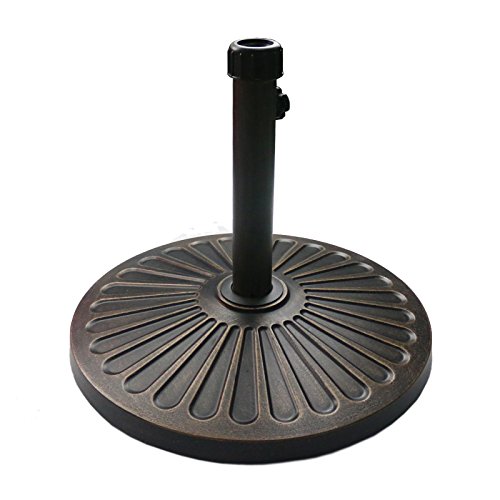
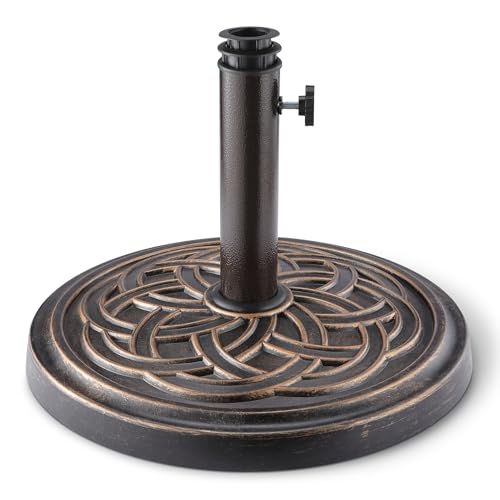
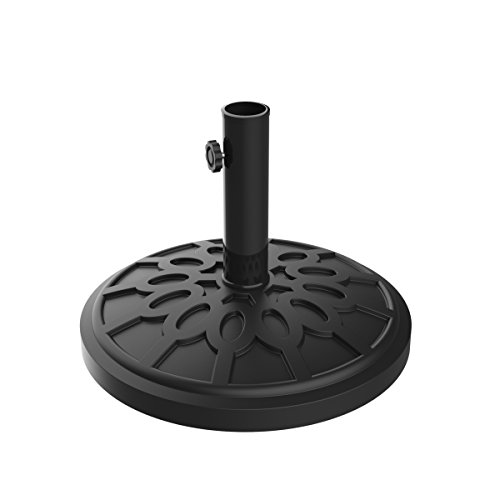
A flat plate base spreads weight over a wide disc, often with a decorative powder-coated finish. These suit table umbrellas that gain lateral support from the tabletop and work well on decks and paved patios where a low profile is preferred. Plate designs are typically the most space-friendly option in the entry-level and mid-range tiers.
Cross Bases
Cross or X-frame bases use four arms to extend the footprint in each direction. The open frame lets air and water pass through, which reduces pooling, and the wide stance resists twisting. Cross bases are a common choice for freestanding parasols and can often be weighted further with removable pavers. Look for reinforced welds and a rust-proof finish at the joints, which are the first points to corrode.
Cantilever and Offset Bases
Cantilever umbrellas hang the canopy from a side arm, so the entire load lands on the base with no table for backup. These stands are the most demanding: they need high mass, a broad footprint, and often a wheeled or handle-assisted design for repositioning. If you are considering an offset shade solution, our overview of standing umbrella base options explains how the arm geometry changes the load path.
Material Comparison: Steel, Cast Iron, and Aluminum
The metal you choose shapes the stand’s weight, finish durability, and maintenance routine. Each material has a clear strength.
Cast Iron
The densest common option, cast iron delivers maximum stability in a small footprint. It is heavy enough to resist tipping without extra weights, making it a top-tier pick for exposed, breezy patios. The trade-off is portability — moving a cast iron base usually takes two people. Choose models with a sealed powder coat to prevent surface rust at chips.
Powder-Coated Steel
Steel plate and cross bases balance mass with a slimmer profile. High-grade steel with a multi-layer powder coat handles seasonal outdoor exposure well and resists scratches better than bare metal. Steel is the most common mid-range and high-end material because it offers good value for its tier without sacrificing holding power.
Aluminum
Lightweight and naturally corrosion-resistant, aluminum suits balconies, rental spaces, and setups that need frequent repositioning. Because it is lighter, an aluminum base often relies on a wider footprint or add-on weights. It is an excellent choice in coastal climates where salt air attacks lesser finishes, provided the receiver and hardware are stainless.
Stainless Steel
Reserved for premium and professional-grade stands, stainless steel offers the best long-term corrosion resistance in humid or seaside environments. It pairs naturally with stainless outdoor furniture collections and is worth the investment if the base will live outdoors year-round near water.
Matching Base Weight to Canopy Size
Weight requirements scale with canopy span and exposure. As a working rule, compact table umbrellas up to roughly a small dining canopy can use an essential-tier plate base. Mid-range canopies covering a four-person table need a heavier steel plate or a cross base with room for added pavers. Large market umbrellas and any cantilever design belong in the high-end or commercial-grade tiers, where bases are engineered with reinforced cast construction and wider stances.
Wind exposure matters as much as size. A sheltered courtyard blocks much of the gust load, while an open lawn or rooftop terrace amplifies it. If your patio is exposed, step up one tier from the baseline recommendation. The same logic applies to stand height: a taller umbrella with a long pole creates more leverage at the receiver, so a heavier base is warranted. Our measurement reference can help you confirm pole diameter and canopy span before you commit.
Finish, Rust Resistance, and Hardware
The finish determines how long the stand looks new. Powder coating is the standard for quality metal bases because it bonds to the surface rather than sitting on top like paint. Look for a rust-proof finish on the base plate, the receiver tube, and every weld. Stainless fasteners are a strong signal of build quality, since ordinary zinc-plated bolts are usually the first components to corrode and seize.
Drainage also matters. Water collecting in a hollow receiver tube accelerates interior rust and can freeze and split the metal in cold climates. Stands with drainage holes, sealed caps, or removable collars last longer. If your base will face salt air, review our notes on sustainable and weather-resistant materials for additional context on coatings and recycled content.
Stability Features Worth Checking
- Receiver tube fit: Confirm the inner diameter matches your pole, or that a reducer sleeve is included. A loose fit causes wobble no amount of base weight can fix.
- Locking collar or thumb screw: A positive lock prevents the pole from rotating or lifting in gusts.
- Non-marking feet: Rubber or plastic pads protect deck boards and prevent the base from sliding on smooth stone.
- Weight ports: Slots for sand or pavers let you increase hold without changing the stand.
- Wheels or handles: Useful on cantilever stands that must be repositioned; look for lockable casters.
- Weld quality: Continuous welds at the tube-to-plate joint resist fatigue better than spot welds.
- Warranty: A multi-season finish and structural warranty signals confidence in the build.
Pairing the Stand With Your Setup
The stand should serve the whole seating arrangement, not just the umbrella. On a compact balcony, an aluminum plate base paired with a folding bistro table keeps the floor plan open. For a dining table with a center hole, a steel plate base is the natural companion — our guide to a white outdoor dining table with umbrella hole shows how the base sits beneath the tabletop. If you prefer a side-mounted shade, a dedicated umbrella side table can integrate the base and a drink surface into one footprint.
Freestanding lounging areas call for a heavier cross base, often combined with a standing umbrella base for offset canopies or a umbrella base with wheels when the umbrella needs to follow the sun across the day. For patios anchored by a small dining set, the practical combination is a plate base plus a table with a pre-cut hole, as described in our guide to a small outdoor patio table with umbrella hole.
If you are furnishing a complete shaded zone, pair the stand with the right parasol first. Our overview of sun shade for patio options and the guide to a solar outdoor umbrella explain how canopy type, tilt range, and lighting affect base selection. For poolside setups, a pool umbrella deserves a base rated for wind exposure and splash resistance.
Installation and Maintenance
Setup is straightforward once the parts are matched. Place the base on a level, solid surface, slide the pole fully into the receiver, and tighten the locking collar until the pole cannot rotate. If the stand includes weight ports, fill them only as directed — overfilling a sealed chamber can stress the welds. During storms, lower the umbrella and close the canopy, or remove the pole entirely, since even a commercial-grade base cannot hold a fully deployed canopy in high wind.
For routine care, wipe the base with a damp cloth and mild soap, then dry it fully. Touch up chips in the powder coat promptly with a matching touch-up pen to prevent rust from spreading. At the end of the season, inspect the receiver tube for standing water, check that fasteners turn freely, and store the base in a dry location if your climate brings hard freezes. A few minutes of care each season keeps a quality metal stand serviceable for many years.
Common Mistakes to Avoid
The most frequent error is under-sizing the base for the canopy. A light plate under a large market umbrella will lean in the first real gust, and repeated leaning fatigues the tilt joint. The second is ignoring pole diameter: a stand whose receiver is too wide lets the pole rattle, which wears the finish and loosens the lock. The third is skipping weight ports on a cantilever base — these designs assume ballast. Finally, many buyers overlook surface compatibility: a metal base dragged across composite decking can leave marks, so non-marking feet are not a luxury but a practical requirement.
Ready to Compare Metal Umbrella Stands?
Use the checklist above to shortlist stands by material, tier, and stability features, then review current options in our curated product section below.
Explore Metal Umbrella StandsFrequently Asked Questions
How heavy should a metal umbrella stand be?
Base weight should scale with canopy size and wind exposure. A compact stand suited to a small table umbrella is typically in the entry-level weight class, while freestanding stands designed for large cantilever canopies sit in the high-end and commercial-grade tiers with reinforced cast construction.
Is cast iron better than steel for an umbrella base?
Cast iron offers high density and excellent stability in a compact footprint, making it a top-tier choice for windy locations. Steel is more versatile and often used in plate-style bases where the weight is spread across a wider area. Both are durable when finished with a rust-proof coating.
Can a metal umbrella stand be left outside all year?
Most metal stands are weather-resistant, but longevity depends on the finish. Powder-coated and galvanized models handle seasonal exposure well. In coastal or freeze-prone climates, look for stainless hardware and a rust-proof finish, and consider storing the base during the harshest months.
Do I need a separate base for a table umbrella?
Table umbrellas rely on the table for lateral support, so a lighter base is often sufficient. Freestanding and cantilever umbrellas carry all the load in the base, so they require a heavier, reinforced stand. Match the stand type to the umbrella style rather than assuming one base fits all.