Small Outdoor Table and Chairs: The Complete Buyer's Guide
Everything you need to choose a compact patio set that fits your space, your style, and your lifestyle — without compromising comfort or durability.
START THE GUIDEWhy compact sets matter: A small outdoor table and chairs set transforms even the tightest balcony, porch, or patio into a functional retreat. Whether you're working with a city apartment, a narrow deck, or a cozy courtyard, the right compact set delivers dining, lounging, and entertaining value without overwhelming your square footage.
What You'll Learn in This Guide
How to Measure Your Outdoor Space for a Small Table and Chairs
Before you browse a single product listing, grab a tape measure and map out your area. The most common mistake buyers make is underestimating the clearance needed for chairs to pull out comfortably. A table may fit against a wall, but if guests can't slide their chairs back, the set becomes a frustration rather than an asset.
The 36-Inch Clearance Rule
Allow at least 36 inches (about 91 cm) of open floor space around the table's edge on every side where a chair will be used. This gives the average adult room to sit down, stand up, and move without scraping knees or walls. For a two-person bistro set tucked into a corner, you may only need clearance on two or three sides — but never skip this measurement.
Typical Footprints for Compact Sets
- 2-person bistro set: Table diameter of 24–30 inches; total footprint roughly 5 x 5 feet with chair clearance.
- 4-person small dining set: Table of 32–40 inches square or round; total footprint roughly 7 x 7 feet.
- Balcony bar-height set: Table of 24–32 inches square; footprint varies but plan for 30 inches of pull-back space per stool.
- Foldable or nesting set: Can collapse to as little as 2 x 3 feet when stored, ideal for micro-balconies.
Pro tip: Use painter's tape to outline the table and chair positions directly on your patio or balcony floor. Live with the outline for a day before committing to a purchase — it reveals awkward walkways and door swing conflicts you might otherwise miss.
Table and Chair Configurations That Work in Tight Spaces
Compact outdoor furniture comes in several smart layouts. Understanding the trade-offs helps you match the set to how you actually use your outdoor area.
Round vs. Square vs. Rectangular Tables
Round tables are the friendliest choice for small spaces because they eliminate sharp corners and allow chairs to be arranged at varied angles without wasted gaps. A small round patio table with 2 chairs can tuck into a corner more naturally than a rectangular equivalent. Square tables maximize surface area per inch of footprint and suit walls and railings. Rectangular tables work best along a balcony edge or against a fence where you can push one long side flush.
Two-Person Sets: The Sweet Spot for Balconies
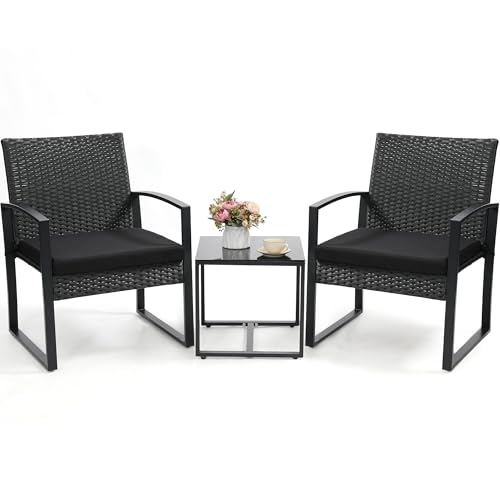
If your space is a balcony or a narrow porch, a two-person configuration is usually the most practical. A small outdoor table and chairs for balcony setups often features a 24-inch table with two compact chairs that nest or fold. Look for sets where chairs can push fully under the table to reclaim walking space when not in use.
Four-Person Sets: When You Need More Seating
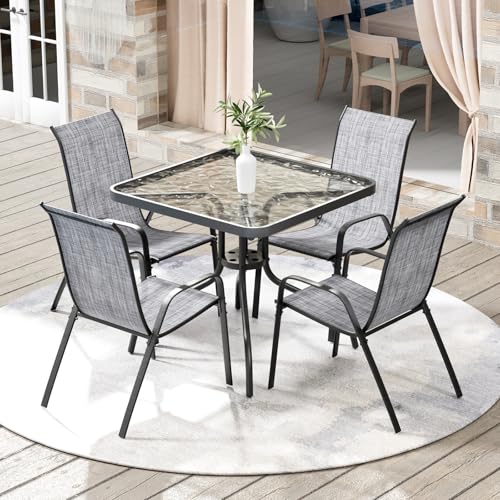
A small outdoor table and chairs for 4 is achievable in spaces as tight as 7 x 7 feet if you choose a 36-inch round or square table and chairs with slim profiles. Avoid armrests on all four chairs in very tight spots — at least two armless chairs allow easier entry and exit.
Bar-Height and High-Top Options
Elevated sets like a small outdoor high top table and chairs pair offer a space-saving advantage: stools tuck underneath more compactly than full dining chairs, and the vertical orientation feels natural on balconies with a view. Just confirm your railing height — you want the tabletop to sit near or slightly below the rail for safety and sightlines.
Material Comparison: What Holds Up Outdoors
Material choice determines how your set ages, how much maintenance it demands, and how it feels in daily use. Here's how the main options compare.
| Material | Durability | Maintenance | Best For |
|---|---|---|---|
| Powder-coated steel | High — resists rust and scratches | Low — wipe clean, occasional touch-up | Windy balconies; heavy-use patios |
| Cast aluminum | High — rust-proof and lightweight | Low — soap and water | Humid climates; easy rearranging |
| Teak and acacia wood | High when oiled; weathers to silver | Moderate — annual sealing recommended | Warm, natural aesthetics |
| Wicker and rattan (all-weather) | Moderate to high — UV-stabilized resin | Low — vacuum and rinse | Coastal and boho styles |
| HDPE resin | High — fade and moisture resistant | Very low — hose off | Low-maintenance households |
| Glass tabletops | Moderate — shatter risk; use tempered | Low but frequent — smudges show | Modern, airy visual effect |
For a deeper dive into frame construction and finish quality, our metal vs. aluminum furniture guide covers the metallurgy behind rust resistance and weight trade-offs. If wood is your preference, the wood furniture care guide explains sealing schedules and grain-level maintenance.
Buying Guide: Features That Separate Good Sets From Great Ones
Once size and material are settled, scrutinize the details. These are the specifications that experienced buyers check before clicking "add to cart."
Frame Welds and Joint Construction
On metal sets, run your eyes along every weld. Smooth, continuous beads indicate quality control; lumpy or porous welds invite moisture and eventual failure. Bolted joints should use stainless hardware. On wood sets, look for mortise-and-tenon or doweled joinery rather than staples alone.
Umbrella Compatibility
If shade matters, a small outdoor table with hole for umbrella is a practical upgrade. The hole (typically 1.5 to 2 inches in diameter) must align with a weighted base — a compact table alone won't stabilize a full-size umbrella in wind. Consider a small outdoor table and chairs with umbrella bundle if you want a matched, pre-tested combination.
Chair Weight Capacity and Comfort
Published weight capacities on compact sets range widely. Mid-range and premium tiers typically rate chairs at 250–300 lbs per seat with reinforced crossbars, while entry-level sets may publish lower figures or omit them entirely. Seat height matters too: standard dining height is 17–19 inches; balcony bar sets run 28–30 inches.
Stackability and Foldability
In a small space, storage is half the battle. Chairs that stack save floor area during off-season months, and drop-leaf or folding tables let you reclaim your patio for other activities. Our small balcony furniture sets overview highlights several nesting and folding designs.
Cushion Quality and Attachment
Outdoor cushions should use solution-dyed acrylic or olefin fabric with quick-dry foam. Check whether cushions tie down or use grip dots — loose cushions become projectiles in gusty weather. If you already own chairs, explore sets of 2 patio chairs with cushions to upgrade comfort without replacing frames.
Weather check: If your area sees frequent high winds, prioritize sets with weighted bases or the option to anchor the table. Lightweight aluminum frames are easier to move but more prone to tipping when unoccupied during storms.
Side-by-Side Tier Comparison
Market tiers describe relative positioning, not absolute figures. The right tier depends on how often you'll use the set, your climate, and how long you expect it to last.
| Tier | Typical Construction | Expected Service Life | Best For |
|---|---|---|---|
| Entry-level | Light steel or basic resin; stapled joints; thinner cushion foam | 2–4 seasons with care | Renters, occasional use, seasonal setups |
| Mid-range | Powder-coated aluminum or oiled acacia; welded frames; quick-dry cushions | 5–8 seasons | Year-round homeowners in moderate climates |
| Premium | Cast aluminum or teak; precision joinery; solution-dyed fabrics | 10+ seasons | Frequent entertaining, coastal or humid regions |
| Luxury | Marine-grade hardware, hand-finished frames, custom upholstery | 15+ seasons with maintenance | Design-forward spaces, long-term investment |
The jump from entry-level to mid-range usually delivers the biggest improvement in weather resistance and frame rigidity. Premium and luxury tiers refine comfort and aesthetics rather than raw durability. For most small-space owners, a well-chosen mid-range set offers the best balance of longevity and everyday livability.
Placement Ideas for Small Patios, Balconies, and Porches
Where you place the set matters as much as which set you choose. A few layout strategies make compact spaces feel intentional rather than cramped.
Define the Zone With a Rug
An outdoor rug visually anchors the dining or coffee zone and prevents chairs from scraping the deck surface. Choose a rug sized so that all chair legs remain on it when pulled out — a common design rule that prevents wobbling.
Corner and Wall-Hugging Layouts
For a small patio, pushing the table against a wall or railing with chairs on the open sides preserves circulation paths. A small table and chair set for porch arrangements often benefit from a bench on one side — a single bench replaces two chairs and frees depth. If benches appeal to you, our small outdoor bench guide covers compact options with storage.
Layering With Lighting and Planters
Compact sets leave little room for extra furniture, but vertical elements — outdoor lighting, hanging planters, and outdoor planters on rails — add ambiance without consuming floor area. A small patio side table with umbrella hole can double as a drinks station beside a bistro set.
Mix and Match for Flexibility
You don't need a matched set. Pairing a small round garden table with two sling outdoor chairs gives you a lightweight, repositionable arrangement — pull one chair into the sun for morning coffee, tuck both away when hosting a standing gathering. Sling chairs dry fast and pack flat, making them a favorite for balconies.
Frequently Asked Questions
How much space do I need for a small outdoor table and chairs?
A two-person set needs roughly 5 x 5 feet including chair pull-out space. A four-person set needs about 7 x 7 feet. Always measure 36 inches of clearance on every side where a chair will be used, and account for door swings and walkways.
What is the most durable material for a compact patio set?
Powder-coated aluminum and cast aluminum offer the best balance of rust resistance and light weight. HDPE resin is the most maintenance-free option. Teak is excellent for longevity if you're willing to oil it annually. Avoid untreated steel and non-UV-stabilized plastic in sun-exposed areas.
Can I leave a small outdoor table and chairs outside in winter?
Aluminum, resin, and teak sets can stay outside year-round in most climates, though covers extend their lifespan. Wood should be sealed before winter. Cushions and glass tops should be stored indoors or covered to prevent moisture damage and cracking.
Are bar-height sets better for small balconies?
They can be. Bar-height stools tuck under more compactly than dining chairs, and the elevated sightline works well with balcony railings. However, bar-height seating is harder for children and some adults to get in and out of. Standard height is more universally comfortable.
Should I buy a set with an umbrella hole?
If your space gets direct sun for more than a couple of hours a day, yes. An umbrella hole costs nothing extra and keeps your options open. Just remember to pair it with a weighted base rated for your umbrella size — a table alone won't hold a full umbrella in wind.
How do I keep chairs from damaging a wood or composite deck?
Use felt or rubber glides on chair legs, place a rug beneath the set, or choose chairs with wide, rounded feet that distribute weight. Avoid metal feet directly on wood — they can gouge and stain over time.