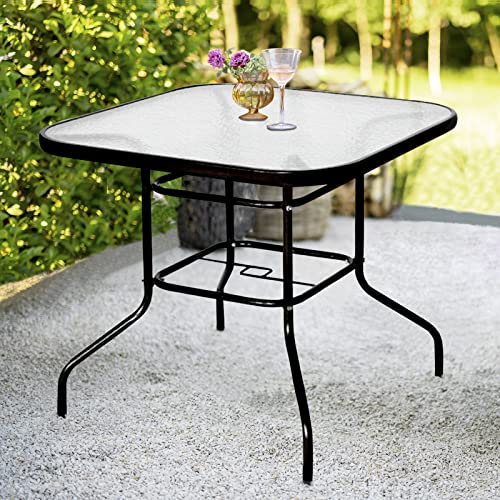
Small Outdoor Table with Hole for Umbrella: The Complete Buying Guide
Everything you need to choose a compact patio, balcony, or deck table with a secure umbrella hole — sizes, materials, stability, and the features that actually matter before you buy.
Explore Recommended TablesWhy this guide matters: A small outdoor table with a hole for an umbrella solves two problems at once — it gives you a compact surface for drinks and meals while anchoring shade exactly where you sit. But not all umbrella-hole tables are built the same. Hole diameter, frame weight, base compatibility, and top material all affect whether your setup stays steady on a breezy afternoon. This guide walks you through each decision so you can buy with confidence.
Quick Picks by Category
If you already know the style of table you want, these three starting points cover the most common small-space setups. Each represents a different balance of portability, durability, and visual style.
Best for Balconies & Tight Corners
A compact round or square table with a centered umbrella hole is the classic balcony solution. Look for a folding or nesting frame so the table can be stored during the off-season.
See balcony furniture sets →Best for Patios & Decks
A powder-coated metal or glass-top table with a reinforced hole collar offers the best mix of stability and easy cleaning for everyday outdoor dining.
Compare glass-top options →Best for Long-Term Outdoor Use
Solid wood or heavy-gauge metal tables with integrated base support are the long-term investment choice. They resist wobble and pair well with larger umbrellas.
View metal table options →What Exactly Is a Small Outdoor Table with an Umbrella Hole?
A small outdoor table with a hole for an umbrella is simply a compact table — typically between 20 and 36 inches across — with a circular cutout in the center of the tabletop. That cutout allows a patio umbrella pole to pass through, so the umbrella stands directly over the table rather than beside it. This arrangement keeps shade centered on your seating area and saves floor space compared with a freestanding umbrella and base.
The concept sounds simple, but the details matter. The hole diameter must match your umbrella pole, the table must be heavy enough to resist tipping, and the tabletop material must handle sun, rain, and repeated cleaning. Many buyers focus only on the tabletop shape and overlook the hole collar and base compatibility — two features that determine whether the setup feels solid or wobbly.
These tables come in several common configurations: a small round outdoor table with umbrella hole, a small square patio table with umbrella hole, and a small rectangular patio table with umbrella hole. Round tops suit conversational seating, square tops maximize surface area in corners, and rectangular tops work well against a wall or railing. There are also side-table versions, such as a small outdoor side table with umbrella hole, which are useful for holding a drink and a compact umbrella without dominating a small balcony.
Sizing Guide: Matching the Table to Your Space and Umbrella
The right size depends on three variables: available floor space, the number of people you seat, and the canopy diameter of your umbrella. A table that is too small for its umbrella creates a top-heavy setup, while a table that is too large defeats the purpose of a compact outdoor area.
| Table Size | Typical Seating | Recommended Umbrella Canopy | Best For |
|---|---|---|---|
| 20–24 inches (round or square) | 1–2 people | Up to about 6.5 ft | Balconies, small porches, coffee-style seating |
| 28–32 inches (round or square) | 2–4 people | About 7.5–9 ft | Small patios, decks, breakfast nooks |
| 32–36 inches (square or rectangular) | 4 people | About 9 ft | Compact dining areas, apartment terraces |
| Under 20 inches (side tables) | 0–1 (accessory surface) | Compact or half-umbrellas | Lounge-side shade, drink rest, narrow balconies |
A useful rule of thumb: the umbrella canopy should extend roughly 12 to 18 inches beyond the table edge on all sides to shade the seated area effectively. If the canopy is much wider than the table, wind leverage increases and a heavier base becomes necessary. Pairing a compact table with an oversized canopy is the most common cause of instability.
If your space is genuinely tight, a small outdoor table and chairs for balcony set often bundles matched proportions and saves you from guessing. For setups that need seating for two without bulk, a small outdoor bistro table and 2 chairs is a practical, space-efficient format.
Umbrella Hole Diameter: The Measurement Buyers Overlook
Most patio umbrella poles measure between 1.5 and 2 inches in diameter, and table holes are typically sized to match. That sounds forgiving, but a hole that is too large lets the pole shift and rattle, while a hole that is too small makes the umbrella impossible to insert. Before purchasing, confirm two numbers: your umbrella pole diameter and the table's specified hole diameter.
Better tables include a stabilizing collar, grommet, or insert ring around the hole. This ring reduces play between the pole and the tabletop and protects the table surface from scratches. If a table has a bare cutout with no collar, the umbrella will lean slightly and the edge of the hole can wear over time. A collar is a small feature with a meaningful effect on long-term stability.
Also consider where the hole sits relative to the table's center of gravity. On a small round table, a centered hole distributes the umbrella load evenly. On a rectangular table, the hole should also be centered — an off-center hole on a narrow table creates a tipping risk, especially with a larger canopy.
Tabletop and Frame Materials Compared
Outdoor tables face sun, rain, temperature swings, and repeated wiping. Material choice determines how well the table handles those conditions and how much maintenance it needs.
Powder-Coated Steel & Aluminum
Metal frames are the workhorses of small outdoor tables. Powder coating resists rust and scratches, and aluminum keeps weight manageable. Steel offers more heft for stability, while aluminum is easier to move. Look for a rust-proof finish and sealed joints.
Tempered Glass Tops
Glass tops are easy to wipe clean and reflect light, which helps small spaces feel more open. Tempered glass is far more durable than standard glass, but it still requires care around hard impacts. A small glass patio table with umbrella hole is a popular choice for modern balconies and patios.
Teak, Acacia & Other Hardwoods
Wood brings warmth and a natural look that suits both rustic and contemporary settings. Teak and acacia are naturally weather-resistant but benefit from periodic sealing. Wood tables are heavier than most metal tables, which helps resist umbrella leverage.
Resin & High-Density Polyethylene
These entry-level materials resist moisture, do not rust, and are easy to clean. They are well suited to covered balconies and low-exposure spaces. On open patios, check for UV stabilization to prevent fading over time.
If you want the classic metal-and-glass pairing, a small metal patio table with umbrella hole combines a sturdy frame with a clean top. For a natural look on a smaller footprint, a small round garden table in wood or wood-look material is a warm, versatile option.
Stability and Base Compatibility: The Real Safety Question
An umbrella table without proper anchoring is a wind hazard. The table hole centers the pole, but it does not anchor it. There are two common anchoring approaches, and the right one depends on your table's weight and design.
The first approach is an external weighted base that sits under the table, with the umbrella pole passing through both the base and the tabletop. This is the most common and most reliable setup for lightweight tables. The second approach is a table with an integrated base or a heavy pedestal frame designed to accept the pole directly. These are sturdier but generally heavier and more permanent.
- Use a weighted base rated for your umbrella's canopy size — larger canopies need more ballast.
- Place the table on a level surface; pavers and decking can shift, so check leveling periodically.
- Choose a table with a wider footprint if your area is exposed to gusts.
- Confirm the hole includes a stabilizing collar or grommet to reduce pole movement.
- Tighten any base bolts and check the umbrella's tilt mechanism before each season.
- Close or remove the umbrella during high winds rather than relying on the base alone.
For very compact spaces, a small patio side table with umbrella hole paired with a compact umbrella and a low-profile base can provide targeted shade over a lounge chair without occupying much floor area. If you are pairing the table with seating, browse patio chairs with cushions to complete a matched set.
Shape Selection: Round, Square, or Rectangular?
Shape affects traffic flow as much as aesthetics. Round tables soften tight corners and make it easier to move around the table in a compact area. Square tables use corner space efficiently and offer more usable surface per inch of width. Rectangular tables are best placed against a wall or railing, where they leave a clear walkway on one side.
For balconies, a small round patio table with 2 chairs is a classic, space-friendly pairing. If you need a bit more surface, a small round patio table with 4 chairs works for casual dining. Corner or wall placements often favor a small square patio table with umbrella hole. And when you want an all-in-one solution, a small outdoor table with umbrella and chairs set removes the guesswork around proportions and pole fit.
Pre-Purchase Checklist
Before you finalize a purchase, run through these checks. Each one addresses a common source of frustration after delivery.
- Measure the space twice: Confirm the table's diameter or width plus clearance for chairs and walkways.
- Match the hole to your pole: Confirm the table's hole diameter against your umbrella pole, ideally within a small tolerance.
- Check base compatibility: Verify that a weighted base fits beneath the table and that the pole length is sufficient.
- Review the weight: Heavier tables resist tipping; lighter tables need a heavier base.
- Inspect the finish: Look for powder coating, rust-proof treatment, or sealed wood, depending on material.
- Consider storage: Folding or nesting frames are helpful for seasonal spaces and small balconies.
- Plan for maintenance: Wood needs periodic sealing; metal and glass need routine wiping.
Frequently Asked Questions
What size umbrella hole should a small outdoor table have?
Most umbrella poles are between 1.5 and 2 inches in diameter, and table holes are sized to match. Always confirm both measurements before buying. A hole that is too large causes wobbling; one that is too small prevents insertion. A stabilizing collar around the hole is a valuable extra feature.
Do I need an umbrella base if my small table has an umbrella hole?
Yes, in most cases. The table hole centers the pole but does not anchor it against wind. A weighted base under the table, or an integrated base design, is essential for safety — especially with lightweight tables and larger canopies.
What materials are best for a small outdoor table with an umbrella hole?
Powder-coated steel and aluminum offer durability and rust resistance. Teak and acacia provide natural warmth with periodic sealing. Tempered glass tops are easy to clean and suit modern spaces. Resin is a practical entry-level choice for covered areas.
Can a small table with an umbrella hole hold a large patio umbrella?
It depends on the table's weight, base design, and canopy size. Small tables generally pair best with umbrellas up to about 7.5 to 9 feet in canopy diameter. Larger canopies catch more wind, so a heavier base and a stable frame are necessary. Check the table's specified maximum umbrella size.
How do I keep a small outdoor table with an umbrella hole from wobbling?
Place the table on a level surface, use a weighted umbrella base, and verify that the hole includes a stabilizing collar. If the table has adjustable feet, level it precisely. For lightweight tables, adding ballast to the base or choosing a model with a wider footprint improves stability.
Ready to Choose Your Small Outdoor Table?
Compare recommended tables with umbrella holes for balconies, patios, and decks — selected for stability, material quality, and small-space fit.
View Recommended Products