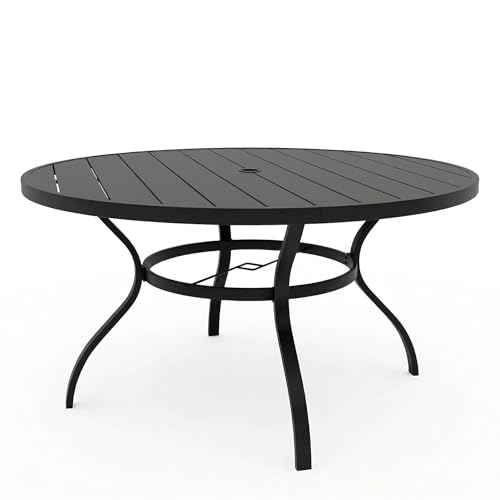
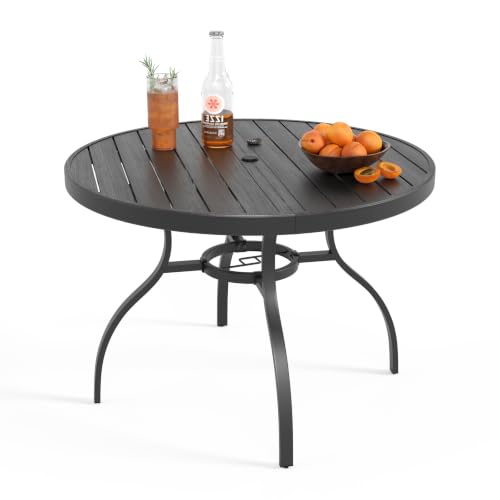
Why a Small Metal Patio Table with an Umbrella Hole Makes Sense
A dedicated umbrella hole is one of the most practical features you can add to a compact outdoor table. Instead of relying on a freestanding umbrella base that eats up floor space, the table itself anchors the umbrella pole, keeping the canopy centered over your seating area. On a small balcony or narrow porch, that saved footprint can be the difference between a usable setup and a cramped one.
Metal construction brings its own advantages. Aluminum, steel, and cast aluminum frames are generally more rigid than resin or wood in small formats, and powder-coated finishes resist moisture, UV exposure, and everyday scratches. For a table that stays outdoors through changing seasons, a metal build paired with a proper finish is a sound long-term investment.
If your space is especially tight, you may also want to compare this category against a small glass patio table with umbrella hole or a small round patio table with umbrella hole. Both share the same umbrella-centric layout but differ in surface feel, weight, and how they handle wind.
Key Criteria When Comparing Small Metal Patio Tables
Not every small metal table with an umbrella hole is built to the same standard. Use the following criteria to separate a solid choice from a compromise.
Market Tiers: Matching Construction to Your Needs
Instead of focusing on numeric figures, it helps to understand where a table sits in the market. The table below describes construction tiers you will encounter when shopping for a small metal patio table with an umbrella hole.
| Tier | Typical Construction | Best For |
|---|---|---|
| Entry-level | Lightweight tubular aluminum, thinner powder coating, simple stamped top | Seasonal use on a covered balcony or porch with light traffic |
| Mid-range | Thicker aluminum or steel frame, reinforced legs, better powder-coated finish | Year-round outdoor use in moderate climates and regular entertaining |
| Premium | Cast aluminum or high-grade steel, rust-proof finish, precise umbrella hole with reducer | Exposed patios, windy locations, and buyers who want a long-term investment |
| Luxury / commercial-grade | Heavy cast construction, architectural detailing, commercial-duty hardware | Hospitality settings or design-forward residential spaces with high use |
Mid-range models usually deliver the best balance for most homeowners: they are more rigid than entry-level frames and more portable than premium cast pieces. If your patio is fully exposed to wind and rain, moving up a tier is a worthwhile investment in durability.
Umbrella Compatibility: Getting the Hole and Base Right
The umbrella hole is only useful if the pole fits securely. Before buying, confirm three things: the hole diameter, the recommended umbrella canopy span, and whether the table requires a separate base. A table with a 1.5-inch hole will not accept a 1.75-inch pole without an adapter, and an undersized base can let a large canopy tip in a gust.
For compact setups, a 6 to 9 foot canopy is the typical pairing. A smaller canopy concentrates shade over a two-person table, while a larger canopy may overhang the table and catch more wind. If you plan to move the umbrella frequently, a table with a slightly wider hole and a reducer ring offers more flexibility.
Related compact configurations worth comparing include a small square patio table with umbrella hole, a small rectangular patio table with umbrella hole, and a small outdoor dining table with umbrella hole. Each shape changes how chairs tuck in and how much shade reaches the seating.
Stability, Wind, and Weighting Your Table
An umbrella acts like a sail, so the table-and-base combination must be heavy enough to resist tipping. Three factors matter most: the table's own weight, the spread of its legs, and the weight of the umbrella base. A heavy-duty steel frame with wide feet handles breezes better than a lightweight tubular frame, but even a sturdy table needs a properly rated base.
If your patio is exposed, consider a table with cross-bracing or a lower shelf that can hold additional weight. During strong gusts, lower or close the umbrella entirely. For tables without a built-in base, a filled umbrella stand is essential — check that the stand's pole collar matches your table's hole diameter.
Weather Resistance and Long-Term Care
Powder-coated aluminum is the most forgiving metal for outdoor use because it resists rust and handles temperature swings well. High-grade steel with a rust-proof finish is very stable but requires periodic inspection for chips. Cast aluminum sits at the premium end with excellent corrosion resistance and a solid feel.
Regardless of material, a few habits extend the table's life:
- Wipe the tabletop after rain to prevent standing water in the umbrella hole.
- Cover the table during off-seasons or prolonged storms.
- Touch up any chips in the powder coating before rust can start.
- Store the umbrella indoors during winter in freezing climates.
For a broader maintenance framework, the small outdoor table category guide covers cleaning routines that apply across materials.
A Practical Buying Checklist
Before you finalize a choice, run through this checklist to avoid the most common mistakes.
If you are still comparing table shapes and seating layouts, the small patio design guide and the small outdoor table and chairs overview can help you visualize how a compact metal table fits alongside seating.
Related Compact Outdoor Options
Your final choice may depend on how the table interacts with the rest of your setup. A few closely related categories are worth a look:
- small metal table and chairs for patio — a coordinated metal set for a cohesive look.
- small outdoor side table with umbrella hole — a secondary surface for drinks and small items.
- small outdoor coffee table with umbrella hole — a lower profile for lounge seating.
- small patio side table with umbrella hole — compact shade for a reading corner.
- small outdoor table with hole for umbrella — a broader overview of hole-compatible tables.