Swing Hammock Types and Which One Fits Your Space
Swing hammocks come in several forms, and the right pick depends on your available space, how you plan to anchor it, and how many people will use it. Below are the main categories, described by their market tier and typical role in a backyard setup.
Rope Swing Hammock
A classic woven rope seat suspended from a single point. Simple, lightweight, and easy to move. Best for casual use on a porch or under a sturdy branch. Entry-level models are straightforward but may need more frequent inspection of the ropes.
Fabric Seat Swing Hammock
A padded or woven fabric seat with a spreader bar for a wider, flatter sitting surface. Mid-range models often include weather-resistant fabric and reinforced stitching. A solid choice for daily use and shared seating.
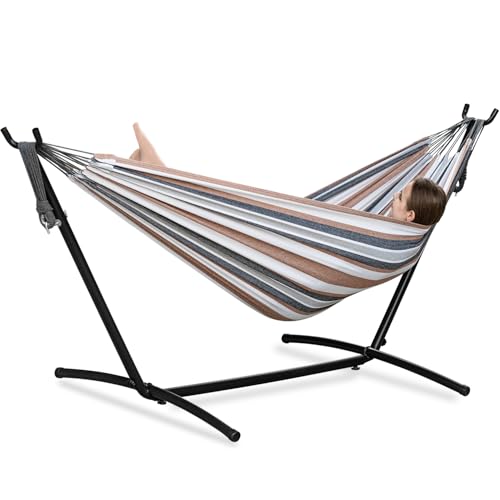
Hammock Chair with Stand
A complete set with a freestanding metal or wood stand. Premium versions use powder-coated steel or solid wood frames and solution-dyed fabric. Ideal when you want to place the hammock anywhere without drilling or tree anchoring.
Canopy Swing Hammock
Includes a built-in canopy or sunshade for added comfort in bright conditions. Luxury-tier models combine a sturdy frame, UV-resistant fabric, and refined stitching. Well-suited to open patios and poolside areas.
If you are still deciding between a seated swing and a full lounger, our swing hammock chair guide explains how a chair-style seat compares to a full-body hammock. For setups that need a dedicated frame, a stand-alone hammock stand pairs naturally with most swing models.
Materials That Hold Up Outdoors
Outdoor exposure is the biggest factor in how long a swing hammock stays comfortable and safe. Focus on three components: the fabric or rope, the spreader bar or frame, and the suspension hardware.
| Material | Best For | Durability Notes |
|---|---|---|
| Solution-dyed acrylic | Year-round outdoor use | Excellent fade and mildew resistance; premium tier |
| Olefin fabric | Humid or coastal climates | Moisture-resistant and quick-drying; mid-range to premium |
| Polyester blend | Balanced comfort and durability | Soft hand feel with good UV stability; mid-tier |
| Cotton canvas | Sheltered porches | Very comfortable but needs protection from rain; entry to mid-range |
| Woven rope (polyester or manila) | Classic look | Inspect regularly; synthetic rope resists rot better than natural fiber |
| Powder-coated steel frame | Stands and spreader bars | Rust-resistant when coating is intact; heavy-duty option |
| Solid wood frame (teak, acacia) | Natural backyard styles | Long-term investment when sealed and maintained |
For suspension hardware, look for stainless steel carabiners, galvanized chains, and reinforced eyelets. These small parts carry the full load, so they deserve as much attention as the fabric. If you are exploring broader material choices for your yard, our guide to sustainable materials covers eco-conscious options.
Setup and Anchoring: Trees, Beams, and Stands
Where you hang the hammock matters as much as the hammock itself. A safe installation protects both the user and the structure. Below is a practical checklist before you anchor anything.
- Confirm the anchor point is rated for at least the hammock's weight capacity plus a safety margin.
- Choose a live tree branch at least 8 inches in diameter, or a reinforced porch beam rated for swinging loads.
- Use a tree strap rather than rope directly against bark to avoid damaging the tree.
- For beam mounting, install a heavy-duty eye bolt through solid wood — never through drywall or hollow trim.
- Leave enough clearance on all sides so the hammock does not hit walls, furniture, or railings.
- Check hardware seasonally for rust, wear, or loosening.
If trees and beams are not an option, a freestanding stand is the most flexible route. A swing with stand bundle takes the guesswork out of matching frame and hammock. For tree-mounted setups, our swing from tree guide covers safe strap and hardware choices. If you are building a larger backyard relaxation zone, a swing for the backyard overview helps you plan multiple seating spots.
Comfort, Size, and Weight Capacity
Comfort is where swing hammocks differ most. Three factors drive the experience: the seat depth, the spreader bar width, and the suspension balance.
A deeper seat with a slight recline suits reading and long lounging sessions. A wider spreader bar reduces pressure on the shoulders and makes it easier to sit side by side. For shared use, look for models rated at 350 pounds or more, and check that the frame or anchor point matches that rating. Premium and luxury tiers typically offer the most refined balance and smoother motion.
If you plan to relax with a book, pair the hammock with shade. A sun shade for patio keeps the seat comfortable during midday, and a swing seat canopy adds overhead coverage directly to the hammock. For evening use, string lights and solar lights extend the usable hours without wiring.
Quick Comparison by Tier
| Tier | Best For | Typical Features |
|---|---|---|
| Entry-level | Occasional use, small porches | Rope seat or basic fabric, simple hardware |
| Mid-range | Daily personal use | Wider spreader bar, weather-resistant fabric, reinforced stitching |
| Premium | Families and shared seating | Powder-coated frame, solution-dyed fabric, higher weight rating |
| Luxury | Design-focused patios | Canopy, refined stitching, premium wood or steel frame |
For a fuller picture of how higher tiers compare in build quality, our splurge vs save breakdown explains where upgrades make a practical difference. If your outdoor area is tight, space-saving furniture ideas help you fit a hammock alongside seating and dining pieces.
Frequently Asked Questions
What is the difference between a swing hammock and a traditional hammock?
A swing hammock hangs from a single anchor point and lets you sit upright with back support, while a traditional hammock stretches between two trees or posts for full-body lounging. Swing hammocks are easier to install in smaller spaces and work well with a dedicated stand.
Do I need a stand for a swing hammock?
Not always. If you have a sturdy tree branch or a reinforced porch beam, you can hang a swing hammock directly. A stand gives you flexibility to move the hammock around the yard and avoids damaging trees or structural beams.
Which fabric is best for a swing hammock?
Solution-dyed acrylic and olefin fabrics resist fading and mildew well, making them ideal for year-round outdoor use. Cotton is comfortable but needs shelter from rain. Polyester blends offer a balance of durability and softness for mid-range models.
How much weight can a swing hammock hold?
Most quality swing hammocks support between 250 and 400 pounds. Always check the manufacturer's rated capacity and confirm that your anchor point or stand is rated for at least the same load.
Can a swing hammock stay outside in winter?
Weather-resistant models can stay out in mild climates, but bringing the fabric and ropes indoors during freezing or stormy months extends their lifespan. A protective cover helps if the hammock must remain mounted.
Ready to Choose Your Swing Hammock?
Use the checklist above to match type, material, and anchoring method to your space. When you are ready to compare specific models, explore the recommended options below.
Explore Recommended Models