Swing for the Backyard: The Complete Guide
Everything you need to choose, place, and enjoy a backyard swing. Compare hanging, freestanding, bench, and hammock styles, then pick the right fit for your outdoor space with confidence.
EXPLORE SWING TYPESWhy a backyard swing earns its place: A swing turns unused lawn or patio space into a destination. It invites slower mornings, shaded afternoons, and quiet evenings, and it works as a focal point that anchors the rest of your outdoor layout. This guide walks through the main swing categories, the materials that last, the safety details that matter, and the placement choices that keep a swing comfortable for years.
The Main Types of Backyard Swings
Backyard swings fall into a few broad families. Each one suits a different yard size, mounting situation, and seating style. Understanding the distinctions early makes the rest of the decision much simpler.
Tree & Beam Hanging Swings
The classic backyard swing hangs from a sturdy tree limb or a reinforced beam. It offers a natural, traditional feel and a wide, smooth arc. Anchoring quality and limb health are the deciding factors, and a swing from tree setup should always use rated hardware and straps that protect the bark.
Freestanding Swing with Stand
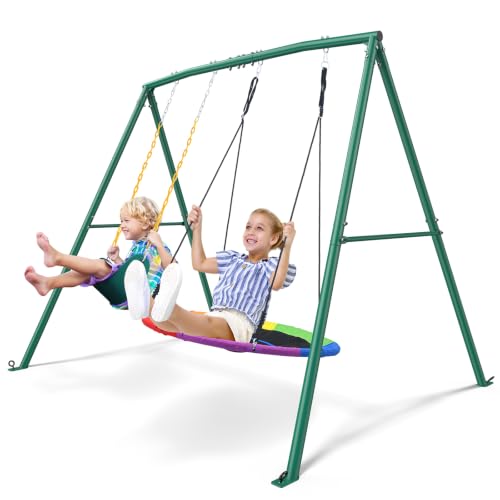
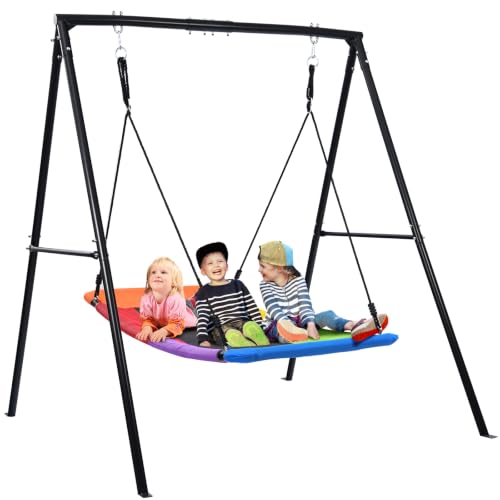
A swing with stand needs no tree and no structural anchor. The frame carries the load, so placement is flexible across lawn, deck, or patio. These sets are the most dependable choice for renters, new yards, and spaces without mature trees.
Porch & Bench Swings
A swing bench seats two or more and reads as outdoor furniture rather than a play item. It suits porches, pergolas, and covered patios. Cushions and a canopy upgrade comfort, while a swinging porch bench brings that front-porch feel to a backyard setting.
Hammock & Chair Swings
A swing hammock or swing hammock chair trades bench seating for a cocoon-like recline. These are compact, easy to reposition, and especially good for reading corners. A stand-alone hammock stand removes the need for trees entirely.
Outdoor Swing Beds
An outdoor swing bed is the lounge-grade option: a flat, cushioned platform that seats or sleeps several people. It demands more floor area and a stronger frame, but it becomes the social center of a patio or poolside layout.
Camping & Travel Swings
A swing camping chair folds down and travels easily, making it useful for picnics, tailgates, and rental properties. It is not a permanent backyard fixture, but it extends the swing habit beyond the yard.
How to Choose the Right Backyard Swing
Start with the practical constraints of your yard, then work toward style. The order matters: a beautiful swing that does not fit or cannot be safely anchored will not get used.
- Measure the footprint first. Mark the swing's full travel arc on the ground with string or chalk. A swing needs clear space in front and behind, not just under the seat. For compact yards, look at space-saving furniture approaches such as hammock chairs and narrow bench swings.
- Match the mount to your yard. No suitable tree means a freestanding frame or a reinforced pergola beam. Never hang from a limb that is cracked, dead, or under ten inches in diameter.
- Pick a tier that fits your use. An entry-level swing suits occasional use and light seating. Mid-range models typically add better hardware, thicker cushions, and more stable frames. Premium and luxury tiers focus on solid hardwood, marine-grade hardware, and weather-resistant finishes built for long-term exposure.
- Check the frame and hardware spec. Look for welded steel or aluminum frames, rust-proof finishes, and rated chains or straps. On hanging models, the suspension hardware matters as much as the seat itself.
- Plan for weather. Cushions should be solution-dyed and quick-drying. Wood needs a sealant schedule; metal needs coated fasteners. A removable canopy or a shaded placement extends the usable season.
- Think about seating depth. Deep seats suit lounging, while shallower benches suit conversation and easy standing. Try the seat height against your own leg length before committing.
Comparing Swing Styles at a Glance
The table below summarizes how each swing family performs across the factors that matter most. Use it as a starting filter, then dig into the category that fits your yard.
| Style | Best For | Mounting | Space Needs | Typical Tier |
|---|---|---|---|---|
| Hanging tree swing | Mature yards with a strong hardwood limb | Tree limb or beam | Moderate; needs clear arc | Entry-level to mid-range |
| Freestanding swing with stand | Renters, patios, yards without trees | Self-supporting frame | Large footprint; flexible placement | Mid-range to premium |
| Porch / bench swing | Covered patios, pergolas, porches | Ceiling or beam | Linear wall or ceiling space | Mid-range to luxury |
| Hammock chair | Reading corners, small patios | Tree, beam, or stand | Compact | Entry-level to mid-range |
| Swing bed | Poolside lounging, entertaining | Frame or beam | Large; needs open area | Premium to luxury |
Materials That Hold Up Outdoors
Material choice drives how a swing ages. Solid hardwoods such as teak and cedar bring warmth and repairability; they also need periodic sealing and re-oiling. Powder-coated steel and aluminum resist rust and hold their shape well, which makes them a dependable frame choice for freestanding sets. Synthetic resin wicker over metal combines a woven look with lower maintenance. Fabric seats should be UV-stable and quick-drying, and suspension hardware should be stainless or galvanized. If longevity is the priority, the premium and high-end tiers generally use heavier-gauge frames, better fasteners, and finishes designed for continuous sun and rain.
For a broader look at durable outdoor builds, see our guide to sustainable materials, and for long-term care patterns that apply to any swing, the notes on splurge vs save help set expectations by tier.
Placement, Safety, and Comfort
Placement is where most backyard swing plans succeed or fail. A swing needs a clear arc, level ground, and a mounting point rated for dynamic load, not just static weight. Keep at least three to four feet of open space in front and behind the swing's travel. For hanging swings, maintain roughly eight feet of clearance between the anchor and the ground so the seat clears when moving. On a freestanding frame, set the feet on firm, level ground and check the stabilizers after the first week of use. Suspension hardware should be rated, inspected seasonally, and replaced if any link shows wear. If the swing sits in full sun, a canopy or a shaded spot keeps the seat comfortable and slows material aging.
If your swing will share space with an existing seating area, consider how it reads alongside nearby pieces. A bench swing pairs naturally with a stone garden bench or a teak garden bench in a garden setting, while a hammock chair works well near a quiet corner with a rattan table lamp for evening light.
Pairing Your Swing with the Rest of the Yard
A swing rarely stands alone. In a garden zone, it sits comfortably near a teak bench or a stone garden bench to form a small seating cluster. On a patio, a swing bench can anchor one end while a dining set anchors the other. In compact spaces, a swing hammock chair makes better use of a corner than a full bench. Lighting matters too: a rattan table lamp or a strand of string lights turns a swing into an evening destination rather than a daytime-only feature.
Frequently Asked Questions
What is the best type of swing for a small backyard?
A freestanding swing with a compact stand or a hanging hammock chair works best for small backyards. These styles require less clearance than a full porch swing and can fit on a patio or narrow lawn area.
Do I need a tree to hang a backyard swing?
No. Freestanding swings with their own frame are a solid alternative when no suitable tree is available. If you do hang from a tree, choose a healthy hardwood limb at least ten inches in diameter and use proper swing hardware.
What material is most durable for an outdoor swing?
Teak, cedar, and powder-coated steel or aluminum are among the most durable options. Synthetic resin wicker over a metal frame also holds up well in varied weather, while fabric seats should be solution-dyed and UV-resistant.
How much clearance do I need around a backyard swing?
Plan for at least three to four feet of clear space in front of and behind the swing's arc. For hanging swings, keep a minimum of eight feet between the anchor point and the ground so the seat clears comfortably when in motion.
Can a backyard swing stay outside year-round?
Many can, provided the frame is rust-resistant and the cushions are removable or quick-drying. In harsh winters, remove fabric components and inspect suspension hardware before the next season. A cover extends the life of wood and woven seats.
Final Checklist Before You Commit
Before you settle on a model, confirm four things: the swing's full travel arc fits your space, the mounting method is realistic for your yard, the frame and hardware match your weather conditions, and the seat depth suits how you plan to use it. If all four line up, the rest is style. A well-chosen swing becomes the piece everyone gravitates toward, and it rewards a little planning with years of everyday use.