Teak Garden Bench: The Complete Buying, Placement & Care Guide
Everything you need to know before choosing a teak garden bench — from wood grades and joinery to placement, weathering, and long-term maintenance. Research with confidence, then buy with clarity.
Explore the GuideWhy teak stands apart: Teak is a naturally dense hardwood with a high oil content that resists moisture, insects, and rot — making it one of the most trusted materials for outdoor benches. This guide walks you through the details that separate a bench that lasts a season from one that becomes a permanent garden fixture.
What Makes a Teak Garden Bench Different?
A teak garden bench is an outdoor seating piece built primarily from Tectona grandis, the hardwood commonly known as teak. Unlike softer woods that need aggressive sealing, teak contains natural oils and silica that slow water absorption and deter termites. Left untreated, it weathers to a soft silver-grey patina; oiled or sealed, it retains a warm golden-brown tone. Both looks are considered desirable, and the choice is largely aesthetic.
Because teak is dimensionally stable, benches built from it resist the warping, cracking, and splintering that plague lower-grade outdoor wood. That stability is why teak furniture is often described as a long-term investment rather than a disposable seasonal purchase. If you are comparing materials broadly, our guide to teak furniture covers how benches fit into the wider teak furniture family.
Key Buying Factors Before You Choose
Buyers researching a teak garden bench usually already know they want teak — the real questions are about grade, construction, size, and finish. Work through these factors in order.
1. Wood Grade and Source
Teak is graded by the proportion of heartwood (the dense inner wood) versus sapwood (the softer outer layer). Benches described as premium or high-end tier typically use a high heartwood ratio, which correlates with better rot resistance and tighter grain. Look for benches labeled as plantation-grown or sustainably harvested — these are more consistent in quality and better for long-term supply.
2. Construction and Joinery
Joinery is where quality separates quickly. Mortise-and-tenon joints, doweled frames, and reinforced corner blocks signal a solid build. Staples and screws alone are a warning sign. Check whether the bench uses stainless steel or galvanized hardware — plain steel fasteners will corrode and stain the wood over time. A heavy-duty frame with cross-bracing underneath the seat is a good indicator that the bench will hold its shape for years.
3. Size and Seating Capacity
Garden benches range from compact two-seaters to long statement pieces. A two-seat bench generally fits a small patio corner or balcony; three-seat benches suit primary garden focal points; longer benches work well along walls, pergolas, or long borders. Always measure the intended spot and leave clearance for legroom and walking paths — the same discipline covered in our measurement guide.
4. Finish: Natural, Oiled, or Sealed
Natural (untreated) teak ages to silver-grey and needs the least intervention. Oiled teak keeps its warm tone but requires periodic reapplication. Factory-sealed teak offers the longest initial protection but may need refinishing as the coating wears. None of these options is inherently superior — the right choice depends on how much maintenance you want and which look you prefer.
5. Back Style and Armrests
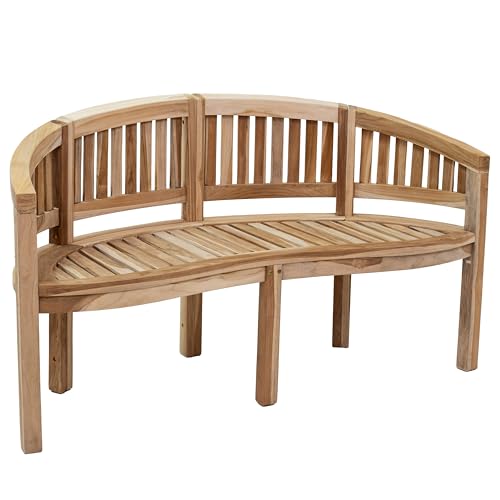
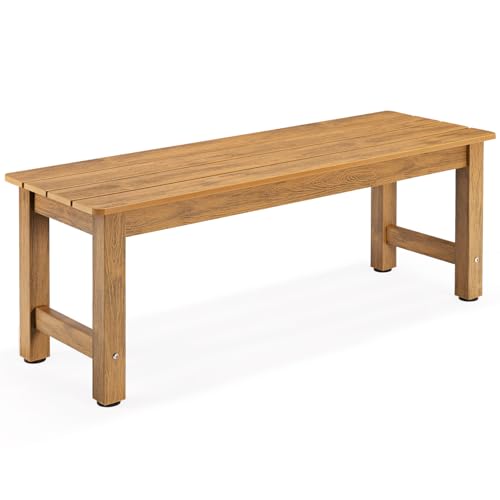
Benches come with contoured backs, slatted backs, or flat backs, and with or without armrests. Contoured backs and armrests improve comfort for longer sitting sessions; flat, armless designs are easier to tuck under a wall or pair with a side table. If comfort and posture matter most, prioritize a curved backrest with lumbar support.
Bench Tiers at a Glance
Use this tier framework to orient yourself. Tiers describe relative market position and construction ambition — not a specific number.
| Tier | Typical Construction | Best For | Maintenance Profile |
|---|---|---|---|
| Entry-level | Thinner slats, simpler joinery, mixed heartwood/sapwood | Casual seating, sheltered porches, first outdoor bench | Moderate; benefits from periodic oiling |
| Mid-range | Solid heartwood sections, mortise-and-tenon joints, stainless hardware | Primary garden seating, daily use, family patios | Low to moderate; occasional cleaning |
| Premium | High heartwood ratio, reinforced frame, precision joinery, curved back | Statement garden focal points, long-term outdoor use | Low; natural weathering or light oiling |
| Luxury / commercial-grade | Furniture-grade teak, engineered joinery, refined finishing | Formal gardens, hospitality settings, multi-generation use | Minimal; premium resilience and finish longevity |
Placement and Design Ideas
A teak garden bench is both a seat and a design anchor. Placed thoughtfully, it draws the eye and gives the garden structure. Consider these common placements:
- Under a pergola or arbor: Creates a shaded destination and pairs well with climbing plants. Our pergola guide covers structural options.
- At the end of a garden path: A classic focal point that rewards the walk and frames the view beyond.
- Beside a fire pit: Extends evening use; see fire pit options for pairing advice.
- Along a patio edge or low wall: Defines the boundary between hardscape and planting.
- On a porch or veranda: A sheltered position slows weathering and stretches the maintenance interval.
Pair the bench with complementary teak seating when you want a coordinated look — teak Adirondack chairs and teak lounge chairs both work alongside a bench in a garden setting. For a more formal arrangement, teak dining chairs can complete a coordinated outdoor room.
Care and Maintenance That Actually Matters
Teak is forgiving, but a few habits make a measurable difference to lifespan and appearance.
Clean Gently
Wash with mild soap and water using a soft brush. Avoid pressure washers, which raise the grain and strip natural oils.
Oil If You Want Color
Apply teak oil once or twice a year if you prefer the golden-brown look. Skip it if you like the silver-grey patina.
Cover During Harsh Seasons
A breathable cover protects against prolonged rain and winter debris. Our weatherproofing guide explains breathability.
Address Loose Joints Early
Tighten or repair any movement as soon as it appears — small fixes prevent structural wear over time.
For a broader maintenance framework that applies to all outdoor furniture, see our outdoor care hub.
Teak vs Other Bench Materials
Teak is not the only option, and understanding the alternatives sharpens your decision.
| Material | Strengths | Trade-offs |
|---|---|---|
| Teak | Natural rot resistance, dimensional stability, ages gracefully | Higher upfront market position than many woods |
| Stone | Extremely durable, sculptural presence | Heavy, harder to move; see stone garden bench |
| Metal | Strong frames, slim profiles | Can heat up in sun; rust risk if coating fails |
| Resin / synthetic | Lightweight, low maintenance | Less natural patina; may fade over years |
If you are weighing a bench against other garden seating, our swing bench guide covers a more dynamic alternative, while garden bench overviews put teak in a wider context.
Common Buying Mistakes to Avoid
- Ignoring heartwood content: A bench with too much sapwood will weather unevenly and lose durability faster.
- Skipping the hardware check: Non-stainless fasteners corrode and stain teak; verify before buying.
- Underestimating size: A bench that is too large crowds a path; too small looks lost in a large garden. Measure the space and the sightlines.
- Over-oiling: Excess oil can attract dust and feel tacky. One or two light coats per year is enough.
- Placing on uneven ground: Rocking from an uneven surface stresses joints. Level the footing or use adjustable feet.
Ready to Compare Teak Garden Bench Options?
Browse curated teak garden bench listings and compare construction, size, and finish details side by side before you decide.
View Teak Garden Bench OptionsFrequently Asked Questions
Final Thoughts
A teak garden bench is one of the few outdoor purchases that genuinely improves with age. Choose a bench with solid joinery, a high heartwood ratio, and hardware that will not corrode — then place it where it will be used, not just admired. With basic cleaning and a light maintenance rhythm, it will serve as a garden anchor for years. If you are still exploring seating options, our teak bench guide and teak garden chairs pages offer further context before you commit.