Comfortable Outdoor Furniture No Cushions: The Complete Guide
Skip the removable pads and discover patio seating that stays genuinely comfortable in every season. Learn which frames, materials, and designs deliver cushion-free comfort that lasts.
Explore Materials & DesignsWhy Homeowners Choose Cushion-Free Outdoor Furniture
Outdoor cushions are one of the most common sources of frustration in backyard living. They absorb moisture, fade under UV exposure, collect dust between fabric fibers, and usually need to be stored indoors when rain is in the forecast. For many homeowners, the appeal of comfortable outdoor furniture no cushions comes down to a simple trade: a little more attention to ergonomic design in exchange for far less ongoing upkeep.
Modern cushion-free furniture is not the rigid, unforgiving patio seating of decades past. Manufacturers now shape seats with contoured profiles, flexible sling suspensions, and breathable woven materials that support the body while remaining completely weatherproof. The result is furniture that looks finished straight out of the box and stays ready to use every day of the year.
This approach suits busy households, pet owners, coastal properties, and anyone who prefers a clean, architectural look over layered textiles. If you have been weighing both options, our comparison of comfortable outdoor furniture with cushions against cushion-free designs can help you decide based on how you actually use your space.
Best Materials for Cushion-Free Comfort
Material choice determines almost everything about how cushion-free furniture feels and how long it lasts. The best options share three traits: they resist moisture, they do not become excessively hot or cold on contact, and they hold their shape under repeated use.
Teak and Cedar Wood
Natural hardwoods like teak and cedar are among the most comfortable cushion-free choices because wood naturally warms to body temperature rather than staying cold like metal. Teak in particular develops a smooth, silvery patina and resists rot and insects without chemical treatment. Well-made cedar Adirondack chairs demonstrate how traditional woodworking shapes a contoured seat and back that support posture without any padding at all.
Resin Wicker and High-Density Polyethylene
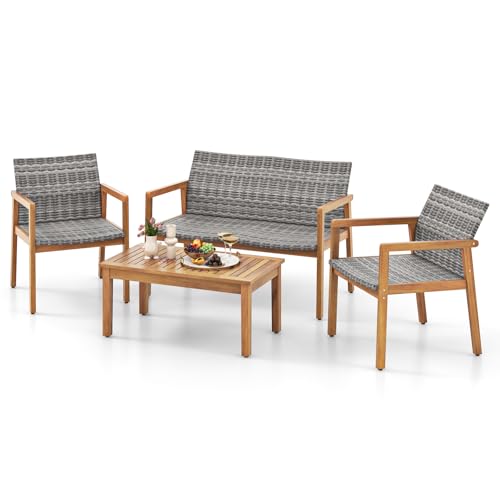
Woven resin wicker offers a springy, slightly flexible surface that distributes weight evenly. Higher-grade polyethylene weaves stay supple in cold weather and do not become brittle under sun exposure. This material works especially well for lounge seating and dining chairs where a gently yielding surface is desirable.
Powder-Coated Aluminum and Steel
Metal frames are light, strong, and virtually maintenance-free. The important detail is the coating: a properly cured powder coating prevents rust and reduces heat buildup. Metal works best when paired with a sling seat or an open-weave back that keeps air flowing and prevents the surface from becoming uncomfortably hot in direct sun.
Sling Fabric
Sling seating uses a tensioned, breathable fabric suspended across a frame. The fabric flexes slightly under weight, providing a supportive, hammock-like feel that many people find more comfortable than a flat wooden seat. Modern sling fabrics are solution-dyed, meaning color is locked into the fibers and resists fading.
| Material | Comfort Character | Weather Behavior | Best For |
|---|---|---|---|
| Teak / Cedar | Warm to the touch, firm with contoured shaping | Excellent rot resistance, ages gracefully | Traditional patios, dining, lounging |
| Resin Wicker | Gently yielding, even weight distribution | UV-stable weaves resist fading and cracking | Lounge sets, conversation seating |
| Powder-Coated Aluminum | Rigid but lightweight, depends on seat shaping | Rust-proof when coating is intact | Modern decks, small balconies |
| Sling Fabric | Flexible suspension, breathable support | Solution-dyed fibers resist moisture and fading | Poolside, dining, everyday use |
For a broader look at material trade-offs across frame types, our guide to composite outdoor furniture covers how engineered materials compare with natural wood and metal over time.
Designs That Deliver Comfort Without Cushions
The shape of the seat matters more than the material alone. A well-designed cushion-free chair uses geometry and tension to support the body, while a poorly designed one leaves you shifting after ten minutes.
Contoured Seats and Lumbar Curves
Look for seats with a subtle dip at the rear and a raised front edge, which together hold you in place and prevent sliding forward. A gently curved backrest that follows the natural line of the spine provides lumbar support without any padding. Adirondack-style seating is the classic example, and you can see the principle applied across classic Adirondack chair designs.
Sling and Suspension Seating
Sling chairs and loungers replace padding with tension. The fabric or mesh surface conforms slightly to your body, which distributes pressure and avoids hard contact points. This is why sling-style comfortable patio chairs without cushions are so popular around pools and decks.
Wide Seats and Generous Armrests
Width matters. A seat that is slightly wider than you expect feels more relaxed and allows you to change position comfortably. Solid armrests at the right height give you a place to rest your forearms and make getting up easier for guests of varying mobility.
Rockers and Gliders
Motion adds comfort. A smooth rocking or gliding mechanism turns a simple seat into something people gravitate toward. Models like comfort rocker chairs show how a well-balanced base can make cushion-free seating feel genuinely restful.
Staying Comfortable in Hot and Cold Weather
One of the strongest arguments for cushion-free furniture is seasonal versatility. Because there are no removable pads, there is nothing to store when temperatures drop or humidity rises. But the material still affects how the surface feels against your skin.
Summer: Managing Heat and Breathability
In hot climates, dark metal and tightly woven surfaces can absorb heat and become uncomfortable. Light-colored sling fabric, open-weave wicker, and natural wood all stay cooler. Shade from an umbrella or pergola also reduces surface temperature dramatically. Pairing cushion-free seating with a properly positioned patio umbrella keeps the seat comfortable through the hottest part of the day.
Winter: Avoiding Cold Shock
Wood stays warmer to the touch than metal in cold weather. If you live in a region with cool evenings, resin wicker and teak are more pleasant than bare aluminum. For extended outdoor use in cold seasons, a small removable seat pad can be added temporarily, but it is not necessary for basic comfort.
Rain and Humidity
Cushion-free furniture shines in wet climates because there is nothing to dry out. After a rain shower, a quick wipe is usually all that is needed. Sling fabric drains quickly, and properly finished wood sheds water without absorbing it.
If you are furnishing a smaller space where weather exposure is unavoidable, our guide to comfy outdoor chairs for small spaces covers compact cushion-free options that fit balconies and narrow decks.
Maintenance That Actually Stays Simple
The maintenance advantage of cushion-free furniture is real, but it is not zero-maintenance. A small routine keeps the furniture comfortable and extends its service life considerably.
- Rinse and wipe regularly. A damp cloth removes dust and pollen before they work into seams and joints.
- Inspect joints and fasteners. Tighten any loose bolts at the start of each season to keep the frame stable and safe.
- Refresh wood annually. A light cleaning and optional sealant keeps teak and cedar smooth and prevents surface cracking. Our guide on cleaning weathered teak outdoor furniture walks through the process step by step.
- Cover or store during long off-seasons. Even weatherproof furniture benefits from protection during extended periods of disuse.
Compared with the cycle of washing, drying, and storing fabric cushions, this routine is minimal. That is precisely why so many homeowners find cushion-free furniture easier to live with over the long term.
Frequently Asked Questions
Is outdoor furniture without cushions actually comfortable?
Yes. Modern cushion-free designs use contoured seats, flexible sling suspensions, and weatherproof materials like resin wicker and teak that provide firm, supportive comfort without the maintenance of removable pads.
Which materials are best for cushion-free patio furniture?
Teak, cedar, powder-coated aluminum, resin wicker, and high-density polyethylene are the most durable choices. They resist moisture, UV damage, and temperature swings, which makes them ideal for year-round outdoor use without fabric covers.
How do I keep cushion-free furniture comfortable in hot and cold weather?
Choose breathable materials that stay cool in summer, such as sling fabric and open-weave wicker, and look for frames that do not become painfully cold in winter. Adding a small removable seat pad is optional but not required for everyday comfort.
Can cushion-free furniture work for dining sets?
Absolutely. Sling dining chairs and contoured wooden chairs are common in outdoor dining. The key is seat depth and back angle. Our overview of comfortable outdoor furniture includes dining and lounge categories so you can match the style to your space.
Is cushion-free furniture suitable for coastal areas?
It is often the better choice. Salt air and humidity degrade fabric cushions quickly, while marine-grade aluminum, teak, and resin wicker handle coastal conditions well with minimal care.
Ready to Choose Cushion-Free Furniture?
Use the guide above to match materials and seat designs to your climate and daily routine. When you are ready, compare the recommended options below to find the right fit for your patio.
View Recommended Options