Large Outdoor Rug Buying Guide: Sizes, Materials & Placement
Everything you need to choose a durable, well-proportioned rug that anchors your patio, deck, or porch and holds up to sun, rain, and daily foot traffic.
Why a large rug matters: A well-sized outdoor rug does more than add color. It defines the conversation zone, protects decking and pavers from scratches, keeps feet cooler on hot surfaces, and makes even an open patio feel like a finished room. This guide explains how to size, choose, place, and care for a large outdoor rug so you can buy with confidence.
Why Choose a Large Outdoor Rug?
A large rug is the single fastest way to make an outdoor space feel intentional rather than improvised. Beyond aesthetics, it delivers several practical benefits that smaller mats cannot match:
- Defines the living zone. A rug visually separates seating from walkways, which is especially useful on an open plan minimalist deck or a long, narrow balcony.
- Protects the surface underneath. Woven backing absorbs grit and reduces scratches on composite decking, wood boards, and stone pavers.
- Improves comfort. A rug softens hard flooring underfoot and reduces heat transfer on sunny afternoons.
- Cushions slips and falls. A thicker weave or a rug pad adds a little give, which is a real benefit for households with children or older guests.
- Ties the design together. A single large rug can harmonize mismatched furniture, unify color schemes, and anchor pieces like an outdoor patio sofa and a modern outdoor coffee table.
How to Choose the Right Size
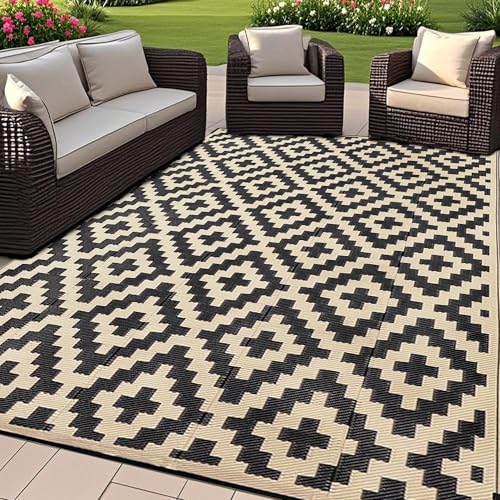
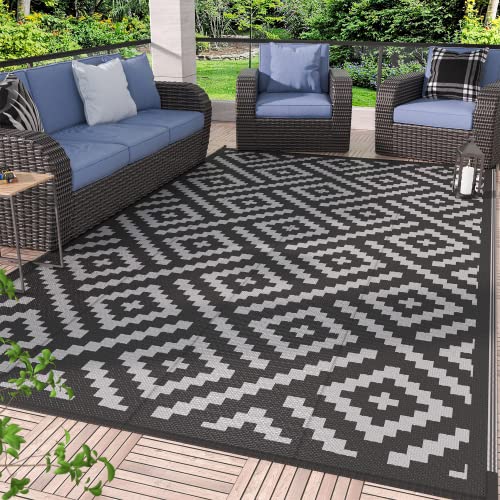
Sizing is where most buyers go wrong. The rule of thumb is simple: the rug should be large enough that all furniture legs sit fully on it, or at least the front legs of every seat. If chairs slide off the edge when pulled out, the rug is too small.
Measure the footprint of your furniture arrangement first, then add roughly two feet of margin on every side. Below is a practical reference table by layout type.
| Layout Type | Typical Rug Size | Best For |
|---|---|---|
| Small conversation set (2–3 seats) | 5 x 8 ft | Balconies, compact cozy outdoor chairs for small spaces |
| Four-seat dining set | 6 x 9 ft to 8 x 10 ft | A four-person outdoor dining set |
| Six-seat dining set | 8 x 10 ft to 9 x 12 ft | Six-piece dining sets and round tables |
| Eight-seat dining or large sectional | 9 x 12 ft to 10 x 14 ft | Eight-seat dining sets and L-shaped sectionals |
| Full lounge zone with fire pit | 10 x 14 ft or custom | Conversation sets and fire pit lounges |
For a dedicated dining area, a rug that extends several inches beyond the table edge under all chairs is ideal. For lounge zones, you can be more flexible: front legs on the rug is acceptable, though full coverage looks more polished and protects more flooring.
Best Materials for a Large Outdoor Rug
Material choice determines how the rug handles sun, rain, mildew, and foot traffic. Below is a comparison of the most common options, organized by tier rather than any numeric measure.
| Material | Tier | Best For |
|---|---|---|
| Polypropylene | Essential to mid-range tier | Full sun and rain exposure; easy to clean and quick to dry |
| PET (recycled plastic) | Mid-range tier | High-traffic decks; excellent UV resistance and stain resistance |
| Recycled plastic weave | Mid-range to high-end tier | Open patios and pool-adjacent zones; very durable construction |
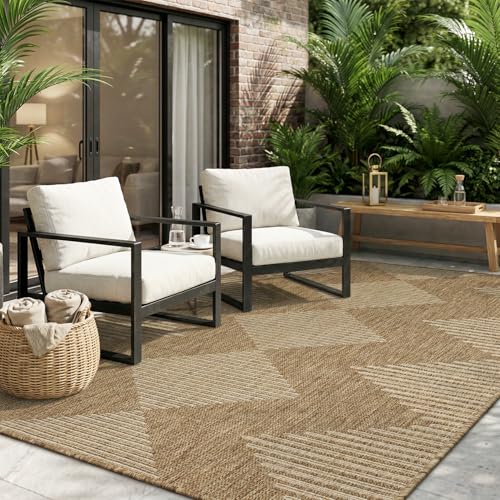
| Polypropylene-natural blends | Balanced tier | Covered porches and semi-sheltered patios; softer hand feel |
| Jute and sisal | Balanced tier (covered use only) | Covered porches and sunrooms; avoid direct rain exposure |
Key point: Weather-resistant synthetics are the safest default for uncovered spaces. Natural fibers look beautiful but should stay under a roof. If you want a softer texture in a fully exposed area, look for a polypropylene blend with a woven finish rather than pure natural fiber.
Placement Strategies for Patios, Decks, and Porches
Where and how you lay the rug matters as much as the size. Consider these approaches:
- Center on the main function. Position the rug under the primary furniture group—dining table, sectional, or fire pit lounge—rather than trying to cover the entire hardscape.
- Leave a walkway border. On decks, leave a strip of bare flooring at the edges so traffic does not constantly cross the rug.
- Use orientation to stretch a space. Placing the long side of the rug parallel to the longest wall makes narrow patios feel wider.
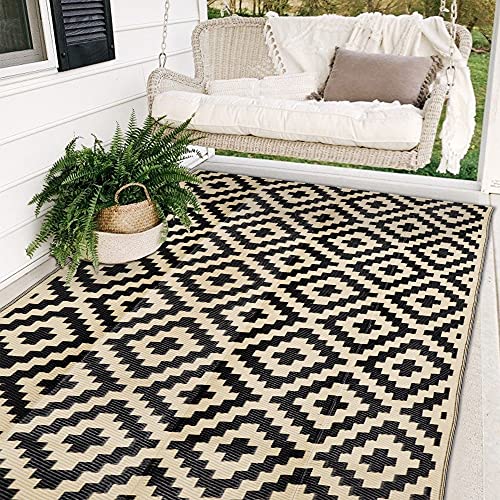
- Align with doorways. On porches, align the rug with the entry so it feels like part of the room rather than an afterthought.
- Layer with a pad. A non-slip pad improves grip, adds cushioning, and helps the rug lie flat over time.
For dining areas, a rug beneath a large outdoor dining table with bench and chairs will be the visual anchor of the space. For lounging, position the rug so it sits beneath a lounge furniture grouping and extends past the front edge of the coffee table.
Cleaning and Maintenance Tips
A large outdoor rug is a long-term investment, and basic care keeps it looking good for years:
- Shake or vacuum regularly. Remove grit before it works into the weave. A quick pass with a broom or leaf blower handles most debris.
- Rinse and air dry. For synthetic rugs, a garden hose rinse followed by air drying in the sun handles most stains and odors.
- Spot clean promptly. Blot spills rather than scrubbing, especially on natural fiber blends.
- Rotate seasonally. Rotating the rug evens out sun fade and wear patterns.
- Store smart. Roll rather than fold for storage, and ensure the rug is completely dry before putting it away for winter.
- Pair with the right accessories. A good rug pad and, for fire pit areas, a fire pit cover and proper ember screen reduce accidental damage.
For broader care guidance, our garden care resources cover seasonal maintenance for outdoor surfaces and textiles.
What to Look For When Buying a Large Outdoor Rug
Use this checklist to compare options on equal footing:
- UV resistance. Look for explicit fade-resistant or UV-stabilized claims, especially for full-sun patios.
- Mold and mildew resistance. Synthetic materials are generally the safest bet; natural fibers need ventilation.
- Backing quality. A woven or rubberized backing grips better and resists curling. Cheap backings degrade quickly in sun.
- Edge finishing. Reinforced or bound edges prevent fraying at high-traffic borders.
- Pile height. Low pile is easier to clean and better for dining chairs; higher pile feels softer underfoot.
- Colorfastness. Dark and saturated colors fade visibly over time; heathered neutrals hide it better.
- Weight and stability. Heavier rugs lay flatter and resist wind. Pair any rug with a pad for best results.
If your rug is part of a larger layout refresh, coordinate it with durable seating like high-quality wicker patio furniture or a covered outdoor sofa so the whole space feels cohesive.
Common Mistakes to Avoid
- Buying too small. The most frequent error. Measure twice, and size up if you are between sizes.
- Ignoring drainage. On decks with gaps and patios with slopes, a breathable rug and pad avoid trapped moisture.
- Skipping the pad. Without a pad, rugs slide, curl at the corners, and wear faster.
- Using indoor rugs outside. Indoor weaves are not built for rain or UV, and they degrade quickly in exposed spaces.
- Placing natural fiber in the rain. Jute and sisal stay beautiful only under cover.
- Forgetting color fade. If your space is open to the sun, favor lighter or heathered tones.
Frequently Asked Questions
What is the best size for a large outdoor rug under a patio dining set?
For a standard six-seat dining set, an 8 x 10 ft rug gives enough coverage so that chairs remain on the rug even when pulled out. Larger sets benefit from 9 x 12 ft rugs. Measure your table footprint and add roughly two feet on every side before ordering.
What materials are best for a large outdoor rug?
Polypropylene and PET are the most popular weather-resistant options, while recycled plastic rugs offer excellent durability for high-traffic decks. Natural fibers such as jute work well only on covered porches, while polypropylene blends are the most balanced choice for full sun and rain exposure.
How do I keep a large outdoor rug from blowing away?
Use a non-slip rug pad sized to the rug, and place heavy furniture anchors on at least two corners. On open decks, choose a heavier woven construction or a rug with a rubberized backing, and avoid lightweight flatweaves in windy locations.
Can a large outdoor rug go directly on grass or gravel?
It can, but performance depends on drainage and material. A weather-resistant polypropylene rug over a permeable pad works best, while natural fiber rugs should be avoided on bare soil. Remove leaves and debris regularly to prevent moisture buildup.
Final Thoughts
A large outdoor rug is one of the most effective upgrades for any patio, deck, or porch. Match the size to your furniture footprint, choose a weather-resistant material suited to your climate, and invest in a proper pad. Do those three things and the rug will define the space, protect the surface beneath it, and look intentional from the first season onward.
Ready to compare options? Browse our recommendations below to find a rug that fits your layout and exposure level.
Related reading: Outdoor patio seating sets · Furniture sections with fire pit · Outdoor coffee tables · Round patio coffee tables · Lounge chairs for tanning · Outdoor fire tables