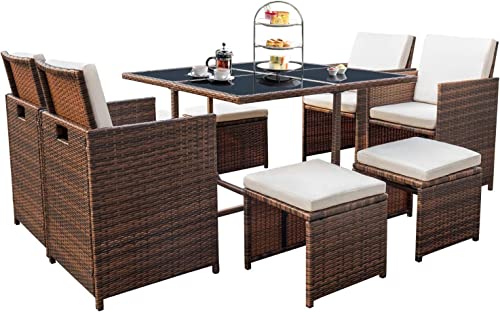
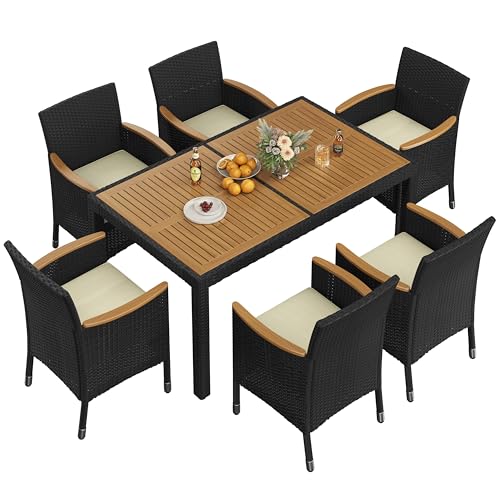
Matching Outdoor Dining and Conversation Sets: The Complete Guide
Create one cohesive backyard with coordinated dining and lounge zones. Learn how to match frames, finishes, cushion tones, and proportions so your patio feels intentional, comfortable, and ready for everyday use and entertaining.
Explore the Layout GuideThe core idea: A matched dining and conversation set does not mean buying identical pieces. It means choosing a shared visual language — frame finish, cushion tone, and material — then sizing each zone so both functions feel natural on the same patio.
Homeowners researching this topic usually already know they want a dining table and some form of lounge seating. The real question is how to combine the two without the patio looking like two separate showroom floors pushed together. The answer comes down to three controls: a shared material story, a restrained palette, and honest measurements of your available footprint.
This guide walks through those controls in order. It covers how to read a patio for zoning, which materials and finishes coordinate most reliably, how to size a dining set against a conversation set, and which details — from a dining table with an umbrella hole to a large outdoor umbrella — tie the whole arrangement together.
Why Matching Sets Matter for a Cohesive Patio
A patio is read as a single visual scene, not as separate furniture categories. When the dining set and conversation set share a consistent finish and cushion family, the eye moves smoothly across the space and the patio feels larger and more resolved. When they clash, each zone competes for attention and the overall result feels smaller and more cluttered.
Matching also has practical benefits. Coordinated frames usually share the same maintenance needs, so one cleaning routine and one set of covers serves both zones. Cushion covers in a shared palette can be swapped between the dining chairs and the lounge sofa, which simplifies replacement when one cover wears out. For readers still evaluating core pieces individually, our guide to matching patio dining and conversation sets covers the fundamentals before you commit to a specific combination.
Zoning Your Patio: Dining Zone vs Conversation Zone
Before choosing any furniture, divide the patio into functional zones on paper. A dining zone is task-oriented: chairs need room to pull out, and the table needs clearance on all sides. A conversation zone is social-oriented: seating should face inward, with low tables and easy circulation between seats. Treating these as two distinct rooms within one open area is the single most reliable way to make a matched set work.
Dining Zone
Anchored by a table with consistent chair spacing. Plan generous pull-out clearance so diners can move comfortably, and place the table near the cooking area or the entrance to the home for easy serving.
Conversation Zone
Anchored by a sofa, loveseat, or paired lounge chairs around a low table. Seats should angle toward each other, and the grouping should stay compact enough that voices carry naturally.
Transition Zone
A clear walkway between the two groups. Keeping this path open is what makes a combined layout feel spacious instead of crowded, and it is the first thing to protect when space is tight.
Use a simple working guideline rather than precise diagrams: keep roughly 36 inches of clearance around dining chairs and lounge seating, and keep the walkway between zones unobstructed. If those two conditions cannot be met, reduce the number of seats rather than shrinking the walkway — circulation is what makes a matched set feel usable rather than decorative.
For tighter footprints, a round dining table that seats eight can sometimes replace a rectangular arrangement more efficiently, and a sectional couch with a pull-out bed can consolidate seating and occasional sleeping into one footprint. If the patio is genuinely small, read our space-by-space guidance before forcing two zones into a single area.
Choosing Materials That Match Across Both Sets
Material is the strongest matching signal, because it is visible from a distance and it dictates how both zones age. Pick one primary frame material and one accent material, then hold to that combination across the dining and conversation sets. Our material guide and expanded materials reference go deeper on care and durability for each option.
| Frame Material | Matching Strength | Best For | Care Level |
|---|---|---|---|
| Powder-coated aluminum | Excellent — consistent finish across collections | Mid-range and premium coordinated sets | Low |
| High-grade steel | Strong — heavy-duty and commercial-grade options | High-traffic family patios | Moderate (rust watch) |
| Weather-resistant wicker / resin | Very strong — natural texture unifies mixed pieces | Lounge-heavy layouts and conversation zones | Low |
| Teak and hardwoods | Strong — warm tone ties dining and lounge together | High-end tier and long-term investment patios | Seasonal oiling |
| Mixed metal and wood | Moderate — needs a deliberate shared accent | Design-forward patios with an intentional palette | Moderate |
Cushion and Fabric Coordination
Cushions are where most matching attempts succeed or fail. A reliable approach is to choose a neutral base for the larger surfaces — the dining chair seats and the conversation sofa — and a single accent tone for small pieces such as lumbar pillows or a dining bench pad. Avoid introducing more than two accent colors across both zones.
- One neutral, one accent: the simplest and most durable matching strategy.
- Shared fabric family: solution-dyed acrylics hold color consistently across both sets.
- Repeat, do not duplicate: reuse the accent tone in a different scale rather than buying identical pillows for every seat.
- Weather-ready covers: store cushions in a waterproof container such as a waterproof outdoor cushion storage box to keep both zones looking matched season after season.
Sizing the Dining Set Against the Conversation Set
Proportion is the second strongest matching signal after material. A heavy, visually dense dining table paired with a delicate lounge frame will look mismatched even if the finishes are identical. Aim for frames of comparable visual weight: if the dining table has a substantial top and thick legs, choose lounge pieces with solid arms and a grounded base.
Seat count should also stay in proportion to the patio rather than to the guest list. A dining table for eight paired with a two-seat conversation set reads as unbalanced; either reduce the dining seating or expand the lounge group with a coordinated outdoor lounge set. Where space allows, a dining table with an integrated fire pit can act as the transitional piece between the two zones, serving meals and evening conversation from a single anchor.
If the layout is generous, a large rectangular cantilever umbrella can shade the dining zone while a large patio umbrella covers the lounge, provided both share the same canopy tone. Matching shade across zones is an often-overlooked detail that makes a combined layout look planned rather than assembled.
Matching Checklist Before You Buy
- Confirm one primary frame finish and hold it across both sets.
- Choose a neutral base cushion and no more than two accent tones.
- Measure pull-out clearance around the dining table and lounge seats.
- Protect a clear walkway between the two zones.
- Compare visual weight of the dining and lounge frames, not just color.
- Decide on one shade family for umbrellas and canopies.
- Plan storage for cushions and covers so both zones stay presentable.
- Verify that replacement cushions are available for both collections.
Homeowners who work through this checklist before ordering usually avoid the most common failure mode: buying two individually attractive sets that never quite read as one space. If you are still comparing individual anchors, a large outdoor dining table with bench and chairs is a strong starting point because the bench silhouette repeats naturally in lounge seating.
Common Matching Mistakes to Avoid
- Matching color but not scale. Identical finishes on mismatched proportions still look wrong.
- Over-matching. Duplicating every cushion and accessory makes a patio feel like a catalog page rather than a home.
- Ignoring the transition zone. A blocked walkway undermines even a well-matched layout.
- Skipping shade planning. Umbrellas and canopies are highly visible and should share a tone family.
- Forgetting storage. Without a plan for cushions and covers, both zones degrade at different rates and stop looking matched.
Each of these is correctable before purchase and difficult to correct afterward. Treat the checklist above as the final gate before you commit to a combination.