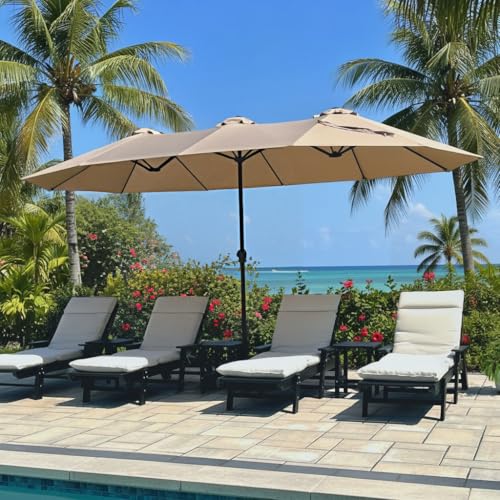
Large Outdoor Umbrella: The Complete Buying Guide
A large outdoor umbrella transforms an exposed patio into a comfortable, shaded retreat. This guide explains canopy sizes, frame materials, wind ratings, stand options, and setup strategies so you can choose the right shade solution with confidence.
Why a Large Outdoor Umbrella Matters
Shade is the foundation of a usable outdoor space. Without it, midday sun can make even a beautifully furnished patio uncomfortable and can fade fabrics, crack cushions, and overheat hard surfaces. A large outdoor umbrella solves this by casting broad, adjustable shade over dining tables, lounge areas, and poolside seating.
Unlike fixed structures such as pergolas or awnings, an umbrella is movable, seasonal, and adaptable. You can reposition it as the sun moves, store it during storms, and change the canopy down the road without replacing the entire frame. For many homeowners, it is the single most efficient shade investment they can make.
This guide is written for buyers in the research stage. You already know you want shade — now you need to understand the differences between canopy shapes, tilt mechanisms, frame grades, and stand types so that your final choice performs well for years.
Choosing the Right Canopy Size and Shape
Canopy size is measured by diameter for round umbrellas and by width-by-depth for rectangular models. The right size depends on the furniture you need to cover and how much overhang you want around it.
Matching Canopy Size to Furniture
- Compact dining tables (4 seats): A 9-foot round canopy typically covers the table with modest overhang.
- Standard dining tables (6 seats): A 10-foot round canopy offers comfortable coverage and shading for seated guests.
- Large dining sets (8+ seats): A 11–13-foot round canopy or a rectangular canopy sized to the table length works best. Rectangular umbrellas pair naturally with long tables such as a long dining table with bench and chairs.
- Lounge and conversation areas: Rectangular or square canopies provide even shade over sofas and chairs rather than a single central pool of shadow.
Round vs. Rectangular vs. Square
Round canopies are the most common and suit round or small dining tables. Rectangular canopies are ideal for long tables and rectangular seating zones, and they look intentional rather than improvised. Square canopies bridge the two, working well over square tables and compact lounge layouts. If your table has a central hole prepared for shade, review the options in our guide to a large outdoor dining table with umbrella hole.
Overhang and Coverage Rules
As a general rule, aim for at least 12–18 inches of canopy overhang beyond each edge of the table so that seated guests are shaded without the canopy obstructing sightlines. Taller users and wider tables benefit from a slightly larger canopy. If you need maximum coverage, cantilever designs can span wider areas without a center pole.
Frame Materials: Aluminum, Wood, and Steel
The frame determines how long the umbrella lasts, how heavy it is to move, and how well it resists rust. This is where buyers see the clearest differences between tiers.
| Frame Material | Market Tier | Best For |
|---|---|---|
| Powder-coated aluminum | Mid-range | Everyday patios, coastal areas, easy repositioning |
| Thicker-gauge aluminum with reinforced ribs | Premium | Windy locations, large canopies, long-term use |
| Hardwood (eucalyptus, teak, acacia) | Premium to luxury | Traditional and cottage-style patios, visual warmth |
| Steel | Entry-level to mid-range | Stable fixed setups, budget-conscious shade |
Aluminum is the workhorse material because it resists rust and stays manageable in weight, even in large sizes. Look for a durable construction with reinforced ribs and a rust-proof finish on the joints and tilt mechanism. Hardwood frames feel substantial and pair beautifully with natural materials, but they require periodic sealing and should be stored during harsh winters. Steel is strong but heavier and more prone to corrosion if the finish chips, so it is best reserved for sheltered locations.
For a broader comparison of frame and fabric options across furniture categories, see our material guide.
Wind Ratings, Vents, and Canopy Fabric
A large canopy acts like a sail. Understanding wind performance before you buy prevents the most common umbrella failure: bent ribs and torn fabric after a gust.
Vents Reduce Lift
Single- or double-vent canopies let air escape through the top instead of lifting the entire umbrella. For any exposed location, a vented canopy is a meaningful upgrade. Some premium models use a wind-release or breakaway system that allows the canopy to collapse inward under extreme gusts rather than snapping the frame.
Fabric Quality
Solution-dyed acrylic and high-grade polyester are the two main canopy fabrics. Solution-dyed acrylic holds color best against UV exposure and resists mildew when cleaned properly. Polyester with a UV-resistant coating is a solid choice for mid-tier models and often feels lighter. Avoid uncoated fabrics that fade within a season. A canopy with a high UPF rating also protects guests from UV exposure, not just glare.
When to Replace a Canopy
If your frame is still solid but the fabric has faded, stretched, or torn, you do not need a whole new umbrella. A large outdoor umbrella replacement canopy restores shade and appearance at a fraction of the effort of a full replacement.
Wind Safety Practices
- Close the umbrella during storms and high-wind forecasts.
- Use a weighted base appropriate to the canopy size — larger canopies demand heavier bases.
- Never leave a cantilever umbrella extended overnight in gusty conditions.
- Position the umbrella so wind strikes it side-on where possible.
Umbrella Stands and Base Weight
The stand is often overlooked, yet it is the component that keeps your shade upright. A base that is too light for the canopy size is the leading cause of tip-overs.
Center-pole umbrellas use a base that sits directly under the table or freestanding on the patio. Cross-base stands with weight plates are common for freestanding setups. For tables with a center hole, a through-table stand or a plate base under the table works well. Cantilever umbrellas use a heavier offset base, sometimes with wheels for repositioning — these are typically commercial-grade or premium-tier products because the engineering demands are higher.
If you want a dedicated base that matches a freestanding setup, review options in our guide to a lawn umbrella stand. For dining configurations, pairing the canopy with the right table is equally important — see our overview of a large outdoor dining table with umbrella hole and a large round patio table with umbrella hole.
Center-Pole vs. Cantilever vs. Offset Umbrellas
Center-Pole Umbrellas
The classic design. The pole runs through or beside the table center, and the canopy tilts for sun tracking. Best for dining tables with a center hole and for smaller footprints. Entry-level and mid-range models dominate this category.
Cantilever Umbrellas
The canopy extends from a side arm, leaving the area beneath completely free of a pole. This is the best choice for lounge seating, large dining sets, and poolside layouts where a center pole would obstruct movement. Cantilever models are typically mid-range to premium or commercial-grade due to the heavier frame and base. A large rectangular cantilever patio umbrella is especially effective over long tables and sectional seating.
Offset and Tilting Models
Many center-pole umbrellas offer push-button or crank tilt to follow the sun. Premium models add dual-tilt or collar-tilt mechanisms for more precise positioning. A large rectangular patio umbrella with stand is a practical all-in-one option for buyers who want a complete setup.
Comparing the Major Types
| Umbrella Type | Tier | Best For |
|---|---|---|
| Center-pole with tilt | Entry-level to mid-range | Dining tables with umbrella hole |
| Cantilever / offset | Premium to commercial-grade | Lounge areas, large dining sets, poolside |
| Wooden market umbrella | Premium | Traditional patios and cottage styling |
| Solar-lit umbrella | Mid-range | Evening entertaining without extra lighting |
Placement and Setup for Different Outdoor Spaces
Where you place the umbrella matters as much as which one you buy. Consider sun direction during the hours you actually use the space. In most yards, midday and early afternoon sun arrives from a consistent angle, so position the canopy to intercept it before it reaches seating.
Patios and Decks
On a patio, place the umbrella so the base does not create a trip hazard near walkways. If you have a covered lanai or screened patio, a shade canopy is usually redundant — learn more in our lanai patio guide. On open decks, choose a vented canopy and a weighted base.
Poolside
Poolside umbrellas benefit from rust-proof finishes and quick-dry fabrics. Place bases away from the water edge so they are not knocked into the pool. For beach or travel setups, a large beach umbrella is a more portable, sand-anchored alternative.
Dining Areas
For dining, the umbrella should shade the table surface and the seated guests, not just the center. Rectangular canopies along the table length are especially effective. If your table seats eight or more, review options in a large round outdoor dining table seats 8 and pair it with an appropriately sized canopy.
Lounge and Conversation Zones
For sofas, chairs, and chaise lounges, a cantilever umbrella provides even shade without a central pole interrupting the seating arrangement. Pair it with a large outdoor table for drinks and snacks within reach.
Features Worth Prioritizing
- Crank and tilt mechanism: A smooth crank and reliable tilt make daily use effortless. Mid-range models often have the best balance of smooth operation and durability.
- Reinforced ribs: Look for ribs that are fiberglass or thick aluminum with secure joints. Weak rib hubs are the first failure point on large canopies.
- Vented canopy: Essential for wind-prone areas.
- Protective cover: A fitted cover extends fabric life and reduces cleaning.
- Solar lighting: Built-in LED strips or solar panels let you keep the shade up into the evening without separate lighting. See a lime green patio umbrella with solar lights for a colorful example.
- Weighted base with wheels: Especially useful for cantilever models that need occasional repositioning.
Maintenance and Seasonal Care
Regular care keeps the canopy looking sharp and extends the frame's life. Brush off debris weekly, rinse the canopy with mild soap and water, and let it dry fully before closing. Mildew on acrylic fabric is usually surface-level and can be removed with a diluted bleach solution followed by a thorough rinse.
Inspect the frame joints and tilt mechanism each season. Lubricate moving parts sparingly, and tighten any loose bolts. Store the canopy closed and covered during off-season months, and bring wooden frames indoors or into a shed to prevent moisture damage. If a rib bends or a joint fails, replacement parts are often available for premium models, which is one reason to favor brands with replaceable components.
A Simple Buying Framework
Use this sequence to narrow your options without second-guessing:
- Measure the coverage area: Table width plus 12–18 inches on each side.
- Choose canopy shape: Round for compact dining, rectangular for long tables and lounge zones.
- Decide on pole type: Center-pole for dining tables with a hole; cantilever for pole-free lounging.
- Match the frame tier to your climate: Mid-range aluminum for normal conditions; premium or commercial-grade for windy, exposed locations.
- Confirm the base weight and footprint: The base must match the canopy size and your available floor space.
- Check fabric and vents: Solution-dyed acrylic with a vented top is the reliable default.
Following this order keeps the decision grounded in your actual space and climate rather than in features you may never use.
Frequently Asked Questions
What size large outdoor umbrella do I need for a six-seat dining table?
A 10-foot round canopy is the standard match for a six-seat table, offering coverage with modest overhang. For eight or more seats, step up to 11–13 feet or choose a rectangular canopy sized to the table length.
Is a cantilever umbrella better than a center-pole umbrella?
They serve different layouts. Cantilever umbrellas are better over lounge seating and large dining sets because there is no center pole. Center-pole umbrellas are simpler, lighter, and well suited to tables with an umbrella hole.
How heavy should the base be?
The base should be proportional to the canopy. Larger canopies and cantilever models require substantially heavier bases. Always follow the manufacturer's base recommendation for the specific canopy size rather than reusing an undersized base.
Can a large umbrella stay up in wind?
Vented canopies with reinforced ribs handle moderate breezes well, but no umbrella should remain open in storms or high-wind forecasts. Wind-release mechanisms help, but closing the canopy is the safest practice.
How do I clean the canopy?
Use mild soap and water with a soft brush, rinse thoroughly, and allow the fabric to dry fully before folding. For mildew, use a diluted bleach solution on solution-dyed acrylic and rinse completely.
Final Thoughts
A large outdoor umbrella is one of the highest-impact upgrades you can make to a patio, deck, or poolside area. Focus on canopy size first, then pole type, then frame tier and base weight. Choose a vented, solution-dyed canopy with a sturdy frame and a properly sized base, and your umbrella will deliver comfortable shade season after season. From there, the right accessories — a protective cover, a weighted stand, or an integrated lighting option — simply refine an already solid choice.